
Matcha tin packaging can give a retail product a useful rigid form and a recognizable shelf presence. It still needs a suitable food-contact surface, a dependable original seal and a closure customers can manage after opening. The buyer should test a filled production unit rather than approve an empty decorated container. Our private-label matcha guide covers the broader brand and packing handoff that surrounds a tin project.
Contents
- 1. What role will the tin play?
- 2. Is powder touching metal or an inner bag?
- 3. How does the original seal protect the powder?
- 4. What should a lid do after opening?
- 5. How should fill weight and headspace be set?
- 6. What food-contact evidence belongs in the file?
- 7. How should a tin’s shelf life be tested?
- 8. What can go wrong during tin filling?
- 9. How should cartons protect finished tins?
- 10. What should a buyer approve before a launch?
1. What role will the tin play?
Define the format, channel and handling path
Ask whether the tin is the primary food container, an outer decorative shell around a sealed pouch or a reusable vessel after the original inner pack is opened. Those choices change which surfaces touch powder and what the closure must accomplish. A retail brand may want a rigid premium presentation; a café may prefer a format staff can open quickly without wasting product. Decide how many times a unit will be handled before it is empty, then specify size and opening method.
Build a brief with powder code, net weight, target market, sales channel and shelf display. Include outer carton and e-commerce shipping conditions if relevant. A tall tin can look impressive but be awkward for a measuring scoop or warehouse case. Ask operations to test a physical sample before artwork is finalized. The useful question is how the complete filled unit functions, not whether the tin alone wins a design review.
2. Is powder touching metal or an inner bag?
Map every food-contact surface
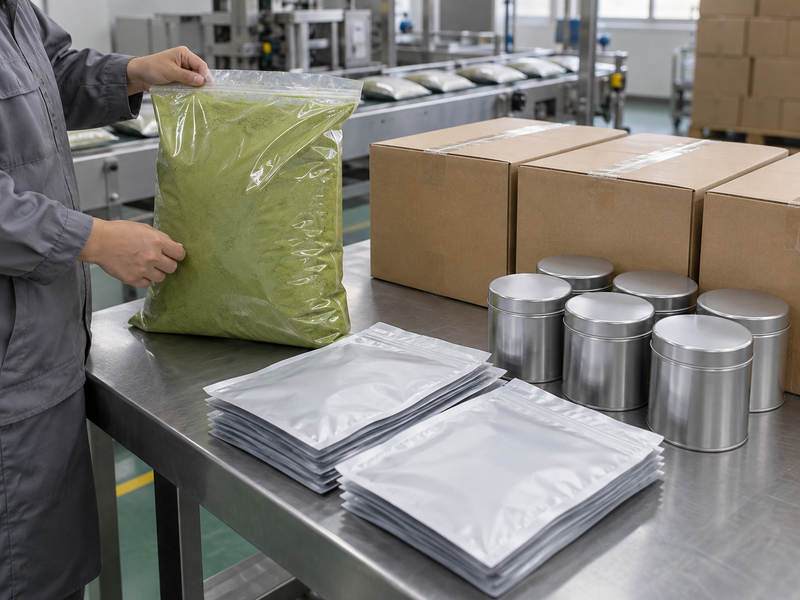
Open the proposed production unit and identify what touches the matcha: coated metal, a separate pouch, a membrane or another component. Ask for the inner material’s code and applicable food-contact evidence. A tin can block light but cannot by itself tell you how oxygen and moisture are controlled at the lid or seam. If a sealed inner bag provides the primary barrier, evaluate its film and heat seal separately from the decorative shell.
Choose the format based on product performance and customer use. An inner pouch may support the unopened storage target, while the tin offers protection and presentation. Direct filling may simplify opening but requires closer review of lining, lid and filling controls. Do not assume that a premium appearance proves safety or shelf life. Request a filled sample from the intended line and a pack specification that names every contact component. The buyer should know which piece must change if a trial reveals clumping or aroma loss.
| Construction | Primary contact | Buyer question |
|---|---|---|
| Direct-filled tin | Liner and lid system | What is approved for contact? |
| Tin with inner bag | Bag film and seal | What provides the barrier? |
| Tin with membrane | Membrane and inner surface | How is integrity tested? |
3. How does the original seal protect the powder?
Test the unopened unit as sold
Ask what makes the package tamper-evident and what actually limits exchange with the outside environment before opening. It might be a heat-sealed inner pouch, a membrane or another closure design. Request the packer’s seal specification and routine inspection method. A lid that sits snugly after opening may not be the package’s original barrier. Conversely, a strong original seal does little if filling dust prevents consistent closure on the line.
Inspect real filled units for crooked seals, powder on closure surfaces, pinholes and damage from applying the lid. Open samples using the same instructions customers will see. Ask how failed seals are identified and which lot records locate affected units. For transport testing, include a few cartons from normal production rather than only perfect hand-selected samples. If the tin contains an inner bag, inspect both the bag seal and the condition of the tin after shipping.

4. What should a lid do after opening?
Test the consumer’s repeated-use routine
Once the original seal is removed, customers may open and close the tin many times. Ask whether the lid is easy to seat fully, whether powder catches in the rim and whether users can tell if it is closed. A closure that feels tight during a single demonstration can perform differently after repeated use. Test it with the scoop or serving tool the product will include. Check how much powder remains in corners at the end of the tin.
Set realistic use instructions rather than promising that a decorative tin keeps matcha fresh indefinitely after opening. Run an after-opening trial under expected home or café conditions: record date, frequency of opening, storage position and sensory changes. If the product will remain in its inner pouch inside the tin, test whether consumers can reclose that pouch properly. The approved design should fit the behavior a buyer can reasonably expect, not require a laboratory handling ritual.
| Use step | Observe | Possible design change |
|---|---|---|
| Open | Tool, force and powder spill | Alter seal access |
| Scoop | Reach and residue | Change diameter or fill |
| Close | Rim contamination | Improve lid or insert |
5. How should fill weight and headspace be set?
Work from powder and container together
The same nominal weight can fill different volumes when powder bulk density changes. Ask the packer to run a fill trial with the proposed SKU, not a substitute material. Check net weight, visual fill level, lid clearance and powder movement after transit. A tin chosen from a drawing may appear half-empty or be too full to close cleanly once the actual powder is used. Packaging design should allow practical fill control without making an unsupported “full to the brim” claim.
If the supplier proposes gas flushing or a particular headspace target, ask what it measures and what evidence links that process to shelf life. Do not assume a low headspace or a nitrogen claim solves every storage issue. Record the filled unit’s dimensions, weight checks and closure result. At receiving, the buyer should know how to identify a short-filled or damaged pack without opening every tin. A pilot run can settle these questions before thousands of printed shells are ordered.
6. What food-contact evidence belongs in the file?
Review the exact construction and market
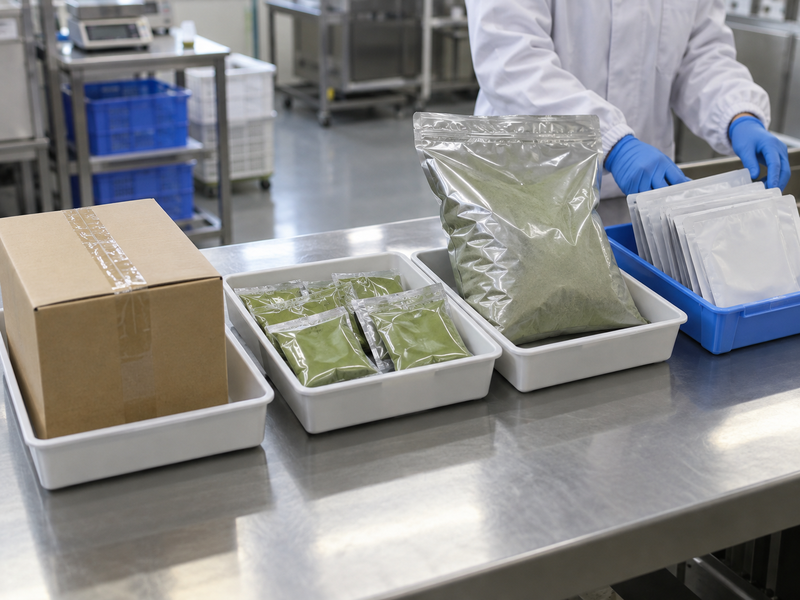
Ask for material identification and applicable evidence for the components that touch powder. In the U.S., FDA explains how food-contact substances are regulated. For EU sales, the European Commission describes food-contact material requirements. A qualified reviewer should decide what documentation applies to the actual lining, pouch, membrane, adhesive or printing arrangement and its intended use.
Check whether a declaration describes the same supplier and material code used on the production line. A generic “food safe tin” phrase may not identify the coating or inner bag. Ask how changes to the liner, lacquer, closure or adhesive reach the buyer before filling. Keep this evidence with the pack revision and destination market. The tin’s artwork can remain identical while the contact surface changes, so material approval must not be inferred from visual inspection alone.
| Component | Document question | Review trigger |
|---|---|---|
| Inner coating | Exact material and use? | New coating supplier |
| Bag or membrane | Contact status and seal? | Film substitution |
| Printing | Placement and set-off control? | Artwork or process change |
7. How should a tin’s shelf life be tested?
Use the filled configuration under stated conditions
Ask what evidence supports the proposed best-before period for the specific powder and tin construction. An inner pouch, membrane or direct-fill format can change the answer. The study should state storage conditions, sampling times and acceptance criteria such as color, aroma, moisture or application performance. A published matcha storage study found changes in measured attributes under different temperatures; it does not assign a shelf life to your new retail tin.
Keep sealed retained units from a normal production lot and evaluate them against an approved reference. Include expected warehouse and retail conditions where practical. Run a separate after-opening trial if the brand will make instructions about use after opening. If a tin is dented but the inner seal remains intact, do not assume the powder is acceptable or unacceptable without the pack’s agreed damage rule. Shelf life needs a defined package, storage route and test, not a round number borrowed from a competitor.
8. What can go wrong during tin filling?
Audit line setup and reconciliation
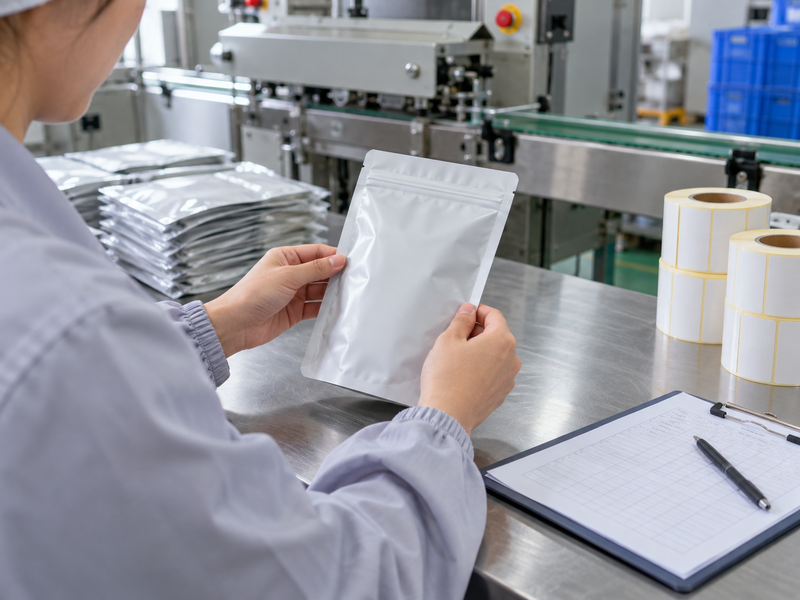
Fine powder can spill onto rims, contaminate seals or obscure printed codes. Ask the packer how it controls dust, fill weight, line clearance and removal of damaged tins. Review a batch record that links powder lot, tin or liner lot, seal check and finished carton. If two artwork variants share a line, ask how staff prevent the wrong shell from being filled. A packing-line photograph cannot establish these controls.
Request a small pilot from the intended line. Inspect units from the beginning and end of the run, not only selected presentation samples. Check lot readability, printed artwork, seal quality and filled weight. Ask what happens to underweight, scratched or badly sealed units and how scrap is recorded. A supplier should be able to reconcile powder issued, units filled and units rejected. That record supports both inventory accuracy and a later complaint investigation.
| Line risk | Control evidence | Buyer check |
|---|---|---|
| Wrong shell | Artwork line clearance | Compare approved revision |
| Seal dust | In-process inspection | Open pilot units |
| Weight drift | Filling log | Check net weight |
9. How should cartons protect finished tins?
Test the shipping unit, not only the shelf unit
Rigid tins can dent, scratch or lose labels during distribution. Ask for the case count, dividers or protective inserts, pallet pattern and carton markings. Send packed pilot cartons through the route your business will use, including parcel shipping if consumers will receive individual tins by mail. At receipt, record dent location, seal condition and whether lot codes remain readable. A tin that looks excellent in a supplier showroom may require a different outer case for your channel.
Check whether cartons contain mixed powder lots or artwork versions. If they do, the packing list and carton labels should make each unit identifiable. Define what receiving staff should hold: broken original seal, unreadable lot, severe damage or a mismatch with the approved pack. If cosmetic dents are allowed, agree the acceptance threshold before launch. A clear receiving rule prevents stores from improvising different judgments about the same shipment.

10. What should a buyer approve before a launch?
Freeze the complete filled pack
Approve powder code, tin and inner-contact materials, seal, lid, net weight, artwork, lot position, carton and shelf-life basis as one controlled package. Keep a signed physical sample or detailed photographic reference with its version. Name the people who may approve a material or graphic change. The purchase order should cite both powder and pack revisions so a later shipment cannot silently substitute a similar-looking shell.
Run one pilot receiving and use test before full distribution. Ask marketing to confirm the shelf appearance, operations to confirm opening and dosing, quality to confirm seal and documents, and purchasing to confirm delivered cost. Matcha Village’s supplied materials list tins among available formats; request the exact proposed construction and production sample for the SKU under review. Good matcha tin packaging earns its premium feel by protecting and identifying the powder throughout real use.
| Approval item | Keep on file | Recheck after |
|---|---|---|
| Powder and fill | Coded pilot units | Material change |
| Tin and seal | Construction and test | Component substitution |
| Artwork and carton | Versioned proof | New market or channel |
FAQ
Q1. Is a metal tin automatically airtight? No. The seal, lid and any inner bag determine unopened and after-opening performance.
Q2. Can a tin contain an inner pouch? Yes. Review the pouch as the primary contact and barrier layer when that is the chosen format.
Q3. Does a premium look prove a long shelf life? No. Request evidence for the filled pack under defined storage conditions.
Q4. Should the same tin be used for every powder grade? Run a fill trial with the actual SKU because powder behavior and bulk density can differ.
Q5. What if tins arrive dented? Apply the agreed damage rule and check original seal, lot identity and product condition.
Order a small line-made pilot before approving printed tins at scale. Open, close, ship and inspect the complete unit. When the powder and package both pass, the design has evidence behind the shelf impression and a clear specification for the next order.