
Matcha powder packaging has to protect a fine tea ingredient through filling, shipping, storage and use after opening. A glossy pouch may look suitable while its seal or food-contact evidence remains unclear. Define the intended route, ask for material and closure specifications and run a realistic storage trial. Our matcha moisture-content guide explains one powder measure that packaging and handling decisions should keep stable.
Contents
- 1. What job must the package perform?
- 2. How does moisture enter the buying decision?
- 3. Why consider oxygen and light together?
- 4. Which material data should a buyer request?
- 5. How should a seal be verified?
- 6. What matters during powder filling?
- 7. How should shelf life be supported?
- 8. Which food-contact checks belong in the file?
- 9. How can a buyer test shipping and use?
- 10. What should the final pack specification contain?
1. What job must the package perform?
Define the entire handling route
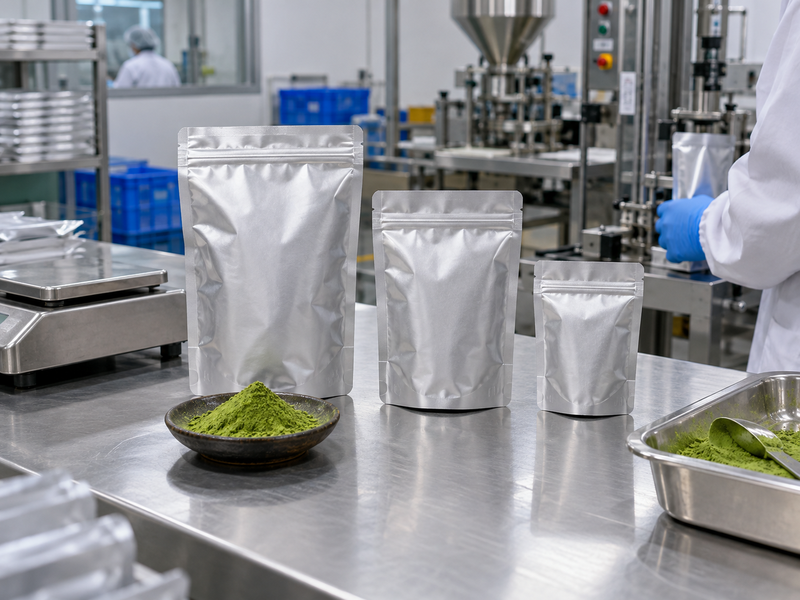
List where powder is filled, how it travels, who stores it and how quickly the user empties an opened unit. A food manufacturer consuming sealed bulk bags has different needs from a chain café opening a small pack at each store. A retail brand must also protect appearance and label readability on a shelf. Name the product code, net weight and distribution route before choosing a pouch or canister. A pack that performs well in a laboratory may still be awkward for store staff or vulnerable in an outer carton.
Decide what failure would matter: moisture uptake, clumps, faded color, aroma change, seal damage or lost lot identity. Ask the supplier which tests and records support its proposed pack. If it offers several formats, run a use trial rather than selecting the one that looks most premium. Record where the buyer will accept the product and who has authority to approve a pack substitution. Packaging becomes a product control only when it is defined as carefully as the powder inside it.
2. How does moisture enter the buying decision?
Keep dry powder dry through the route
Fine tea powder can clump when exposed to moisture, making weighing and mixing less predictable. Ask for the product’s moisture or water-activity limits if these are part of the quality specification, then ask how the pack helps maintain them. A matcha storage study examined water activity and light exposure under its test conditions; use it as a reason to validate your own pack, not as a universal shelf-life claim.
Review the barrier material, closure and expected humidity during shipping and use. A good unopened barrier cannot protect powder after a café leaves the pouch unsealed. If a large pack is opened many times, compare smaller units and total packaging cost against product waste. Test the proposed pack in your warehouse and store routine. Record opening date, closure behavior and any change in clumping. When the package fails in practice, changing staff instructions or unit size may be more effective than choosing a different laminate alone.
| Moisture question | Supplier evidence | Buyer trial |
|---|---|---|
| Unopened barrier | Material data | Storage condition |
| Seal integrity | Filling-line check | Receive and inspect |
| After opening | Closure design | Repeated-use test |
3. Why consider oxygen and light together?
Protect the color and aroma the brand sells
Matcha’s visual and sensory qualities can change in storage. The package should limit exposures relevant to the intended distribution period. Ask whether the proposed wall is opaque or whether a secondary carton provides light protection. Ask what the material supplier reports about oxygen barrier under stated conditions. A transparent window can help a consumer see the powder but should be evaluated against the shelf and warehouse environment rather than selected only for design appeal.
Do not infer protection from a metallic appearance. Some films look silver yet have different constructions and seal behavior. Request the actual material specification and a sample of the filled unit. If the supplier uses a gas-flush process, ask what it controls and how it checks the result; do not assume the word “nitrogen” guarantees freshness. A storage trial should evaluate color and aroma against a retained reference under real route conditions. Tie any shelf-life promise to evidence for the finished pack, not to a generic material claim.
4. Which material data should a buyer request?
Read the construction and its intended use
Ask for layer or material identification, nominal thickness where relevant, barrier data with test conditions and the approved food-contact use. Request the supplier’s current specification rather than a product-family brochure. A claimed oxygen or water-vapor transmission rate has little comparison value without its units, temperature, humidity and test method. If the buyer is comparing films from two vendors, place data side by side only after checking those conditions.
Consider recycling or material-reduction goals as separate project requirements that still need product protection and compliance review. A simplified pack may perform well, but it should be tested rather than assumed equivalent. Ask who can change the inner layer or adhesive and what notice the powder buyer receives. A film substitution can affect sealing and food-contact status even when the outer artwork looks identical. Keep the approved material code with the finished SKU and purchase order.
| Material field | Ask for | Why it matters |
|---|---|---|
| Construction | Identified layers | Compare actual packs |
| Barrier result | Method and conditions | Interpret performance |
| Food contact | Intended use evidence | Market review |
5. How should a seal be verified?
Inspect the closure made on the actual line
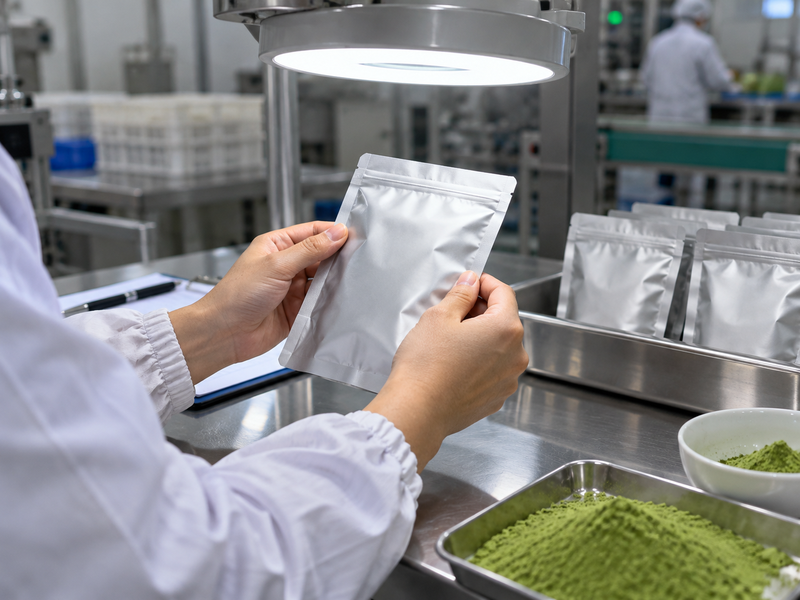
A strong film is of little use if powder contaminates the heat-seal area or the closure is inconsistent. Ask the packer how it sets and checks seal conditions for the proposed format. Review a completed production record, not only a machine catalogue. The procedure should describe how a failed check is handled and how affected units are located. Ask whether every pack is visually checked and whether additional integrity testing is part of the plan.
Request packed samples from the intended line. Examine seal width, fold areas, pinholes and how the package behaves when handled by warehouse staff. For a resealable pouch, test repeated opening and closure, while recognizing that the factory’s original seal and the consumer closure have different jobs. If a seal fails during transit, record the lot and carton position before discarding the evidence. A useful specification identifies both the seal design and the verification method that gives the buyer confidence in it.
6. What matters during powder filling?
Match the line to a fine, mobile material
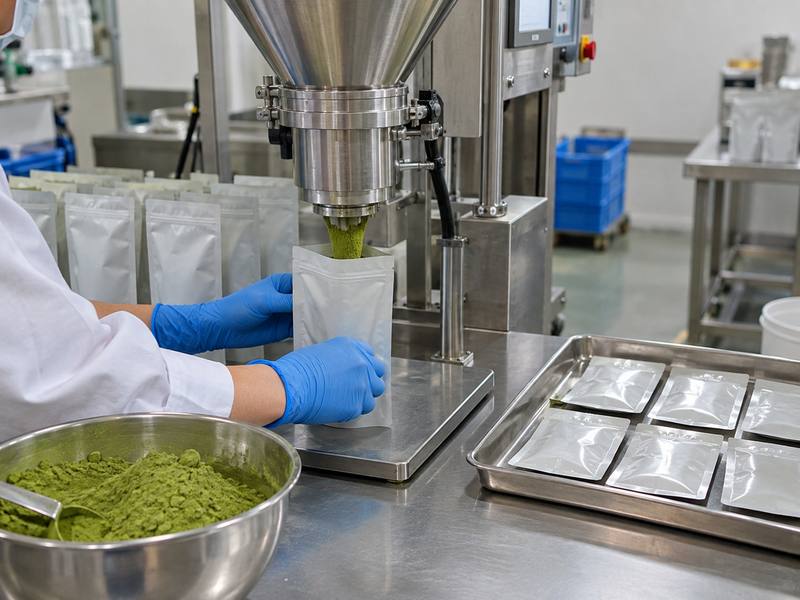
Ask how the packer controls product identity, fill weight, powder dust and line clearance. Fine powder can reach surfaces and seals if equipment and housekeeping are not managed. The buyer should see how material and packaging codes are staged, how the first packed units are checked and how underweight or damaged units are handled. If a line fills several grades, ask what record confirms changeover before your run starts.
Clarify the headspace or gas-handling claim only if it is part of the offer. Do not put a technical term on artwork because it sounds premium. Request a filled sample that represents normal production and a batch record tying powder lot to packaging lot. Have operations open the pack and measure how much powder remains caught in corners or creases. That waste affects real cost. Packaging fit includes production control and user handling, not only shelf appearance.
| Filling point | Factory record | Buyer check |
|---|---|---|
| Identity | Material and film codes | Correct SKU |
| Weight | In-process results | Net-content agreement |
| Seal area | Line inspection | Clean closure |
7. How should shelf life be supported?
Ask for evidence under stated conditions
Shelf life is a product-and-package claim. Ask what powder, pack, storage temperature and evaluation criteria were used in the supplier’s study. Did it assess unopened units only? Was color measured, aroma judged or moisture checked? A claim based on one package size may not carry over to a larger unit or different material. A study of matcha under different storage temperatures found changes in measured quality attributes under its conditions; see the published storage experiment. Your supplier still needs evidence for its offered pack.
Plan a practical trial for the intended market. Retain sealed units from a production lot, store them under realistic conditions and evaluate against the approved sample at defined times. For cafés, add an after-opening trial because unopened shelf life does not predict how an open pouch performs on a busy counter. Record the test method before results arrive. A shelf-life date should be a decision your quality team can explain, not a number copied from another matcha brand.

8. Which food-contact checks belong in the file?
Review the market and actual contact layer
The material touching powder must be suitable for its intended food-contact use in the destination market. Ask the packaging supplier or packer for a current declaration or other applicable compliance evidence identifying the material and use conditions. FDA explains food-contact substances for U.S. use, while the European Commission describes EU food-contact material rules. Your qualified reviewer should determine which requirements apply to the exact pack and market.
Do not assume an outer tin makes a noncompliant inner pouch acceptable or that a generic “food grade” phrase answers the compliance question. Keep the inner-contact material code, declaration and supplier identity with the pack specification. If the factory changes a laminate, liner, ink placement or adhesive, ask whether the food-contact file needs updating. Packaging artwork and material approval are related, but they are separate decisions with different evidence.
| Pack component | Evidence question | Reviewer |
|---|---|---|
| Inner contact layer | Suitable for intended use? | Regulatory or quality |
| Seal or adhesive | Covered in material file? | Packaging specialist |
| Outer printed layer | Migration or set-off review? | Qualified team |
9. How can a buyer test shipping and use?
Put packed units through the real route
Request finished cartons, not just empty film samples. Check case dimensions, stack pattern, lot labels and how packs survive normal handling. Inspect a delivery after transit for seal damage, crushed corners, powder leakage and readable codes. Record carton position and lot on any damaged unit. A single photo of a perfect pouch on a desk cannot establish performance in mixed pallets or store distribution.
Ask staff to open, dispense and close the product as they normally would. Watch for powder trapped in folds, difficult closures and units too large for daily turnover. Compare returned or damaged stock with the packaging batch record. If a new pack reduces material but creates more powder waste, the project has not necessarily improved. Use a short pilot with a named decision owner before converting a whole SKU. Real-route testing ties barrier, seal and usability into one purchasing choice.

10. What should the final pack specification contain?
Make a pack that can be reordered
Record inner material code, unit size, dimensions, seal type, closure, carton count, lot-code position, artwork revision and storage instructions. Add the agreed inspection and shelf-life basis. Name who can approve a change. The first order should cite this version, and the receiving team should know what to hold if a seal, label or material differs. A pack specification has value only if it reaches the purchasing order and production line.
Retain a signed or photographed reference unit and a material file. At each reorder, ask whether the powder, packing site or materials changed. Matcha Village’s supplied material lists bulk and retail formats; choose a specific format and request its current specifications before assuming a company-wide pack claim covers it. Good matcha powder packaging protects a defined product through the buyer’s route and gives staff a clear way to identify the pack they approved.
| Final field | Supplier confirms | Buyer checks |
|---|---|---|
| Material and seal | Codes and procedure | Approval file |
| Unit and carton | Weights and count | Receiving plan |
| Change notice | Trigger and timing | Requalification need |
FAQ
Q1. Is a silver pouch always a good barrier? No. Request construction, barrier data and a filled-pack trial.
Q2. Does nitrogen filling guarantee shelf life? No. Review the process checks and stability evidence for the finished unit.
Q3. Should small cafés buy the largest bag? Compare unit price with opening frequency, waste and closure performance.
Q4. What if the packer changes film supplier? Review food-contact evidence, sealing and storage performance before accepting a substitution.
Q5. Is unopened shelf life enough for foodservice? Add a use-after-opening trial under normal store conditions.
Take one proposed powder and its finished pack through storage, transit and repeated use. Approve the material, seal, label and shelf-life basis together. The package should make the powder usable when it reaches a café or factory, not merely attractive when it leaves the filling line.