
Matcha Thai tea combines a prepared matcha base with the strong black-tea flavor of Thai tea, usually over ice and milk. A café can make it as two visible layers or a fully mixed drink. The difficult part is keeping both teas recognizable after dilution, sweetness, and milk are added. This guide gives a test formula, then shows how a buyer can choose powder, control a Thai-tea concentrate, and turn one attractive glass into a repeatable menu item. The One Organic recipe is one consumer example of the pairing; the commercial method below uses weighed ingredients and separate batch records.
1. What is matcha Thai tea?
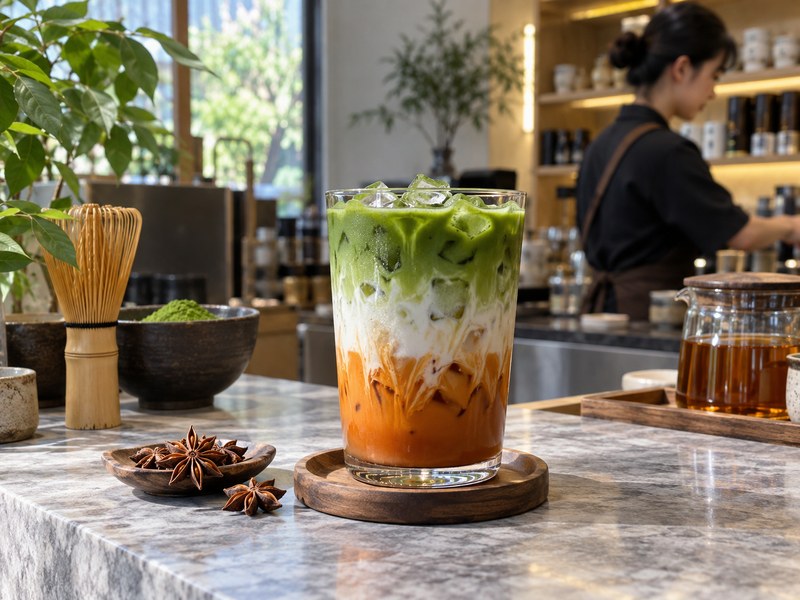
Matcha Thai tea is a fusion drink made from two different tea preparations. Matcha is finely ground green tea dispersed in water. Thai tea, as served in many cafés, starts with a strongly brewed black-tea blend and often includes spices, sweetener, and milk. The specific blend varies by supplier. Putting both in one cup can produce a green top and amber lower layer, although the drink will eventually mix as a customer stirs or drinks it. The product name should describe the ingredients actually used; a green tea latte with orange coloring alone does not provide a Thai-tea flavor.
What should the customer taste?
Start with two clear flavors. Prepare each tea alone at the same strength it will have in the finished cup. The matcha should register as tea rather than green color. The Thai base should retain black-tea character after milk. A good finished drink lets a customer notice both, perhaps with warm spice on the finish. If vanilla syrup or condensed milk overwhelms them, reduce sweetness before increasing the tea dose. That saves ingredient cost and makes the name more honest.
| Component | What it contributes | Common failure in the cup |
|---|---|---|
| Matcha base | Green color, tea aroma, grassy or savory notes | Clumps or weak flavor |
| Thai-tea concentrate | Black-tea body and blend-specific spice | Thin or harsh extraction |
| Milk | Creaminess and visual separation | Mutes both teas |
| Sweetener | Balances bitterness and spice | Covers the tea entirely |
2. Which ingredients define the Thai-tea side?
The base is a brewed black-tea blend. Some commercial blends include star anise or other aromatics; some are flavored and colored. Read the supplier’s ingredient declaration rather than assuming that every orange blend has the same composition. Make a concentrated brew, strain it completely, then sweeten by a measured amount if your drink specification calls for it.
How should a buyer select a blend?
Ask for the ingredient list, allergen information, country of origin, preparation instructions, and lot identification. If a menu promises a particular spice, verify that the blend contains it or add it as a controlled ingredient. Compare two samples at identical leaf mass, water volume, steep time, and milk ratio. Record aroma after brewing and again after chilling; cold storage can change what the team perceives. Color deserves a separate check. Do not describe orange color as a natural property of tea if the purchased blend contains added color.
3. What matcha works with a strong black-tea base?
Choose a powder for performance in the complete drink. A delicate matcha may taste excellent in water but disappear beside milk and spice. A stronger culinary or beverage-oriented powder can work better, provided its bitterness stays controlled. Request a current lot sample, specification, and relevant test documents from any supplier. Then compare it blind at the actual dose, in the actual milk, with the actual Thai-tea concentrate.
How can the bar avoid green clumps?
The mixing step decides a lot. Weigh matcha rather than using an uncalibrated scoop. Mix it first with a small volume of cool or warm water until smooth, then add the remainder of the base liquid. A sifter can help if the powder has compacted, but a good mixing method should also work during a busy shift. Test a whisk, handheld mixer, or other food-safe tool under realistic speed and cleaning conditions. For a plain-water benchmark, see our matcha tea ceremony guide, which separates a tasting cup from a milk drink.
| Trial control | Record each time | Reason |
|---|---|---|
| Powder | Lot and grams per cup | Flavor, cost, caffeine |
| Water | Volume and temperature | Dispersion and dilution |
| Mixing | Tool and seconds | Clumps and labor |
| Finished drink | Tea recognition after five minutes | Real service performance |
4. What is a useful starting formula for one iced cup?
For a 450 ml serving vessel, start with 2.5 g matcha dispersed in 40 ml water, 75 ml chilled Thai-tea concentrate, 140 ml milk, and 15 ml simple syrup. Add ice to the target fill line. This is a development starting point, not a claim that one recipe suits every powder or blend. If the Thai concentrate already contains sugar, reduce or omit syrup. If condensed milk is used, measure its grams and account for both sweetness and dairy solids.
How should the first tasting be run?
Make three cups, not one. Hold the tea bases and milk steady while varying syrup, for example 10, 15, and 20 ml. Taste blind immediately and after five minutes of ice melt. Select sweetness only after deciding whether both teas are clear. Next, adjust matcha in small increments while leaving the Thai base alone. Changing all ingredients together makes it impossible to identify which change helped. Log each test in grams and milliliters, including the concentrate recipe. Transfer the approved formula to an operating sheet with a photograph of the mixed and layered presentations.
| Development item | Starting quantity | What to adjust after tasting |
|---|---|---|
| Matcha | 2.5 g | Increase only if masked by milk |
| Matcha water | 40 ml | Enough for smooth mixing |
| Thai-tea concentrate | 75 ml | Set black-tea and spice strength |
| Milk | 140 ml | Controls creaminess and dilution |
| Simple syrup | 15 ml | Reduce if concentrate is sweetened |
| Ice | To fill line | Standardize by cup and machine |
5. How can a café keep the layers attractive?
Layers depend mainly on density, temperature, ice, and pour speed. A sweeter Thai base often settles lower in the cup; a lighter matcha mixture can sit above milk for a short time. These effects vary with syrup concentration and the milk selected. Build a cup over a consistent amount of ice and pour slowly against the ice or a spoon. Photograph the appearance immediately, at the handoff point, and after five minutes.
When is a mixed drink better?
Choose a mixed specification when flavor matters more than a green-over-orange photograph. Stirred versions can distribute sweetness more evenly and reduce complaints about an intensely sweet first sip. A visible layer can still work for counter service if staff explain that customers should stir before drinking. Never rely on a layer to conceal an unbalanced formula. The team should taste a fully mixed version during product approval; that is what customers eventually consume. If the colors turn muddy, test a lower concentration of Thai-tea color or a different milk before adding food color solely for appearance.
6. How sweet should matcha Thai tea be?
Sweetness is a design choice, not a fixed feature of the drink. Thai-tea concentrates, sweetened condensed milk, flavored syrups, and premixed matcha powders can all contribute sugar. Calculate the total from every component before deciding that a recipe is lightly sweetened. For foodservice, a practical approach is to define one standard drink and one reduced-sweetness variation that staff can make without altering tea strength. If the concentrate is pre-sweetened, a reduced-sweetness option may need a separate unsweetened batch.
Which measurement helps during development?
Taste still makes the decision. A refractometer reading can track dissolved solids in a consistent recipe, but it is not a direct sugar measurement in a tea-and-milk mixture. Use it as a process check only after the formula is set and the sampling method is stable. Record syrup grams or milliliters, sugar concentration in the syrup, and any declared sugar in the purchased concentrate. Compare a freshly made cup with one after ice melt. If the fresh cup tastes balanced but becomes flat, consider stronger tea bases or less liquid, not automatically more sugar.
| Sweetness source | Control point | Frequent mistake |
|---|---|---|
| Thai concentrate | Unsweetened or fixed syrup recipe | Variable batch strength |
| Simple syrup | Measured dose and concentration | “One pump” without calibration |
| Condensed milk | Weight per cup | Ignoring its sugar contribution |
| Premixed matcha | Supplier ingredient declaration | Treating blend as pure tea |
7. Which milk or alternative milk should be tested?
Milk changes tea perception and appearance. Dairy can soften bitterness and add body; oat and soy products differ widely in sweetness, texture, and stability. Coconut milk introduces its own flavor, which may work with Thai tea but can make matcha hard to identify. Test the exact brand and product type used by the stores. If a substitute is offered, maintain a separate recipe card for it rather than changing the carton while keeping every other quantity fixed.
What should the milk trial record?
Evaluate the drink immediately and after a realistic service delay. Note visible separation, color, aroma, thickness, and whether either tea disappears. Compare sweetness because some alternative milks are already sweetened. Check the declared allergens for each ingredient and train staff on cross-contact controls. An “oat” option cannot automatically be described as gluten-free; that depends on the particular product and its documentation. Likewise, avoid a dairy-free claim if the Thai concentrate or toppings contain milk ingredients.
8. How should the two bases be prepared for service?
Write separate preparation sheets for matcha and Thai tea. A brewed concentrate needs a defined leaf-to-water ratio, water temperature, brew time, straining method, cooling method, batch size, and discard time. Matcha may be best mixed per order, especially when the store wants a vivid top layer. Keep cold ingredients refrigerated according to local rules; the general FoodSafety.gov guidance uses 40°F/4°C or below for cold food.
Where do shifts usually lose consistency?
Watch the handoff between batches. A new staff member may top off an old concentrate, use a different steep time, or substitute a sweetened milk. Those actions change several variables at once. Label each container with product, preparation time, and operator, and finish one batch before opening the next. Put the drink build on a single card near the station. A manager can verify it with a test cup at opening and when a new tea lot arrives. Sampling a fresh lot against a retained reference reveals changes earlier than customer complaints.
9. What should a buyer calculate before adding it to the menu?
Calculate cost per saleable cup, not cost per kilogram of matcha alone. Include both teas, milk, syrup, ice, cup, lid, garnish, waste, and labor. A 2.5 g matcha dose yields 400 theoretical cups from a kilogram; spills, calibration cups, and rejected drinks reduce that number. The Thai concentrate has its own yield, including liquid retained in the spent leaves and batch disposal. Compare a layered version with a mixed version if the former takes more labor or causes more remakes.
How can a small pilot expose the real cost?
Run the formula across several shifts before launch. Track actual grams of powder opened, drinks sold, remakes, and concentrate discarded. Ask staff where service slowed down. If a premix or measured pump saves time, test whether it changes flavor or layer quality. A pilot also shows whether customers understand the name; some may expect a Thai green tea drink, which is a different product. Use an accurate menu description such as “matcha over spiced Thai black tea with milk” when those ingredients are present.
10. What should an importer or café ask a matcha supplier?
Ask for samples that cover your intended application and price range, plus lot-linked specifications, ingredient declarations, origin, shelf-life information, and available test reports. For an international order, confirm packaging size, lead time, minimum order quantity, and documents needed by the destination market. A supplier may offer grades for plain drinking, lattes, and baking; evaluate each in this two-tea drink before choosing.
What should a final approval file contain?
Keep the accepted lot sample, both tea-base recipes, sensory notes, ingredient and allergen records, finished-cup photograph, cost sheet, and staff instructions together. Name the approved milk and Thai-tea blend, not merely “milk” and “tea.” If any one component changes, repeat a focused comparison before calling the product equivalent. Request samples for the intended cup size and channel, then make the purchase decision from your own service test.
| Approval document | Minimum content |
|---|---|
| Ingredient specification | Lot, origin, declaration, relevant tests |
| Recipe card | Grams, milliliters, process, cup size |
| Sensory record | Immediate and delayed tasting |
| Operating record | Batch labels, holding, cleaning |
| Cost sheet | Saleable yield and waste |
FAQs
Q1. Is matcha Thai tea the same as Thai green tea? No. This drink combines matcha with a Thai-style black-tea base. Thai green tea uses a different tea blend.
Q2. Can it be made without condensed milk? Yes. Use measured milk and syrup, then adjust sweetness after tasting the two tea bases together.
Q3. Will the layers stay separate? Only temporarily. Density, ice, temperature, and movement all affect their appearance; test at the actual handoff time.
Q4. Can a café prepare matcha in advance? It can test a held base, but color, settling, flavor, and food safety need documented limits.
Q5. Which matcha grade is best? Choose the lot that remains recognizable in your full recipe at an acceptable cost, regardless of the marketing grade name.