
A matcha tea ceremony is a formal way of preparing and sharing a bowl of powdered green tea. A café can borrow its attention to ingredients and service, but it should not present a quick counter drink as a traditional ceremony. That distinction matters if you sell matcha experiences, retail kits, or training. This guide separates cultural practice from the practical choices a business can make: powder, tools, preparation, staff training, and honest menu language. For cultural background, the Urasenke school describes chado as a practice centered on the time host and guest spend together over a bowl of matcha.
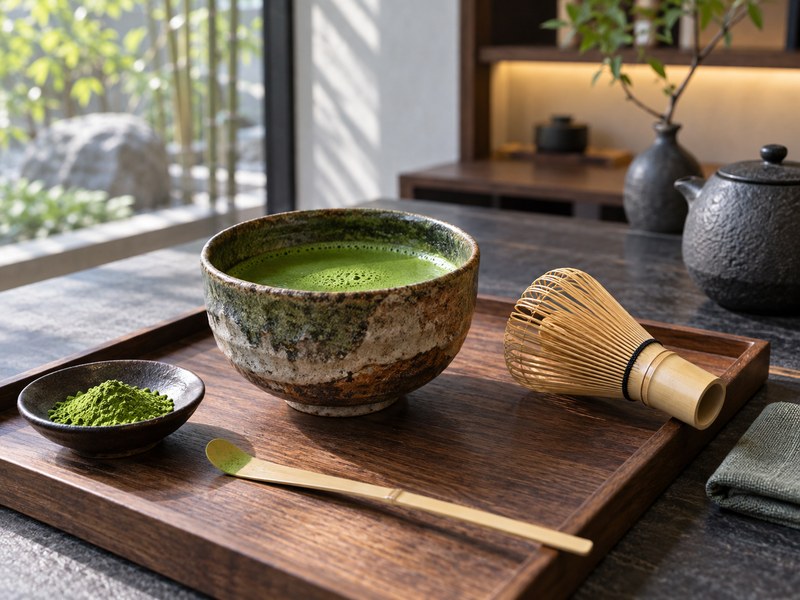
1. What is a matcha tea ceremony?
A matcha tea ceremony, often called chanoyu or chado in Japan, is more than a recipe. The host prepares tea for guests within a considered setting; the choice of utensils, the sequence of actions, and the exchange between host and guest all matter. A business should understand that context before borrowing its language. A bowl whisked for a customer is a matcha service. Calling it a ceremony suggests something much more specific, including training and cultural knowledge. Urasenke’s own introduction to chado is a better starting point than a social media clip that reduces the practice to foam.
Where does a commercial tasting fit?
A tasting flight can be an excellent business format without claiming to reproduce chanoyu. Serve two powders at identical doses, explain what each guest should notice, and allow time to compare aroma, texture, and finish. A café can use a bowl and whisk to show the ingredient clearly; a tea brand might add a short discussion of storage and production. Describe the event as a guided tasting or matcha preparation demonstration unless a trained practitioner is actually presenting a ceremony. That wording respects the practice and gives customers an accurate expectation. The distinction also helps your staff answer questions without relying on improvised history.
| Format | Honest description | Main business task |
|---|---|---|
| Traditional chado gathering | A practice led by a trained host | Cultural training and appropriate setting |
| Guided matcha tasting | Several powders prepared for comparison | Consistent recipe and sensory notes |
| Café matcha service | A bowl or drink made to order | Speed, hygiene, and repeatability |
2. How did powdered tea become part of Japanese tea culture?
Powdered tea traditions have roots in China and developed in distinctive ways in Japan. Japanese tea culture eventually gave matcha a central place in formal gatherings. The Japanese Ministry of Agriculture, Forestry and Fisheries describes the development of Uji tea, tencha cultivation, and tea ceremony culture. It also explains how tencha, a prepared leaf used for matcha, is grown under cover and later ground. A short brand story can acknowledge this history without suggesting that all present-day matcha comes from one place or follows one method.
What history can a brand state with confidence?
Keep the account modest. Explain that today’s matcha is associated with Japanese tea practice while specifying where your powder was grown and processed. Do not borrow the name of a Japanese region for a product grown elsewhere. Likewise, do not imply that a modern automated mill is a hand-operated stone mill. If your packaging mentions a particular school, region, or tradition, have evidence and permission for that specific statement. Good provenance starts with a lot record, not a romantic description.
3. Which tools are used for preparing matcha?
The familiar kit includes a bowl, bamboo whisk, and scoop. A sifter can help break up powder clumps, while a scale makes commercial recipes repeatable. Traditional utensils have names and meanings within chado; a café can use similar objects for straightforward preparation without pretending that each tool carries the same role outside that setting. The bowl needs enough space for whisk movement. The whisk should fit the bowl and be cared for so its tines do not break into a drink. A scoop gives a visual measure, but its actual capacity varies with packing and powder density.
What should a buyer check before ordering kits?
Ask for real dimensions, materials, packing method, replacement parts, and a sample set. Test whether staff can comfortably hold the bowl, whether the sifter is easy to clean, and whether the whisk survives routine training. Fragile ceramic should be packed for the route it will actually travel. If a tea brand sells a gift kit, check that every component reaches a consumer intact and that the printed care instructions match the material. See our matcha accessories range as a starting point for kit planning, then approve physical samples.
| Item | Buyer question | Common failure |
|---|---|---|
| Bowl | Is there room to whisk without spilling? | Small opening or unstable base |
| Bamboo whisk | Are tines sound after repeated use? | Splitting or difficult cleaning |
| Scoop and scale | Can staff reproduce the dose? | Variable scoop weight |
| Sifter | Can it be cleaned and dried fully? | Powder trapped in the mesh |
4. What powder belongs in a plain bowl of matcha?
A plain bowl makes powder quality hard to hide. Water does not cover a stale aroma or coarse mouthfeel. Seek a clean tea smell, a color appropriate to the specified product, fine texture, and a finish that suits your audience. Labels such as ceremonial and premium can help a supplier organize samples, but they are not universal specifications. Two products carrying the same grade name can taste different. Decide what matters in the cup and ask for product details tied to the offered lot. Pure matcha powder should be evaluated alone before it goes into a sweetened application.
How can staff compare samples fairly?
Use the same water, powder weight, bowl, mixing method, and serving time for each sample. Give each powder a code so the tasting team is less influenced by a label or price. Record dry aroma, wet aroma, color, foam, body, sweetness, savory notes, bitterness, and finish. Then repeat on another day. One good bowl is a start; consistency across tasters and lots matters more for a business. If you later change a supplier, a side-by-side tasting in the same session is more useful than someone’s memory of last month’s cup.
5. How is a bowl of matcha prepared?
A practical service sequence is simple: weigh the powder, sift if needed, add a small amount of warm water, stir or whisk it smooth, then add the remaining water and whisk to the desired texture. A café must define its own dose and cup volume because powder strength and guest expectations vary. Start with a modest test ratio, record it, and adjust based on taste. Hot water that is too aggressive can make a delicate tea seem rough.
What belongs in the operating procedure?
Write down the exact powder mass, water volume and temperature range, whisking time or motion, vessel, and maximum time between preparation and service. Photograph the target appearance for staff training, but include taste notes too: foam alone cannot prove a good cup. If the shop offers a lighter and stronger bowl, maintain two named recipes rather than letting each barista improvise. Clean and dry utensils between orders, especially during busy service. Compare your method against the Urasenke description of thin tea for cultural context, not as a substitute for training.
| Recipe control | Record for each service | Why it matters |
|---|---|---|
| Powder | Grams and lot | Strength, caffeine, and cost |
| Water | Milliliters, source, temperature | Flavor and dispersion |
| Mixing | Tool and timing | Clumps and texture |
| Service | Time prepared and served | Fresh appearance and flavor |
6. What is the difference between thin and thick tea?
In Japanese tea practice, usucha is a thinner whisked tea. Koicha is a thicker preparation using more powder and less water, with a different texture and method. A product that works in a milky latte may seem unbalanced in either plain style. For retail or café buyers, the useful lesson is that one powder should be tested at the concentration actually sold. If your menu names either traditional preparation, staff should be able to explain the term and make the drink consistently. A casual “extra strong” option need not borrow a ceremonial name to be appealing.
How should a café test both styles?
Prepare samples at defined concentrations with the same lot, then look for changes in bitterness, body, and finish. As concentration rises, a rough note becomes easier to notice and a coarse grind can feel more obvious. Have tasters evaluate the drink while fresh; settled powder can distort the comparison. Write down the recipe customers prefer and its cost per serving. If a thicker version is too expensive or too challenging for your staff to make well, offer one carefully prepared bowl instead of two inconsistent ones.
7. Can a café use ceremony ideas without misrepresenting the practice?
Yes. Attention, clean tools, a calm handoff, and a willingness to explain the ingredient are all useful. A café can show the powder before mixing, whisk a bowl in view, and invite customers to notice aroma. It should still describe the offer as a tasting, demonstration, or bowl service. Claims that a two-minute purchase is an authentic ceremony are hard to support. If you want a formal event, collaborate with a trained practitioner and agree on how they will introduce the practice. Let the expert shape the format and wording rather than treating the ceremony as decoration for a menu launch.
What should event planners decide in advance?
Set the audience size, room layout, length, accessibility needs, and guest questions before selecting the powder and equipment. Make the host’s role clear in promotional copy. Offer guests a way to opt out of tasting if caffeine or ingredients are a concern. A demonstration can include a commercial product discussion after the cultural portion, but keep the two clearly signposted. For a B2B buyer event, a later technical tasting with batch sheets and application samples may be more useful than forcing procurement questions into the ceremony itself.
8. What should a retail matcha ceremony kit contain?
A useful introductory kit gives customers a realistic path to a good first bowl: an appropriate amount of powder, a sound whisk, a bowl with enough room to work, a simple measuring method, and clear care instructions. A scoop alone cannot promise an exact dose. If room permits, include a small sifter or explain an alternate way to break lumps. Package powder in a barrier format that protects it from light and moisture.
How can a brand test a kit before launch?
Give unopened samples to people who have never made matcha and watch them follow the enclosed instructions without coaching. Note where they hesitate: powder dose, water temperature, whisk movement, cleaning, or storage. Then run a shipping test on the actual packed kit and inspect every component. Ask what happens when the powder runs out: can the customer reorder a matching product? Private-label teams should also verify the ingredients, origin, care notes, and market-specific labeling before approving artwork. Matcha Village’s OEM options can be discussed against a written product brief.
| Kit decision | Minimum practical test |
|---|---|
| Powder pack | Opened pack remains manageable and easy to reseal |
| Ceramic | Survives the intended shipping route |
| Instruction card | New user can make a drink without coaching |
| Refill path | Customer can identify the same powder later |
9. How should a business discuss origin and authenticity?
Say where the tea comes from, where it was processed, and how it was packed. Keep these statements distinct from the history of the ceremony. Matcha culture has a strong Japanese association; that does not turn every matcha powder into a Japanese product. A Chinese producer should describe its own tea gardens, milling, testing, and export documents honestly. Matcha Village’s company materials describe a Hangzhou supply chain and product options for several applications. Such company information should be checked against current lot documents whenever a buyer needs a factual claim for packaging or procurement.
Which documents support buyer claims?
Ask for a product specification, ingredient declaration, lot traceability, relevant testing, and the current certificate for any certification claim. Origin claims should match export documents and packaging. If a buyer uses terms such as “stone ground,” ask which lot and process the statement covers. A ceremonial story does not replace food safety checks, and a food safety certificate does not prove a ceremonial claim. Keep marketing copy narrow enough that the sourcing file can support every sentence.
10. How can a buyer choose a supplier for ceremony-style service?
Start with the customer experience you can deliver consistently. If the product is a plain bowl, prioritize clean flavor, texture, and repeat supply. If it is a tasting kit, add packaging durability and instruction clarity. If it is a formal cultural event, include a trained host and accurate program language. Ask suppliers for samples tied to a lot, repeat-order terms, and the documents your market requires. Test a pilot at the intended serving volume; the best sample in a quiet office may expose problems during a Saturday rush.
What should the final approval include?
Sign off on the actual powder, the measured recipe, the tool set, staff training, packaging, and customer description together. Calculate powder and accessory cost per serving or kit, not only unit price. Keep a reference sample and a copy of the approved copy. If the supplier proposes a different lot or tool later, repeat the relevant tests before assuming equivalence. Matcha Village can discuss bulk supply and kit components against your brief. A small, honest service with a sound cup is a better foundation than a grand claim staff cannot explain.
| Approval item | Evidence to keep |
|---|---|
| Powder | Lot sample, sensory sheet, specification |
| Recipe | Weights, water, timing, training record |
| Tools | Sample approval and cleaning method |
| Claims | Origin documents and reviewed customer copy |
FAQs
Q1. Is a matcha tea ceremony the same as a café matcha? No. A café may prepare matcha carefully, but a formal ceremony involves a specific practice, setting, and trained host.
Q2. Do I need a bamboo whisk to serve matcha? A whisk works well for a plain bowl. Commercial mixers can work for other formats, but test texture and cleanability.
Q3. Does “ceremonial grade” guarantee suitability for a ceremony? No universal grade standard guarantees a particular cup. Evaluate the specific powder and lot in the preparation you plan to serve.
Q4. Can matcha grown in China be sold for a ceremony-style tasting? Yes, if its origin is stated accurately and the cup meets your sensory target. Do not imply Japanese origin when it is not documented.
Q5. What should be in a retail starter kit? Powder, a usable bowl and whisk, a measuring method, care instructions, and packaging that protects the contents in transit.