
Chai matcha tea pairs powdered green tea with a spiced chai base, often black tea brewed with cardamom, cinnamon, ginger, and other aromatics. It can be served hot, iced, layered, or blended. The commercial challenge is balance: a sweet, forceful chai can erase matcha, while too much matcha makes the spices seem thin. This guide gives cafés and beverage developers a measured starting formula, tests for each ingredient, and a practical route from bench cup to repeatable service. The Aprika iced matcha chai latte illustrates consumer interest in the combination; your own recipe should be approved with your actual tea, milk, and serving size.
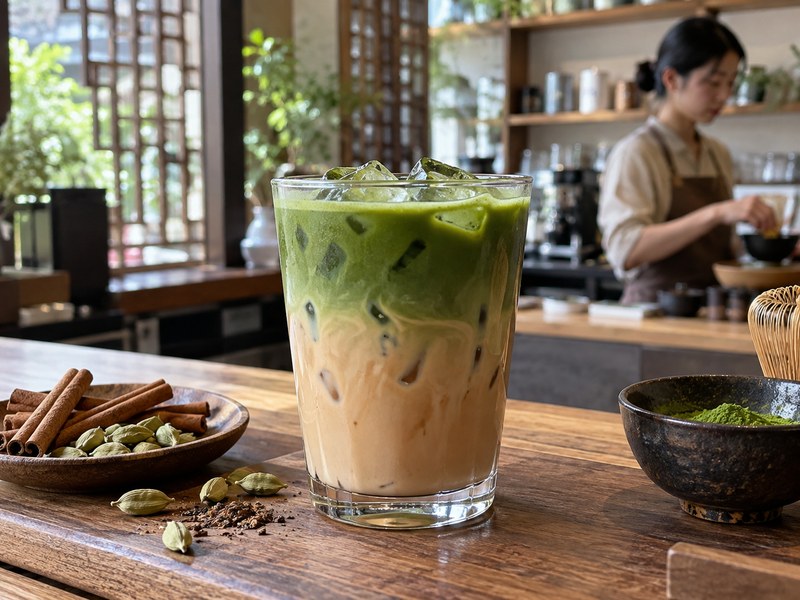
1. What does chai matcha tea contain?
At minimum, the drink has matcha and a chai component. In many markets, chai latte means a spiced black-tea concentrate mixed with milk, although recipes vary. The matcha portion is a separate powder-and-water dispersion, not brewed leaf tea. This distinction helps a café name the drink accurately and helps an importer specify the correct raw materials. If the chai base contains no black tea, describe it as spiced milk or a caffeine-free chai-style base rather than implying another tea source. A layered drink displays the components; a stirred drink lets the customer judge how well they work together.
What should the first sip deliver?
Taste the mixed cup. The first impression may be spice, but green-tea flavor should appear before the finish. Cardamom and ginger can provide lift without requiring more sugar. Cinnamon can add warmth but becomes dusty if a dry blend is poorly dispersed. Black tea brings tannin and body. Write a target description in sensory terms: perhaps “spiced black tea first, then matcha and a clean finish.” This is more useful during sourcing than “premium” or “authentic.” Train a small panel with a reference cup so each trial is judged against the same flavor goal.
| Component | Purpose | Approval question |
|---|---|---|
| Matcha | Green-tea flavor and color | Can it still be tasted after stirring? |
| Chai base | Black tea and spice | Are spice notes clear, not harsh? |
| Milk | Body and temperature control | Does it mute tea or separate? |
| Sweetener | Balance | Does it cover the finish? |
2. Which chai base suits a commercial recipe?
Choose between brewed leaf-and-spice concentrate, liquid syrup or concentrate, and a dry premix. Brewed concentrate gives the development team control over tea and spice but requires a batch process. A liquid concentrate can reduce labor, yet its sugar, preservative, and flavor profile are set by the manufacturer. Dry premixes simplify storage; they can also add sugar or dairy powder before the café has decided on sweetness or allergen positioning. Read the full declaration. “Chai” alone tells you too little about black-tea content, spice composition, and added flavor.
How should three candidates be compared?
Prepare each chai option at its recommended strength, then dilute all three to the same finished cup volume with the same milk. Add identical matcha doses. Evaluate spice definition, black-tea body, sweetness, sediment, and color after ten minutes. If one base is already sweet, compare at equal perceived sweetness rather than adding the same syrup to every cup. Record the concentrate’s cost per serving and usable yield, including leftovers discarded at the end of its hold period.
3. How should matcha be selected for a spiced drink?
Select a lot that remains visible and recognizable once chai and milk enter the cup. A soft, delicate powder may work in a plain bowl yet disappear here. A strongly bitter powder is no solution; it can join black-tea tannin to create a rough finish. Ask suppliers for sample lots, origin and ingredient information, specifications, and available testing. Compare samples blind at equal powder weight in both water and the final recipe. Water shows inherent aroma and texture; the finished cup shows whether the product earns its cost.
What mixing method should the café approve?
Clumps are a process signal. Weigh powder, disperse it in a little water, then add the remaining liquid. If the powder has compacted, sift it before mixing. Trial a bamboo whisk, handheld frother, and the actual bar equipment under rush conditions. Evaluate foam, sediment, cleaning time, and noise. For staff training on plain-water preparation, see our matcha tea ceremony guide. The business recipe needs a separate, operational specification.
| Matcha trial | Keep fixed | Record |
|---|---|---|
| Plain cup | Powder weight and water | Aroma, bitterness, texture |
| Chai cup | Chai, milk, cup volume | Tea recognition after stirring |
| Hold check | Time and temperature | Color and sediment |
| Cost check | Dose and landed price | Powder cost per saleable cup |
4. What starting formula works for an iced chai matcha latte?
For a 450 ml serving vessel, test 2.5 g matcha mixed with 40 ml water, 90 ml unsweetened strong chai concentrate, 150 ml milk, and 10–20 ml simple syrup, with ice to the same fill line each time. This is a trial formula, not a universal recipe. A sweetened commercial concentrate may require no extra syrup. If a brand uses a dry chai mix, calculate its tea, spice, sugar, and milk contributions before substitution. Build each test cup by weight or calibrated volume and note whether the drink is intended to be layered or mixed at handoff.
How should the team adjust the formula?
Make one change per round. If matcha disappears, reduce chai concentration or milk before increasing matcha. If spice is weak but black tea is strong, choose a different spice profile rather than over-extracting the tea. If the finish is harsh, examine tea steeping, cinnamon level, and powder dose before adding more sugar. Taste cold cups immediately and after ice has melted for five minutes. The resulting recipe card should specify the brand and lot of each base, powder grams, syrup amount, ice fill, cup size, and pour order.
| Ingredient | Starting quantity | Trial note |
|---|---|---|
| Matcha | 2.5 g | Adjust only after tasting mixed cup |
| Matcha water | 40 ml | Make a smooth dispersion |
| Unsweetened chai concentrate | 90 ml | Define tea and spice strength |
| Milk | 150 ml | Test exact product used in store |
| Simple syrup | 10–20 ml | Omit for a sweetened concentrate |
| Ice | To fill line | Keep dilution comparable |
5. Should the drink be layered or mixed?
Layering can make the two tea sources obvious in a clear cup. It is also sensitive to density and pour technique. A sweet chai base tends to sit lower than a lighter matcha base, but milk formulation, ice, and temperature change the result. Test layering with the approved ingredients and service route, not a photographic prototype. If the flavor only works when a guest stirs it, tell them to stir. A blended presentation may be better for hot service, opaque cups, or markets where customers value a consistent sip over visual separation.
What is the right presentation test?
Photograph a fresh drink at the bar, at the usual pickup delay, and after a short carry. Then stir it completely and taste it. Ask staff how long the build takes and whether a new employee can produce the same result. A layered format that adds 40 seconds and a high remake rate may not suit a fast counter. Decide presentation with customer experience and labor data, not color alone. Fine spice dust on top can look attractive but may give an unpleasant first mouthful.
6. How do hot and iced versions differ?
An iced version has dilution from melting ice and lower aroma release. It may need a stronger chai base to remain clear after five minutes. A hot version has no ice dilution, but heat can make spice seem more forceful and milk sweetness more noticeable. Trial them as separate products with separate recipes. Do not pour a cold matcha base into a hot chai cup and assume the final serving temperature will be suitable. Define the target temperature and mixing order.
What changes when using a sweetened premix?
Read the label before adjusting. A chai powder may already contain sugar, creamer, or flavor. A matcha latte blend may do the same. Combining both can create a drink far sweeter than the test made with pure matcha and unsweetened tea. Record every component in the full ingredient deck for allergen and nutrition review. If the café wants a low-sugar variation, an unsweetened chai base and pure matcha give more room to work.
7. Which milk and spice choices need extra care?
Milk choice changes the balance of both teas. Dairy offers familiar body; oat products can add sweetness and thickness; soy can provide a cleaner profile in some recipes; coconut may dominate the spice and green tea. Trial the exact product used at the bar. Some alternative milks foam well hot but separate in a chilled acidic or concentrated base. Keep a separate recipe card for each approved substitution. For prepacked products, ask a qualified labeling reviewer to check declarations for milk, soy, nuts, and any other allergens relevant in the sales market.
Should cafés add more spices on top?
Spice garnish can signal flavor, but it should not compensate for a weak chai base. Ground cinnamon can float as a dry patch; whole spices can create a choking or service nuisance if placed in a drink without a clear purpose. A small, measured garnish is easier to train and cost than an informal shake from a jar. Taste the drink with the garnish in place, including the first sip through a lid. If staff use freshly ground spices, give them a cleaning and storage method so the aroma stays consistent.
8. How can a chain control preparation and holding?
Define a chai concentrate batch: tea and spice weights, water volume, extraction time, filtration, cooling, container, and approved hold period. Label each batch with preparation time and lot. The matcha base may be mixed per cup; if held, it needs its own tested limits for color, settling, flavor, and safe handling. Cold perishable ingredients should stay under the temperature controls required locally. As a general reference, FoodSafety.gov advises keeping cold foods at 40°F/4°C or below and limits time without cold holding.
Which records make a supplier change manageable?
Keep an approved sample and sensory sheet for the matcha and chai base. When a new lot arrives, make an old-versus-new cup with identical milk and syrup. Record any adjustment to the formula, then update the recipe card before stores change inventory. Do not quietly mix old and new concentrates in one container. If a supplier swaps a sweetened chai for an unsweetened one, the difference affects taste, nutrition, and labeling.
9. What does the drink cost per saleable cup?
Calculate powder, chai, milk, sweetener, ice, packaging, garnish, and expected waste. Chai concentrate yield should be measured after straining, because leaves and spices retain liquid. Run a small pilot across real shifts and count remakes. Layered service may have a higher labor cost than mixed service, especially if one staff member must prepare matcha while another builds the chai. A useful price comparison uses the actual served cup, not supplier price per kilogram.
What signals a formula is ready to launch?
Look for repeatability. Three trained staff members should make cups that meet the same flavor target using the written card. A busy shift should not produce a different sweetness level from a quiet one. Ingredient use should match expected yield closely enough that purchasing can forecast stock. Customers should understand the menu name and the presence of two tea sources. If any of these checks fail, the formula still needs work.
| Cost input | Measurement | Common omission |
|---|---|---|
| Matcha | Grams per cup | Training waste |
| Chai | Saleable ml per batch | Liquid lost in straining |
| Milk and syrup | Calibrated dose | Free pouring |
| Labor | Build time in a rush | Layering time |
| Packaging | Cup, lid, straw | Delivery format |
10. What should a buyer ask a matcha supplier?
Ask for pure matcha samples suitable for milk and spices, not a grade name alone. Request lot-linked ingredient, origin, storage, shelf-life, and test information relevant to the import market. Confirm pack size, minimum order, lead time, and whether the quoted product will match the sampled lot. Matcha Village can support a discussion about bulk powder or custom blends, but the buyer should approve a drink made with the intended chai and milk.
What should go in the launch file?
Keep the approved matcha sample, chai declaration, allergen review, hot and iced recipes if both are sold, pilot observations, and cost calculations. State the final menu wording. If the drink uses two caffeine-containing teas, avoid implying it has a fixed caffeine value from a generic chart; obtain data for the ingredients and serving sizes you use. Request samples, conduct a controlled tasting, and launch only after the bar can repeat the selected cup during normal service.
| Launch evidence | Buyer use |
|---|---|
| Lot documents | Verify ingredient and origin claims |
| Sensory notes | Compare future lots |
| Recipe card | Train stores and control yield |
| Allergen review | Support menu and label accuracy |
| Pilot record | Check speed, waste, customer response |
FAQs
Q1. Does chai matcha tea contain two sources of caffeine? It usually does when the chai contains black tea. Check the actual bases and serving doses.
Q2. Can I make it without black tea? Yes, with a spice-only chai-style base. Describe that variation accurately on the menu.
Q3. Is a layered cup better than a mixed one? Layering helps presentation. A mixed tasting decides whether the recipe itself works.
Q4. Can the chai concentrate be prepared ahead? Yes, under a documented recipe, cooling process, holding limit, and local food-safety rules.
Q5. Which matcha grade is best for chai? The best lot stays clear in your finished drink without excessive bitterness and fits your cost target.