
Matcha tang yuan combine a rice-flour wrapper with a tea-flavored filling, usually served warm in a sweet liquid. For a dessert kitchen, the main development problem is keeping that filling inside a wrapper that cooks evenly. Treat dough, filling and cooking load as connected parts of one product before promising a flowing center.
1. What kind of matcha tang yuan should the kitchen develop? · 2. Which rice flour should purchasing specify? · 3. How should the matcha filling be tested? · 4. How can a wrapper trial reveal hydration problems? · 5. How should the filling and wrapper be portioned? · 6. What should a cooking trial measure? · 7. How should syrup or soup support the tea flavor? · 8. What changes when the kitchen considers freezing? · 9. How can the kitchen calculate useful yield figures? · 10. What must a service handover explain?
1. What kind of matcha tang yuan should the kitchen develop?
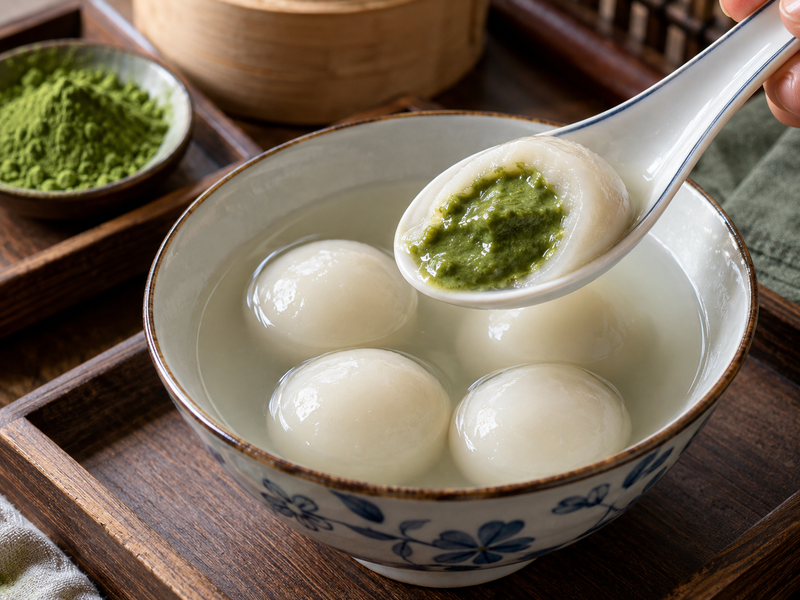
Choose between a flowing and a firm center
A soft matcha filling can create an appealing cut-open sample, but the kitchen must also be able to portion and enclose it. Decide whether the menu needs a flowing center or a filling that stays mostly in place when bitten. That decision affects preparation, service and the photograph customers will judge.
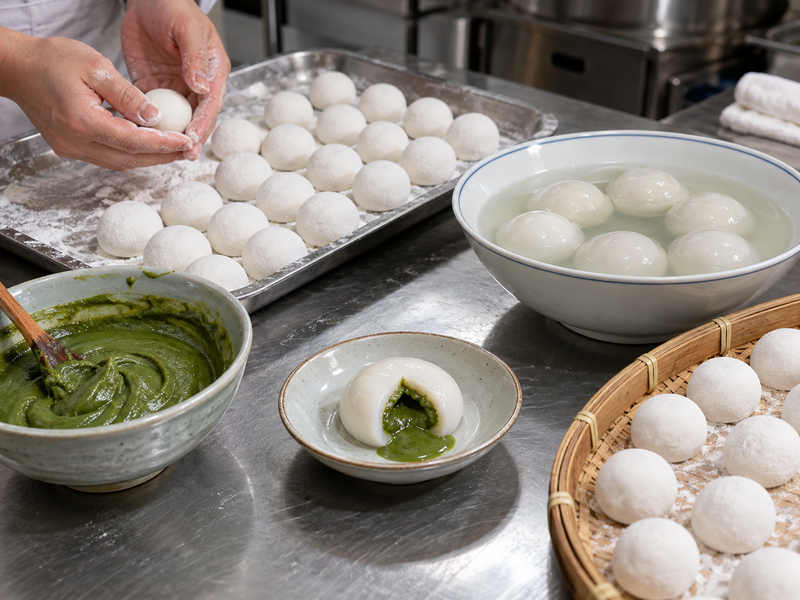
Sift & Simmer’s oozy matcha tang yuan demonstrate a matcha filling enclosed in a plain glutinous-rice wrapper. The recipe firms the filling before wrapping. It offers a useful product direction, while its cooking and storage times belong to that author’s specific preparation.
For an initial cafe trial, keep the wrapper plain so the filling’s tea flavor is easier to evaluate. Matcha in both the wrapper and center can be tested later. Choose the intended bowl, spoon and number of dumplings before fixing individual size.
A very large dumpling may look impressive but be awkward to eat from a shallow spoon. Test the serving vessel with an actual cooked sample, including the surrounding syrup or soup.
2. Which rice flour should purchasing specify?
Read the ingredient identity rather than the bag color
Glutinous rice flour and ordinary rice flour should not be treated as interchangeable stock items. Bob’s Red Mill identifies sweet white rice flour as flour milled from glutinous rice. The word sweet does not mean the flour is sweetened with sugar.
Use the flour named in your selected wrapper recipe and retain its product code. Record whether it is a dry powder or another supplied format. A familiar brand name does not replace a check of the actual ingredient.
| Purchase field | What to verify | Kitchen use |
|---|---|---|
| Rice flour | Glutinous-rice identity | Correct wrapper base |
| Matcha | Unsweetened ingredient list | Independent tea adjustment |
| Filling base | Complete composition | Texture and claims |
| Serving syrup | Recipe or product code | Consistent finished bowl |
Ask the flour supplier for preparation guidance when changing products. Run a small wrapper test before committing the replacement to a filled batch.
The finished dessert’s gluten-free, dairy-free or vegan status depends on all components and production controls. A suitable rice flour alone cannot establish those claims, especially when the center or serving liquid includes other ingredients.
3. How should the matcha filling be tested?
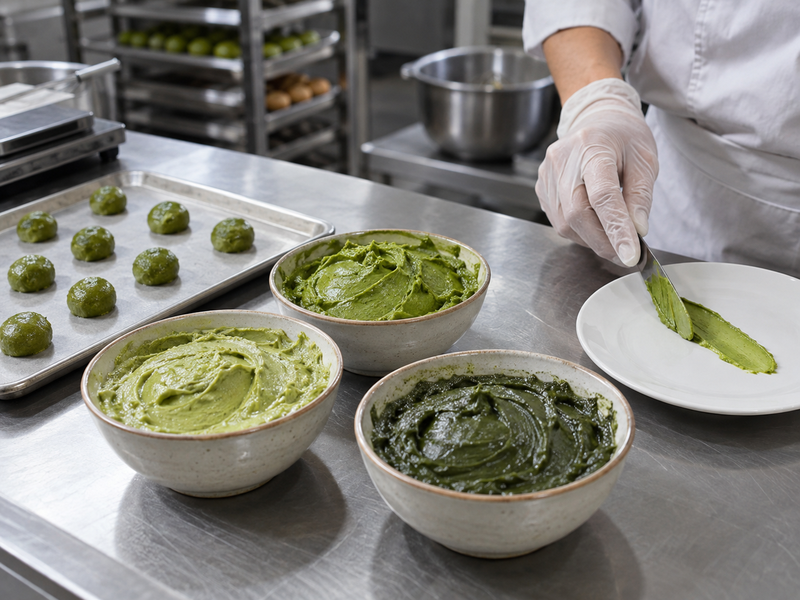
Compare it after cooking inside a wrapper
Begin with a filling base your kitchen already understands, such as a prepared sweet bean paste or an established milk-based filling. Choose one for the first trial. These bases create different textures and ingredient declarations, so they should not be swapped during the same comparison.
As an unvalidated screening plan, mix 0.5, 1 and 1.5 grams of matcha into separate 100-gram portions of the chosen filling. These are proposed tea levels. Assess their handling before wrapping, then taste them after the normal cooking trial.
Disperse the powder thoroughly without adding unrecorded water. Spread a little filling across a white plate to check for concentrated tea specks. Keep the filling’s preparation and holding conditions within your approved food-safety procedure.
Make equal-size centers and mark the tray positions for each trial. A larger center can taste stronger simply because more filling reaches the spoon. Matcha selection should follow a comparison at equal filling weight.
The site’s matcha spread article can help structure questions about a creamy tea filling. It does not replace a tang-yuan trial, because a spread also has to survive enclosure and cooking in this application.
4. How can a wrapper trial reveal hydration problems?
Record the water addition and dough behavior
Use a complete wrapper method appropriate to the flour product. If it calls for hot water, follow that method with suitable utensils and handling precautions. Do not borrow an unexplained water ratio from a different flour or dough style.
Weigh the water actually added and reserve any permitted adjustment separately. Record how the dough behaves during flattening and closing: does its edge crack, stick to the hand or resist joining? Those observations give the next operator more useful information than a direction to add enough water.
| Dough behavior | Check before adjustment | Record |
|---|---|---|
| Cracked edges | Flour identity and hydration | Water actually added |
| Sticky surface | Weighing and working conditions | Mixing sequence |
| Difficult closure | Wrapper thickness and filling size | Portion pair |
| Dry surface skin | Exposure during assembly | Covered working quantity |
Keep unused dough covered under the conditions specified by your method while working with a manageable portion. A dough that changes across the wrapping session can make early and late dumplings behave differently.
Any corrective addition belongs on the trial sheet. Repeatedly dusting flour onto sticky pieces without recording it means the final dough no longer matches the listed recipe.
5. How should the filling and wrapper be portioned?
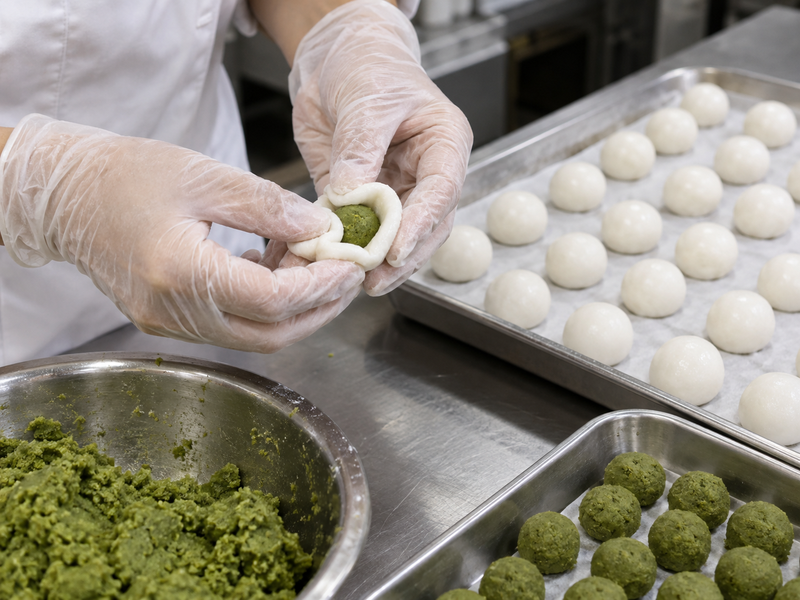
Make the seam a visible checkpoint
Set up separate weighed portions of wrapper dough and filling before wrapping the first pilot. As a proposed size exercise, compare an 18-gram wrapper around a 6-gram center with the same wrapper around an 8-gram center. These are development dimensions, not a validated formulation.
Flatten the dough with an even center and workable edges. Place the filling centrally, bring the wrapper around it and close the seam without trapping filling in the join. Inspect the surface from more than one angle before rolling it gently into shape.
If the filling becomes difficult to handle, stop and review its condition using your approved procedure. Pressing a spreading filling into a thin wrapper can contaminate the seam and make later failures harder to interpret.
Keep failed raw examples on a separate assessment tray during development. Compare an overfilled piece with one that closed cleanly. Staff can then see the difference between a cosmetic surface mark and an incomplete closure.
Do not hide every seam under additional dough. That creates a thick patch which may cook differently from the rest of the wrapper and alters the portion weight.
6. What should a cooking trial measure?
Separate floating from a release decision
Use your chosen base method as the initial cooking procedure and validate it for the selected dumpling size, filling and starting condition. Floating is an observation, not a universal proof that every center has reached the required cooking condition.
Start with a small, recorded load in the actual service pot. Note the water quantity, how the boil or simmer recovers, and whether dumplings contact the base or each other. Use the handling technique required by the recipe without aggressive movement that damages the wrappers.
| Trial variable | Observation to keep | Why it matters |
|---|---|---|
| Starting condition | Fresh or frozen | Different cooking behavior |
| Load size | Count and total weight | Pot recovery |
| Wrapper | Surface and cross-section | Even cooking |
| Filling | Leakage and finished texture | Product acceptance |
Cut assessment samples and inspect the wrapper thickness and center. Conduct any required temperature or process checks under the kitchen’s approved validation plan.
Record leaks by raw assembly batch. A cooking failure can originate at the seam, so increasing cooking time or changing water movement may not solve it. Keep wrapping and cooking records linked rather than treating them as unrelated tasks.
7. How should syrup or soup support the tea flavor?
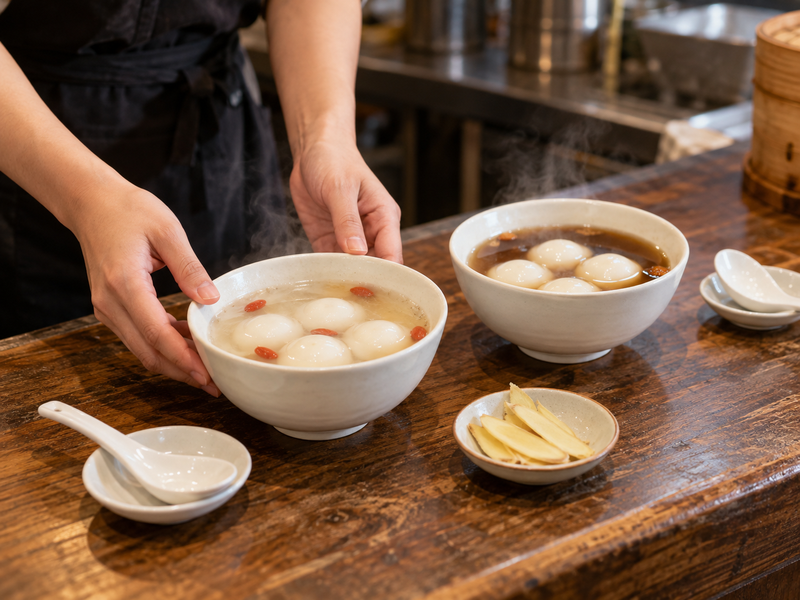
Taste the complete spoonful
The serving liquid can change how customers perceive the filling. Begin with a restrained sweet syrup or the soup already used in your dessert kitchen, then compare it with a plain cooked dumpling. Record whether the tea remains recognizable.
If you want ginger, sesame or another strong flavor, test it in a separate bowl rather than changing the entire service pot. Keep the dumpling count and liquid amount constant across the comparison. A deeper bowl with more syrup can make the same dumplings seem less tea-forward.
Choose a bowl that supports careful serving. Staff need room to place dumplings without tearing them against the rim, and customers need a spoon that holds a comfortable bite. Avoid a garnish that hides the dumplings completely.
Inspect the bowl after the expected service delay, within your approved handling conditions. Note sticking, wrapper firmness, leakage and how the liquid looks. A beautiful freshly plated sample is only one point in the service process; the product also has to reach the table in that condition.
8. What changes when the kitchen considers freezing?
Test the actual frozen product separately
Freezing can be a production option, but a fresh-dough trial does not establish a frozen specification. Evaluate the intended filling, wrapper, tray arrangement, packaging and cooking method as a separate version.
Keep portions from touching during the initial freezing arrangement if that is part of the selected process. Once packaged, inspect whether pieces adhere, crack or lose shape during normal handling. Do not copy a home recipe’s frozen-storage duration onto a commercial pack.
| Frozen-product check | What to examine | Decision required |
|---|---|---|
| Surface condition | Cracks or exposed filling | Wrapper suitability |
| Pack handling | Pieces sticking together | Portion separation |
| Cooking outcome | Leaks and center texture | Frozen cooking method |
| Finished bowl | Shape and bite | Service acceptance |
Follow a validated food-safety and storage plan for the product. Sensory comparisons can show quality changes but cannot establish safety on their own.
For an initial cafe launch, freshly prepared service may be easier to define than a retail frozen line. Choose the channel you can validate and operate consistently. A second channel can be developed after the first product has a reliable specification.
9. How can the kitchen calculate useful yield figures?
Count wrapped pieces, intact cooks and served bowls
Track how many centers are prepared, how many dumplings close successfully and how many remain intact after cooking. Count the bowls that meet the intended presentation. Each stage identifies a different possible source of loss.
For a hypothetical example, 60 wrapped dumplings with six cooking failures leave 54 intact pieces. At three dumplings per bowl, that allows 18 complete bowls before other losses. These figures illustrate the calculation rather than a target failure rate.
Weigh filling residue and unused wrapper dough during the pilot. A formula can appear economical when only finished dumplings are weighed, while preparation losses remain invisible. Labor should include portioning, wrapping and clearing failed pieces from the cooking station.
When discussing matcha with Matcha Village, provide the filling type and serving liquid. A Chinese matcha suitable for a sweet bean center may need a different sensory assessment in a dairy filling. Request identifiable samples and retain the cooking notes for the selected version rather than ordering from the color of dry powder alone.
10. What must a service handover explain?
Link assembly to the final bowl
The working instructions should show a wrapper portion, a centered filling, a closed raw dumpling and a cooked cross-section. Include the serving bowl and spoon. Those images help a second team connect raw preparation with the product the customer receives.
Name the flour and filling products, rather than allowing generic substitutions. Keep fresh and frozen instructions separate if both versions are eventually approved. A single ambiguous cooking line invites mistakes during service.
| Handover item | Used at | Evidence |
|---|---|---|
| Wrapper and center weights | Portioning bench | Weighed setup pair |
| Closure example | Wrapping station | Approved raw sample |
| Cooking procedure | Service pot | Validated working instruction |
| Bowl arrangement | Pass | Finished portion photograph |
Review the menu description with the actual filling. If the center is creamy but does not flow reliably under the approved service conditions, describe it accurately instead of promising a dramatic liquid center.
Ask a second operator to prepare and cook one small service batch from the written instructions, then compare seam integrity, center texture and the completed bowl before accepting a larger production schedule.
FAQ
Q1: Is ordinary rice flour an equal substitute?
No. Use the rice flour specified by the selected wrapper method and trial any supplier or flour-type change before production.
Q2: Must the filling be frozen before wrapping?
That depends on its formulation and handling method. A firm paste may behave differently from a soft creamy center.
Q3: Does floating mean the dumpling is fully cooked?
Do not use floating as a universal release test. Validate the procedure for the chosen size, filling, load and starting condition.
Q4: Can the same instructions cover fresh and frozen dumplings?
Only if both have been separately evaluated and the instructions clearly describe their approved cooking conditions.
Q5: Can every matcha tang yuan be described as vegan?
No. Check the filling, serving liquid and all other ingredients. A plain rice wrapper does not establish the claim for the bowl.