
A matcha swiss roll is a thin tea-flavored sponge wrapped around a filling and cut into slices. For a bakery buyer, the challenge is repeatability: the sheet must bend without cracking, the tea must remain recognizable after baking, and the filling must hold its shape through distribution. Define the target slice, test powder in the actual batter, and run a controlled line trial before choosing a supplier. These are product-development checks, not a copied home recipe; an ingredient’s value becomes clear only in the finished roll under the bakery’s own process.
Contents: 1 · 2 · 3 · 4 · 5 · 6 · 7 · 8 · 9 · 10
1. What should the finished roll deliver?
Start with a slice standard
A product brief should describe the customer experience before listing ingredients. Decide whether tea leads the flavor or simply colors a cream-filled sponge. Set slice mass, diameter, spiral appearance, crumb tenderness, filling thickness, and acceptable breakage. A central commissary and a café that rolls cakes by hand may need different formats even when both use the same powder. Record the sale temperature and time between production and eating. A fresh sheet on a cooling rack does not represent a slice that has spent a day in a chilled case.
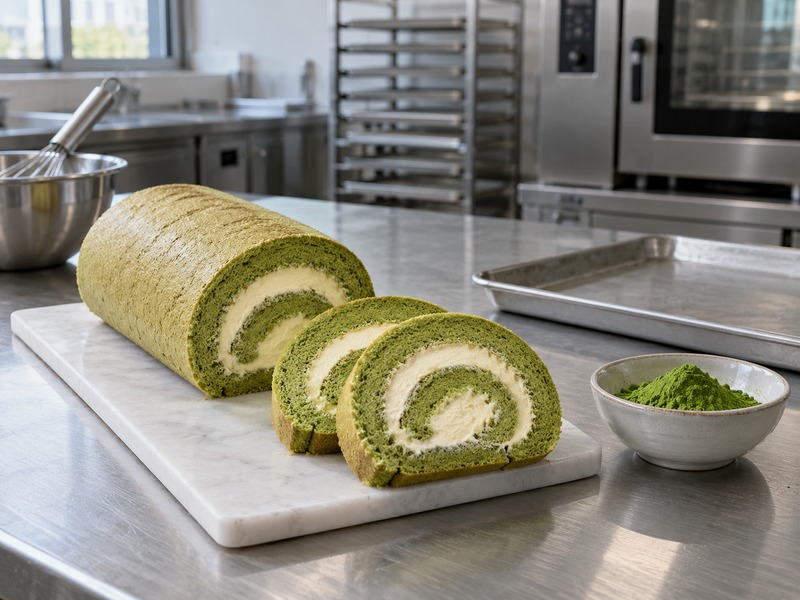
Make defects visible. Photographs of an approved cross-section can help staff recognize an uneven spiral, cream void, surface tear, or dry edge. Pair them with practical measurements such as portion mass and slice yield. Train tasters to assess tea presence, sweetness, crumb moisture, and aftertaste separately. A beautiful green surface does not prove the roll tastes like matcha.
| Target | Observable check | Who needs it |
|---|---|---|
| Flexible sponge | No split at normal roll radius | Production |
| Clear tea note | Taste in finished slice | R&D and buyer |
| Neat cross-section | Stable filling and even spiral | Retail and quality |
2. Which matcha suits the sponge and filling?
Test tea after baking
Matcha color and aroma can change in a baked sponge, while a cold cream filling exposes different flavor notes. A powder that is attractive in water may be too delicate after egg, flour, sugar, and heat. Screen current supplier lots in a fixed sheet formula. Keep bake profile, batter deposit, and cooling procedure stable so the team can attribute differences to the powder. Compare the finished cake under normal display light, then taste at the sale temperature.
Separate two uses. If the filling also contains matcha, it may need a different powder dose or even a different lot from the sponge. Test each component alone and together. A strong tea cream can mask a weak sponge, creating unnecessary ingredient cost. Document the powder’s lot code, ingredient declaration, pack format, and change-notice terms before the preferred sample is approved.
| Use | Main stress | Approval question |
|---|---|---|
| Sponge | Baking heat | Is tea still perceptible? |
| Cream | Chilled fat and sugar | Does tea stay balanced? |
| Both | Combined bite | Is the flavor coherent? |
Grade names can shortlist samples, but they do not predict performance in this product. Use the application result and a written specification to make the purchase decision.
3. How should the sponge formula be screened?
Keep the sheet geometry fixed
A roll cake depends on a thin, even sponge that can bend. The bakery should define tray dimensions, batter deposit mass, target thickness, and mixing method before adjusting matcha. Powder adds dry solids and can change color distribution. If the developer changes flour, sugar, egg aeration, and tea dose together, a successful sheet will be hard to repeat. Begin with a working plain sponge and compare tea levels while holding the other variables steady.
Record the batter path. Note mixing time, batter temperature, specific gravity if the line uses it, spread uniformity, oven profile, and cooling interval. A hypothetical test might compare equal tea masses per kilogram of finished batter; those values are trial starting points, not a published production formula. Watch for streaks where powder was not dispersed. A preblend with a portion of dry ingredients or a validated slurry can be compared, but select a method that fits the plant equipment.
Taste and color should be assessed only after the sheet is filled and chilled, since the assembled roll changes how tea is perceived. Retain a plain control sheet to show whether a texture problem came from the matcha addition or the underlying sponge process.
4. What causes cracking during rolling?
Diagnose structure and timing
Cracks can come from a dry or overbaked sheet, uneven thickness, rough handling, or a roll radius tighter than the sponge can tolerate. A chilled sheet may behave differently from one rolled while still warm. The process team should compare bend performance at defined times after baking and record which surface becomes the outside of the roll. Avoid copying another bakery’s temperature and timing into a different oven and tray system.
Inspect the edge. The first visible split often appears where an edge dried faster or where the sheet stuck to its liner. Check oven uniformity, release method, and cooling airflow before reformulating everything. Measure the share of sheets that crack in a pilot rather than judging one carefully handled cake. Have regular operators perform the roll using normal tools and pace.
| Symptom | Likely check | Controlled trial |
|---|---|---|
| Edge fissures | Edge drying and trim | Compare protected cooling |
| Full-width split | Moisture and roll radius | Hold formula, vary timing |
| Surface tearing | Liner release | Compare approved liners |
Cracking is a line yield issue as well as a visual defect. Track salvage, rework, and discarded sheets separately when costing candidates.
5. Which filling system fits the sales channel?
Stability depends on distribution
Fresh whipped cream, stabilized dairy filling, and non-dairy systems can give different flavor, handling, and label outcomes. A same-day café roll can tolerate a different hold profile from a packaged slice sold through several refrigerated steps. Specify filling water activity or other relevant quality measures through the plant’s technical team, along with allergen and ingredient declarations. Do not infer shelf life from one tidy trial slice.
Watch the interface. Filling can migrate into the sponge, soften the crumb, or squeeze out during slicing. Test the assembled roll after the actual chill and transport sequence. Record filling deposit mass and thickness, leakage, taste, and cross-section appearance. If matcha enters the cream, compare its dispersion and color after holding; dry powder added late can create specks.
| Filling path | Buyer concern | Trial check |
|---|---|---|
| Fresh dairy cream | Short handling window | Chilled hold and slicing |
| Stabilized filling | Texture and declaration | Taste after intended life |
| Non-dairy system | Flavor and mouthfeel | Full slice comparison |
The chosen filling should be costed with the sponge. A less expensive cream that creates more broken slices may raise the cost per saleable unit.
6. How can a pilot control color and flavor?
Compare the edible product
A vivid dry powder can become duller in batter or after baking. Cream color, lighting, and cut surface all affect what a shopper sees. Set a visual target using finished slices photographed under one repeatable light. Record sponge color after baking, after filling, and near the end of the intended sale window. A color score is useful only if the team can apply the same method to later batches.
Keep flavor separate. Panelists can score tea presence, bitterness, sweetness, and cream balance without seeing supplier names. Compare a fixed-dose set to understand differences among powders, then adjust dose to the same tea target. A lower-priced powder that needs a larger dose might not save money. The target-matched trial also shows whether higher tea solids change sponge texture.
| Trial checkpoint | Color record | Flavor record |
|---|---|---|
| Baked sheet | Surface and cut face | Sponge alone |
| Assembled roll | Spiral contrast | Combined bite |
| Sale window | Display appearance | Slice at sale temperature |
Use an approved physical sample or calibrated image as a receiving reference, while recognizing that a photo cannot establish food safety or origin.
7. What should the line trial measure?
Move beyond a pastry-chef prototype
A line trial should repeat the complete sequence: ingredient weighing, mixing, depositing, baking, cooling, filling, rolling, chilling, slicing, and packing. Note where manual intervention is needed and whether the process fits the planned shift. A formula that works only when one developer spreads each tray by hand may not transfer to a standard production crew. Compare several consecutive sheets and operators, not a single showcase roll.
Measure the losses. Record batter left in the mixer, sheet trim, cracked rolls, cream leakage, uneven end slices, and packaging damage. Tie each defect to a stage and lot. Check food contact and cleaning needs when switching between plain and matcha products. The quality team should set the relevant safety checks for eggs, dairy, and any other allergens in the actual formula.
A line trial should end with written settings and decision points. If a new matcha lot changes sponge color or powder flow, the plant needs a controlled reapproval route. Supplier handling advice can inform the trial, but the approved production procedure belongs to the bakery’s validated process.
8. How should packaging and cold chain be tested?
Protect the cut surface
A roll slice exposes sponge and filling to air and contact with packaging. Choose a pack that protects the spiral without smearing cream, crushing the crumb, or trapping visible moisture. Test the package through packing, stacking, transport, retail display, and opening. For a chilled product, the technical team must define and validate the required temperature and shelf-life controls; a bench tasting cannot establish them.
Use the real route. Run vibration and handling checks that resemble the distribution path, then inspect the slice at retail and after a customer opens it. A paper collar might improve presentation but add labor. A tight tray can reduce movement yet damage the outer sponge. Record the tradeoff rather than choosing from catalog photos.
| Packaging choice | Risk to check | Evidence |
|---|---|---|
| Individual tray | Compression | Transit sample |
| Film or lid | Condensation | Chilled hold |
| Multi-pack | Slice movement | Stack and delivery trial |
The label should reflect actual ingredients, allergens, storage instructions, and any origin claim. Have regulatory staff approve final artwork against the approved supplier and formula files.
9. How do yield and cost change the decision?
Price the saleable slice
Matcha price per kilogram is only one cost input. Calculate the approved tea dose per sheet, then divide total ingredient, labor, packaging, and distribution cost by accepted slices. Include trim, cracked sheets, filling squeeze-out, and unsaleable end pieces. A more expensive powder may make sense if it achieves the tea target at a lower dose or maintains color through the sales window. Verify that benefit with data from the same line and formula.
Keep assumptions visible. In a hypothetical comparison, two matcha lots are tested in one tray format at the dose needed for the same flavor target. The denominator is accepted slices from that tray, not the theoretical number of cuts. Freight and exchange rate assumptions should be listed separately from measured production losses.
| Cost driver | Measurement | Decision use |
|---|---|---|
| Tea dose | Grams per approved sheet | Supplier comparison |
| Saleable yield | Accepted slices per sheet | True unit cost |
| Filling loss | Weighed waste | Process correction |
| Pack cost | Quote and handling time | Channel margin |
Finance can model price points once R&D and production agree on a repeatable unit. Doing that earlier risks costing a slice the plant cannot reliably make.
10. When is the roll ready for launch?
Sign off one product, not separate prototypes
The launch file should contain the accepted ingredient lots, matcha and filling specifications, mixing and bake settings, slice standard, packaging, safety controls, cost model, and supplier change rules. R&D approves sensory fit, production confirms repeatable yield, quality clears the process and label, and procurement confirms supply terms. All teams should refer to the same finished-product benchmark.
Run a final handoff. Give the written method to staff who did not develop it and inspect several normal production runs. Record customer-facing defects by name: cracked sponge, muted tea, wet crumb, cream void, or damaged slice. State who can authorize a replacement matcha lot or filling change before orders begin.
The next action is a small controlled bake using two traceable matcha lots and one fixed sheet formula, followed by a line trial with measured saleable yield. For background on tea processing, see the Japanese agriculture ministry’s matcha overview.
Reference: Matcha Swiss Roll (Roll Cake) 抹茶ロールケーキ. This home recipe supplied topic context; the bakery evaluation plan above is original.
FAQ
Q1: Should the sponge and filling use the same matcha?
Not automatically. Test each component and the combined slice at the intended sale temperature.
Q2: Why does a matcha swiss roll crack?
Sheet dryness, thickness, rolling radius, release, and timing can all matter. Change one factor per trial.
Q3: Which sample best predicts retail quality?
A packaged slice tested after the normal chill and distribution route is more useful than a fresh sheet.
Q4: How should suppliers be compared?
Use traceable lots, a fixed process, finished-slice sensory scores, and cost per accepted slice.
Q5: Can a café prototype set shelf life?
No. Qualified technical staff must validate the formula, packaging, and storage conditions.