
A matcha tree is a casual way to refer to the tea plant behind matcha, but commercial tea is usually managed as low shrubs, not a separate tree species that produces matcha powder. The plant is Camellia sinensis; cultivation and processing determine the ingredient a buyer receives. For a brand or manufacturer, the useful question is how the leaf was grown, handled, made into tea material, ground, and documented by lot. The Japanese agriculture ministry describes the tencha-to-matcha route as a process, which is firmer ground for a sourcing brief than a romantic farm image.
Contents: 1 · 2 · 3 · 4 · 5 · 6 · 7 · 8 · 9 · 10
1. Is there a special tree that grows matcha?
One tea plant, many product paths
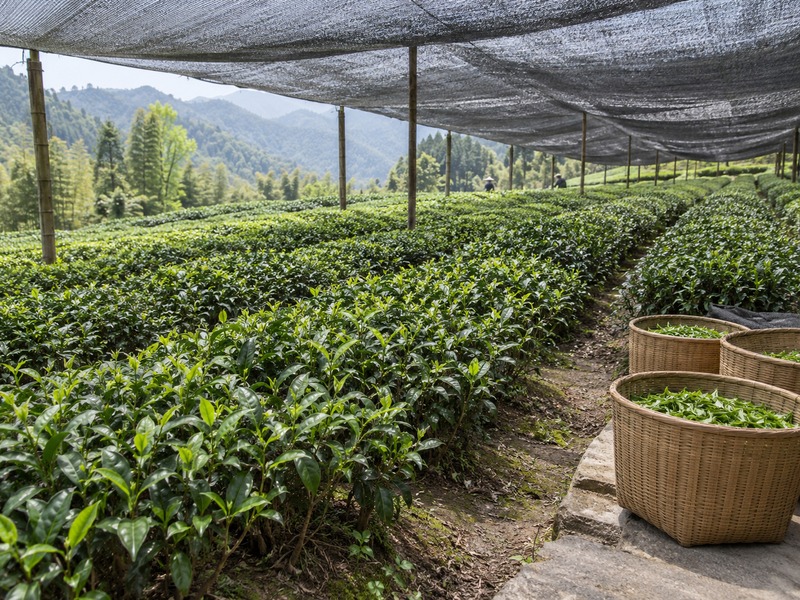
Matcha does not grow as powder or as a unique fruit on a ‘matcha tree’. Tea leaves grow on Camellia sinensis plants; producers manage those plants and process selected leaves into different teas. In commercial fields, pruning keeps the crop accessible and encourages new shoots, so the view is usually rows of bushes. The same botanical species can support multiple tea styles depending on cultivar, cultivation, harvest, and processing. A buyer should not infer a finished powder’s quality from a species name alone.
Correct the brief early. A menu or product page can say matcha comes from tea plants without claiming a special tree. Internally, ask the supplier which leaf material was used and how it reached powder form. If a farm image appears in marketing, verify that it represents the actual supply chain or label it as illustrative. A visually appealing plantation photo cannot prove the lot in the warehouse came from that location.
| Term in a brief | Better question | Useful evidence |
|---|---|---|
| Matcha tree | Which tea plants supplied leaf? | Producer declaration |
| Tea origin | Where was leaf grown? | Lot traceability |
| Matcha powder | Which processing route? | Process and ingredient record |
2. What does the tea plant contribute?
Leaf material starts the process
Cultivar, leaf maturity, growing conditions, and harvest selection shape the raw material available for processing. They can affect color, aroma, and flavor, but their impact must be checked in the finished powder rather than asserted from a catalogue description. Ask whether the supplier offers a single cultivar or a blend and whether that composition can change. A blend may be a sensible route for continuity, provided its controls and origin claims are clear.
Keep the lot specific. A statement about the tea plant on an educational page may be accurate yet irrelevant to the powder being quoted. Ask for the current harvest or production lot, sample identity, and a specification linked to it. The same field can produce material with different characteristics over time. A buyer needs the intended use, such as an unsweetened cup or a milk latte, to judge whether a leaf profile is suitable.
When comparing suppliers, use controlled sensory trials. Prepare equal doses under the same conditions, then test each powder in the actual product. A green leaf photo or a claim about tender shoots is not a substitute for application performance, safety documents, or continuity planning.
3. How does shade management change the brief?
Ask what happened, not what the image suggests
Shading is associated with the traditional tencha route described by Japan’s agriculture ministry. It can be managed in different ways and at different stages. A photograph of netting over a field does not show exactly how a given leaf lot was cultivated. Request a supplier’s written cultivation description if shade practice matters to the product claim or sensory target. Separate that request from a blanket assumption that more shade always gives a better ingredient.
Tie practice to outcome. Prepare a controlled tasting of the offered powder and record its color, aroma, astringency, and body. Then test the finished product. If the powder will be baked into a sweet filling, the relevance of a subtle neat-water difference may be small. If it will be served plain, that difference may be central. The use case determines how much detail the buyer needs.
| Claim or question | What to request | What to test |
|---|---|---|
| Shaded leaf | Lot-linked practice statement | Sensory profile |
| Green color | Defined color method | Finished-product appearance |
| Consistent supply | Harvest and blending plan | Later-lot comparison |
Do not turn a supplier’s cultivation note into an unqualified consumer claim before the regulatory team reviews the exact wording.
4. Which harvest details should a buyer request?
Define the relevant window
Harvest timing and leaf selection can vary across regions and suppliers. Rather than buying the phrase ‘first harvest’ without context, ask what period and material it describes, how the batch is identified, and whether future orders will come from the same inventory or from later production. A first-harvest label is useful only when it is traceable and when the resulting powder meets the product standard.
Plan for continuity. A brand may need the same flavor across many months while leaf is harvested seasonally. Ask how the supplier stores raw material, blends lots if applicable, and communicates changes. Test a backup lot before the initial supply is exhausted. A limited single-lot launch and a national year-round product call for different purchasing plans.
| Harvest field | Buyer use | Follow-up |
|---|---|---|
| Date or season | Context for sample | Link to lot code |
| Leaf selection | Expected profile | Confirm in sensory test |
| Available inventory | Supply plan | Reserve or qualify alternative |
Avoid inventing fixed dates or quality rankings for a region. The supplier should document the lot on offer, and the buyer should approve it by evidence in the intended application.
5. What happens between leaf and powder?
The route matters more than the shorthand
After harvest, leaf handling, steaming, drying, sorting, grinding, and packing shape the ingredient. In the traditional route described by the Japanese agriculture ministry, shaded leaves become tencha before grinding. Ask a supplier which stages it controls and which are performed by partners. This helps quality staff judge traceability and gives procurement a clear change-notice path.
Inspect the powder behavior. Grinding affects particle characteristics, but a mill label alone does not tell you how the powder will disperse in milk or flow in a dry mix. Test the offered lot with the plant’s actual mixing equipment. Record clumps, sediment, color, and flavor over the relevant hold time. Review pack barrier and storage instructions, because handling after grinding can affect quality before the ingredient reaches production.
The term ‘matcha tree’ skips every step that makes the purchased product different from fresh leaf. A useful supplier conversation starts with a batch flow diagram or plain process narrative, then checks that account against sample labels and shipment records. Do not treat a broad educational explanation as proof of an individual lot.
6. How can origin and variety be traced?
Build a chain of locations
Leaf growing area, tencha processing site, grinding site, blending site, and packing site may differ. Ask for these locations separately when origin matters to the brand or import file. A document showing where a carton shipped from cannot prove where the tea plant grew. If a powder includes several leaf origins, record the blend and its change controls. A cultivar statement also needs a link to the lot rather than a generic list of varieties a supplier can access.
Keep claims and tests separate. Origin evidence supports label wording; a certificate of analysis supports specified measured properties. One does not replace the other. Procurement can gather the files, while quality and regulatory reviewers decide which statements can appear on pack in the destination market.
| Evidence | Question answered | Limitation |
|---|---|---|
| Leaf declaration | Where plants grew | Depends on supplier controls |
| Process record | Where material was transformed | May omit growing origin |
| Certificate of analysis | What was measured | Does not prove geography alone |
When a source changes, the buyer may need new label approval and a sensory trial. Put both triggers in the supply agreement before an emergency substitution occurs.
7. What can a farm photo and sample prove?
Use each for its proper purpose
A farm photo can show the style of cultivation and make an educational page clearer. It is weak evidence for a specific commercial lot unless the supplier identifies the site and links the image to that supply. A sample can demonstrate appearance, aroma, taste, and process behavior, but it cannot by itself prove origin, safety, or future continuity. Treat images and samples as parts of a larger evidence file.
Test a current sample. Ask for a lot code and sample date, then compare the powder with the actual product matrix. For a café, that means the water, milk, sweetener, and service hold it uses. For a food manufacturer, it means a pilot process with the intended heat and packaging. Keep a retained sample if the material is approved. Later deliveries can be checked against that benchmark.
Do not publish a plantation picture as though it depicts the producer if the image is an illustrative asset. In marketing, truthful captions are more durable than vague promises about pristine fields. In quality, records and test results remain the deciding evidence.
8. How should suppliers be qualified?
Ask for the documents the product needs
A qualification file should include legal supplier identity, ingredient declaration, traceability approach, pack and storage details, food-safety documentation relevant to the market, and the proposed lot specification. Ask which tests are routine and which require an extra order. If the finished product uses an organic or geographic claim, verify certificate scope and lot linkage. A glossy farm story cannot replace a current report or a working complaint process.
Follow a sample into production. The supplier’s sample code should appear in R&D notes, the purchase order, the certificate, and the receiving record. Ask how raw-material or processing changes are communicated. A change to cultivation, blend, grinding, or packaging could affect both claims and performance.
| Qualification item | Buyer decision | Owner |
|---|---|---|
| Traceability map | Can the lot be followed? | Quality |
| Application sample | Does it work in product? | R&D |
| Capacity and lead time | Can supply meet plan? | Procurement |
| Claim evidence | Can copy be used? | Regulatory |
Approve a supplier for a defined material and use. A general claim that it sells matcha is too broad to release every future product code.
9. What does farm-level variability cost?
Price the finished use
Weather, harvest, and source choices can contribute to variation, while processing and storage add other variables. The buyer does not need to predict every agronomic effect. It needs a specification and a plan for checking incoming lots. Cost a candidate powder using its accepted dose per finished unit, landed price, handling loss, testing, and any waste caused by inconsistency. A lower quote can become expensive if a later lot requires a new formula or label.
Model alternatives before shortage. A hypothetical comparison could test two traceable powder lots per finished 250 mL drink at equal dose, then at doses that meet the same tea target. The serving size is a trial denominator, not a universal formula. Repeat the approach in baked or dry-mix products with the relevant unit. Separate measured pilot losses from financial estimates.
| Cost input | Measurement | Risk addressed |
|---|---|---|
| Approved dose | Pilot grams per unit | True ingredient spend |
| Lot variability | Repeat application check | Reformulation cost |
| Inventory | Available volume and lead time | Supply interruption |
| Claim change | Artwork and approval work | Label rework |
A backup lot is valuable only if the team has already tested and approved it.
10. How should a brand explain the plant?
Teach without inventing a special species
A customer-facing explanation can say matcha begins with tea leaves from Camellia sinensis, which producers cultivate and process into fine powder. If the brand uses the phrase ‘matcha tree’ because shoppers search for it, answer the question directly and then use ‘tea plant’ in the body. Describe shading, tencha, and grinding only where the actual supply supports those details. Do not suggest every powder follows an identical route or comes from one origin.
Keep a short proof file. Marketing should be able to trace every farm, region, cultivar, and process statement to a current supplier record. Quality should know which source changes require new sensory or label approval. The same discipline helps customer support answer questions without improvising.
The next step is to ask two suppliers for lot-linked cultivation and process descriptions, then compare current samples in the intended product. The Japanese agriculture ministry’s tea overview provides further process background.
Reference: The Matcha Plant: How Matcha is Made (Quick Guide). This source gives topic context; the buyer framework above is original.
FAQ
Q1: Is a matcha tree a separate species?
No. Matcha is made from tea-plant leaves, commonly managed as shrubs in commercial fields.
Q2: Does every tea plant produce matcha?
The plant can supply tea material, but cultivation and processing determine the powder offered as matcha.
Q3: Can a shaded-field photo prove origin?
No. Request lot-linked traceability records for the actual powder.
Q4: Which farm details matter most to a buyer?
Ask about leaf origin, cultivation practice, harvest identification, supply continuity, and changes.
Q5: How should a brand describe its ingredient?
Use tea-plant language and make only process and origin claims supported by the approved lot file.