
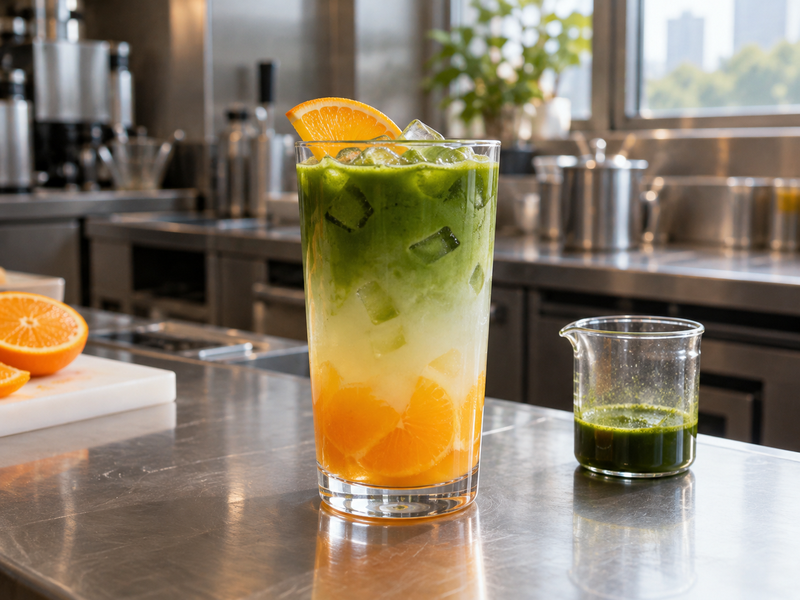
A matcha sunrise is a layered drink that pairs green matcha with an orange or golden lower layer, often citrus. The visual sells the first cup; taste and service speed decide whether it stays on the menu. A good photograph can hide a drink that turns muddy before pickup, separates into a sour bottom and bitter top, or takes too long for staff to build. This guide gives café operators, beverage developers, and ingredient buyers a practical way to design the drink: set the flavor brief, choose a tea, control the layers, test real service conditions, and cost each serving. From a supplier’s viewpoint, the matcha must be judged in the finished drink rather than by color in a dry pouch.
1. What defines a matcha sunrise drink?
The common visual idea is green tea above an orange-toned base, with a gradual transition that resembles a sunrise. Recipes vary: the lower layer might be orange juice, a citrus syrup diluted with water, or a different fruit preparation. There is no single standardized café formula behind the name. A brand should specify ingredients and flavor rather than assuming customers know what “sunrise” contains. If the menu says orange juice, use the named ingredient and make the quantity clear in the internal recipe.
Decide whether the drink is tea-led, fruit-led, or a balanced refresher. That choice changes both powder dose and bottom-layer sweetness. A tea-led version needs matcha that remains recognizable after the layers mix; a fruit-led version may use a lighter tea dose to avoid a bitter finish. Test the complete stirred drink as well as the initial layered view. Most customers will eventually mix or sip through both layers. The final flavor must work after the visual effect disappears.
| Menu direction | Customer expectation | Development focus |
|---|---|---|
| Tea-led | Clear matcha character | Bitterness with citrus |
| Fruit-led | Bright orange profile | Tea still detectable |
| Balanced refresher | Even flavor after stirring | Layering and dilution |
2. How should the flavor brief be written?
Describe the desired first sip and the mixed cup in ordinary sensory words. “Fresh orange with a clean tea finish” gives a test panel something to judge; “premium refreshing experience” does not. Set a sweetness level relative to the brand’s existing drinks, a serving size, a target selling price, and whether dairy is allowed. Many sunrise recipes are water and fruit based, but a creamy version could suit a different menu. Keep those concepts separate during development so a sensory panel can compare like with like.
Use a small test matrix. Hold matcha dose constant while changing the orange base, then hold the preferred base constant while changing matcha. Include an unsweetened control if sweetness is being added. Taste blind at the intended temperature and after normal ice melt. Ask panelists whether the drink tastes coherent when stirred. An attractive two-tone glass that becomes harsh after stirring is unfinished. Write the selected formula as weights and volumes, then make it again on another day with a new ingredient lot.
3. Which matcha works best with a citrus base?
Acidity can make astringency and bitterness more noticeable, so a matcha that tastes gentle in milk may behave differently over citrus. Request at least two candidate grades and test each in the exact orange base. Look for a recognizable tea aroma and a finish that does not become dry or metallic. Matcha color matters for the layered visual, but an unusually vivid powder is not automatically a better choice. Compare the cup after the planned pickup interval, under the lighting customers will see.
Ask the supplier for a current specification, relevant testing documents, pack format, lot coding, and price at forecast volume. A large chain also needs consistent supply and a reference sample for future lots. Evaluate water dispersion because the top layer often contains matcha in water rather than milk. Fine powder can reduce grit, but it still needs a proper pre-mix. Keep grade labels in perspective; “ceremonial” and “culinary” are vendor terms, while the actual drink trial tells the buyer whether a sample works.
| Matcha check | Test setting | Accept if |
|---|---|---|
| Tea flavor | Mixed with orange base | Recognizable and balanced |
| Green appearance | Finished cup after hold | Fits visual standard |
| Dispersion | Top-layer concentrate | No hard clumps or harsh grit |
4. What should go into the orange layer?
Orange juice is familiar, but its sweetness, acidity, pulp, and color can vary. A syrup-based base gives more control at the bar, though it may move the drink toward a sweeter profile. Concentrate and ready-to-drink juice create different storage and handling questions. Choose one route for the pilot and record brand, specification, and batch. A change in juice supplier can alter both taste and layer behavior even when the matcha has not changed.
Measure the bottom layer’s sweetness and dilution in a repeatable way. High-density sweet liquid can help maintain a visible separation under a lighter top layer, but a syrup-heavy bottom can make the last sip unpleasantly sweet. If the recipe includes lemon, yuzu, or another acid, test its effect on the tea’s appearance once the drink is stirred. Do not promise a particular vitamin or health benefit from the finished cup without qualified review. The menu can accurately describe ingredients and taste without leaning on nutrition claims.
5. How do the green and orange layers stay distinct?
Layering depends on density, pour speed, temperature, ice placement, and cup shape. Build the orange base first and add measured ice. Prepare a smooth matcha top layer separately. Pour it slowly over ice or against the side of the cup to reduce direct mixing. The result should be photographed at a fixed time after preparation, not only at the instant of pouring. Run several repeats; a method that works once for a developer may be too delicate for a busy café.
Test the same formula with the cups and ice a store actually uses. Large cubes, crushed ice, and partially melted ice change flow paths. So does a narrow takeaway cup. If layers blur immediately, consider adjusting the base concentration or pour method before increasing syrup blindly. The visual should be strong enough for a normal handoff, while the combined drink should still taste balanced. A simple station method is more valuable than a perfect laboratory glass that requires unusual equipment.
| Variable | Effect to observe | Controlled trial |
|---|---|---|
| Ice size | Flow path and dilution | Compare standard store ice. |
| Pour speed | Layer mixing | Time the top-layer pour. |
| Base sweetness | Density and final taste | Change one dose at a time. |
6. How should staff make the drink consistently?
Use a recipe card with weights and volumes for matcha, pre-mix water, orange base, ice, and any syrup. Specify water temperature for preparing the matcha, the whisk or mixer, cup size, and pour order. Avoid spoon measures for powders; heaped and level spoons can produce noticeably different cups. Train staff with a visual reference for the layers and a taste reference for the mixed drink. Ask two or three operators to make the recipe independently during a timed exercise.
Record preparation time, rework rate, and the reason for each failed cup. A common problem is a dry matcha island that travels to the rim. Another is a top layer poured too hard through ice, turning the entire drink olive. Adjust the method before adding more ingredients. If premixing matcha saves service time, use a documented food-safety and quality plan for the concentrate’s hold and storage. A batch bottle should carry a prep time and lot reference so operations can trace any complaint.
7. What should a café test before menu launch?
Run a full shift simulation rather than a one-cup demonstration. Prepare drinks at the expected peak rate, using the actual station and staff. Watch whether the matcha concentrate stays uniform, whether orange base dosing drifts, and how often a cup needs remaking. Check pickup appearance after the average wait. Ask tasters to sample both unmixed and stirred versions; the latter reveals whether the flavor balance survives beyond the visual moment.
Build a brief quality checklist for each store: ingredient lot, juice condition, matcha dose, ice amount, layer appearance, and cup taste. Keep the checklist short enough to use. A launch photo can set the visual target, but do not let staff chase it by adding extra syrup or powder. If the layered effect fails in a particular cup format, change the format or method and retest. A clear customer description should also state the drink contains matcha, which naturally contributes caffeine, without making unsupported dose claims.
8. How does takeaway or delivery change the drink?
A takeaway lid, straw position, and travel time change the experience. A straw placed at the bottom can deliver concentrated orange sweetness before the customer tastes any tea. Movement may merge the layers before the drink arrives. Test the lidded cup over a realistic pickup and delivery route, then taste it. The goal may shift from preserving perfect stripes to preserving an attractive gradient and a good mixed flavor. Set expectations accordingly in menu photographs and copy.
For delivery, use the actual cup seal and packaging. Check leaks, condensation, ice melt, and whether the cup still looks appealing when opened. If a brand ships components separately, evaluate extra packaging and assembly instructions; complexity can hurt customer satisfaction. A drink that must be built in store usually offers the clearest control. Avoid claiming that layers will remain distinct for a precise period unless a repeatable test supports that claim across store conditions.
| Channel | Main risk | Useful acceptance check |
|---|---|---|
| Counter pickup | Gradient fades during wait | Photo at normal pickup time |
| Takeaway | Straw changes first sip | Taste through final lid |
| Delivery | Motion and ice dilute drink | Route simulation and tasting |
9. How should the serving be priced?
Cost the approved drink, including matcha, orange base, any syrup, ice, cup, lid, garnish, labor, and a realistic remake allowance. Compare cost per finished serving, not price per kilogram of tea. A stronger matcha may work at a lower dose; a cheaper powder may force a heavier dose or a sweeter base. Keep the visual and sensory acceptance standards fixed when comparing prices. Otherwise procurement can appear to save money while the menu team quietly changes the drink.
Model expected sales alongside prep time. A striking drink may draw trial purchases but slow a bar if each top layer must be poured with extreme care. Time the drink in a five-order rush and compare it with the menu’s existing cold beverages. For a chain, include training materials and any special station tools in the rollout budget. A limited pilot at several stores can expose location-specific water, ice, and operator issues before buying a large volume of matcha or printed packaging.
| Cost component | Unit | Watch for |
|---|---|---|
| Matcha | Grams per serving | Extra dose needed after citrus |
| Orange base | Milliliters per serving | Seasonal price changes |
| Labor | Seconds per cup | Slow layering at peak time |
10. What should a supplier know about the concept?
Send the supplier a short brief with the intended orange ingredient, matcha preparation method, cup size, target flavor, color standard, forecast, and destination market. State whether the tea is for a fresh café drink, a premix, or a packaged beverage concept. Ask for samples sufficient for a store-style trial, plus a current specification, lot information, relevant test documents, pack sizes, minimum order quantity, and lead time. A photograph of the approved layered cup and a description of the stirred flavor are more useful than “bright green” alone.
Matcha Village offers matcha grades and blends through its website. A buyer can use the same brief to compare multiple samples fairly. Give feedback in operational terms: the top layer clumped, the tea vanished after orange juice, or the color shifted during pickup. The matcha sunrise should earn its place through repeatable service and a drink people enjoy after the layers mix. That is the test worth completing before the menu print deadline.
Frequently asked questions
Q1: Does a matcha sunrise require orange juice? No single formula defines the name. State the actual orange or golden ingredient clearly on the menu.
Q2: Why do the layers mix at once? Check pour speed, ice, base concentration, and cup shape in a controlled trial.
Q3: Can staff make the matcha top layer ahead? A prepared base can help service, but its safe and acceptable hold needs a documented plan.
Q4: Should customers stir the drink? Test both layered and stirred sips. A good recipe should remain enjoyable when the layers combine.
Q5: Which matcha grade gives the best color? Compare actual samples in the finished cup after the expected pickup wait, then weigh taste and cost as well.
A matcha sunrise starts with a visual idea and succeeds as a repeatable beverage. Approve the mixed flavor, the normal pickup appearance, and the station method before ordering for a chain-wide launch.