
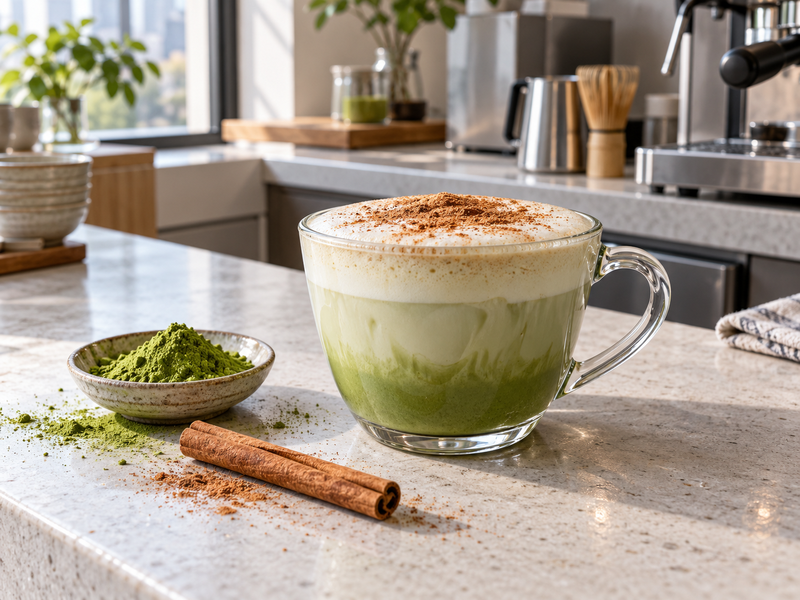
A cinnamon matcha latte is easy to sell on a menu and surprisingly easy to get wrong at the bar. A strong cinnamon syrup can hide stale tea. A light dusting can disappear behind milk. Ground spice can leave grit in the final sip. For a cafe buying matcha in volume, these are repeatability problems, not merely matters of taste. The useful question is how to make a drink that tastes recognizably of matcha and cinnamon, costs what the menu allows, and can be reproduced during a rush.
This guide sets out a small-batch development method for beverage teams. It separates the tea purchase from the spice choice, gives a test formulation rather than a universal recipe, and shows which checks belong in a supplier brief. Matcha Village supplies matcha for business use; the sensible first step with any supplier is to test a sample in the actual milk, cup and service routine.
1. What should matcha and cinnamon taste like together?
Good matcha and cinnamon have a clear order. The first sip should carry the tea’s green, slightly savory character; cinnamon should arrive as a warm aromatic note, then leave a clean finish. If the drink tastes mainly of cinnamon candy, the spice or sweetener is doing too much. If it tastes like plain milk with a brown garnish, the tea is too weak for that particular base. Customers may enjoy either version, but a cafe should know which drink it is promising.
Build the sensory brief before changing ingredients. Taste unsweetened matcha in water, then in the intended milk. Add cinnamon last. This sequence shows whether bitterness belongs to the tea, the extraction method or the spice. A blunt tea can become harsher when mixed with a woody cinnamon powder; a clean tea can be overwhelmed by sweet syrup. Record aroma, first sip, mid-palate, finish and visible sediment. Two or three staff members can use the same simple sheet. Their descriptions will be more useful than an unqualified verdict of “good.”
2. Which matcha works best in a cinnamon latte?
Choose for the finished drink rather than for a grade word on a bag. “Ceremonial” and “culinary” are commercial descriptions with no single universal definition. A cafe needs a matcha that remains visible and identifiable after milk, spice and ice are added. Ask suppliers for a consistent lot specification, sample quantity, lead time and a clear explanation of what changes between lots. Then blind-taste samples at the intended serving strength. Paying for a delicate powder whose aroma disappears in a sweet cinnamon drink may add cost without improving the cup.
Check dry aroma, color under the cafe’s lighting, dispersion and the taste after ten minutes in the finished latte. Testing only the dry powder can mislead: a vivid powder may still produce a thin drink, while a less dramatic sample may be better balanced in milk. Keep the exact recipe constant during the comparison. A supplier sample that wins a water tasting should not automatically win the milk tasting.
| Check | How to run it | Decision signal |
|---|---|---|
| Dry aroma | Open equal-size fresh samples | Clean tea note, no stale or dusty odor |
| Milk visibility | Use the same cup and milk | Green remains clear after cinnamon is added |
| Dispersion | Prepare with the bar’s normal equipment | No persistent clumps or gritty layer |
| Ten-minute taste | Taste after a normal pickup delay | Tea remains identifiable, finish stays clean |
3. Should a cafe use ground cinnamon, syrup or an infusion?
Each form solves a different service problem. Ground cinnamon offers an immediate aroma and a familiar visual cue, but it does not dissolve in milk. Use a controlled finishing amount, not a freehand shake over the cup. A cinnamon syrup is faster and more consistent at scale, but it brings sugar and can turn the drink into a sweet-spice latte with matcha in the background. An infusion can give a softer, less gritty result, though preparation and holding time have to fit the bar’s food-safety plan.
Do not assume one form can replace another at the same dose. Compare them at similar perceived cinnamon intensity while holding the tea and milk constant. Record the ingredient name on the menu accurately; “cinnamon” covers products with different aroma and behavior. For a chain or multi-site cafe, specify the form, supplier, batch size and dispensing tool so that a new barista is not asked to interpret “a dash.”
| Form | Useful strength | Main control point |
|---|---|---|
| Fine ground spice | Fresh top-note and visual finish | Weigh or use a measured shaker; expect sediment |
| Cinnamon syrup | Fast, repeatable sweetness | Measure pump output and total sugar |
| Infused liquid | Gentler aroma without surface grit | Document preparation and refrigerated hold |
| Cinnamon foam | Aroma at first sip | Check stability through pickup time |
4. How can the first recipe be tested without wasting matcha?
Start with a small reference recipe and adjust one variable at a time. For a 12-ounce iced trial, a practical starting point is 2 grams of matcha, a small amount of water to disperse it, roughly 180 milliliters of milk, and measured cinnamon flavor. These are trial quantities, not a claim that every matcha or cup needs the same formula. A concentrated tea base lets the bar compare milk types and cinnamon forms without preparing a new full serving for every variation.
Make three coded samples: low, middle and high cinnamon, keeping tea and milk constant. Taste them immediately and after a realistic queue delay. Once the spice level is settled, run a second test for matcha dose. Do not alter dose, sweetener and milk in the same round; the team will not know what caused an improvement. Photograph the final cup under the actual service lighting and note foam height, separation and remaining sediment. These observations belong in the recipe record alongside taste.
| Trial | Matcha | Milk | Cinnamon setting | What it tests |
|---|---|---|---|---|
| A | 2 g | 180 mL | Low | Whether tea remains dominant |
| B | 2 g | 180 mL | Middle | Balance and repeatability |
| C | 2 g | 180 mL | High | Point where spice masks tea |
5. How should sweetness and milk be chosen?
Cinnamon can smell sweet even when no sugar has been added. That matters when writing a menu description: customers may expect a sweet drink from the aroma alone. Test the unsweetened version first, then add measured sweetener only if the target customer and price point call for it. If a prepared cinnamon syrup is used, count its sugar in the formulation rather than adding a second sweetener by habit. Record serving size and any standard customizations separately.
Milk choice changes cinnamon perception as well as matcha color. Dairy milk can round the spice; oat milk may add its own cereal sweetness; some plant milks separate or mute the tea. Test the exact product the cafe will buy, including the barista formulation if it differs from retail cartons. The desired outcome is not to declare one milk “best” in general. It is to find a base that stays stable and pleasant during the cafe’s normal preparation and pickup window.
6. What changes when the drink is served hot instead of iced?
A hot cinnamon matcha latte releases spice aroma quickly, which can make the matcha seem quieter. It also makes poor dispersion more obvious: clumps float, then appear as bitter pockets. Prepare the tea base separately with water at a temperature suited to the selected powder; do not use boiling water simply because the milk is hot. Steam milk to the cafe’s usual safe service standard and combine after the matcha is smooth. Finish with a measured amount of spice or syrup.
An iced version has different problems. Cold milk can slow dispersion, and a syrup may sink if poured late. Make the matcha base first, then combine in a standard sequence that every barista can repeat. Test the first sip and the last sip, because ice melt and spice settling can make them taste like different drinks. A recipe that wins immediately after mixing may fail after it sits on the pickup shelf. Time the test against actual service conditions rather than an idealized photo session.
7. How can a bar team keep every cup consistent?
Write the recipe as a sequence of measured actions. Include the amount of matcha, the water used for dispersion, milk fill line, cinnamon form, dispensing tool, cup size and finishing instruction. A photograph can show the intended appearance, but it cannot replace quantities. Calibrate syrup pumps and shakers at the start of a shift; their output varies with product thickness and how staff operate them. Keep powders sealed between uses so the sensory test matches service reality.
During launch week, have a supervisor check a small sample from each shift. Ask whether tea flavor is still present, whether the cinnamon leaves grit, and whether the drink’s color matches the approved cup. If the bar has to make frequent remakes, find the process step that fails. Simply adding more matcha to every cup may hide the problem while destroying the margin. A good recipe can be taught in minutes because its critical steps are written down.
| Observation | Likely cause | First action |
|---|---|---|
| Cinnamon grit at bottom | Heavy ground-spice dose | Reduce measured dose or test syrup/infusion |
| Tea disappears in milk | Weak tea concentration or overpowering syrup | Test tea and syrup separately |
| Clumps on surface | Poor matcha dispersion | Prepare a smooth base before milk |
| Sweet first sip, bland last sip | Syrup not integrated | Change build order and stir standard |
8. How should ingredient cost be calculated?
Calculate the matcha cost per cup from the purchase price and actual dose, not from a vague “premium ingredient” allowance. Add cinnamon, syrup, milk, packaging and expected waste. A drink that needs an extra gram of expensive matcha to be heard over syrup may not be the most profitable version, even if it tastes rich. Run the numbers for the exact cup size and for a high-volume day. Include the cost of the service step if it slows the queue.
Separate ingredient cost from price positioning. Some cafes can charge more for a seasonal drink; others need an everyday item that sells repeatedly. If the drink is seasonal, check whether the matcha and cinnamon inputs can be used elsewhere after the promotion. For procurement, request pack size, shelf-life information, minimum order and replenishment lead time before committing to a menu launch. The cheapest bag per kilogram may be costly if it leaves unused powder after the campaign.
| Line item | Measure to record | Common omission |
|---|---|---|
| Matcha | Price per gram × tested dose | Over-dosing during rush |
| Cinnamon flavor | Powder, syrup or infusion cost | Variable pump output |
| Milk and sweetener | Actual milliliters and grams | Free customization |
| Cup and waste | Packaging plus remakes | Trial loss and expired inputs |
9. What should the supplier brief include?
Tell the matcha supplier how the powder will be used. “Good matcha” is not a purchase specification; “2-gram dose in a 12-ounce iced oat-milk cinnamon latte, prepared with a handheld whisk, target cost of X per cup” is useful. Ask for samples from the intended commercial line, not a one-off showcase lot. Request relevant quality documents and packaging information, and test the samples against your own recipe. Consistency across replenishment lots matters more than a striking first sample.
If two candidates are close, compare them blind and keep written notes. Use the same cinnamon syrup, milk and water in each trial. Photograph color but do not judge on color alone. Discuss delivery schedule and how substitutions are handled if a lot changes. Matcha Village can help a business buyer select a powder for the intended application; the buyer still needs to approve the result in their own bar conditions. A good supplier conversation is specific enough to prevent an expensive mismatch.
10. When is a matcha and cinnamon drink ready for the menu?
Launch after the recipe survives a realistic service test. A staff member who did not develop it should make the drink from the written card without coaching. At least two cups should be compared side by side for flavor, color and finish. Check the hot or iced version that will actually be sold, the chosen milk, and the normal queue delay. Confirm the menu description states the main ingredients plainly and the price supports the measured food cost.
Keep a change log after launch. A new syrup, milk carton or matcha lot can alter the cup enough to deserve a quick retest. Do not treat every customer preference as a signal to rewrite the standard recipe; offer sweetness or milk options without losing the core drink. When the team can explain what the matcha tastes like beneath the cinnamon, and reproduce that taste over a full shift, the menu item is ready to carry its name.
Frequently asked questions
Q1. Does cinnamon make low-quality matcha taste better?
It can cover some harsh notes, but it cannot restore a stale or poorly stored powder. Test the matcha in water and milk before adding spice. If the tea is unpleasant on its own, start with a different sample rather than more syrup.
Q2. Can cinnamon powder be mixed directly into cold matcha?
It can be stirred in, but it will not dissolve. Expect visible particles and sediment. For a smooth commercial drink, compare a measured syrup or infusion and check the final sip after the cup has stood for several minutes.
Q3. How much matcha should a cafe use?
Use a tested dose for the selected powder, milk and cup size. Two grams is a reasonable first trial for a 12-ounce iced latte, not a universal rule. Increase or decrease it based on blind tasting and per-cup cost.
Q4. Is a hot version prepared the same way as an iced one?
The ingredient list can be similar, but the build sequence and sensory balance change. Prepare a smooth matcha base separately, then combine with warm milk; test cinnamon aroma and texture at the actual serving temperature.
Q5. What should a buyer ask a matcha supplier for?
Ask for a sample from the intended supply line, lot consistency information, packaging, lead time and documentation relevant to the market. Share the actual cinnamon latte recipe so the sample is evaluated in the product you will sell.
For a cafe or beverage brand developing a repeatable cinnamon matcha, Matcha Village can discuss sample options and application requirements. Send the cup size, milk choice, intended matcha dose and volume forecast; those details make the first conversation useful.