
Starter kits are meant to make matcha easier. Yet a set can cause the very confusion it promises to solve: too many pieces, a bowl that fights the whisk or a recipe that leaves a first-time user guessing. For a retailer or café, those mistakes scale into returns, wasted training time and a weaker product reputation. This guide identifies ten avoidable matcha starter kit mistakes and the sample tests that catch them before a larger order.
The Matcha What starter-set guide introduces the familiar tools; here the focus is on what a business buyer should check when those tools are packed and sold together. Our matcha tea set buying guide gives a component list to compare against common starter-kit mistakes.
Contents
- 1. Are you buying from a picture alone?
- 2. Does the set promise a drink it cannot make?
- 3. Have the bowl and whisk been tested together?
- 4. Are powder claims replacing a real tasting?
- 5. Does the scoop create a dosing mistake?
- 6. Are extras crowding out essential quality?
- 7. Can a new user follow the instructions?
- 8. Has anybody checked cleanup and storage?
- 9. Will the box survive delivery and replacement?
- 10. Can the same kit be supplied again?
1. Are you buying from a picture alone?
Ask for an assembled commercial sample
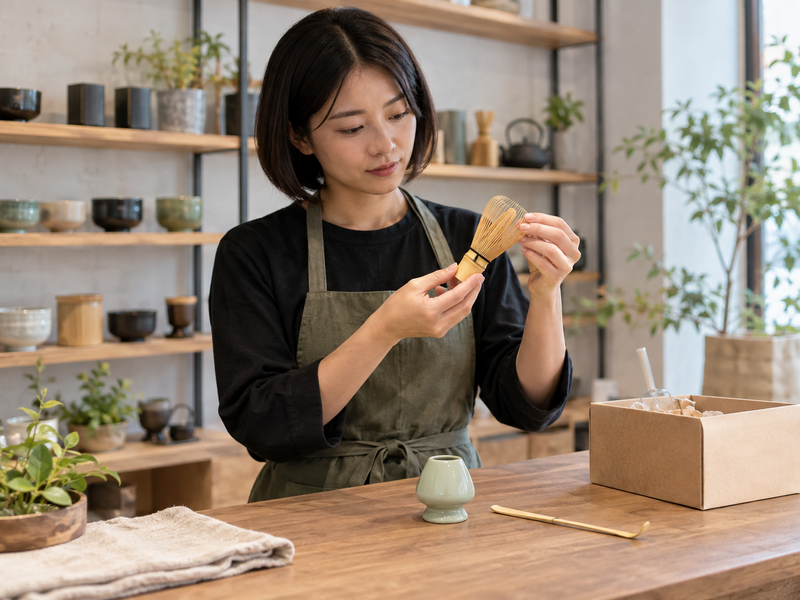
A styled photo can hide a small bowl, weak whisk, damaged ceramic foot or box with no useful protection. Request a complete sample made from the components the vendor intends to supply. Unpack it without special handling, compare contents with the quote and make the advertised drink. If a supplier sends separate component samples, assemble them into the proposed retail pack before deciding. The buyer needs evidence about the whole set, not just assurance that each item exists.
Look beyond one pristine sample. Ask how incoming items and finished boxes are inspected, and inspect several pilot units yourself. Check component count, tea seal, bowl finish, whisk tines, print quality and how the insert holds everything in place. Keep one approved master unit with photos and item identifiers. A supplier may substitute a similar-looking accessory later, so written dimensions and a first-cup test matter more than a catalog image. A kit should be approved in use.
2. Does the set promise a drink it cannot make?
Align contents with the wording on the box
A “ready to make matcha” kit should include the tea or clearly state that tea is separate. A latte kit needs a recipe that explains how the whisked mixture combines with milk and ice. A set marketed for a plain whisked bowl should include a vessel and whisk that handle that preparation. Write the promised drink on the inspection sheet and try to make it using only the supplied pieces and ordinary household equipment named in the instructions. Record every unmentioned tool or ingredient needed.
The fix may be simple: revise the wording, include a missing measure or change the recipe. Do not add a pile of extras merely to make the box seem complete. Customers judge whether the set helped them do the thing they expected. For a café training program, check the kit against the actual menu workflow, not a generic home recipe. For retail, ask someone unfamiliar with matcha to explain what they think the box will let them prepare before they open it. That expectation test can catch a misleading product name early.
| Printed promise | Required proof | Common gap |
|---|---|---|
| First cup ready | Tea and usable tools | Powder sold separately |
| Latte starter | Tested milk-drink steps | Only plain tea directions |
| Café training | Repeatable menu method | Unmeasured portions |
| Gift set | Complete unboxing trial | Missing care guidance |
3. Have the bowl and whisk been tested together?
Check movement rather than matching colors
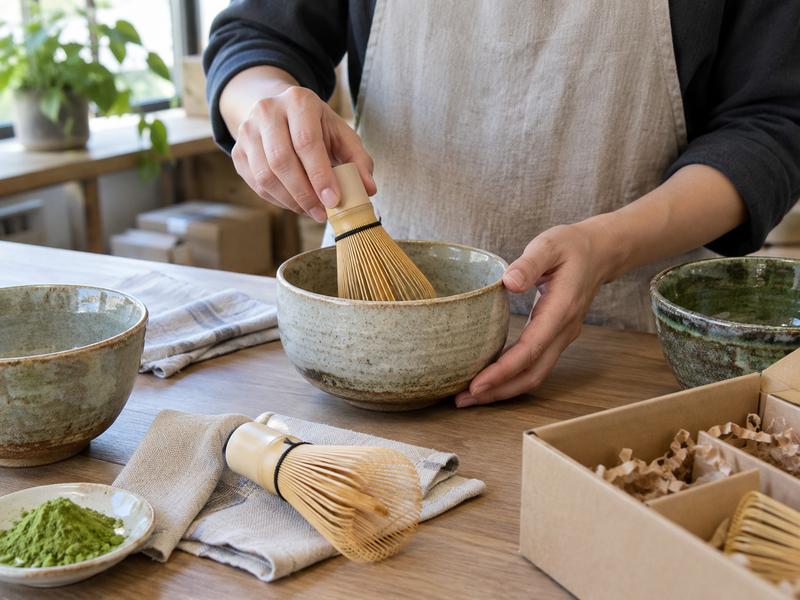
The bowl should sit firmly and leave space for the whisk to move without crushing its tines against the side or base. Test the intended liquid amount; a bowl that works for a small concentrate may splash with a larger drink. Check grip and pouring after whisking. If the set includes a sifter or holder, confirm those pieces fit and do not create an awkward extra step. A coordinated color palette cannot compensate for tools that interfere with preparation.
Repeat the test after a proposed component change. A visually similar bowl can have a different interior curve, and another whisk with the same nominal size may feel different. Keep the approved pair in a master sample with dimension notes. For a multi-supplier kit, assign one party responsibility for checking fit after assembly. Otherwise the ceramic vendor and whisk vendor may each meet their own specifications while the customer receives a mismatched pair. A short hands-on trial is more convincing than product descriptions.
4. Are powder claims replacing a real tasting?
Taste the included tea in the advertised format
Words such as “premium” or “ceremonial” do not tell a buyer whether a particular powder suits a plain bowl, sweetened drink or café latte. Obtain a representative sample and prepare the exact recipe the kit will teach. Ask several tasters for specific comments on flavor, texture and ease of mixing. Record the tea product and lot behind the sample where possible. If the supplier later offers a different grade or blend, repeat the application test rather than relying on a similar label.
Check pack format as well as taste. A pouch that tears badly or cannot be closed may undermine an otherwise useful kit. Verify net weight, lot information, storage wording and supported claims for the destination market. Matcha Village supplies matcha ingredients and blends for several applications, but any claim on a finished starter kit should match its actual powder and supporting documents. A buyer should not borrow a broad supplier claim and assume it applies to every pack in the range.
5. Does the scoop create a dosing mistake?
Distinguish transfer from measurement
A bamboo scoop transfers powder neatly, but its filled weight can vary with the tea, scoop shape and user. If a starter card says “two scoops” while promising a precise strength, test several real portions on a scale. State the result as an approximation if it varies. A café should set its recipe by weight during training and periodic checks, even if staff use a scoop to move tea into the bowl. This avoids gradual drift when a different powder or scoop arrives.
The scoop must also reach into the supplied pouch or tin without spilling. Try it at the beginning and end of the pack, then check how the user stores it after cleaning. If a measuring spoon is included instead, a stated volume still does not guarantee a fixed mass of powder. A helpful beginner instruction can give a starting measure and explain how to adjust one variable at a time. The goal is a repeatable first attempt, not a falsely exact measurement claim.
| Portioning issue | Test | Practical response |
|---|---|---|
| Scoop varies | Weigh repeated scoops | Use approximate wording |
| Pack opening is narrow | Try actual pouch | Change tool or pack |
| Café dose drifts | Check recipe by scale | Retrain with weighed target |
| Cup tastes strong | Change one variable | Revise card guidance |
6. Are extras crowding out essential quality?
Give each item a job
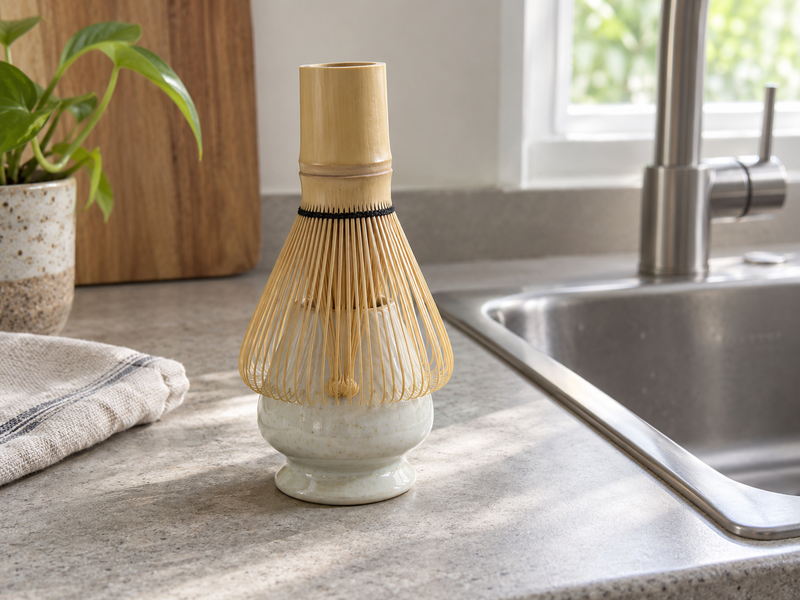
A holder, tray, sifter or decorative cloth can improve a set when its use is clear. It can also consume budget and packaging space that a better whisk or stronger insert needed. For each extra, write the problem it solves and test that claim with the chosen tea and user. A sifter may help with clumps, but it should be easy to clean and appear in the preparation sequence. A holder may support storage, but it must fit the supplied whisk. A tray may improve presentation but increase carton dimensions.
Compare the delivered cost per sellable kit after including each extra’s purchase price, assembly time, packaging cavity and damage or replacement exposure. If an item does not improve preparation, care or recipient experience in the pilot, consider leaving it for a higher tier. A simple set with sound core pieces can be more useful than an impressive box full of poorly matched objects. Do not treat a larger component count as a quality score.
7. Can a new user follow the instructions?
Run a silent first-cup trial
Hand the assembled kit and card to someone who has not worked on the product. Let them proceed without coaching. Watch where they stop: opening the tea pack, estimating a portion, choosing water amount, whisking, pouring or cleaning. Ask them to explain any confusing sentence in their own words. Revise the card, then test again with a different person. A set cannot be called beginner friendly simply because its copy says so.
Use quantities and steps that were tested with the actual tea and tools. If a video is offered through a QR code, make sure the printed card still contains the essential method and the link works. Check legibility at final print size. For a product sold in several markets, review language, units and claims for each version. A concise card that makes the first cup possible has more value than a long brand story that leaves the user guessing. Watch the hands, not just the page.
| User pause | Likely cause | Card or kit correction |
|---|---|---|
| Powder spills | Opening or scoop mismatch | Adjust pack or tool |
| Water is guessed | No clear amount | Print tested quantity |
| Whisk scrapes | Bowl pairing | Change component |
| Care is skipped | Vague instruction | Add item-specific steps |

8. Has anybody checked cleanup and storage?
Follow the cup through its final step
A first-cup demonstration often ends when the drink is served. Continue through rinsing or washing, drying and putting each piece away. Ask suppliers for care instructions specific to the bowl finish, bamboo whisk, scoop and any sifter or holder. Do not assume that one generic dishwasher statement suits every item. Watch whether powder collects in awkward crevices or wet bamboo is pushed back into a closed box. Retail customers should receive clear guidance that they can follow without specialized knowledge.
For cafés, test the set against the site’s cleaning routine and available storage space. A fragile bowl that needs careful hand handling may not fit a fast service environment. A whisk should be replaceable when worn. If the box is meant to store accessories, verify that dry pieces fit back in their cavities without pressure on tines. Cleanup influences whether the set gets used regularly; a beautiful kit that is inconvenient to maintain may be abandoned after the first week.
9. Will the box survive delivery and replacement?
Inspect arrival condition by component
A starter kit brings breakable ceramic, flexible bamboo and possibly a sealed food pack into one carton. Send filled production-like samples through the intended parcel or wholesale route. Open them and record chipped bowls, bent whisks, damaged tea seals and shifted parts. A lightweight insert may save money while raising replacement cost. A large gift box may look impressive yet add freight and leave components loose. The correct packing choice comes from the observed route trial, not appearance alone.
Plan what happens after a failure. Can a retailer replace one bowl or whisk, or must it replace an entire set? Does the vendor provide spare item codes and reasonable reorder quantities? Calculate the cost of damaged goods and service, not only the opening unit price. Keep the outer carton and packing quantity in the specification. For online orders, examine individual parcel handling; for store delivery, examine case packing and shelf presentation. Both affect the customer’s first view of the product.
| Arrival fault | Check first | Service action |
|---|---|---|
| Chipped bowl | Support around rim and foot | Replace bowl or unit |
| Bent whisk | Tine cavity | Provide spare whisk |
| Broken tea seal | Hard adjacent edge | Replace food pack |
| Shifted pieces | Insert fit | Revise packing |

10. Can the same kit be supplied again?
Avoid a one-off assortment with no controls
A successful pilot can create a new problem if its parts cannot be reordered consistently. Record approved component codes, dimensions, tea specification, artwork revision, pack layout and care instructions. Request written notice before substitutions. A new whisk, bowl or tea pack may appear nearly identical while changing preparation, label wording or the fit of the insert. Keep an approved master packed unit and run the relevant test whenever a component changes. A repeat order should be compared with that reference, not merely with the old invoice.
Review customer comments by cause after launch. If people struggle with the same recipe step, improve instructions; if bowls arrive chipped, revise protection; if powder disappoints in milk, revisit the tea selection and stated application. Update documents and photos when the product changes. For a B2B buyer, confirm spare-part terms, tea lot records, lead times and minimum orders before scaling. A dependable starter kit is one the business can deliver, support and improve without losing the working experience that made customers buy it.
| Reorder control | Why it matters |
|---|---|
| Master packed unit | Shows approved fit |
| Component codes | Flags substitutions |
| Tea specification | Supports repeat cup |
| Artwork version | Prevents wrong claims |
| Spare-part terms | Supports customers |
FAQ
Q1. What is the biggest beginner-kit mistake? Selling a set before an unfamiliar user has made the advertised drink with it.
Q2. Is a scoop a precise dose measure? No. Check it against a scale and describe its portion as approximate when appropriate.
Q3. Does a kit need a sifter? Only when tests with its chosen powder show a useful benefit.
Q4. Why test the packed box? A sound bowl or whisk can still be damaged by the delivery route.
Q5. What should be kept for reorders? A master packed sample, component list, tea details, artwork revision and test record.
Most starter-kit mistakes are visible before launch if buyers make the first cup, clean the pieces and inspect a shipped unit. Treat those actions as purchasing checks. They lead to a set that is easier for customers to use and easier for a business to supply again.