
Matcha packaging has to protect a fine powder through filling, shipping, sale and use after opening. A beautiful tin will not help if its inner seal fails; a strong pouch will disappoint if customers cannot close it cleanly. Buyers should start with the route the product will take and the amount a customer uses at a time. These ten steps turn packaging into a testable specification rather than a design choice made from samples on a table.
Contents: Route · Risks · Format · Barrier · Fill · Seal · Opening · Artwork · Testing · Supplier
1. Where Will the Matcha Packaging Travel?
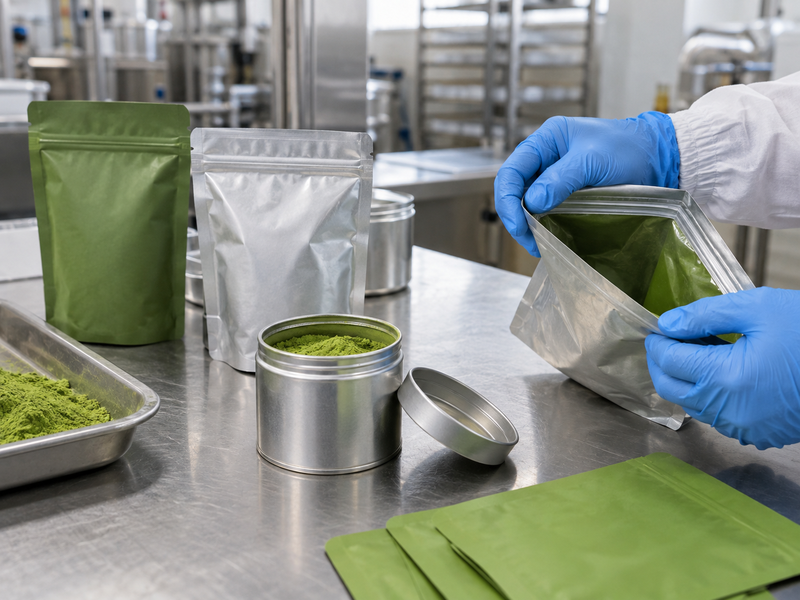
Map the route before choosing a format
A small retail pouch mailed directly to a customer faces a different journey from a bulk bag delivered to a drink factory. A cafe can empty a container quickly; a home user may open it every day for weeks. Write down fill site, storage, shipping, sales channel, expected time before opening and period of use after opening. Include temperature and humidity exposures the business can reasonably expect. The same attractive format may not work for every route. A gift tin can be sold for presentation, while an inner sealed pouch may do most of the protective work.
Follow a sample order. Pack the powder exactly as planned and send it through the normal delivery path. Inspect the outer carton, retail pack and powder when it arrives. Look for dents, broken closures, punctures and loose green dust. If a salesperson only handles an empty mockup, they may miss how the filled pack behaves. The product brief should define what a customer opens, not only what a buyer sees at a trade show.
2. What Must the Pack Protect Against?
Keep light, air and moisture in view
Matcha powder is finely milled tea. Its color, aroma and flow can change during storage. A packaging brief should address moisture entry, oxygen exposure, light exposure and physical damage. The relative priority depends on product format and route. An opaque pouch may protect from light; its seams and closure still need testing. A decorative clear window can show a vivid powder but may expose it during retail display. Ask the packaging supplier to describe the proposed structure and its intended protective function in plain terms.
Test with real powder. Empty packs can pass a visual review while a filled pack develops caking, color change or aroma loss. Use the approved matcha lot, normal fill process and intended storage conditions in a stability plan set by qualified staff. Compare with a retained reference. If a new pack seems to improve freshness, document the evidence rather than claiming a longer shelf life immediately. Powder quality, filling atmosphere and storage all affect the result.
| Risk | What a buyer can inspect | Evidence to request |
|---|---|---|
| Moisture | Clumping and closure integrity | Material and finished-pack test |
| Oxygen | Aroma and color change | Barrier specification and stability study |
| Light | Fading in display | Pack design and exposure trial |
| Damage | Leaks or dents | Transit test and complaint data |
3. Which Pouch, Tin or Sachet Fits the Use?
Choose for dispensing as well as protection
Resealable pouches are compact and often efficient to ship. Tins can offer rigidity and a premium feel. Single-serve sachets can control dose and reduce repeated exposure of a large pack, but they add packaging material and fill operations. Bulk bags or lined cartons suit food manufacturing when the customer can handle the powder safely on opening. None is automatically best. Compare fill weight, customer behavior, pack cost, transport and disposal requirements in the target market.
Put powder through the opening. Ask a cafe worker or home user to scoop a measured dose. Does the pouch mouth stay open? Does powder collect in a tin rim? Does a sachet tear cleanly without spilling? A design that photographs well may be awkward every morning. If a gift tin contains an inner pouch, test the two together and describe what each part does. A closure should not be presented as protective unless the complete filled pack has been tested.
4. What Barrier Evidence Should You Request?
Compare the proposed material, not a category label
“Foil pouch” and “premium tin” do not specify every layer, seam or liner. Ask for a material specification that identifies the structure offered for the exact order. Request relevant barrier data, food-contact documentation for the destination market and confirmation of how the material performs after conversion into a pouch or lid. A laboratory film value may not represent a finished bag with seals and a zipper. Match the evidence to the finished pack and planned shelf-life claim.
Check change control. If the converter changes a film layer, zipper or liner, the pack may behave differently even when the artwork looks identical. Agree on how such changes will be communicated and approved. Keep a retained sample from the qualified packaging lot. A buyer should be able to compare a new shipment with the approved structure and investigate a complaint without guessing which material was used.
| Document | What it should answer |
|---|---|
| Material specification | Which structure was ordered? |
| Food-contact evidence | Is it suitable for the target market and use? |
| Barrier data | What protective performance is claimed? |
| Finished-pack test | Do seams and closures perform? |
5. How Should Fill Size and Headspace Be Set?
Calculate from use rate and pack geometry
A 30-gram specialty tin and a kilogram foodservice pouch serve different customers. Choose fill size from expected use, price point and the time a pack stays open. Then test how that quantity sits in the actual container. Too much headspace can make a small pack look underfilled; too little can soil the seal area or prevent a proper closure. Define fill-weight tolerance and how it will be checked on the line. If powder is dosed by volume, its packing behavior may create more variation than a weighed fill.
Check the final unit. Weigh filled samples from early, middle and late production and open them. Powder left in the seal area can undermine closure and appearance. If the pack is nitrogen-flushed or uses another atmosphere-control step, qualified production staff should set and validate that process. Do not rely on a decorative label to cover a mismatch between pack size and powder quantity. A customer should feel that the pack is practical at the stated weight.
6. What Makes the Closure Reliable?
Test both the factory seal and daily resealing
A heat seal protects an unopened pack only if its width, cleanliness and strength are controlled in production. A zipper matters after opening but can be blocked by fine powder. Tins may need an inner seal and lid fit check. Define inspection points for the exact format, then test them with filled packs. Ask operators to open and close a sample several times. A closure that works empty can become messy when matcha dust enters its track.
Run a leak and handling trial. Move filled units through the normal case pack and shipping route. Note any green dust outside the pack. If a customer returns a pouch with a poor seal, batch and packaging lot records should identify the material and line settings. For a foodservice pack, consider whether staff can close it safely after scooping or whether it should be decanted into a controlled container. The handling instruction should reflect how the customer will actually use it.
| Closure point | Test on filled product |
|---|---|
| Factory seal | Strength and powder contamination |
| Zipper | Repeated use with powder nearby |
| Tin lid | Fit after transport and opening |
| Inner liner | Removal without spills |
7. What Happens After a Customer Opens It?
Design the second half of the product life
Many packaging discussions stop at an unopened shelf-life test. Customers judge the product after opening. Watch how powder is scooped, where the pack is kept and how often it is exposed to air and kitchen moisture. A small pack may be preferable for a low-use customer; a larger format may make sense for a busy cafe with controlled storage. If the label gives storage guidance, make it realistic for the pack’s closure and the target audience.
Have someone use a trial pack for a week. Record spills, caking, difficulty reaching the last powder and how well the closure continues to work. This use test can reveal faults no transit study catches. Do not claim that a zipper alone preserves fresh aroma indefinitely. The product’s opened-use guidance should be based on appropriate evidence and should describe practical handling, such as closing the pack promptly and keeping it away from moisture and heat.
8. What Should the Label and Artwork Say?
Write the product identity before the graphic design
The front panel should tell buyers what is in the pack and why the format suits their use. The full label needs ingredient, net quantity, business and other market-required information reviewed by the appropriate regulatory team. Organic, origin, grade and health statements require support. If a tin is packed in one country with tea from another, do not let visual styling blur that distinction. Keep the exact approved copy with the packaging version so a last-minute printer change does not create an inaccurate batch.
Show the real green. A photograph of matcha can be adjusted until it no longer resembles the powder customers open. Approve artwork beside the actual filled pack under ordinary light. Avoid promising a bright shade that every natural lot cannot meet. If the brand sells several grades, make the differences legible and meaningful rather than relying on vague premium words. The pack should help a buyer choose the right powder, not force them to guess.
| Artwork element | Verify |
|---|---|
| Product name | Matches actual contents |
| Origin or organic claim | Supported by records |
| Serving guidance | Fits the product and market |
| Color photograph | Resembles approved lot range |
9. Which Tests Belong Before Launch?
Test the filled system as customers will receive it
A practical qualification plan includes food-contact suitability, seal or closure checks, fill-weight accuracy, transit performance and a stability study for the product in its intended route. The quality team should set the detailed protocol for the exact powder, pack and destination market. Inspect samples at several points, including after realistic light and temperature exposure. Keep a control in known conditions for comparison. A single attractive pack from a short photo shoot does not support a shelf-life statement.
Repeat after material changes. Changing film, ink system, tin liner, zipper or filling line can alter performance. Decide which changes need a new trial and document sign-off before the converter substitutes material. For private-label work, a buyer should receive samples made from the intended production construction, not only an unfilled design mockup. Physical evidence makes the final choice easier to defend when cost pressure appears later.
10. What Should a Packaging Supplier Commit To?
Put quality and timing in the purchase specification
Agree on the exact material, dimensions, print version, fill compatibility, inspection method, minimum order, lead time and change notification process. Keep an approved pack sample and a versioned drawing. A factory supplying both matcha and private-label packaging should still show which party owns artwork approval, legal copy and final packed-product release. A low quote can become expensive if packs arrive with weak seals or the wrong opening size.
Finish with a filled pilot. Run the intended powder through the proposed line, pack a small production lot and send it through the sales route. Open it after storage and let a real user scoop from it. If the powder remains pleasant and the pack works from first opening to last dose, the packaging choice has earned approval. If it fails, the pilot has saved a much larger mistake.
| Purchase term | Why it matters |
|---|---|
| Material and version | Prevents silent substitutions |
| Filled-pack acceptance | Links design to performance |
| Lead time and MOQ | Supports supply planning |
| Change notice | Triggers qualification review |
| Artwork ownership | Prevents wrong-label production |
FAQ
Q1: Is a tin always better than a pouch for matcha? No. Compare the complete filled pack, closure, sales route and customer use.
Q2: Does a zipper replace an inner seal? A zipper serves repeated use, while an unopened pack needs a qualified factory seal. Test both roles.
Q3: Can clear packaging be used? It can be considered, but light exposure and actual storage performance need review.
Q4: What fill size should a brand choose? Match expected use rate, price and time after opening, then test the actual container.
Q5: What evidence should a buyer request? Ask for material and food-contact documentation, finished-pack tests and filled-product stability evidence.
For ingredient care after opening, see matcha storage. The SERP reference packaging guide compares common formats; the best choice still depends on the filled product and customer route.