
Matcha popcorn can be a clever snack, but powder does not stick to dry kernels by itself. The coating needs to carry tea flavor without making popcorn soggy or leaving a green cloud at the bottom of the bag. A snack maker has to balance binder, seasoning and pack protection. These ten checks turn a small kitchen bowl into a measurable product trial, with crispness and saleable yield given as much attention as color.
Contents: Concept · Pop · Powder · Binder · Dose · Coat · Flavor · Crunch · Pack · Launch
1. What Kind of Matcha Popcorn Are You Selling?
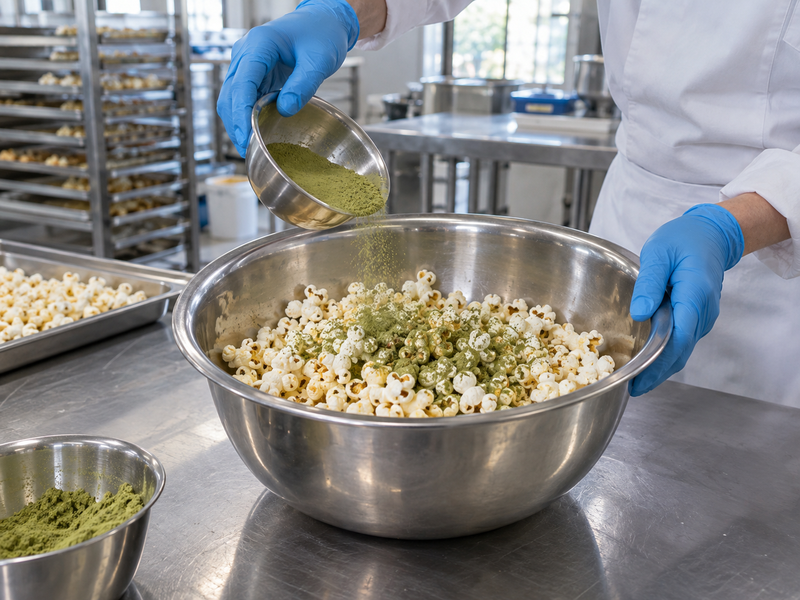
Choose sweet, savory or lightly seasoned
A sweet matcha snack may use a sugar-based coating, while a savory version might pair tea with salt or sesame. A lightly dusted version can feel cleaner but may shed powder. Decide which eating occasion the product serves: cinema-style treat, cafe side or packaged snack. Set portion size, target color, sweetness and acceptable powder residue. The product should taste intentional by the last handful, not merely look unusual in the first photograph.
Eat from the proposed bag. A small tasting cup hides what happens when powder falls through a full portion. Fill a sample pack, carry it and open it as a customer would. Check the top and bottom servings for flavor difference. If the last kernels are bitter or coated in loose powder, the application method needs work. Keep a plain popcorn control from the same popping run so changes in crunch are attributed to the coating rather than stale base popcorn.
2. Which Popcorn Base Should You Use?
Control popping before testing matcha
Kernel variety, expansion, residual moisture and oil level influence how a coating adheres. Use one established popcorn base for the early trials. Sort out unpopped kernels and record saleable popped weight. A dense, uneven base makes a thin matcha coating hard to judge. The manufacturer should know how long popcorn cools before seasoning and whether oil is already on the surface. A warm batch may accept coating differently from a fully cooled one.
Watch breakage. Every mixing step can create fines. Count intact pieces before and after coating, especially if the method uses a drum or tumbler. Powder that collects on fines may leave full kernels bland and create a bitter green residue. Popping quality is therefore part of matcha performance. A coating formula cannot rescue a base that arrives with high breakage or variable moisture.
| Base check | Why it matters |
|---|---|
| Popped yield | Sets real batch cost |
| Piece size | Changes coating area |
| Surface oil | Affects adhesion |
| Fines | Carry excess powder |
3. Which Matcha Powder Fits the Snack?
Choose after coating and packing
Request lot-linked matcha samples and use each at one fixed dose in the same coating process. A fine powder may adhere more evenly, but it can also produce visible dust if the binder is wrong. A strong powder may survive a sweet coating yet taste bitter on kernels with heavy deposition. Compare color, aroma and flavor after the snack has sat in its test bag. Dry powder appearance says little about the final snack. Use cost per saleable bag rather than price per kilogram alone.
Keep a supply standard. Ask for a product specification and relevant quality records. Save a sealed approved powder sample and a reference finished bag. If a new lot varies, make a short coating trial before switching. A product marketed with organic or origin language needs supporting records for the actual material and finished product. The powder should be chosen for a repeatable snack, not a single bright pilot run.
4. What Helps the Powder Adhere?
Compare binders without soaking the kernel
A small amount of compatible oil, syrup or another coating system may help matcha stay on popcorn. Each option changes flavor, texture, ingredient list and shelf behavior. Trial one at a time. An oil route may feel light but leave fingers green. A sweet syrup route can distribute powder and create clusters but may soften the popcorn if overapplied. A dry seasoning blend can work only if the popped base has enough surface adhesion. Record binder pickup by weighing the batch before and after application.
Check every handful. Apply the chosen matcha dose, mix for a defined time and sample from several places in the batch. If one part is heavily green and another barely seasoned, improve distribution before increasing powder. A coating that sticks in the mixing bowl instead of on the popcorn wastes ingredient. For a retail product, the binder and process must be reviewed by quality staff for the final food and shelf-life plan.
| Binder route | Possible benefit | Trial risk |
|---|---|---|
| Light oil | Fast, savory profile | Greasy feel or loose dust |
| Sweet syrup | Strong adhesion | Loss of crispness |
| Dry blend | Simple ingredient handling | Uneven pickup |
5. How Much Matcha Belongs on a Serving?
Measure powder on the finished portion
Make a low, middle and higher matcha version while holding popcorn and binder constant. Calculate matcha per bag from actual coating pickup, not from powder added to a mixer. Some remains on the drum or in fines. Taste a normal serving and look at residue at the bottom. A high dose can bring rich color and a harsh final handful. A low dose may disappear behind caramel or salt. Choose the level that gives an identifiable tea note across the bag.
Mind ingredient claims. If a brand wants to state a caffeine amount or nutrition value, it needs reliable data for the finished serving. Powder dose can vary when coating is uneven, so process control matters. A snack with matcha in its name should taste like matcha without asking customers to shake a bag of loose green powder onto the kernels.
6. How Do You Coat Kernels Evenly?
Build a repeatable sequence
Record popcorn temperature, binder addition, powder addition, mixer speed and time. In a small trial, hand mixing may give good control; in a factory, a tumbler or coating drum changes how pieces move. Pull samples from the beginning, middle and end of a batch. Compare color and powder pickup. If the coating is applied to warm popcorn, check whether steam or residual heat changes crispness. If the powder is added too early to a wet binder, it may clump before reaching the popcorn.
Inspect the equipment. Green buildup on a drum wall indicates wasted powder and possibly inconsistent later batches. Cleanability matters, particularly when another snack follows on the same line. A second operator should be able to run the process from a short instruction, not an expert’s memory. Count breakage and fines after coating so a visually attractive sample does not hide poor yield.
| Process point | Record |
|---|---|
| Popcorn condition | Temperature and base weight |
| Binder | Addition rate and pickup |
| Matcha | Dose and addition order |
| Mixing | Equipment, speed and time |
| Yield | Saleable pieces and fines |
7. Does the Seasoning Balance the Tea?
Taste at the start and end of a bag
Salt can sharpen a savory matcha note; sweetener can soften bitterness. Too much of either can hide the tea. Build a plain matcha coating first, then test one supporting flavor at a time. White chocolate, sesame or citrus may be interesting, but each changes processing and labeling. Eat a full portion rather than tasting a single heavily coated kernel. Ask whether the flavor stays pleasant once the initial novelty wears off.
Keep the product name honest. A matcha and white chocolate snack may be driven mostly by chocolate. That can still be a good product, but the package should say so. If the tea note is weak, adjust the formula or revise the name. A strong sensory target helps purchasing evaluate future powder lots. “Green enough” does not tell the team whether the snack tastes right.
8. How Will You Keep Popcorn Crisp?
Test texture through the proposed sales window
Popcorn picks up moisture from its environment and from some coatings. Pack trial batches immediately according to the intended process and test them at realistic intervals. Compare crunch, clumping and flavor with a plain control. A syrup binder may need a different drying or cooling step from a light oil coating. Qualified quality staff should validate food safety and shelf life for the exact formula and pack. Do not borrow a date from uncoated popcorn.
Open the bag slowly. Note whether pieces stick together, whether powder falls out and whether the first aroma is tea or stale oil. Test packs after normal transport and display. A clear window can show attractive green kernels but may expose color to light. Packaging should be chosen from actual product performance, not a mockup alone.
9. What Happens Inside the Bag?
Protect the snack and the visual promise
Fill weight, headspace and bag material affect crushing and shelf appearance. Trial the intended bag with real product and send it through normal distribution. Count fines after transit. If powder collects at the bottom, decide whether the coating process or pack movement is responsible. A customer should not need to shake aggressively to get consistent flavor. The package also carries ingredient, allergen, nutrition and any organic or origin claims; all should reflect the approved recipe and market rules.
Photograph the opened pack. Marketing often photographs a carefully arranged bowl. Show the product as it emerges from the bag after a real route. A little variation is normal. A thick layer of green dust is not. If a multipack or larger format is planned, test it separately because longer consumption after opening changes freshness and handling.
| Pack observation | Follow-up |
|---|---|
| Excess fines | Review coating and transport |
| Loose matcha | Improve adhesion |
| Soft kernels | Review moisture and barrier |
| Faded color | Review pack and light exposure |
10. What Must Be in the Commercial Specification?
Approve yield, crunch and flavor together
Keep powder supplier and accepted lot range, popcorn base, binder, seasoning weights, application order, equipment settings, coating pickup target, finished pack and shelf-life evidence in one versioned file. Calculate cost per saleable bag, including fines and rejected product. Quality staff need the exact process linked to storage conclusions. Purchasing needs a way to test a replacement powder before a full production run.
Run another full batch. Ask a second operator to make the snack from the sheet. Compare the first and last bags with the approved reference after transport. A dependable matcha popcorn should stay crisp, carry tea flavor evenly and leave only a modest amount of residue in the pack. That is a more useful launch standard than one vivid handful selected from the mixer.
| Release item | Evidence |
|---|---|
| Powder | Lot sample and specification |
| Process | Coating record and yield |
| Sensory | Full-bag tasting |
| Pack | Transit and storage trial |
| Label | Finished-product review |
FAQ
Q1: Can dry matcha simply be shaken onto popcorn? It can be trialed, but adhesion may be uneven. Check powder left in the bag and the flavor of a full serving.
Q2: Is sweet or savory matcha popcorn better? That depends on the audience. Test both against a clear product brief and compare full-bag eating quality.
Q3: Why does coated popcorn lose crunch? Binder moisture, cooling and packaging may contribute. Use controlled trials and a plain control.
Q4: Can a snack brand claim a caffeine amount? Only with reliable finished-serving data and the applicable market review.
Q5: What supplier records matter? Ask for lot-linked matcha samples, a specification, relevant quality records and repeatable supply.
For powder selection, see types of matcha. The SERP reference popcorn recipe is a kitchen-scale idea; retail snacks need coating and pack studies.