
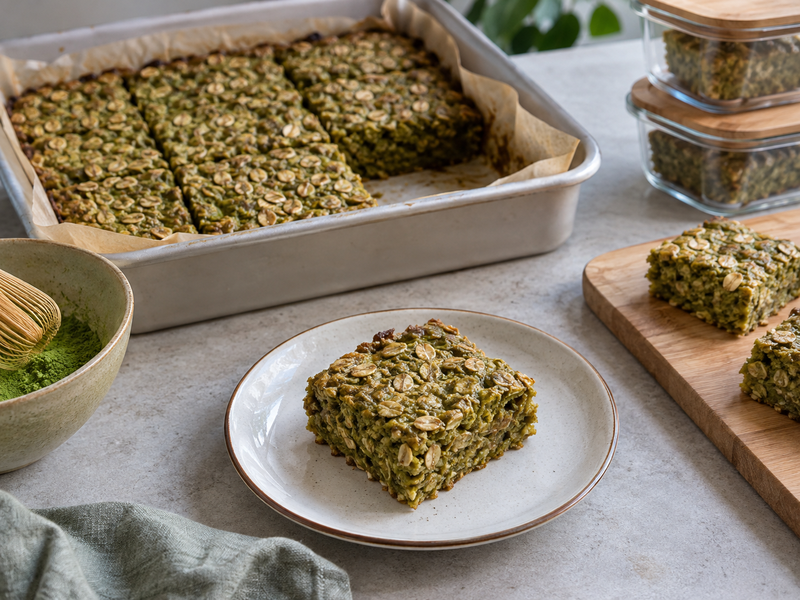
Matcha baked oats can serve breakfast quickly, but a single ramekin recipe may dry out or lose color when multiplied for a café tray. A useful batch test measures batter depth, finished moisture and the result after reheating. That Spicy Chick’s individual baked oats show one combination of blended oats, matcha and toppings. The operator’s task is to adapt the format to the actual oven, pan and service window. Matcha Village’s sample service can provide tea candidates for the bake trial.
Contents
- 1. What breakfast format should be sold?
- 2. Which oat texture works for batch production?
- 3. How should matcha and wet ingredients be mixed?
- 4. What pan size and batter depth make sense?
- 5. How can bake color and center set be judged?
- 6. Which mix-ins survive a larger bake?
- 7. What happens when a portion is reheated?
- 8. How should portions be held and labeled?
- 9. What is the saleable yield and cost?
- 10. Which result is ready for the breakfast menu?
1. What breakfast format should be sold?
Decide between ramekin and tray
An individual dish offers a neat oven-to-table presentation but occupies oven space and costs time to wash or package. A tray can serve several portions quickly, yet corners and center may bake differently. Decide whether the item is served hot, chilled for reheating, or boxed for takeaway. Set a target portion weight and eating texture: soft spoonable center, cake-like square or a slice that holds on a plate. Those targets require different batter depth and bake endpoints.
Taste the product with the café’s likely beverage pairing. A sweet topping may make the oats too rich beside a flavored latte, while a plain oat base may feel austere alone. The single-serve reference uses fruit, nuts and chocolate; those are options to test, not a required commercial formula. Photograph an approved cut or spoonful after the planned service delay. A green top by itself says little about moisture inside.
2. Which oat texture works for batch production?
Compare blended and whole oats
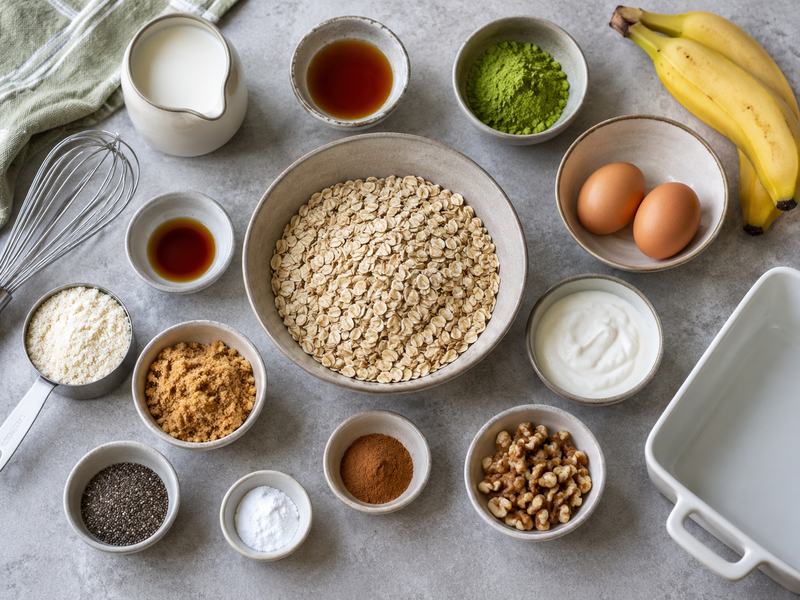
Blended oats can give a cake-like crumb, while visible rolled oats make a more recognizable baked oatmeal. The reference recipe blends oats for an individual dish. A café should compare the texture after a full tray bake and after reheating. Grind size matters: coarse particles may absorb liquid slowly; very fine oat flour may make a dense center. Record the oats’ product specification and whether they are processed in a facility relevant to any gluten-free claim.
Make two small batches with identical matcha, liquid and pan depth. Change only the oat grind. Check batter viscosity at fill and finished texture at several points in the tray. If the center seems underbaked while the edge is dry, a shallower pan or smaller tray may be better than a new ingredient. Keep the chosen oat form in the production sheet; switching to another brand or grind can alter absorption.
| Oat form | Expected texture | Batch question |
|---|---|---|
| Blended oats | Finer, cake-like | Does the center stay soft? |
| Rolled oats | Visible grains | Does liquid absorb evenly? |
| Partial blend | Mixed texture | Is the result consistent across tray? |
3. How should matcha and wet ingredients be mixed?
Avoid green streaks
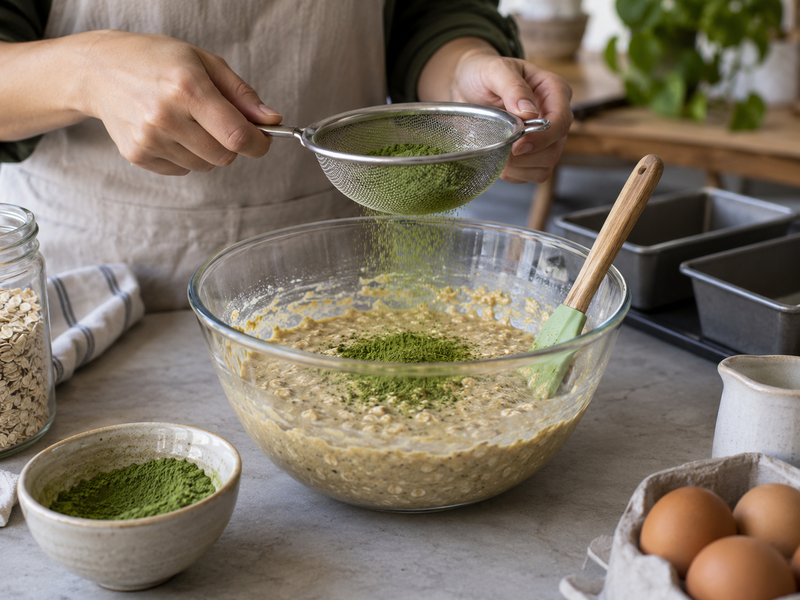
Sift matcha into the dry ingredients before adding liquid, or pre-disperse it in a measured amount of the recipe’s milk. Either route needs an even result in a large bowl. Scrape the bottom and sides because powder can remain there while the visible surface looks mixed. If the formula uses protein powder, egg whites, apple sauce or alternative milk, weigh them; their moisture and thickening effects may differ from the home recipe.
Run a mix-time trial using the actual batch size and equipment. Overmixing a formulated batter can change texture, while undermixing leaves pockets of baking powder or matcha. Sample from the first and last portions deposited into pans. If the final portion is thicker, the oats may be hydrating during filling. Record maximum workable time between mixing and oven loading, then schedule production around it. Supplier documents, rather than a grade nickname, should support any claim about the matcha used.
4. What pan size and batter depth make sense?
Measure geometry before scaling
Multiplying a single ramekin formula into one deep pan changes the distance heat must travel to the center. Weigh batter into each pan and record depth before baking. Compare two pan sizes or fill depths at the same total formula. If a tray must be cut into squares, choose dimensions that produce the intended portion count without narrow edge scraps. Line or grease pans consistently so release does not tear the product.
The reference notes that baking time may change with multiple servings. For a café, do not replace that uncertainty with one guessed timer. Record oven load, pan position and the appearance of the center at the approved endpoint. A full oven may bake differently from one test dish. Include a center and corner sample in tasting. If the dish will be reheated, the slightly softer initial texture may perform differently, but any adjustment must still meet the operation’s cooking and handling controls.
| Pan trial | Keep fixed | Observe |
|---|---|---|
| Shallow tray | Formula and portion weight | Center moisture and cut |
| Deeper tray | Formula and portion weight | Edge dryness |
| Ramekin batch | Formula and serving size | Oven capacity and labor |
5. How can bake color and center set be judged?
Separate tea color from doneness
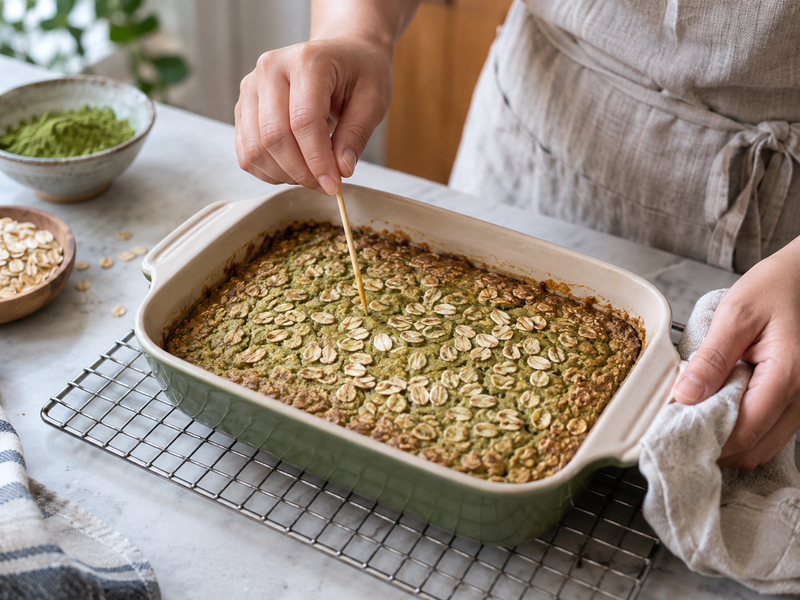
Matcha may look vivid in raw batter and duller after baking. Browned edges can also hide the green center. Do not judge the bake from color alone. Use a repeatable center check suited to the formula, then cut a sample after its planned rest. Record whether the center is creamy, gummy or dry. The acceptable endpoint depends on whether the item is eaten directly or reheated later, but it must be defined by a tasted reference.
Photograph the top and cut center under ordinary service lighting. A bakery display light can make a good product look brown, and adding extra matcha may increase bitterness without correcting the light or bake. Compare matcha candidates in the baked product, not merely as water whisk samples. A powder with a good green appearance may still be overwhelmed by cinnamon, chocolate or sweet protein powder.
6. Which mix-ins survive a larger bake?
Keep toppings from becoming the process
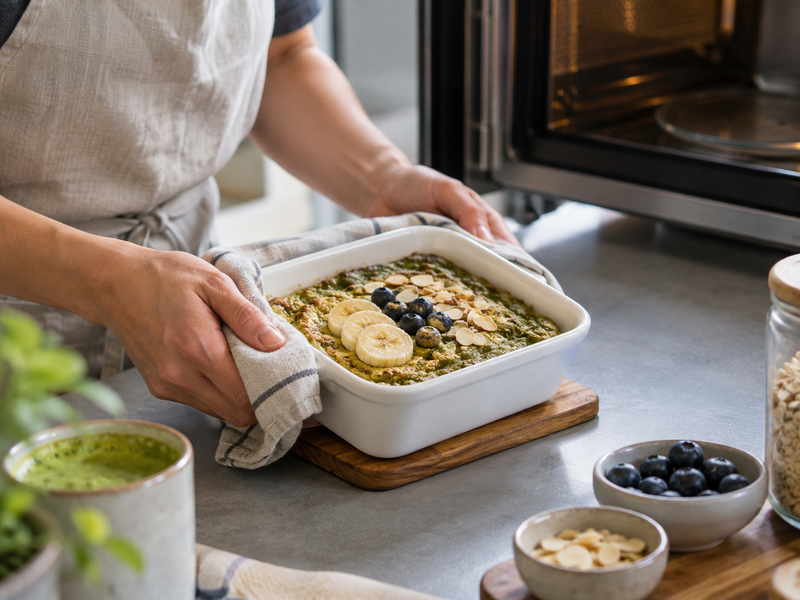
Raspberries, pistachios and chocolate can make an individual bowl appealing, as in the reference. In a large tray, they may sink, release liquid or distribute unevenly. Weigh each add-in for the batch and decide whether it belongs inside the batter or on top after portioning. A fresh fruit topping may look better at handoff than after reheating. Nuts add crunch and an allergen that must be reviewed.
Make a plain control and one mix-in version at equal batter weight. Compare center moisture, cut quality and reheated appearance. If fruit creates wet pockets, reduce the amount or move it to service rather than extending the bake until the entire tray dries. If chocolate hides the tea, a smaller garnish may be enough. The most useful toppings are those staff can portion consistently and customers can identify in the finished square.
| Add-in | Desired effect | Batch risk |
|---|---|---|
| Berries | Acidity | Wet pockets and color bleed |
| Nuts | Crunch | Uneven distribution and allergens |
| Chocolate | Sweet contrast | Covers matcha flavor |
| Yogurt at service | Creaminess | Separate cold handling |
7. What happens when a portion is reheated?
Test the actual service appliance
Reheating is a separate product test. Cut or scoop a portion of the approved weight, store it under the operation’s plan, then reheat it with the café’s oven or microwave. Check center warmth, moisture, edge toughness and whether any topping changes unpleasantly. A tray that tastes excellent fresh may become dry on the second heat. Add-on sauces can mask dryness in a tasting, so evaluate a plain portion first.
Record portion size, container, appliance setting and handoff time. If a microwave makes the texture rubbery, compare a covered oven reheat or sell the oats only during a fresh-bake window. Reheat testing does not establish a safe storage interval. The FDA Food Code is a U.S. model; local requirements and the café’s food-safety plan govern the actual handling. Keep a sample that shows the approved reheated texture for training.
Run the reheat comparison with center and edge pieces from the same tray. Those pieces may start with different moisture, so one appliance setting can make the edge dry while leaving the center soft. Weigh each portion before and after reheating to see whether moisture loss tracks the tasting notes. If a sauce or yogurt is served beside the oats, add it after the plain reheated portion has passed; otherwise the topping can hide a weak base. Write a maximum portion thickness on the service card so staff do not stack two squares in one container and expect the same result.
8. How should portions be held and labeled?
Design the route from oven to counter
Decide whether a baked tray is sold the same morning, cooled for later service or cut and packaged. Each route needs a written handling plan. Identify the pan, batch, bake and portioning steps, and label stock according to the operation’s procedures. A fruit, egg, milk or protein-containing version may need different controls from a simpler oat formula. Do not assume the home recipe’s “meal prep” note provides a commercial use period.
Observe quality over the intended service window. Look for surface drying, soggy toppings, fading color and a change in spoon texture. Test the actual case or holding equipment, not a covered pan in an empty kitchen. Keep allergen and ingredient information current when toppings change. The FDA major allergen guidance is a U.S. reference; the selling market determines final declarations.
| Service route | Quality question | Control to document |
|---|---|---|
| Fresh ramekin | Can it reach the table promptly? | Bake and handoff |
| Cut tray | Are center and edge portions alike? | Portion and rotation |
| Packaged portion | Does it survive transport? | Pack and storage |
9. What is the saleable yield and cost?
Count the portions customers receive
Weigh the baked tray after cooling and cut it with a fixed grid. Count full saleable portions, edge trim and broken pieces. A theoretical twelve-cut plan is not a twelve-serving yield if three pieces crumble. Cost oats, matcha, liquid, eggs or protein, add-ins, toppings, packaging and labor against actual portions. The more elaborate the topping, the more labor a morning rush absorbs.
Compare the economics of ramekins and trays. Ramekins may carry a higher menu price but tie up dishes and oven space; trays can lower assembly time but create trim and uneven corners. Watch the sell-through during a limited breakfast service and note when remaining portions lose quality. If customers mostly add a drink, measure that attachment rather than assuming the oats will sell alone. Keep the final cost tied to the approved taste and reheating result.
10. Which result is ready for the breakfast menu?
Repeat a full production load
The final specification should state ingredient weights, oat grind, matcha item, mixing order, pan and batter depth, oven load, bake endpoint, cooling, cut or scoop size, toppings and reheating method. Have a second shift make a full load from the sheet. Compare center and edge portions with the reference immediately after bake and after the planned service route. A successful single ramekin is only the beginning of the test.
During a limited sale, record customer comments by cause: dry, gummy, weak tea or overly sweet. Adjust one variable at a time. If no version reheats well, offer a fresh-bake period instead of promising all-day breakfast. The product deserves a regular menu line when ordinary staff can produce the approved texture, portion it consistently and serve it within the operation’s handling plan.
| Decision | Evidence | Next action |
|---|---|---|
| Launch | Consistent portions and reheat | Train service |
| Revise | One reproducible texture fault | Controlled trial |
| Hold | Unclear storage or label control | Complete review |
FAQ
Q1. Can a single-serve recipe be multiplied into one tray? It can start a trial, but pan depth and oven load change the bake.
Q2. Why are the edges dry and center wet? The tray may be too deep or the bake uneven; compare pan size and position.
Q3. Is blended oat texture better? It gives a different, finer crumb. Taste both oat forms after baking and reheating.
Q4. Can matcha baked oats be reheated? Test the approved portion in the café’s actual appliance and assess moisture and texture.
Q5. What should the team record first? Batter weight, pan depth, baked yield and center-versus-edge texture.
Bake a shallow tray beside several individual dishes from the same batter. Their cut centers and reheated portions will show which format can survive a real breakfast shift.