
A matcha sifter canister combines powder screening with a temporary holding vessel. That can clear a café counter, but it also creates a new question: how long will sifted tea sit in the container, and how will staff keep moisture and old powder out? Nio Teas’ canister guide describes the format. A buyer should evaluate its actual lid, mesh, cleanability and portioning flow before treating it as a storage solution.
Contents
- 1. What job should the canister perform?
- 2. Is the lid suitable for the intended holding period?
- 3. How does its sifting mechanism perform?
- 4. What capacity fits a real service block?
- 5. Can staff portion accurately from it?
- 6. Where can moisture enter the system?
- 7. How should cleaning and batch changeover work?
- 8. What defects should wholesale buyers reject?
- 9. Does it earn space in a retail set?
- 10. When is the canister ready to buy?
1. What job should the canister perform?
Distinguish prep from storage
A canister may be a useful prep tool for sifting a small working amount of matcha before a service block. It should not automatically replace the tea’s primary pack. The primary pack may have barrier properties and supplier storage instructions that a serving canister does not. Decide how many drinks the café expects to make from one fill and where the remaining tea will stay. For a retail customer, determine whether the vessel is part of daily preparation or simply a decorative caddy.
Map the movement from sealed tea pack to sifter to bowl. Count transfers, open-lid time, powder spills and any residual tea left after closing. The Nio Teas article presents a convenient integrated format; convenience needs a service trial. If the vessel only adds another step before staff use a scale, a separate handheld sieve may be simpler. If it neatly serves several bowls without repeated mess, it may be worth the extra cleaning.
2. Is the lid suitable for the intended holding period?
Check closure without inventing shelf life
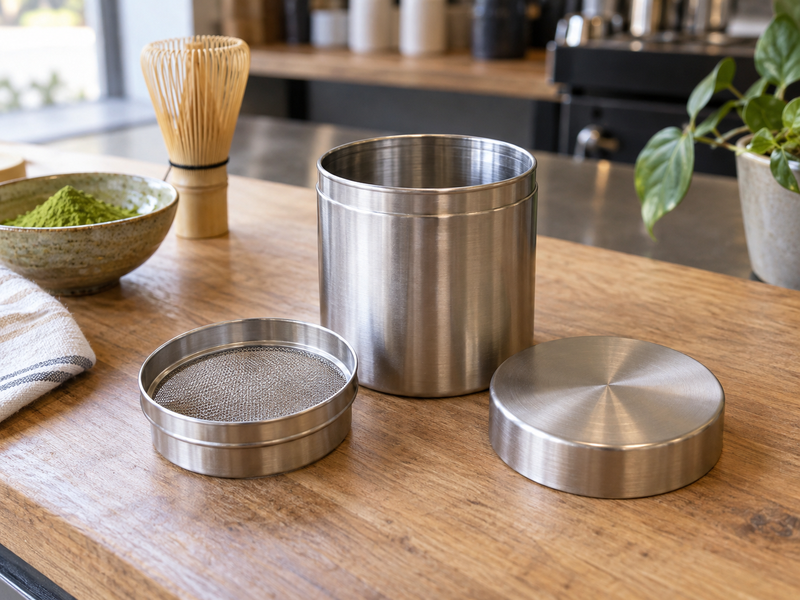
Inspect how the lid meets the body and whether it stays in place when the vessel is moved. Test opening with dry hands, then with the normal gloves or routine used at the station. A loose lid invites powder spills; an overly tight one may require staff to pull hard near a full bowl. Look at gaps around a built-in crank or moving part as well as the top closure. A canister can appear sealed while having another path for air or moisture.
Do not describe the container as airtight or protective without a supplier specification and a suitable test. Matcha quality depends on the powder, original packaging and actual storage conditions. Keep only a working amount in the canister according to the operation’s documented plan. Label the fill with tea item and lot so old and new powder are not mixed. A neat canister should make stock control clearer, not obscure the source of a weak cup.
| Closure check | Trial action | Concern |
|---|---|---|
| Lid fit | Move a filled vessel | Spill |
| Opening | Repeat with staff | Delay or powder puff |
| Mechanism gap | Inspect all openings | Moisture path |
| Label space | Mark item and lot | Traceability |
3. How does its sifting mechanism perform?
Compare output with a handheld sieve
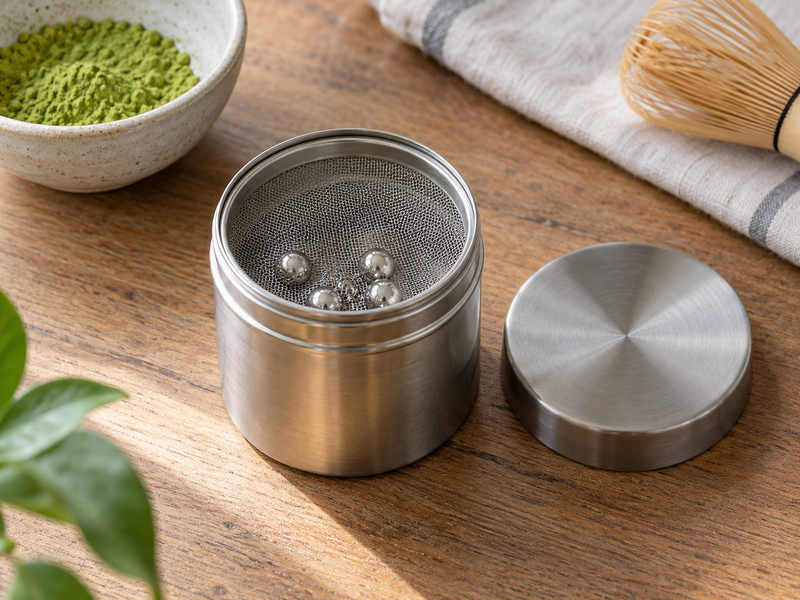
Some canisters include an internal mesh and a turning or shaking mechanism. Put a weighed amount of the actual matcha into each candidate and collect the sifted output. Record time, visible clumps left behind, powder stuck to the mesh and consistency of flow after several cycles. Compare the result with a separate sieve used by the café. The mechanism should make preparation easier without forcing powder through a damaged or overloaded screen.
Inspect whether the mechanism can be disassembled for cleaning under the supplier’s instructions. A crank that feels smooth when empty may jam with powder in a seam. Test at the proposed fill level and again when nearly empty. If most of the tea remains trapped when the canister is low, usable capacity is smaller than the label implies. A vendor video of one clean turn cannot substitute for repeated-dose trials.
4. What capacity fits a real service block?
Size the working fill
Calculate expected tea use from the café’s recipe dose and planned order range, then choose a working fill rather than filling the canister to the rim. Leave enough room for the mechanism to move and for staff to open it without a green cloud. Run a half-full and near-full test. A large vessel may look efficient but hold more powder than the shift can use under its quality plan; a tiny one may need constant refilling.
Count how many saleable doses come from a fill before the mechanism slows or powder clings to the walls. Record residue at the end. If staff repeatedly top up old material with new, the container is too large for the workflow or the refill procedure is weak. For a retail set, size should also match the supplied tea pack and fit the box without crowding a bowl and whisk.
| Size option | Service benefit | Trial risk |
|---|---|---|
| Small | Fresh working fill | Frequent refill |
| Medium | Several orders | Cleaning at changeover |
| Large | Fewer fills | Old powder and counter space |
5. Can staff portion accurately from it?
Separate sifting from weighing
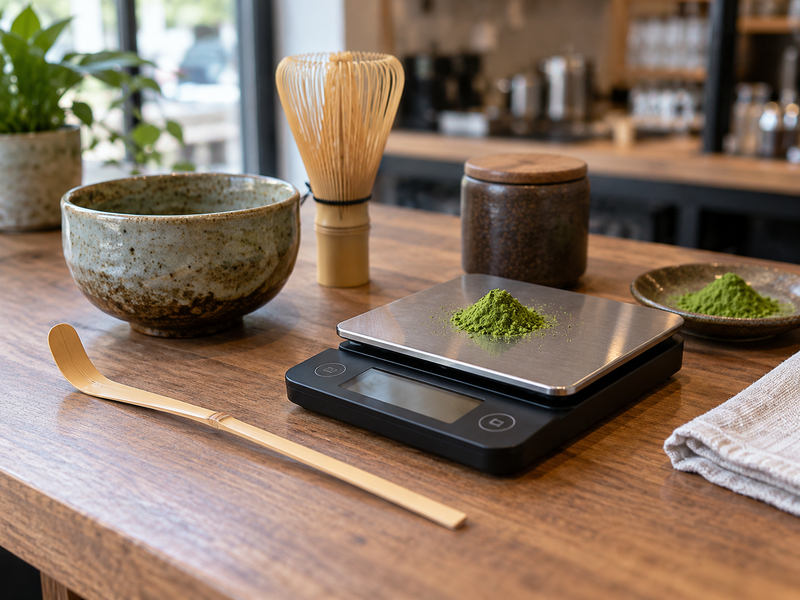
The canister may deliver fine powder, but it may not deliver a fixed amount each time. If it has a dispensing gate or shake-to-pour feature, collect repeated portions on a suitable scale. Test with different fill levels. Staff should not assume one turn of a crank equals the beverage recipe dose unless measured. If it is only a storage vessel, choose a compatible scoop and check whether its opening allows a clean transfer.
Observe a run of ten drinks. Does powder stay inside the bowl, or dust the counter when the vessel is tipped? Does the last serving require scraping a narrow corner? For a scale-based café, the canister should make powder available while the scale controls mass. For a beginner set, a care card can explain that a scoop is approximate and a gram target is more precise. Do not print a guaranteed dose without validating the actual canister and matcha.
6. Where can moisture enter the system?
Inspect the station, not only the gasket
Steam from a kettle, splashes from the sink and damp utensils may matter more than the lid material. Put the canister in the proposed position for a trial shift and observe when it is opened. If staff reach over a steaming pitcher with an open canister, move the station. Dry all components according to the operation’s cleaning plan before refilling. A fine mesh can blind quickly if a small wet patch meets powder.
Check the underside of the lid, crank area and inner walls after service. Clinging powder may indicate static, moisture or rough surfaces; diagnose before claiming the vessel keeps tea fresh. The canister is a temporary handling tool unless its barrier performance has been documented for longer storage. Follow the matcha supplier’s storage instructions for the unopened and opened primary pack. A bright tea sample on day one cannot establish a storage period inside a secondary container.
| Moisture source | Observation | Response |
|---|---|---|
| Steam | Opening near hot station | Relocate canister |
| Cleaning water | Damp seam or mesh | Dry before refill |
| Wet scoop | Clumps near opening | Separate tools |
| Condensation | Cool pack opened in humid area | Review handling |
7. How should cleaning and batch changeover work?
Avoid mixing yesterday’s powder
Write a procedure for emptying, cleaning, drying, inspecting and refilling the canister under the café’s food-contact plan. Check whether the mesh and any moving part can be removed without tools. Powder lodged behind an inaccessible screen can carry over into the next lot and make cleaning uncertain. If the design cannot be disassembled as the operation requires, reject it for shared foodservice use.
Record the tea item and lot at each fill, especially when several matcha grades are used. Never hide leftover powder by topping the vessel up without a documented rule. During a pilot, ask staff to perform a full changeover at closing and time it. A convenient dispensing action can be outweighed by slow cleaning. For a consumer set, the care instructions should be clear enough that a first-time user can empty and dry the vessel without bending mesh.
8. What defects should wholesale buyers reject?
Build a functional sample plan
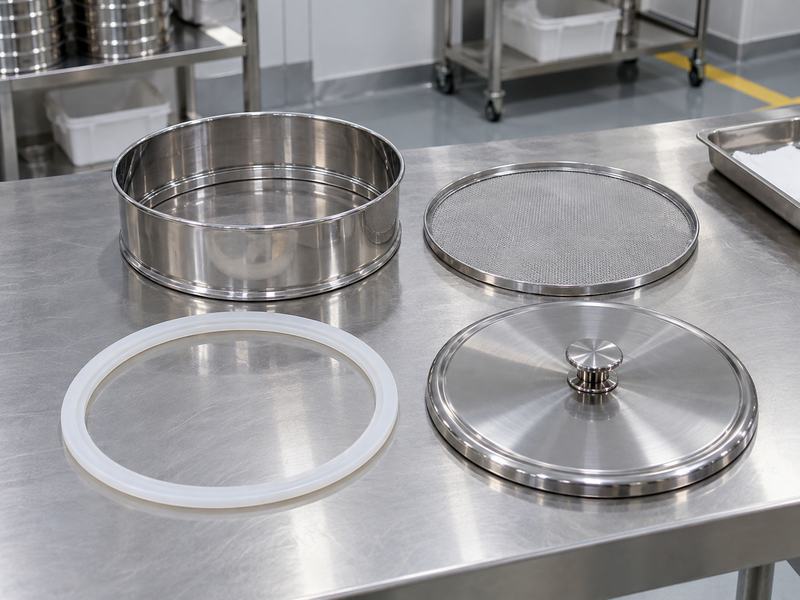
Inspect several units from the proposed production batch for lid fit, mesh tension, smooth mechanism movement, internal finish and packaging damage. Test one filled unit from each carton position rather than accepting the supplier’s display sample alone. A slightly different lid tolerance can change both spill risk and ease of opening. Photograph acceptable variation and clear failures.
Ask for material and food-contact documentation for the specific item and intended market. If a canister is sold as airtight or suitable for long tea storage, request the evidence behind that claim before printing it on a retail box. Test whether the supplied instructions match the physical product. Keep a retained approved unit, since small revisions to an internal mesh or crank can change throughput while leaving the outside unchanged.
At receipt, open a sample canister and look beneath the moving parts, not only at the visible outer walls. Powder can collect behind a lip that seems inconsequential in a catalog image. Check whether the lid, screen and weight or crank components arrive in the right quantities and fit without force. Run the same measured dose through two or three units and compare the output, then clean each by the printed method. If a variation makes one unit hard to disassemble, log it before stock is distributed to stores. A consistent appearance does not guarantee consistent service behavior.
| Incoming check | Pass condition | Reject cue |
|---|---|---|
| Lid | Secure and usable | Spills or binding |
| Mesh | Even, intact | Tear or loose wire |
| Mechanism | Smooth under load | Jamming |
| Interior | Cleanable | Inaccessible residue trap |
9. Does it earn space in a retail set?
Make the user benefit obvious
A canister adds cost, weight and box volume. In a premium set it may look substantial, but a beginner may be better served by a bowl, whisk and a simple separate sieve. Ask a new user to unpack both set options and make the first bowl. Do they understand where tea is stored, how much to add and when to sift? A canister that needs a long explanation may not be the right first purchase.
Compare landed cost, protective insert, care card, damage rate and customer use in a small pilot. Matcha Village’s company materials discuss tea and gift-set combinations, but a specific canister, packaging design or sourcing capability needs a current sample and quote. Do not promise that the vessel extends tea life unless the final configuration has been validated. Its strongest claim may simply be a tidier sifting workflow.

10. When is the canister ready to buy?
Approve the complete operating routine
The purchase sheet should state material, capacity, working fill, mesh and mechanism, lid, dimensions, cleaning method, pack and inspection limits. Run the preferred sample through several service blocks with the actual tea. Compare powder flow, portion variation, residue and changeover time against a separate sieve and primary-pack workflow. The canister should improve at least one real task without weakening traceability or cleaning.
For retail, complete an opening test and shipping trial with the full set. For café service, get operations and quality agreement on where it sits and how it is refilled. If the business cannot define a safe, clean changeover, delay the purchase. A sifter canister is useful when staff know exactly what it holds, how long it is a working vessel and how it returns to a clean state.
| Approval gate | Evidence | Owner |
|---|---|---|
| Flow | Repeated-dose test | Beverage team |
| Closure | Handling trial | Operations |
| Cleaning | Changeover demonstration | Quality |
| Pack | Transit test | Packaging |
FAQ
Q1. Does a sifter canister replace matcha’s original pack? Treat it as a working vessel unless storage performance and use are documented.
Q2. Does one crank turn equal one serving? Verify repeated output on a scale; do not assume it.
Q3. Why does powder stop flowing? Check fill level, mesh blinding, dampness and mechanism condition.
Q4. Is a larger canister always better for cafés? No. Match capacity to a service block and a clear refill plan.
Q5. What should a wholesale buyer inspect first? Lid fit, mesh, loaded mechanism, interior cleanability and pack damage.
Fill the proposed canister with the chosen matcha and run it through a normal shift. Its value will show up in cup consistency, clean changeover and how much powder remains usable at closing.