
Matcha clumps are easy to see in a clear cup and frustrating to fix during a rush. They can form because a fine powder has packed together, because humidity reached an open container, or because dry powder was added to too much cold liquid at once. Those situations need different responses. Sifting helps some drinks; a damaged, damp pack should not simply be sifted and sold.
Contents: Causes · Safety · Powder · Sieve · Slurry · Cold · Tools · Storage · Supplier · SOP
1. Why Do Matcha Clumps Form?
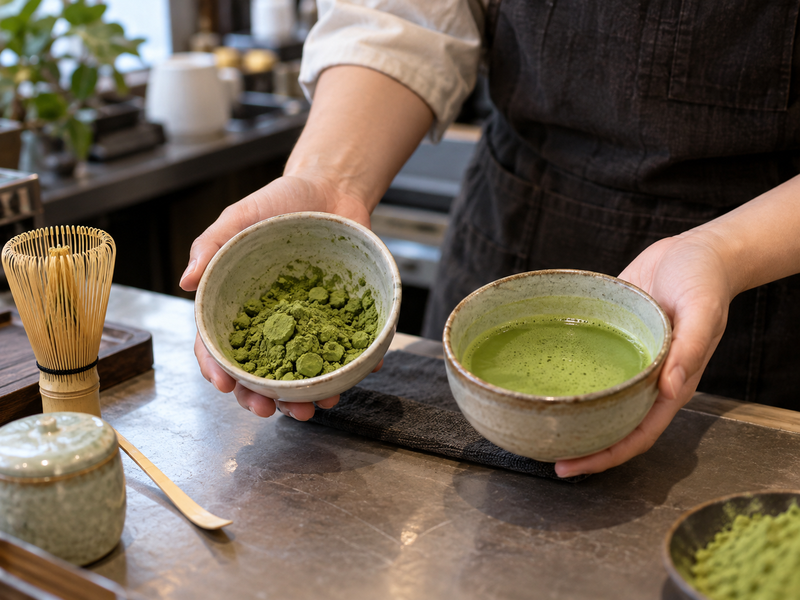
Identify whether the powder or the method changed
Matcha is a fine ground leaf powder. Fine particles can stick together when packed, squeezed by a scoop or exposed to moisture. The way powder meets liquid also matters. A large cold cup can wet the outside of a mound while leaving dry powder in the center. If staff then stir briefly, the cup can contain small green pockets. A clump is therefore an observation, not a diagnosis.
Begin with three questions. Was the pack intact and stored as instructed? Does the dry powder contain hard masses or only soft compacted bits? Does a fresh sample from a sealed pack behave the same way under the same recipe? These checks separate a storage problem from a preparation problem. If the issue appears only in one store, inspect the service jar, scoop and water amount. If it appears across sites with the same new lot, discuss the lot with the supplier.
Matcha does not truly dissolve like sugar; its particles disperse in liquid. The goal is a smooth suspension without visible dry pockets. A perfectly clear liquid is not a realistic target for pure powder.
| Observation | Possible cause | First check |
|---|---|---|
| Soft dry lumps | Packing or settling | Break a small amount apart |
| Hard damp lumps | Moisture exposure | Inspect seal and storage |
| Clumps only in cold milk | Mixing sequence | Make a small base first |
| Clumps across one lot | Powder or pack change | Compare retained sample |
2. When Are Clumps a Quality Warning?
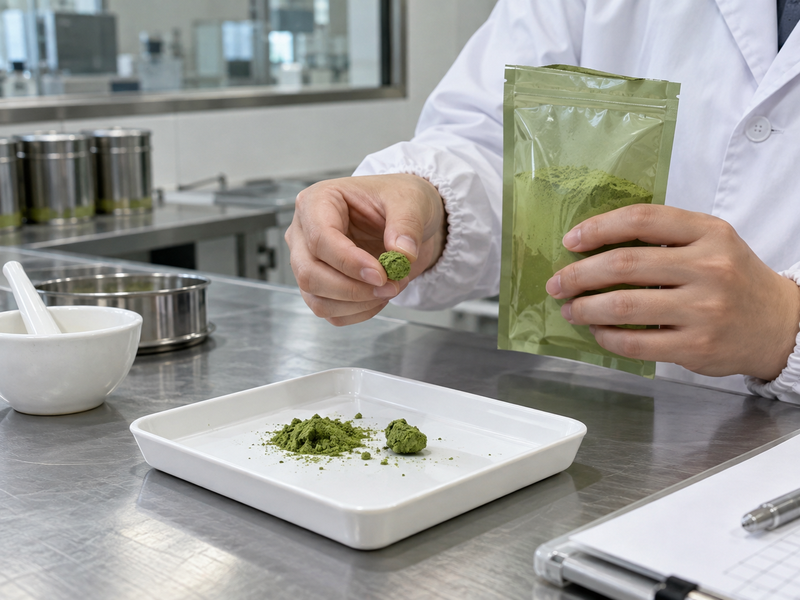
Do not mix away evidence of damage
Some soft clumping is a normal handling issue with fine powders. Hard, damp masses, an unusual odor, visible moisture or a broken seal are different. Isolate the affected pack and record its lot number. The receiving or quality team should compare it with a sealed reference and contact the supplier. A sieve can remove visible lumps, but it does not establish that a moisture-damaged ingredient is safe or suitable for use. Staff need authority to hold questionable stock rather than being rewarded for hiding a defect in a sweet drink.
Check the outer carton and inner pack separately. A carton can be damp while a well-sealed inner pouch remains protected; the reverse can also happen if a seal failed. Photograph damage before discarding packaging. For a multi-site operation, ask whether other locations have the same lot. Keep the investigation factual: lot code, date opened, storage area, appearance and recipe method. Avoid assuming that every clump means spoilage or that every green powder is acceptable because its color still looks attractive.
The supplier’s specification should say how to handle damaged or nonconforming product. If it does not, agree on a process before placing a large order.
3. Can a Fine Powder Still Clump?
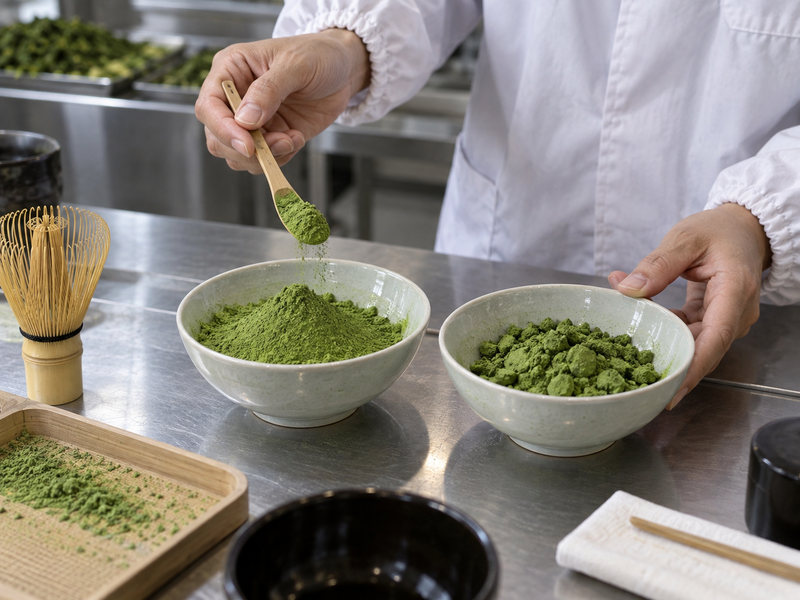
Fineness and flow are different properties
Yes. Very fine particles can form small agglomerates even when the underlying powder is suitable for a smooth drink. Fineness can improve mouthfeel after proper dispersion, while poor flow can make dry powder harder to portion. A powder may arrive loose in a new pouch and compact after repeated scooping. Neither a marketing claim of “ultrafine” nor a photograph of fluffy powder proves how it will behave in your bar.
Test a candidate with the intended service process. Weigh a portion from a fresh pack, then from the working container after a normal shift. Make both drinks with the same liquid and tool. Record whether staff need to sift and how much time that step adds. If a powder requires a delicate method that busy staff cannot repeat, a slightly different grade may be a better commercial choice. For a bottled product, the manufacturer should evaluate particle behavior and settling in the full formula rather than relying on a café whisk test.
Do not confuse dry flow with finished-drink smoothness. A powder that pours easily may still be coarse; one that compacts a little may disperse well after a controlled base is made.
| Property | Observe dry | Observe in drink |
|---|---|---|
| Fineness | Powder texture | Mouthfeel |
| Flow | Scooping and pouring | Portion speed |
| Wetting | Not visible dry | Dry pockets after mixing |
| Stability | Not visible dry | Settling over service time |
4. When Does Sifting Help?
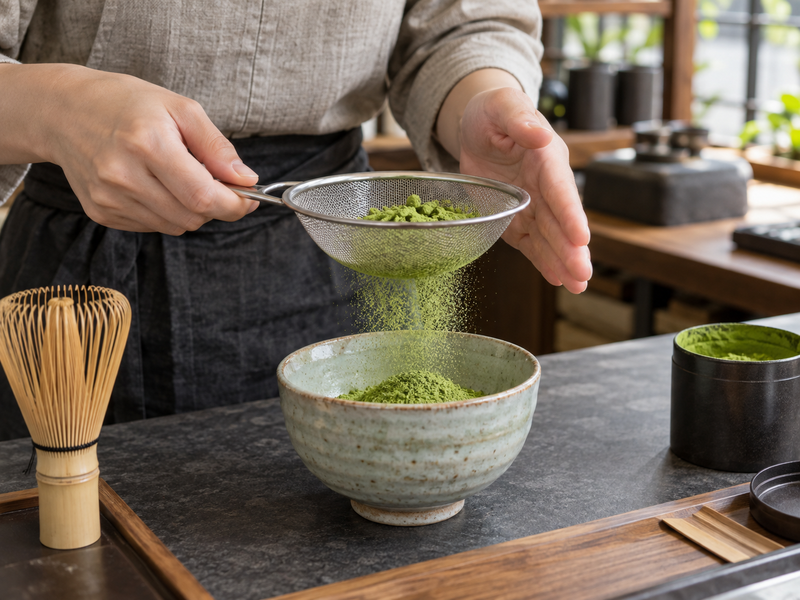
Use it for soft agglomerates, not damaged stock
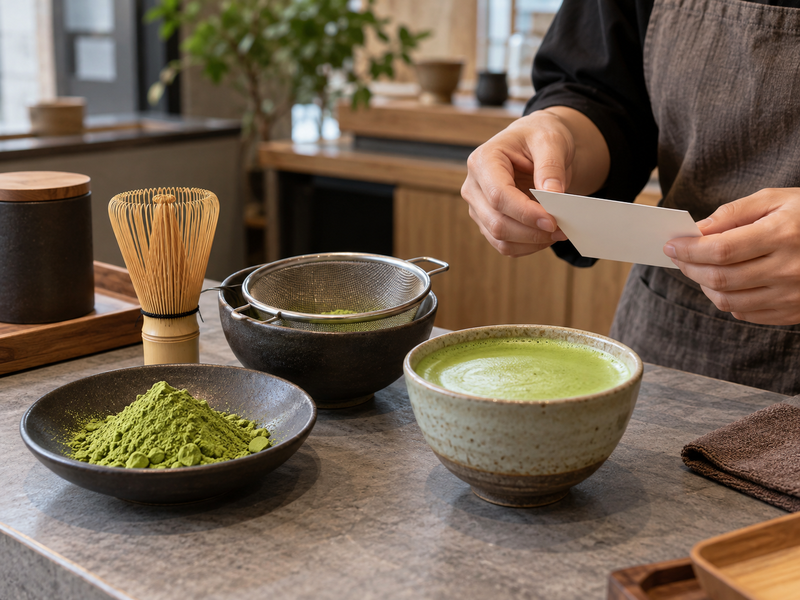
A clean, dry fine-mesh sieve can break up soft lumps and spread powder across a bowl before water is added. The step is useful when the chosen matcha tends to pack in a service tin or when staff make plain tea where clumps are obvious. It is less useful if the powder has absorbed moisture and formed hard masses. Reject or investigate that material first. Sifting also cannot compensate for adding dry powder directly to a large cold liquid and stirring inadequately.
Decide whether sifting belongs in the standard recipe or only in a troubleshooting procedure. A café with low volume may accept the extra seconds. A busy chain should test the time and cleanliness impact. Keep the sieve dry and clean it on a defined schedule; residue can carry moisture or old powder into the next cup. If the step causes powder loss, account for it when setting dose and cost. Check what falls through the sieve rather than assuming every retained bit is harmless.
A good staff instruction says what to do with the powder that will not pass a sieve. Forcing a hard lump through with a spoon is not a quality control method.
5. How Should a Smooth Base Be Made?
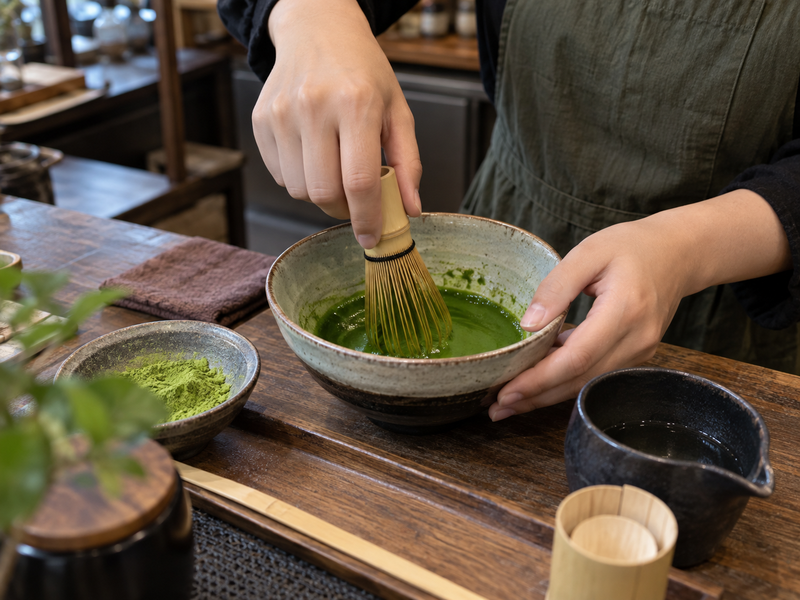
Wet a measured portion before adding the main liquid
Weigh the matcha, place it in a clean bowl or mixing vessel, and add a small measured amount of water. Whisk or mix until no dry powder remains on the wall or at the bottom. Then add the remaining water, milk or other liquid according to the recipe. This controlled base gives the powder an easier path into a larger drink. The water volume and temperature should be tested with the specific powder; too little makes a paste that is hard to move, while too much can dilute the finished cup.
Use the same tool during supplier comparisons. A powerful mixer can hide differences that become obvious with a hand whisk at the bar. Observe the cup immediately and after a few minutes. Fine settling is a different issue from dry clumps and may need a different service instruction. If a batch base is prepared in advance, validate its covered hold time and re-mixing procedure. Do not let staff rely on an unmarked jug that sits throughout a shift.
| Base step | Define in recipe | Check in cup |
|---|---|---|
| Powder | Grams and lot | Tea strength |
| First water | Volume and temperature | Wetting |
| Mixing | Tool and time | Dry pockets |
| Final liquid | Volume and order | Smooth finish |
6. Why Do Cold Drinks Show More Clumps?
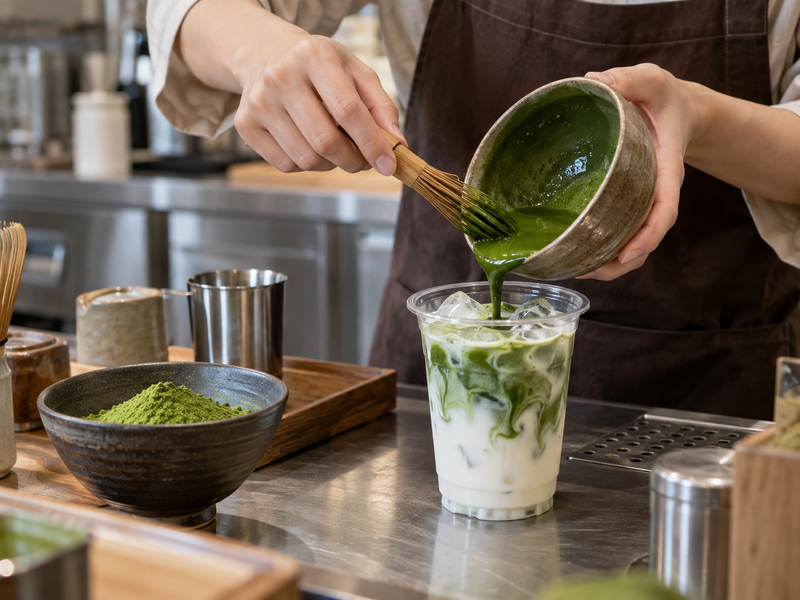
Cold liquid is a demanding first contact
When dry matcha lands on cold milk or ice, it may not wet evenly before the barista finishes stirring. Ice also blocks the tool and hides pockets near the bottom of the cup. Prepare a smooth base first, then add chilled ingredients in the order that the team has tested. A shaker or mixer can work, but the recipe should specify powder, liquid, ice, time and container. “Shake until smooth” is too vague for a chain that needs the same cup across shifts.
Test the drink through a realistic service period. A clear cup may show a few specks that customers notice, while a dark or opaque cup can conceal them without improving the texture. Taste the first and last sips. If matcha collects at the bottom, the issue may be settling rather than clumping. That suggests a mixing-before-handoff instruction or a different powder for the format. A layered drink can be visually attractive, but the customer should know whether to stir it.
Avoid making a cold recipe stronger just to mask uneven mixing. Fix the dispersion step first, then revisit flavor and cost.
7. Which Mixing Tools Work at Scale?
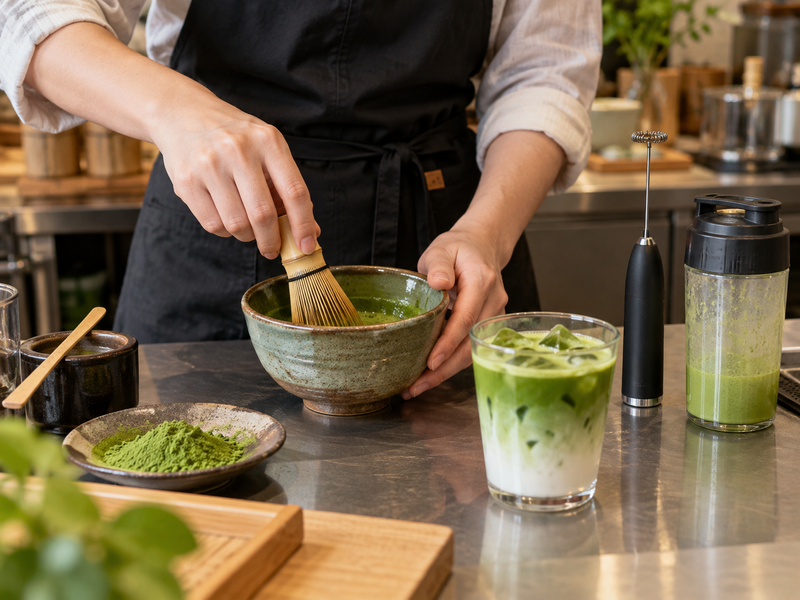
Choose a tool that matches volume and training
A bamboo whisk can make a smooth small serving in practiced hands. A handheld frother or commercial mixer may be faster for a high-volume bar. A blender can handle larger or frozen formulas, though it may add foam, heat or cleaning time. Each tool changes the drink. Test the actual equipment, not a laboratory substitute, and include cleaning and changeover in the time study. A powder that performs only with one skilled person may be a poor choice for a wide rollout.
Check the end of the process. Are dry deposits stuck under a blender blade or on the side of a tall vessel? Does the first cup from a batch pitcher differ from the last? Is the texture still acceptable after the drink sits for a short period? Use these observations to specify mixing time, vessel size and re-mixing. A production facility should validate its own equipment and food-safety controls; a café method is not a manufacturing specification.
| Tool | Strength | Watch for |
|---|---|---|
| Bamboo whisk | Small-cup control | Staff skill and speed |
| Hand mixer | Fast service | Foam and cleaning |
| Shaker | Cold drinks | Dry pockets at seams |
| Blender | Frozen or batch drinks | Residue and over-aeration |
8. How Can Staff Prevent Clumps Between Shifts?
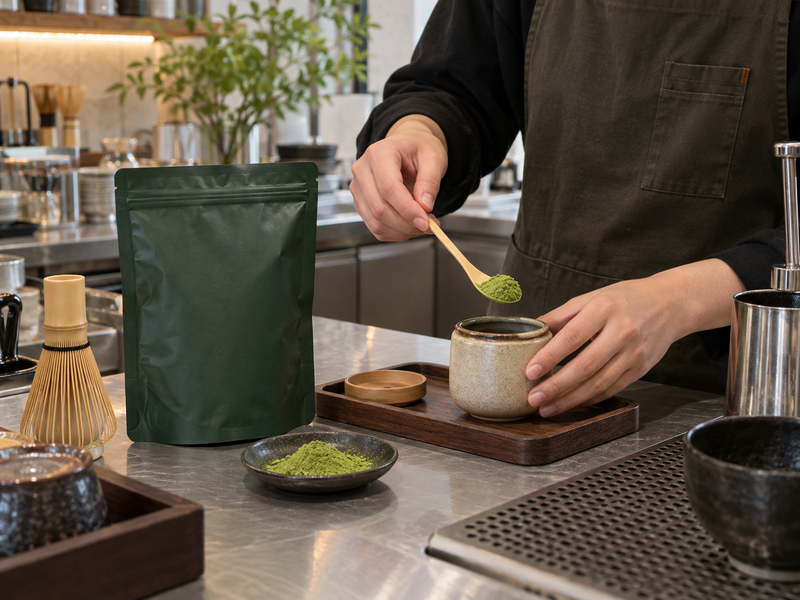
Protect the powder before it meets water
Keep reserve matcha sealed in its protective pack and transfer only a small working quantity to a clean, dry container. Close it after each use. Store it away from steam, wet sinks, direct sun and strong odors. A scoop that has touched a wet counter should not go back into the powder. Label the working container with its lot and opening date so teams can compare a problem with stock from the same delivery.
At shift change, inspect the lid, scoop and powder surface. Soft compaction can be broken up during normal preparation; hard or damp lumps should trigger an isolation step. If one station develops clumps repeatedly, look at its location and workflow. A steam wand or dishwasher nearby may matter more than the supplier’s milling claim. Train staff to report defects without improvising a fix in the customer’s cup.
For a central kitchen, extend the check to transferred bags and batch containers. Each open-and-close cycle is an opportunity for moisture entry or powder loss. A sensible pack size can reduce handling.
9. What Should a Supplier Be Asked to Test?
Compare production lots under your method
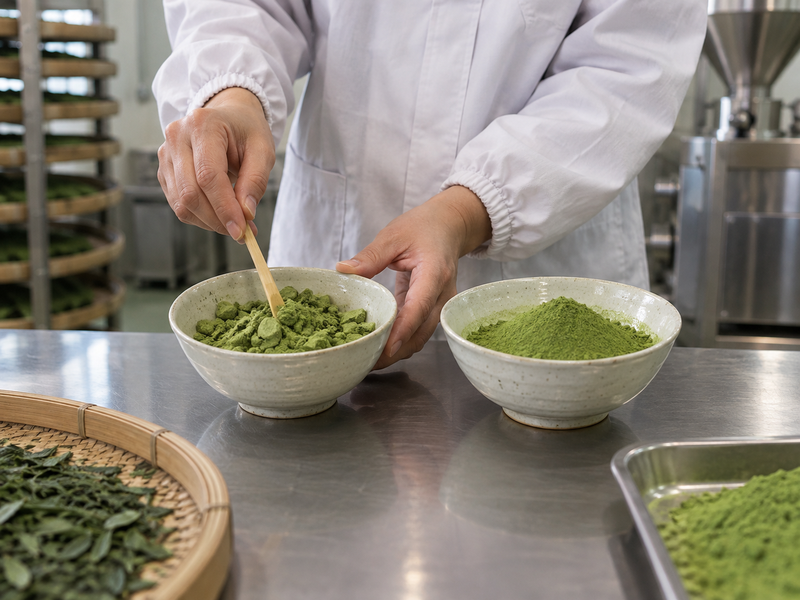
Ask the supplier for a representative production sample, product specification, packaging details and relevant lot test results. Describe the clump problem precisely: where it occurs, whether dry powder is affected, and the exact recipe method. If a new lot behaves differently from the approved sample, send both for comparison. Matcha Village’s company material describes testing support and bulk formats; request evidence for the particular lot and pack offered rather than relying on a general capability statement.
Discuss particle fineness and moisture control if they are relevant to the failure, but avoid assuming one number explains the drink. A powder can meet an internal fineness target and still clump under a poorly designed cold process. A supplier may propose a different grade, packaging size or mixing sequence. Run that proposal at the bar and record whether it solves the observed problem without changing flavor or cost unacceptably.
| Supplier question | Useful evidence | Buyer test |
|---|---|---|
| Did the lot change? | Batch record and retained sample | Same-recipe comparison |
| Is the pack protective? | Material and seal specification | Open-pack service trial |
| Is fineness suitable? | Specification if available | Mouthfeel and clump check |
| What method is advised? | Preparation guidance | Peak-hour trial |
10. What Belongs in a No-Clump Service Procedure?
Make the fix observable
Write the powder dose, tool, first-water volume, mixing time, ingredient order and final cup check on one recipe card. Show staff a normal finished drink and a failed example. State when to sift, when to remake a cup and when to isolate a pack. If the cup contains hard green pockets after the standard method, serving it anyway undermines the product promise. The procedure should also cover cleaning and dry storage for the sieve, scoop and working container.
Pilot the method with staff who did not develop it. Watch the process during a busy hour and compare drinks from several workers. If it requires too many hidden judgments, simplify it or choose a more forgiving powder. Record the approved lot, then compare the next delivery using the same method. A routine that works only with a fresh sample on a quiet day is not ready for rollout.
The best outcome is not a promise of zero visible particles forever. It is a clear standard for a smooth drink, a way to detect deviations and a decision path when powder or conditions change.
FAQ
Q1. Does sifting always remove matcha clumps?
It helps break soft agglomerates. It should not be used to hide hard, damp lumps or damage from a failed seal. Investigate that stock first.
Q2. Why does matcha clump more in cold milk?
Dry powder may wet unevenly in a large cold volume. Make a small smooth base first, then add milk and ice using a tested sequence.
Q3. Are small dry lumps evidence that matcha has spoiled?
Not necessarily. Fine powder can compact. Check the seal, odor and moisture signs, then compare with a fresh reference before deciding.
Q4. Can a blender solve clumping in every product?
A blender may disperse powder in some formulas, but it can add foam or leave residue, and it does not fix damaged stock. Test the finished drink and process.
Q5. When should a café contact its supplier?
Contact the supplier when a new lot differs from the approved sample, hard damp clumps appear, several stores report the same issue, or the standard method no longer works.
For a consumer troubleshooting view, see Tasting Table’s article on clumpy matcha. For supplier selection, see our bulk matcha buyer guide. Keep the service procedure tied to the powder and pack you actually purchase.