
Matcha simple syrup can speed up a bar, yet a green bottle that separates overnight can slow it down again. The matcha particles do not become sugar, and a recipe that tastes bright in a tasting spoon may disappear in a full drink. This guide gives beverage and dessert teams a measured way to develop, cost, store, and specify a matcha syrup. We approach it from the ingredient supplier’s side, where the finished application matters more than a powder grade name.
1. What is matcha simple syrup, technically?
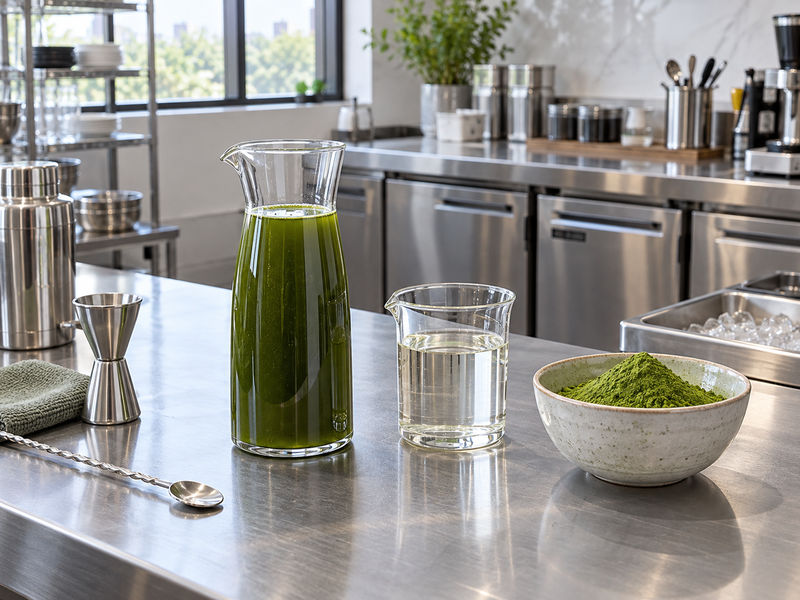
Simple syrup is sugar dissolved in water. Matcha simple syrup adds finely milled green tea to that sweet liquid. The tea is largely suspended, not truly dissolved, so some settling is expected unless the formulation and process are designed for suspension. That distinction explains why a syrup may look uniform after blending and show a green layer or sediment later. It also explains why shaking instructions can matter at service.
The name can cover several commercial products: a fresh café preparation, a thick dessert drizzle, a flavored retail syrup, or a powder designed to be mixed into syrup on site. Define which one you need before selecting ingredients. A cocktail bar may value fast mixing in a cold shaker. A bakery may need a syrup that brushes evenly onto sponge cake. A beverage plant may want a concentrate compatible with pumps and dosing lines. The target use determines sweetness, thickness, matcha intensity, pack, and testing plan.
2. Which matcha simple syrup formula variables should a development team set?
Begin with weighed sugar and water, then specify matcha as grams per kilogram of finished syrup. A one-to-one sugar-to-water starting point is convenient for a bench trial, but it is only a formulation choice, not a food safety guarantee. Make two or three matcha levels around your sensory target. Record the final yield after heating because evaporation can change sweetness and pourability. If your drink already contains another sweetener, calculate total sweetness in the finished serving rather than judging the syrup alone.
Consider viscosity and pumpability together. A very thick syrup may leave attractive green ribbons in a glass but dispense unevenly through a standard pump. A thinner one can integrate quickly but require more volume for flavor. Test the lowest matcha dose that still shows up in the actual drink. That dose may differ between a clear sparkling beverage, oat latte, and chocolate sauce. Keep a control batch without matcha so the team can distinguish tea effects from the base syrup.
| Variable | Record | Decision it affects |
|---|---|---|
| Sugar and water weights | Inputs and finished yield | Sweetness and viscosity |
| Matcha dose | Grams per kg of syrup | Tea flavor and sediment |
| Heat exposure | Time and temperature | Color and aroma |
| Dispense method | Pump, squeeze bottle, pour | Portion consistency |
3. How should buyers choose matcha for syrup?
Choose powder by performance in the finished syrup and application. A darker, more assertive matcha may suit a cocktail with citrus or a sweet cake soak. A smoother, brighter powder might be needed in a lightly sweet iced tea. Ask suppliers for application samples with lot identification, a specification, and storage guidance. Compare powders at equal dose in the same syrup base; a cup of hot water does not predict behavior in a sweet, cold liquid.
Check color after preparation and over the intended use period. Look for coarse particles, off-aroma, excessive bitterness, and uneven dispersion. A powder can be finely ground yet still settle because its particles are not soluble. Do not pay for a grade name without seeing what it changes in your product. For a multi-store program, ask whether the chosen sensory and color range can be supplied consistently and how replacement lots will be approved. Retain the tested sample and its syrup formula together so later comparisons use the same reference.
4. What production method gives a repeatable result?
Weigh the inputs. Dissolve sugar in water under a controlled heating step if that is your recipe, then avoid prolonged heat exposure after adding matcha. Many operators disperse matcha separately into a small measured amount of liquid before blending it into syrup; this reduces dry clumps. Record the order of addition, mixing equipment, mixing time, and product temperature. A countertop whisk, high-shear mixer, and recirculating tank can produce different suspension behavior even with the same formula.
Straining is a trade-off. It may remove clumps, but a fine filter can also remove tea solids and change flavor or color. Measure yield before and after filtration. Run the process at least twice with different operators, then compare bottles after a normal hold. If the second batch looks different, the written method needs more detail. For a commercial product, validate cleaning, handling, filling, and process controls with your food safety team rather than assuming a kitchen trial is a production procedure.
| Step | Control to write down | Visible failure |
|---|---|---|
| Make base syrup | Weights, heat, final yield | Inconsistent thickness |
| Pre-disperse matcha | Liquid amount and mixing tool | Dry clumps |
| Combine | Temperature and mixing time | Uneven green color |
| Fill | Pack and filling condition | Air, leaks, or portion drift |
5. Why does matcha syrup settle or change color?
Tea particles can move through liquid under gravity. A taller bottle may show a more visible gradient than a shallow container, even when both hold the same syrup. Sugar concentration and viscosity influence how quickly particles settle, but they do not turn the powder into a soluble flavor. Test the actual service bottle or retail pack. Record the appearance after filling, after the proposed hold, and after a defined number of gentle inversions. If shaking is needed, decide whether staff can do it consistently and whether the pack allows it safely.
Green color may also change with exposure to heat, light, oxygen, and other recipe ingredients. An acid cocktail mixer or dairy base can affect the final appearance. Avoid promising that a syrup will stay vividly green for a given number of days without product-specific stability data. For a menu syrup, define an acceptable color range and a remake rule. For retail, physical, sensory, microbiological, and packaging studies should support the stated shelf life and storage condition.
6. Where does matcha simple syrup work best?
Use the syrup where its sweetness and liquid format solve a service problem. In an iced latte, a measured pump can combine sweetening and tea dosing, but it reduces the barista’s ability to offer unsweetened matcha. In a cocktail or mocktail, syrup can disperse faster than dry powder, though foam and sediment need checking in the finished glass. In baking, a brushable syrup can add tea flavor to cake layers. In a dessert sauce, thickness and surface color may matter more than speed of mixing.
Test each application separately. Pour the syrup into the real glass over ice, not only into a beaker. Brush it onto the real sponge and check whether the crumb becomes soggy. For a soda, watch what happens when carbonation meets suspended powder; excessive foaming or a dull color may rule out that recipe. A single syrup could serve several menu items, but only if its sweetness, flavor, and dispensing method fit each one. Otherwise one concentrated matcha base and separate sweetener may give operators better control.
| Application | Primary test | Common failure |
|---|---|---|
| Iced latte | Flavor after milk dilution | Tea disappears behind sugar |
| Cocktail or mocktail | Dispersion in cold mixer | Particles or foam |
| Cake soak | Even brushing and crumb texture | Wet spots |
| Dessert drizzle | Pour and plate appearance | Runny line or sediment |
7. What food safety and shelf-life questions remain?
A sweet syrup is still a food product. Its safety depends on its recipe, water activity, handling, processing, packaging, storage, and contamination controls. Do not assign a shelf life from a generic one-to-one sugar recipe or from another brand’s label. A café should follow its local food safety plan for preparation, cooling, date marking, storage, and discard. The FDA Food Code is a useful reference for U.S. retail teams, alongside local rules. If the syrup is sold as a retail item, qualified technical staff should validate the process and shelf life for that exact formula and pack.
Matcha adds an agricultural ingredient to the syrup, so request relevant lot documents and treat the powder according to your normal incoming-ingredient controls. Record who made the batch and when. Use clean utensils and avoid topping off an old bottle with new syrup, which breaks lot traceability. The label for a packaged product also needs market-specific review, including ingredients, allergens if other components are present, nutrition, and claims. These checks are part of turning a bar recipe into a dependable commercial product.
8. How can purchasing compare syrup with powder service?
Calculate cost per finished drink, not simply cost per liter of syrup. A syrup contains water and sugar as well as matcha, so matcha concentration and portion size matter. Include labor for brewing, mixing, bottling, and cleaning if stores make it on site. For a purchased syrup, include freight on liquid weight, pack disposal, storage space, and any unused product. Compare those totals with powder mixed per order or a premade matcha concentrate.
Then test portion drift. A pump marked “one ounce” may dispense a different weight with a viscous syrup. Weigh ten consecutive pumps and compare them with the recipe standard. A small overpour repeated across a chain can erase a price advantage. If a supplier proposes a lower-cost matcha, test the dose needed for the same flavor; a weaker powder may require more syrup and more sugar. The cheapest ingredient quote does not necessarily produce the least expensive accepted beverage.
| Cost line | In-house syrup | Purchased syrup |
|---|---|---|
| Matcha and sugar | Raw input cost | Included in purchase price |
| Labor | Preparation, filling, cleaning | Receiving and service |
| Freight and storage | Inputs and local pack | Shipped liquid and bottles |
| Waste | Expired batches | Expired open packs |
9. What changes when a kitchen recipe moves to a factory?
Equipment changes the product. Heating a small saucepan is different from heating a large tank; mixing energy, cooling time, and exposure to air all shift. Ask the production team to run a pilot with the intended equipment and fill pack. Measure viscosity, color, dose accuracy, and sediment after the same hold used in bench testing. If the pack is a pump bottle, test the actual pump after storage. If the product will be shipped, examine how movement and temperature cycles affect appearance.
A factory also needs defined ingredient tolerances and release checks. State the matcha grade or approved supplier lot range, sugar specification, water controls, and any other ingredients. Agree on what happens when a lot falls outside the accepted color or sensory range. The aim is not to reproduce every hand-whisked detail; it is to deliver the same approved drink or dessert after a predictable commercial process. Pilot records should explain any changed formula or process rather than hiding the difference under the same product name.
10. What should a usable matcha simple syrup specification contain?
A finished specification needs an ingredient list, matcha level, pack size, appearance range, flavor description, viscosity or dispensing target, storage condition, and lot identification. It should also name the approved applications and serving dose. For a manufacturer, add the validated safety and release criteria set by the quality team. For a café, include a build card and clear handling instructions for the service bottle. Keep the accepted reference sample and a photo under consistent light.
Ask the supplier how it communicates a matcha source or formulation change. A change that looks minor on a purchase order can show up as color drift in a transparent drink. Matcha Village can supply matcha grades and discuss application fit, but a buyer should request a tested lot against the syrup target. Once the sample passes sensory, process, and commercial checks, the formula can be quoted and replenished on terms that reflect the actual product rather than a generic green syrup.
| Area | Record | Who approves |
|---|---|---|
| Formula | Ingredient identity and matcha dose | R&D |
| Quality | Appearance and validated tests | Quality team |
| Service | Portion and handling | Operations |
| Supply | Lot, pack, lead time, change notice | Purchasing |
Frequently asked questions
Q1: Does matcha dissolve in simple syrup?
No. Much of the finely milled tea remains suspended, so test settling and shaking.
Q2: Can I use a one-to-one sugar syrup as a shelf-stable product?
Do not assume shelf stability. Validate the exact formula, process, pack, and storage condition.
Q3: Should matcha be added while the syrup boils?
Test controlled addition after the sugar dissolves; long heat exposure can change sensory and color.
Q4: Can one syrup serve cocktails and lattes?
Possibly, but test flavor, sweetness, dispersion, and dose in each finished drink.
Q5: What should a bulk buyer request?
Ask for ingredient and lot documents, a sample, application guidance, and a clear change process.
If you are developing matcha simple syrup for a menu or packaged line, share the target drink and process with Matcha Village. A tested matcha sample is the sensible starting point.