
Matcha shelf life is often reduced to a number printed on a pouch. That number has little value to a buyer unless it belongs to the actual powder, package and storage conditions being purchased. A retail tin, a bulk foil bag and a sweetened latte mix may change at different rates. Quality can also drift before a product becomes unusable: color, aroma and flavor may fall below a brand’s standard.
Contents: Meaning · Factors · Pack · Tests · Open pack · Blends · Claims · Receiving · Changes · Supplier
1. What Does Matcha Shelf Life Actually Mean?
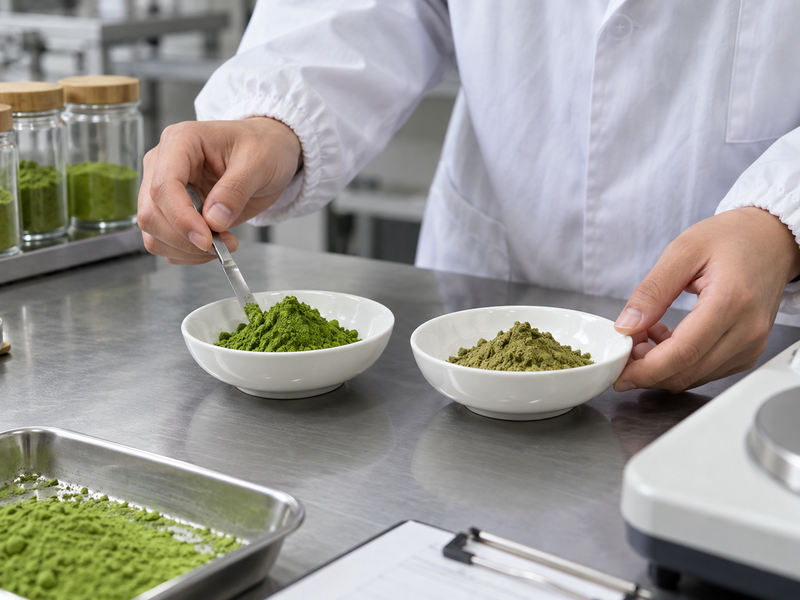
Define the end point before asking for a number
A shelf-life statement should describe how long the specified product is expected to meet defined requirements under stated conditions. Those requirements can include sensory quality, appearance and safety-related criteria where applicable. A brand may reject a powder when its tea aroma fades or its color no longer matches the approved product, even if the package remains intact. The date should therefore be linked to measurable acceptance limits, not only to the absence of obvious spoilage.
Ask whether the printed date is a best-before or another type of date under the rules of the destination market. Do not assume every jurisdiction treats date wording alike. The supplier and brand owner should agree on what the statement means and who supports it. Keep the underlying product specification with the study: powder identity, pack format, fill weight, storage instruction and the lots tested. If those details are missing, a date printed on a sales sheet is hard to evaluate.
Consumers often ask whether an expired pack is “safe.” A B2B article cannot decide that from a date alone. A damaged or wet pack should be isolated regardless of the date, and the responsible food-safety team should handle any safety decision.
| Shelf-life element | Question to ask | Evidence to retain |
|---|---|---|
| Product | Which exact formula? | Specification and lot codes |
| Pack | Which material and size? | Packaging record |
| Conditions | Stored where and how? | Written protocol |
| End point | What counts as failure? | Acceptance limits and results |
2. Which Factors Change the Date?
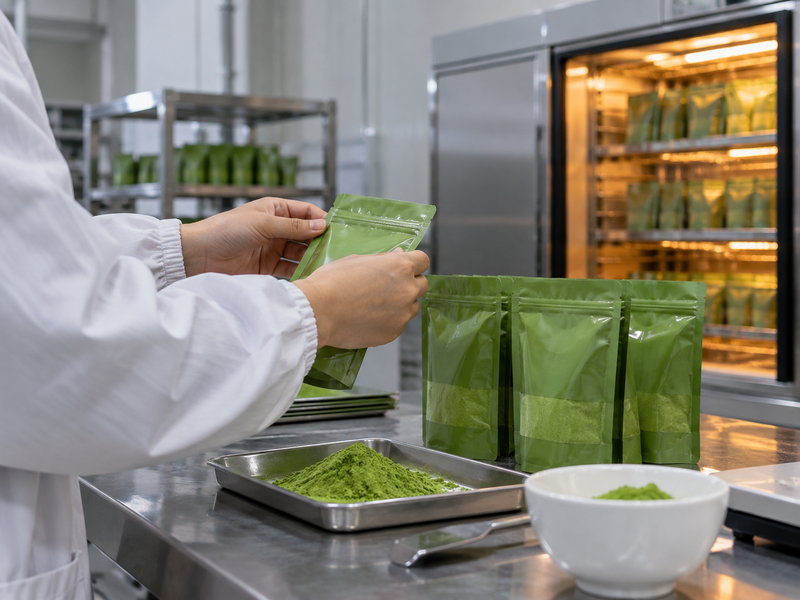
Look at the complete product system
Fine matcha powder exposes a large surface area to the environment when a pack is opened. Light, oxygen, moisture, heat and nearby odors can affect sensory quality. The starting leaf, milling and initial freshness also matter. An intact high-barrier pouch in a cool, dry distribution chain may behave differently from a clear jar on a warm retail shelf. A supplier’s date should reflect the route the product is likely to take, not only ideal factory storage.
Finished products add more variables. Sugar, milk solids, flavors or other ingredients can change how a latte mix behaves. A ready-to-drink beverage has water and a different food-safety profile. It needs its own formulation, process and stability review. Do not transfer the plain-powder shelf life to a bottled drink just because matcha appears in both ingredient lists.
For a retailer, map the supply chain from factory to consumer. Ask how long stock may sit in transit, a third-party warehouse and a store before purchase. A long theoretical date can still leave too little useful selling time if delivery is delayed.
3. How Does Packaging Affect the Study?
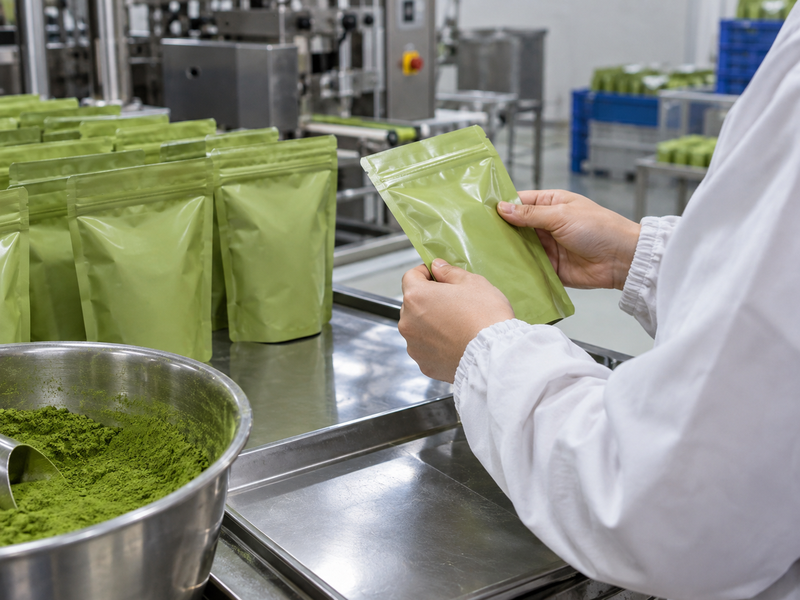
Test the pack that will be sold
Packaging is part of the product. Material barrier, opacity, seal quality, headspace, closure and pack size can change how powder is protected. A small sample sachet with a strong seal does not establish the shelf life of a larger resealable retail bag. A foil-looking exterior does not prove the inner structure or seal is appropriate. Ask for the pack specification and a study using the final pack or a justified equivalent.
Private-label projects often change artwork and sometimes change the pouch at the same time. Distinguish a graphic change from a material or sealing change. The latter may require rechecking shelf-life support. Run filled-pack inspections on production units, not only empty packaging samples. A weak seal can invalidate even a good material choice. For a jar, test the lid and liner as supplied, including the condition after normal opening and reclosing if the label makes an open-pack claim.
| Pack feature | Potential effect | Buyer check |
|---|---|---|
| Opaque barrier | Limits light exposure | Inspect final filled pack |
| Seal | Controls entry of air and moisture | Request seal checks |
| Closure | Affects opened use | Run a service trial |
| Size | Changes time after opening | Compare with sales or use rate |
4. What Should a Stability Plan Measure?

Follow quality through the intended period
A useful plan identifies test lots, packaging, storage conditions, sampling points and pass criteria before the first sample is stored. Sensory checks can record aroma, flavor, color and texture using a consistent preparation method. Physical checks may include clumping and package integrity. The food-safety or quality team should select any analytical tests required for the product and market. The goal is a record that explains how the date was chosen, not a folder of unrelated certificates.
Use the intended application in the sensory work. A powder sold for plain tea should be tasted in water; one sold mainly for milk drinks should also be tested in the finished recipe. A small color shift may matter greatly to a retail tea brand and less to a baked product, while aroma loss can matter in both. Set limits that match the commercial promise. Keep retained reference samples and use neutral lighting so photographs do not create false differences.
Accelerated tests can help screen designs, but they need a sound link to real conditions before they support a consumer-facing date. Ask the supplier how it interpreted any accelerated results and whether real-time observations are available.
| Study component | Record | Why |
|---|---|---|
| Lot selection | Production lots tested | Captures normal variation |
| Storage | Conditions and duration | Defines the claim |
| Sensory method | Dose, water, panel | Makes comparisons fair |
| Pass limit | Pre-agreed criteria | Prevents moving the goalposts |
5. Is Open-Pack Life the Same as Unopened Life?
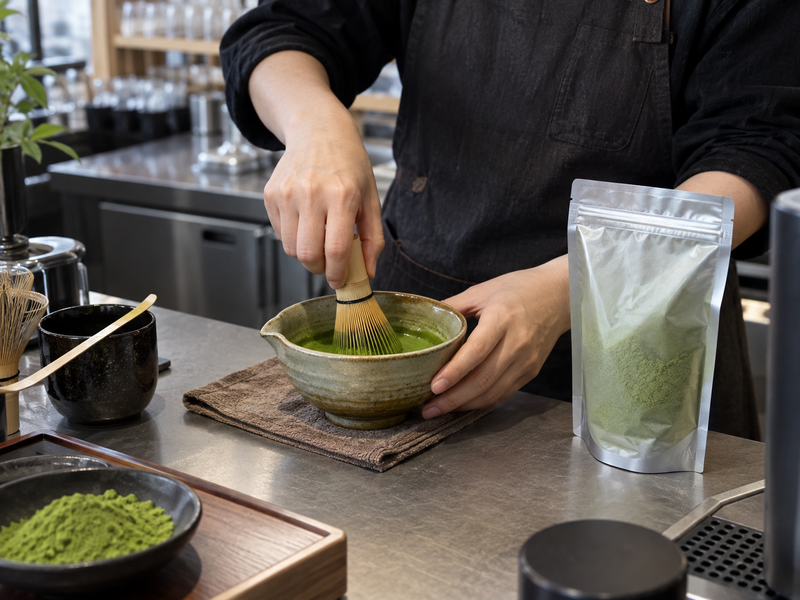
Treat first opening as a new exposure
No. The unopened date assumes an intact pack under defined storage conditions. Once a café opens a bag, air enters, tools touch the powder and the closure may be weaker than the factory seal. A retail consumer may also leave a pouch near a hot kettle or repeatedly open a large tin. The maker’s open-pack advice should be considered separately from the unopened best-before date. It may be based on different tests or practical guidance.
For a café, choose a working pack size that can be used within the approved open-pack window. Mark the opening date and lot on the service container, keep reserve stock closed and use dry tools. If a supplier has no open-pack guidance, ask for it and run a sensory trial under the real service routine. Do not invent a universal number of days. The target is a consistent drink through normal use, not merely powder that can still be stirred into a cup.
When a customer asks how to store an opened retail pouch, give clear, realistic instructions: close it tightly and protect it from heat, moisture and light, following the product’s label. Avoid promising that refrigeration always extends usable life; condensation can become a problem if a cold pack is opened immediately in humid air.
6. Do Latte Mixes and Ready-to-Drink Products Need Separate Dates?
Yes, because the product has changed
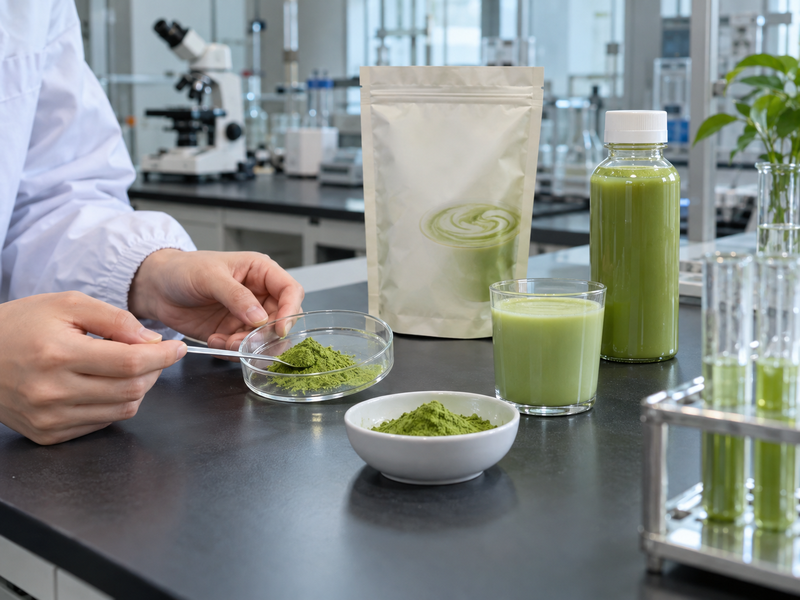
A sweetened powder mix contains ingredients beyond matcha. Its moisture behavior, aroma and label claims may differ from those of pure powder. A ready-to-drink beverage adds water and a production process; the safety and stability questions are substantially different. Each final formulation and pack needs its own review. A matcha supplier’s certificate of analysis for plain powder is useful input, not a shelf-life validation for a milk drink or bottled tea.
For a private-label latte mix, test the final blend in its final pouch, including the way consumers scoop and reclose it. For a bottled beverage, a qualified manufacturer or food technologist should validate process, safety and sensory life under the intended distribution conditions. Look for settling, color change and flavor drift alongside relevant safety tests. The team should document which recipe and packaging version each result supports.
The distinction matters in marketing. A phrase such as “made with fresh matcha” should not be used to imply a finished drink retains the same sensory profile as freshly whisked tea throughout its entire labeled life.
7. How Should a Best-Before Claim Be Reviewed?
Link the date to evidence and local rules
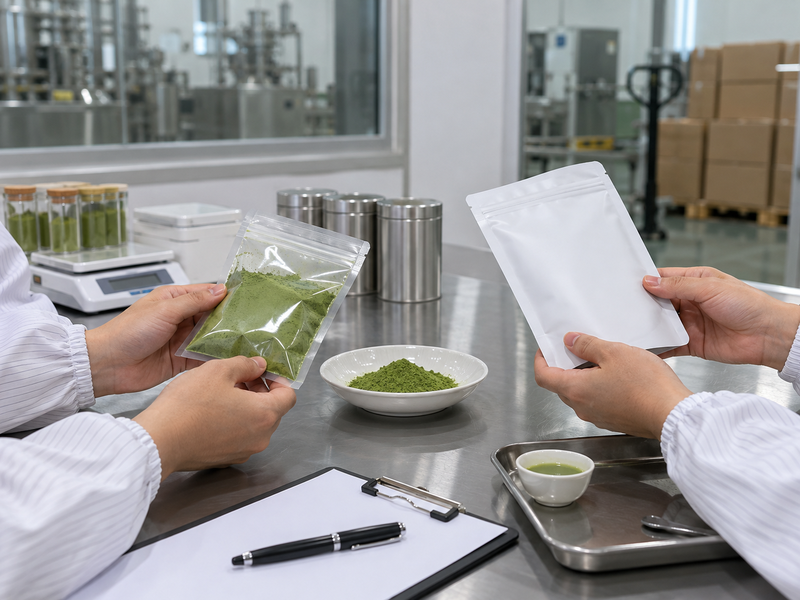
Before printing, confirm the exact wording, date format and responsibility under the market’s applicable rules. The label reviewer should see the finished product specification, pack design, storage statement and stability evidence. A supplier may recommend a date, but the brand owner still needs to know whether it fits the product it sells. When a distributor requests a longer date for logistics, do not simply change the artwork. Ask what additional evidence would support that change.
Consider the customer experience at the end of the period. If a powder is technically within a broad specification but tastes noticeably dull compared with the advertised premium product, the claim may not be commercially honest. Choose acceptance limits that reflect the promised quality. Keep version control: a change in material, formula or pack should not inherit an old study without review.
| Claim decision | Owner question | Evidence |
|---|---|---|
| Date wording | Is it suitable for this market? | Regulatory review |
| Duration | What supports the period? | Stability data |
| Storage line | Can consumers follow it? | Pack and use trial |
| Revision | What changed since testing? | Change-control record |
8. How Much Remaining Life Should a Buyer Require?

Work backward from actual selling or use time
A café may use an ingredient quickly; a retail brand may need time for import, warehousing, shelf placement and consumer purchase. Set a minimum remaining life on delivery based on that route. Do not accept a pack merely because the printed date is still in the future. A shipment with little time left can create discounting, waste or pressure to use powder after its desired sensory quality has faded.
Build the requirement into the purchase order or quality agreement. Ask the supplier to show manufacturing and best-before date codes on cartons and individual units. At receipt, record lot, quantity and date, then rotate by the earliest date where appropriate. Keep damaged or questionable stock separate. If a shipment arrives below the agreed remaining-life threshold, resolve it before distributing units across stores or to customers.
The threshold depends on the business, not a universal matcha rule. A buyer should base it on its own sales forecast and distribution time, with a margin for delays.
| Route | Time to account for | Receiving decision |
|---|---|---|
| Café ingredient | Stock turnover | Enough life for planned use |
| Retail tin | Import and shelf time | Enough life for consumer purchase |
| Private label | Packing and launch delay | Date still supports campaign |
9. When Must Shelf Life Be Rechecked?

Use change control, not memory
Review the shelf-life basis when the supplier changes the powder source, processing, formulation, pack material, seal, fill size or intended storage route. A new production site or distribution market may also matter. The change does not always require a full new study, but the quality team should document why existing evidence remains applicable or what additional testing is needed. A silent substitute is particularly risky for private-label products with printed dates already approved.
Incoming complaints are another trigger. If customers report faded color, weak aroma or clumping before the date, collect lot and storage details. Compare retained samples and investigate whether the issue is isolated damage, a service-handling problem or a broader stability failure. Do not dismiss a pattern because the date has not passed. Equally, do not assume every complaint proves the original shelf-life study was wrong; transport or open-pack conditions may be the cause.
Matcha Village describes lot testing and OEM support in its company material. A buyer should ask how any supplier handles change notification and retained samples for the actual product under contract.
10. What Should a Supplier Provide Before Launch?
Request a compact evidence package
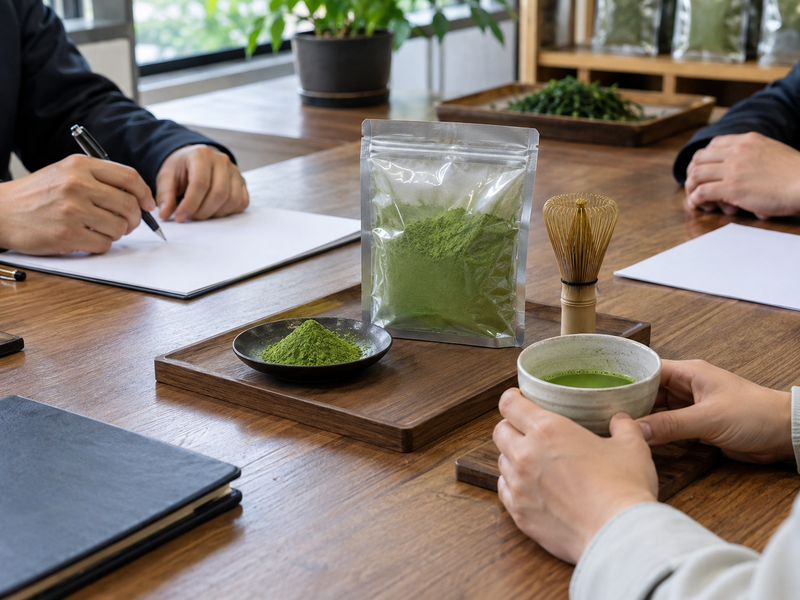
Ask for the product specification, ingredient identity, packaging specification, recommended storage, date coding method, shelf-life basis and relevant lot test records. For a private-label project, confirm that the study applies to the final pack and label. Agree on minimum remaining life at delivery and a process for handling damaged, short-dated or disputed stock. Include notification for material changes that could affect stability.
Run a small commercial-pack pilot. Put samples through the route they are likely to take, then compare them with a properly stored retained unit. Taste the powder in its intended product. The supplier’s documentation and the buyer’s own experience should point in the same direction. If they do not, resolve the gap before committing to a large print run or a long date claim.
The useful question is not “How many months does matcha last?” It is “What date can we support for this formulation, pack and route, at the quality we have promised?”
FAQ
Q1. Does unopened matcha last longer than opened matcha?
Usually the intact pack offers more protection. The actual periods depend on the product, packaging and conditions; follow the maker’s evidence and open-pack guidance.
Q2. Can one shelf-life study cover every pack size?
Do not assume so. Material, seal, headspace and opening behavior can differ. Ask the quality team to justify whether evidence transfers to the final pack.
Q3. Is a best-before date a guarantee of unchanged flavor?
No. It should be supported by defined acceptance criteria under stated conditions, but sensory change can occur. Set criteria that match the product’s promise.
Q4. Can a café use a supplier’s retail date for a service jar?
The retail date normally applies to an unopened package. A service jar is repeatedly opened, so use separate handling and open-pack guidance.
Q5. What should a buyer do with a short-dated shipment?
Check it against the agreed minimum remaining life, keep the lot identifiable and resolve the discrepancy with the supplier before distributing it.
For a consumer discussion of freshness, see Uji Matcha Tea’s shelf-life overview. For commercial storage practice, see our bulk matcha guide. Date claims should be reviewed against the actual product, pack and destination-market rules.