
Matcha protein bars may taste fine from a mixing bowl and still fail as a retail item: the slab cuts unevenly, the topping softens, or the wrapper collects oil. A café needs to test the bar in its intended pack and display, then calculate protein from the final formula if it plans a protein claim. The Healthy Maven’s cashew-based recipe offers a no-bake reference. The production decision is whether a cut bar adds enough value over a simpler matcha bite. Matcha Village’s sample service can support powder selection for that test.
Contents
- 1. What should the finished bar do?
- 2. Is a cut bar better than a matcha bite?
- 3. Which protein ingredient fits the flavor?
- 4. How should the base bind without becoming greasy?
- 5. Where should matcha go in the formula?
- 6. How can slab thickness and cut weight stay consistent?
- 7. What should the coating and pack survive?
- 8. Which storage and label questions need evidence?
- 9. What is the real cost per saleable bar?
- 10. When is the product ready for a small sale?
1. What should the finished bar do?
Define the eating occasion
A wrapped counter snack must hold together while someone opens it and eats without a plate. A chilled dessert bar can be softer, but the case and staff must be able to keep it in the intended condition. Set a target piece weight, length, thickness, sweetness and matcha strength. Test the first bite and the last bite; a thick coating can make the opening taste of tea while the base remains bland. Decide whether the bar is sold with coffee, plain matcha or as a standalone snack.
Do not treat “protein” as a decorative word. Record the ingredient amounts and obtain a defensible nutrition calculation for the finished serving before stating a number on a pack. The base recipe on The Healthy Maven includes cashews and protein powder, but its home yield and storage note are not commercial validation. Write a one-page product brief: intended consumer, serving format, pack, target texture and proposed claim. That brief gives the team something concrete to test.
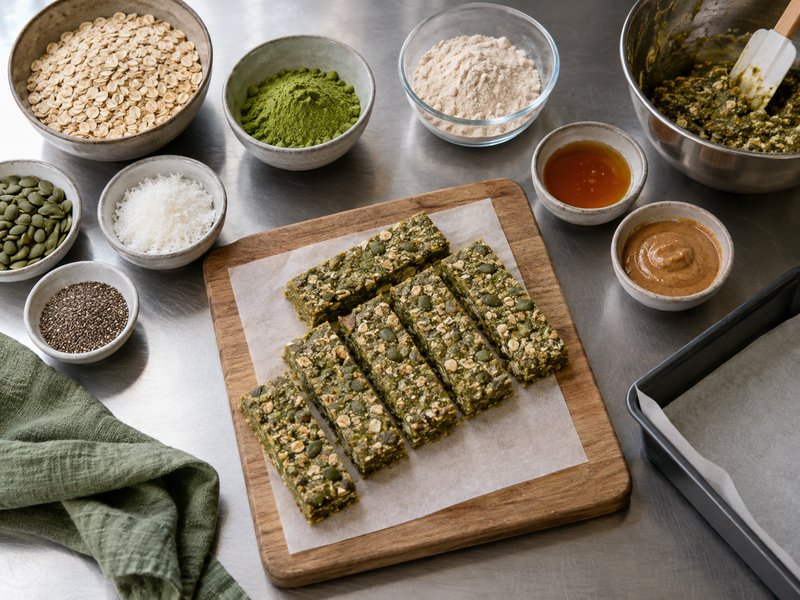
2. Is a cut bar better than a matcha bite?
Compare handling, not only taste
Bars offer a familiar retail shape and more surface for a visible matcha coating. Bites can be easier to portion and may tolerate a softer mix because they are formed rather than cut from a slab. Both need consistent weights and packaging, but their waste patterns differ. A bar often leaves edge trim and cracked ends. Bites can leave mixture on the forming tool and may need a tray or pouch that prevents flattening.
Make both shapes from the same base mixture. Use equal serving weights, then compare time to form, reject rate, hand feel and how they look after a short trip in the intended pack. If the bar needs a large amount of binder merely to survive cutting, the bite may give a better texture. If the bite’s small size makes the protein amount per pack awkward, a bar may be clearer for labeling and pricing. Choose by actual yield and customer use, not by which photograph looks better.
| Format | Main advantage | Production risk | Check |
|---|---|---|---|
| Cut bar | Familiar single serving | Cracked cuts and trim | Saleable weight range |
| Formed bite | Flexible portion count | Uneven hand forming | Unit weight range |
| Layered bar | Visible matcha surface | Coating separation | Pack and hold test |
3. Which protein ingredient fits the flavor?
Taste the powder in the complete bar
Protein ingredients differ in flavor, texture and water demand. A neutral powder may leave matcha clear; a strongly flavored vanilla powder can make the product taste more like icing. Some powders produce a chalky finish or firm up after resting. Compare two candidates in small equal-weight batches while keeping nuts, binder and matcha fixed. Taste after the product has set and after its planned storage interval, not only when the mixture is fresh.
Read the current specification for ingredient composition, allergens and any sweetener already in the powder. A “plant-based” label is not enough to infer dairy-free production or a particular protein level. If a finished-product protein claim matters, send the approved formula through the relevant nutrition and label review. Do not borrow a number from a blogger’s portion size. Matcha should be evaluated alongside the chosen powder in the final bar; a tea that works in a latte may vanish under cocoa or sweet protein flavoring.
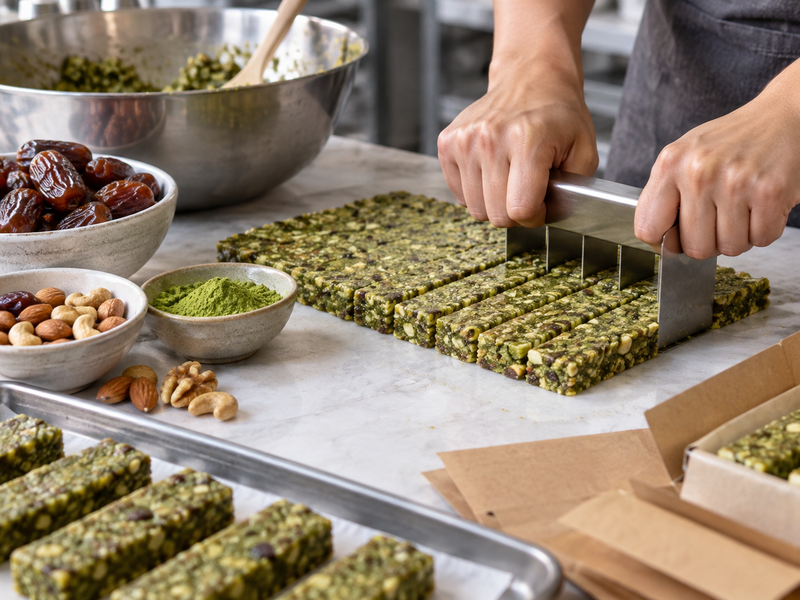
4. How should the base bind without becoming greasy?
Separate cohesion from softness
Cashews, nut butter, coconut oil, syrup and dry powders can all affect the base. The reference recipe blends a cashew mixture and presses it into a loaf pan. In production, record every ingredient by weight, the degree of grinding and the mixture temperature. A glossy mass may look cohesive while warm but release oil in a wrapper later. A dry one may compact in the pan yet break when cut.
Press two small slabs at the same thickness with different binder levels. Cut them after the same rest and compare edge cracking, finger feel and chew. Then place a finished bar in the intended pack and check for staining or sticking. Do not solve a greasy bar solely by adding more protein powder; that may produce a dense, chalky bite. Look first at the fat source, mixing, particle size and the conditions under which the bar was tested.
| Fault | First variable to inspect | Trial response |
|---|---|---|
| Crumbles at the knife | Binder and particle size | Adjust one level |
| Oil marks wrapper | Fat source or temperature | Review formula and hold |
| Dense, dry bite | Powder load | Compare lower dose |
| Softens quickly | Pack and display condition | Test intended route |
5. Where should matcha go in the formula?
Test tea in the base and coating
Matcha in the base gives flavor throughout, but nuts and protein can cover it. Matcha in a top layer delivers a clear first taste and a bright visual cue, yet an exposed coating may smear or soften. The Healthy Maven’s version puts matcha in a coconut-butter topping. Use that as one candidate, then make a base-only version and a split-dose version. Keep total tea weight the same so tasters can judge placement rather than amount.
Sift matcha to avoid dark pockets. Mix the coating at a controlled temperature and weigh what actually lands on each bar. If the topping contains a fat that changes firmness with room conditions, test it at the café’s display conditions. A powdered matcha finish may taste dry or mark the wrapper. Record flavor, color and pack appearance after the intended selling interval. Ask for current supplier documentation before making origin or grade claims about the powder used.
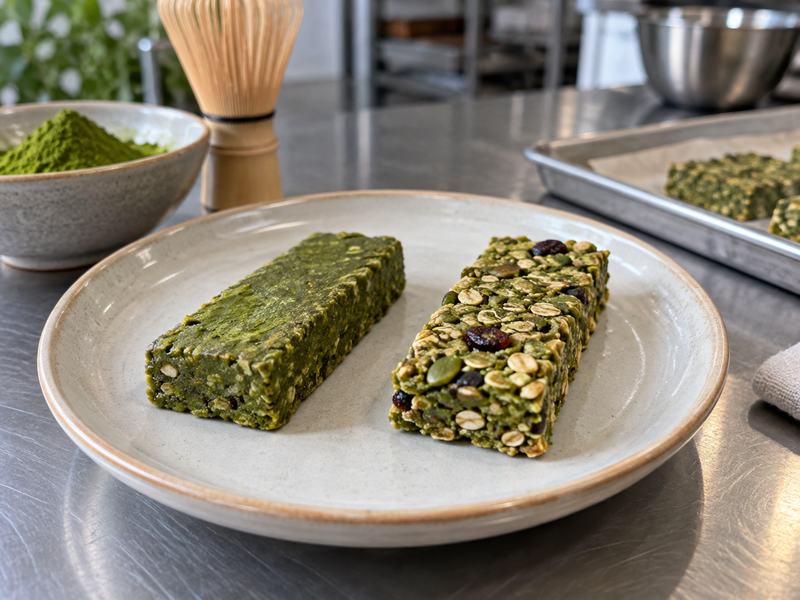
6. How can slab thickness and cut weight stay consistent?
Turn the pan into a measuring tool
Weigh the entire mixture before pressing. Use a frame or pan with known dimensions and spread it to a measured depth. Mark a cutting grid that produces the target unit count, then weigh bars from the center and corners. A thick edge can hide portion variation even if every piece has the same width. Record the force or tool used to press, because uneven pressure changes texture and can make one corner crumble.
Choose a cut point based on the actual formula. A slab that is too warm may smear; one that is too firm may fracture. Trial the cut with the production knife or cutter and note how often it must be cleaned. Include broken pieces and trim in yield records. If the proposed claim depends on a stated serving weight, variation in cut weight also affects the calculation. The best-looking grid is useful only when it produces a reproducible saleable count.
| Yield measure | Record | Decision supported |
|---|---|---|
| Mixed mass | Total weight | Formula reconciliation |
| Pressed slab | Dimensions and depth | Repeatable shape |
| Cut units | Count and weight range | Portion control |
| Trim and rejects | Weight and reason | True cost |
7. What should the coating and pack survive?
Test an actual trip
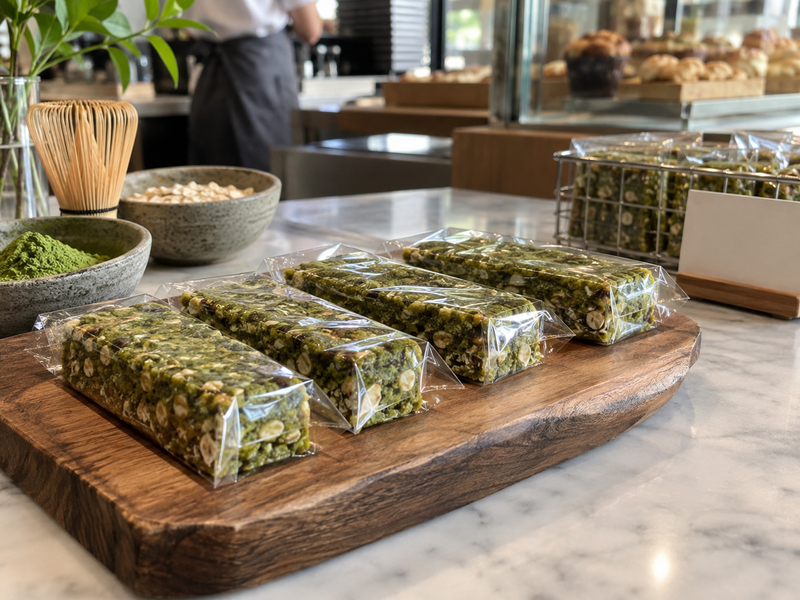
Pack a finished bar in candidate film or a small rigid container, then handle it as a customer would. Put it in a bag with another purchase, open it without a knife and inspect whether the coating comes away on the pack. A topping that cracks on bending or peels from the base will create complaints even if the recipe tastes good. Check whether the bar leaves oil marks, releases crumbs or deforms during a short warm exposure representative of the sales route.
Packaging must also carry the product identity, ingredients and any required allergen information. Do not choose a film solely because the green coating looks bright through it. Verify food-contact suitability and seal performance with the packaging supplier. If the bar needs chilled display, include that in the service workflow and transport trial. Quality changes during a test cannot establish a safe shelf life; a retail date needs separate validation for the final formula and pack.
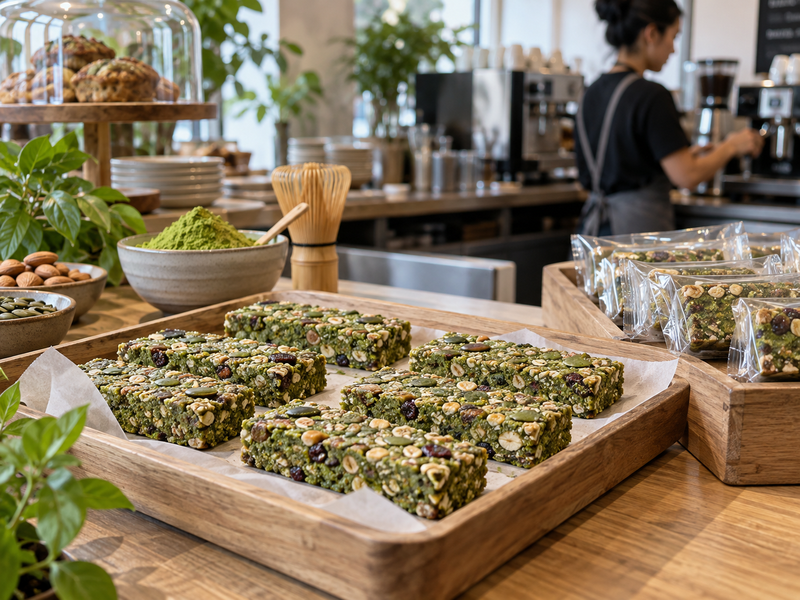
8. Which storage and label questions need evidence?
Review the final formula, not the idea
The chosen protein powder, nuts, coating and sweetener determine the allergen and label review. The FDA’s major allergen guidance is a primary U.S. reference, while requirements depend on the sales market. A cashew base raises tree-nut questions, and a sesame garnish adds another ingredient to check. Do not call the bar gluten-free, dairy-free or high-protein because a home recipe uses those words.
For a chilled café product, document preparation, storage and rotation under the operation’s food-safety plan. The FDA Food Code is a U.S. model, not a substitute for local rules. If the business wants wider distribution or ambient storage, plan qualified shelf-life testing for the final product and package. A bar that still tastes acceptable after a few days is not evidence of microbiological stability.
| Claim or control | Evidence to obtain |
|---|---|
| Protein amount | Final formula calculation or testing as required |
| Allergen declaration | Current ingredient and cross-contact review |
| Storage instruction | Approved process and validation |
| Shelf-life date | Final formula and pack study |
9. What is the real cost per saleable bar?
Count waste that home recipes omit
Cost the full batch: protein ingredient, matcha, nuts or seeds, binder, coating, packaging, labor and any cold display cost relevant to the operation. Divide by bars that meet the weight and appearance standard, not by rectangles drawn on a pan. Trim and cracked bars may become another product only after a separate handling and label decision. Keep the cost calculation tied to the approved sensory version; a cheaper powder that requires a larger matcha dose may not lower total cost.
Observe production time across consecutive batches. Hand-cutting, individually wrapping and cleaning a sticky cutter can dominate a small run. Compare the bar against the formed-bite option using labor minutes per saleable serving. If bars sell as an add-on to a drink, note actual attachment rate during a limited sale rather than assuming the counter space will pay for itself. Price should reflect the complete packed product and the intended channel.
10. When is the product ready for a small sale?
Repeat the full batch
Write a production sheet with ingredient weights, supplier identifiers, mixing order, pan dimensions, press method, rest, cutting grid, coating weight, pack and storage instructions. Have another worker make a full batch without coaching. Compare first and last bars for weight, texture, matcha flavor and pack cleanliness. If the second run has a different yield, find the cause before printing labels or quoting wholesale pricing.
Run a limited sale under the approved handling plan. Record customer comments by fault: too sweet, chalky, crumbly, oily or weak matcha. Each suggests a different experiment. The product is ready when ordinary staff can make saleable bars at a predictable yield and the final label has been reviewed. If the bar remains fragile, return to the bite format and test whether it solves the problem without weakening the product promise.
| Result | Evidence | Next move |
|---|---|---|
| Launch | Repeatable yield and approved pack | Train and monitor |
| Revise | One identifiable texture fault | One-variable trial |
| Hold | Claim or storage evidence missing | Finish validation |
FAQ
Q1. Can matcha protein bars use any protein powder? No. Flavor, sweetener, allergens and texture vary; test the selected powder in the complete bar.
Q2. Why does the top layer smear? The coating formula or display temperature may be wrong for the intended pack. Test both together.
Q3. Are bites easier than bars? They can avoid a cutting step, but require their own portion and packaging checks.
Q4. Can a café state grams of protein from a recipe post? Use a calculation or testing for its final formula and serving size.
Q5. What should the first pilot measure? Mixed weight, cut weight range, rejects, coating behavior and packed cost.
Make one bar slab and one batch of equal-weight bites, then carry both in their proposed packs. The version that arrives intact, tastes of matcha and yields predictable portions is the better product to develop.