
A matcha bamboo scoop looks like a measuring tool, but its curved tip does not deliver a fixed mass across every powder, worker and scoop. A café should buy it for an intentional service experience and calibrate its dose against a scale. A retailer should judge finish, packaging and care instructions as carefully as appearance. MatchaWhat’s chashaku guide describes the traditional form; its approximate scoop weight is a useful starting estimate, not a purchasing specification for a commercial recipe.
Contents
- 1. What job will the bamboo scoop do?
- 2. How should its dose be checked against a scale?
- 3. Which shape and finish defects matter?
- 4. How should buyers compare bamboo and alternatives?
- 5. Does the handle work at the service station?
- 6. What cleaning and storage plan is practical?
- 7. How should a wholesale sample be inspected?
- 8. What packaging protects the curved tip?
- 9. What belongs in a kit cost calculation?
- 10. When is the scoop ready for purchase?
1. What job will the bamboo scoop do?
Separate presentation from dosing
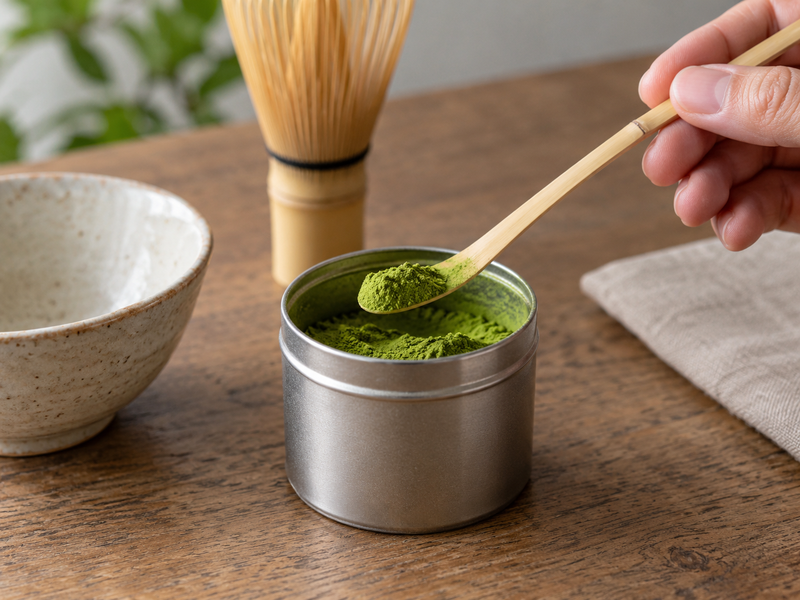
A chashaku can make a customer-facing matcha service feel deliberate. It reaches into a small tea container without a wide spoon bowl, and its shape helps deposit powder into a whisking bowl. That is a different job from weighing an exact recipe. Decide whether the scoop is used by trained café staff, sold inside a starter kit or displayed in a ceremonial-style gift. The same object may be appealing in all three settings, but each buyer needs a different acceptance test.
For a café, observe how staff use it during a rush. Does the tip reach the bottom of the chosen tin? Does powder land inside the bowl, or on the counter? Can the worker distinguish one level scoop from a heap without slowing service? For a kit, ask a first-time user to handle it without coaching and watch where they place it after use. The item earns space in the box only if its purpose and care are clear. A scale can remain the recipe reference even when the scoop is part of the visible ritual.
2. How should its dose be checked against a scale?
Calibrate the actual scoop and powder
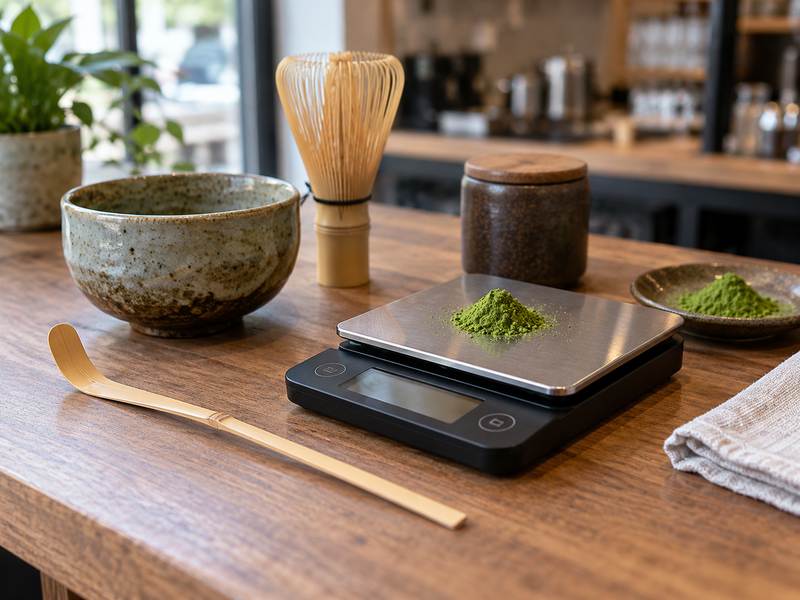
The reference guide gives a rough mass per scoop, but the amount held changes with scoop curve, powder condition and how a worker loads it. Use a scale suitable for the small dose in the recipe. Have several staff members take repeated scoops from the actual tea container, then record the range rather than only the average. Check a level-looking scoop and a visibly heaped one. That trial gives the team a realistic picture of variation.
If the café recipe requires a fixed matcha mass, weigh portions in prep or use the scale at service. The bamboo scoop can transfer powder without pretending to be the control device. If a retail instruction says “two scoops,” state that it is an approximate measure and offer a gram target for customers with a scale. Recheck when the scoop design or tea product changes. Fine powder from one lot may pile differently from a coarser or compacted sample.
| Trial | Record | Decision |
|---|---|---|
| One worker, repeated scoops | Mass range | Personal consistency |
| Several workers | Combined range | Training need |
| Different tea lot | Change in mass | Recalibration |
| Target recipe dose | Gram reference | Scale or scoop instruction |
3. Which shape and finish defects matter?
Inspect what touches the powder
Check the curved tip for splits, sharp fibers, rough cuts and uneven finish. Run a clean visual inspection along the grain, including the inner curve where powder can lodge. A scoop that looks elegant from above may have a rough underside that catches tea. Check whether the tip is wide enough to handle without feeling fragile and narrow enough to enter the intended pack. Do not accept a glued joint as a seamless single-piece item if the product description promises one piece.
The MatchaWhat guide discusses curve, grain and finish as buying cues. For a bulk order, translate those cues into an approved physical sample and defect photos. Compare several units from a pilot shipment, not only the supplier’s best photograph. A natural material can vary in color and node position; decide which variation is acceptable to customers. Functional cracks and splinters should be treated differently from harmless visual variation.
4. How should buyers compare bamboo and alternatives?
Judge the use case, not a price tier
Bamboo gives the recognizable chashaku shape and a distinctive gift-set presentation. A metal dosing spoon or small scale may be easier to integrate into some foodservice cleaning routines. A plastic item may be inexpensive but less suitable for a premium set. Compare actual service requirements: dose repeatability, contact with moisture, replacement frequency, visual fit and total cost. Avoid describing one material as universally more hygienic without a validated cleaning procedure and local review.
Set up a short task test. Let staff transfer the same matcha into the same bowl with a bamboo scoop, metal spoon and weighed portion. Record spillage, time and dose variation. For retail, ask customers which tool they understand from the instructions. A decorative bamboo scoop may help a gift, while a scale may better support a precise beverage program. Some businesses will use both: the scale sets the formula and the bamboo scoop handles the powder at the counter.
| Tool | Strength | Question to test |
|---|---|---|
| Bamboo chashaku | Presentation and narrow reach | How variable is the dose? |
| Metal spoon | Familiar handling | Does it fit the tin and cleaning plan? |
| Pre-weighed portion | Repeatable mass | Packaging and labor cost |
| Digital scale | Recipe control | Speed and calibration |
5. Does the handle work at the service station?
Test the real container and bowl
Measure the scoop’s usable reach rather than buying from a photograph. A deep tin or narrow pouch can make the last portions awkward to collect. Try it with the intended matcha pack and the bowl or shaker used by the café. The hand should clear the rim and the powder should release without tapping the scoop against a hard edge. If workers repeatedly scrape the tip on a tin, the design may wear or shed fibers.
Observe left- and right-handed staff and both experienced and new workers. Note how they park the scoop between orders. Resting it over a steaming cup or near wet tools may be unsuitable for the material and the station. A dedicated dry resting place can keep the worktop organized, but it adds another object to clean. Time ten normal orders and count spills. A product that is comfortable during one demonstration may still slow a busy sequence.
6. What cleaning and storage plan is practical?
Follow the operation’s requirements
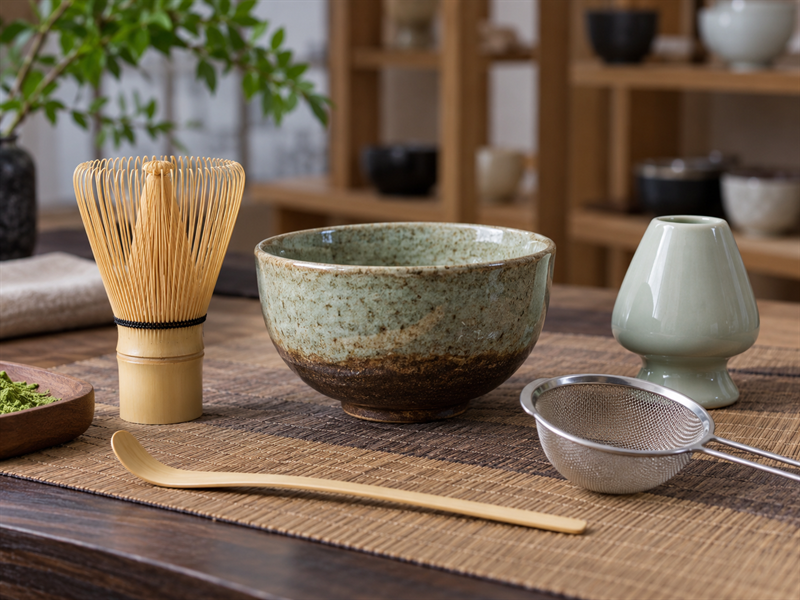
Consumer guides often advise keeping a bamboo chashaku dry and wiping it after use. A café must also meet its own food-contact cleaning policy and local requirements. If that policy requires a method the scoop cannot tolerate, choose another tool for shared service. Do not use a dry-wipe instruction from a seller as a blanket food-safety exemption. Train staff on where clean scoops are kept, when they are replaced and how damaged pieces are removed.
For home kits, provide care guidance matched to the supplier’s material and finish. Tell users not to store the scoop against a damp whisk or inside a wet bowl. Test the printed instruction with someone unfamiliar with the tool; if they ask whether it goes into the dishwasher, the card should answer. Inspect stored samples over the proposed sales period for warping or cracks. A scoop needs protection from both moisture and crushing.
| Setting | Care question | Evidence to collect |
|---|---|---|
| Shared café station | Is cleaning policy compatible? | Written procedure |
| Retail kit | Can a beginner understand care? | Unboxing test |
| Warehouse | Does pack protect shape? | Storage sample |
| Replacement | What damage triggers removal? | Defect photo |
7. How should a wholesale sample be inspected?
Approve a range, not a hero piece
Request several units from the proposed production run or specification. Measure length, tip width and curve against the pack and container. Check finish, grain, visible joints and the ease of releasing powder. Photograph acceptable natural variation and unacceptable defects. If the supplier offers different bamboo colors or finishes, keep separate item identifiers so a warehouse does not mix them in one retail box.
Run a handling test on a small set of units after ordinary shipping. Does the tip remain intact? Does any protective sleeve leave marks? Ask for a current materials and care description, and verify what it says against the physical sample. Keep one approved reference unit sealed for later incoming inspection. The supplier’s claimed country, craft method or finish type should appear in documentation before the brand repeats it in sales copy.
8. What packaging protects the curved tip?
Design for a long, thin object
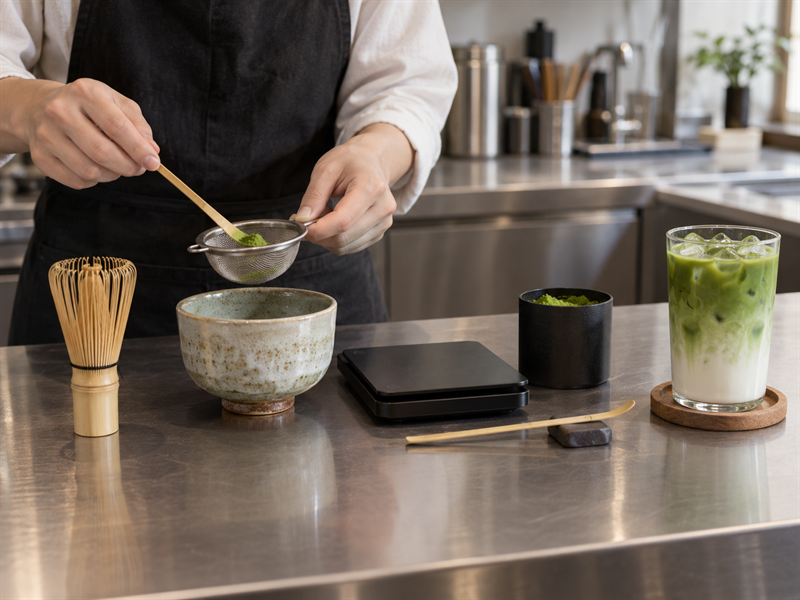
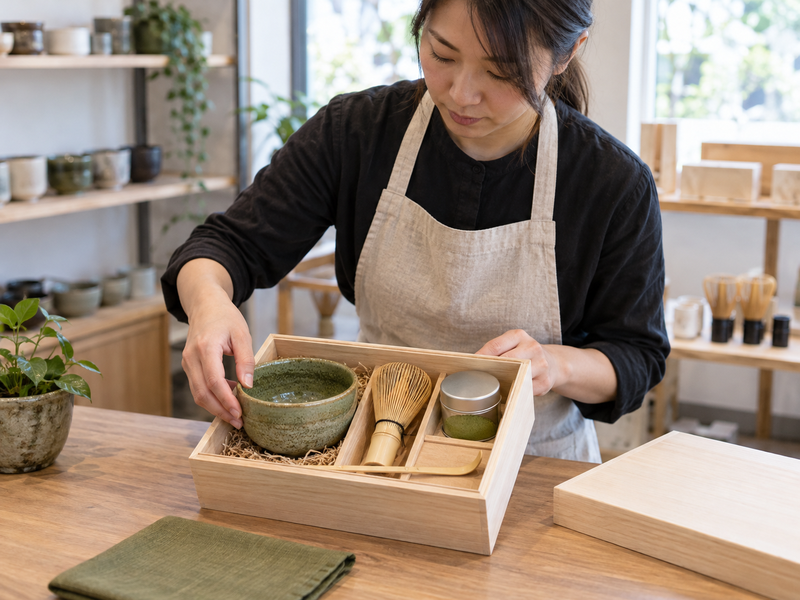
The scoop’s curve can be damaged when it floats beside a heavy ceramic bowl. Give it a sleeve, channel or compartment that holds it without bending. Test a fully packed kit through the intended fulfillment route, then open several samples and inspect the tip. A decorative tissue wrap may look appealing but provide little protection if the scoop can slide under a bowl. Packaging should also make the item visible so customers do not discard it with filler.
For individual wholesale units, compare a paper sleeve, tube and formed insert for damage rate, packing time and cost. A tube may protect well but add bulk and a care question if it retains moisture. Avoid compressing the scoop to fit a standard box size. Record the material and dimensions in the bill of materials. A packaging change needs a new shipping check even when the scoop itself is unchanged.
| Pack method | Benefit | Trial risk |
|---|---|---|
| Flat sleeve | Low bulk | Tip pressure |
| Rigid tube | Impact protection | Cost and fit |
| Kit channel | Organizes components | Movement in transit |
9. What belongs in a kit cost calculation?
Include handling and rejection
Calculate landed unit cost, protective packaging, inspection, assembly labor and any rejected or broken scoops. A low purchase price may be offset by rough finish that slows inspection or by extra protection needed for shipping. For a gift set, compare the cost of a basic scoop with a visually distinctive version only after customers see both in the completed box. The item should add a real use or presentation benefit.
Track replacement contacts after a pilot sale. Are tips arriving damaged, or are customers breaking them during cleaning? Those causes require different fixes. If staff use scoops daily, estimate replacement from the actual café trial, not a seller’s general lifespan statement. Matcha Village’s company information discusses product and gift-set combinations, but any specific accessory sourcing, custom packaging or quote needs confirmation for the proposed order.
10. When is the scoop ready for purchase?
Sign off on function and supply
The purchase specification should state material, dimensions, acceptable finish, tip shape, pack, care card and inspection method. Keep photographs of approved and rejected units. Have staff use samples from a pilot lot with the actual tea pack, then check the result against a scale. A single attractive sample is not enough if the incoming lot varies enough to confuse portioning or damage a kit’s appearance.
For café service, approve the scoop only when its cleaning and replacement routine fits the operation. For retail, approve it only when the customer can identify, use and care for it after opening the box. Request a quote and lead-time confirmation for the exact approved version. If accuracy is the leading requirement, retain a scale-based recipe even when the scoop is included for the experience.
| Approval gate | Evidence | Owner |
|---|---|---|
| Shape and finish | Pilot units and defect guide | Quality |
| Dose use | Scale comparison | Beverage team |
| Care | Written procedure | Operations |
| Shipping | Packed transit trial | Packaging |
FAQ
Q1. Is one bamboo scoop always one gram? No. Treat that as an estimate and weigh repeated scoops with the selected powder.
Q2. Does a café need a scoop if it owns a scale? The scale controls the recipe; the scoop may still help transfer powder and present the service.
Q3. What defect should buyers reject first? Splits, splinters or a weak tip that contacts the powder and may break.
Q4. Can every bamboo scoop be washed like a metal spoon? Follow the material instructions and local food-contact policy; choose a compatible tool for shared service.
Q5. How should it be packed in a set? Hold the curved tip away from heavier pieces and test the complete shipment.
Buy the scoop that works with the actual tin, bowl, staff routine and pack. Weigh its dose during testing, then keep a reference unit and a clear care instruction for every subsequent order.