
An attractive matcha set can disappoint as soon as somebody tries to make tea with it. A bowl rocks, a whisk catches the wall, or a powder pouch arrives with a poor seal. These are specific quality problems that buyers can find before a retail launch or café rollout. This matcha set quality guide offers ten checks for a complete assembled sample, not just a collection of supplier certificates.
The Mubai article on a great matcha set describes familiar beginner components; a business order also needs defined acceptance criteria, shipping evidence and control of later substitutions. Check the ceramic matcha bowl guide when a set includes a bowl that looks good but has not been tested for whisking.
Contents
- 1. What should quality mean for this set?
- 2. Does the bowl stand and handle well?
- 3. Can the whisk move freely without damage?
- 4. Is the scoop useful and safely finished?
- 5. Do all components work as one system?
- 6. Does the tea match the promised cup?
- 7. Are care directions and material records clear?
- 8. Will the packed set survive the route?
- 9. How should a buyer inspect a pilot batch?
- 10. How is quality kept stable at reorder?
1. What should quality mean for this set?
Define acceptance through intended use
Quality starts with a job description. A café set used several times per shift needs stable tools and a replacement path; a retail gift needs a sound first-cup experience and reliable parcel protection. Write down the intended drink, user, sales channel, packaging route and care conditions. Then turn those needs into observable checks. “Premium feel” cannot be inspected consistently, while “bowl stays stable on a flat counter during whisking” can. An approved sample should be prepared, cleaned and repacked, not merely displayed.
Set a small number of nonnegotiable faults that require rejection: cracked food-contact surfaces, broken whisk tines, missing parts, damaged tea seals or an incorrect label. Other variation, such as a small handmade ceramic color difference, may be acceptable if it does not conflict with the signed specification or customer promise. Agree on those boundaries with the supplier before production. This prevents a buyer from rejecting harmless variation one day and accepting a functional defect the next. Use the same test on every proposed version.
2. Does the bowl stand and handle well?
Examine the foot, rim and inner curve
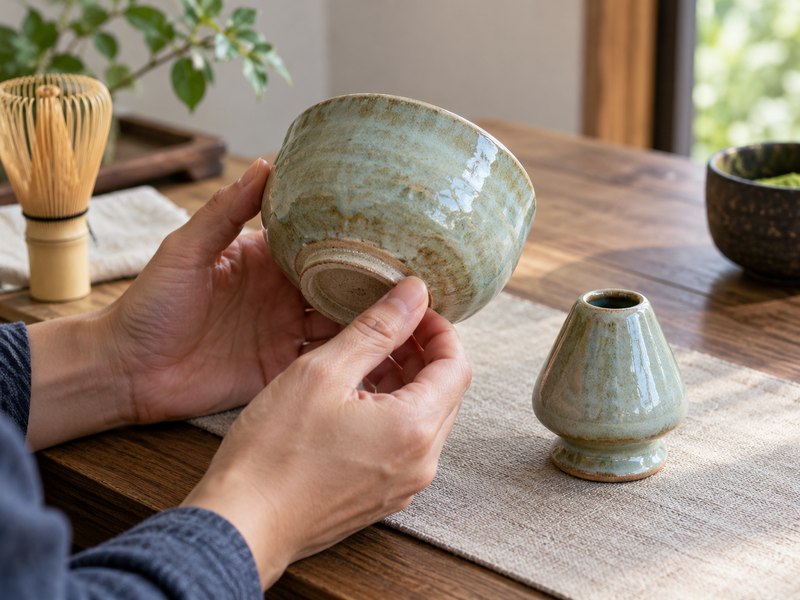
Place the bowl on the surface where a customer would use it and press gently around the rim. A rocking base makes whisking awkward and increases spill risk. Examine the foot and rim for chips, sharp edges and rough contact points. Look into the bowl under even light to spot glaze irregularities that could make cleaning difficult. Match the interior volume and curve to the intended recipe; a visually large bowl may still be narrow where the whisk needs to move. Test pouring, especially if the prepared mixture will go into a latte glass.
Ask for a specification that can be checked when another shipment arrives. Outer diameter alone may hide a changed inner curve. Record interior dimensions, shape, surface finish and acceptable handmade variation where relevant. Follow the maker’s care instructions rather than assuming every ceramic item tolerates the same wash method. A retailer should include those directions in language a first-time user understands. A café should trial the bowl through normal cleaning. When several finish colors are offered, test each production finish rather than assuming one approved sample represents all.
| Bowl check | Simple method | Why it matters |
|---|---|---|
| Stability | Test on flat surface | Safe whisking |
| Rim and foot | Visual and touch review | Handling comfort |
| Inner curve | Use supplied whisk | Tool clearance |
| Pouring | Transfer the recipe | Reduced drips |
| Cleaning | Follow care directions | Ongoing usability |
3. Can the whisk move freely without damage?
Inspect tines before and after use
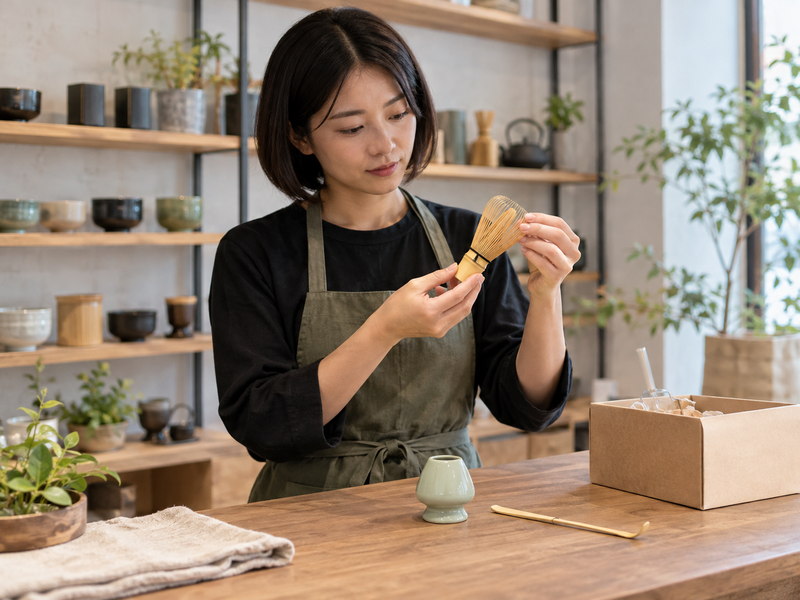
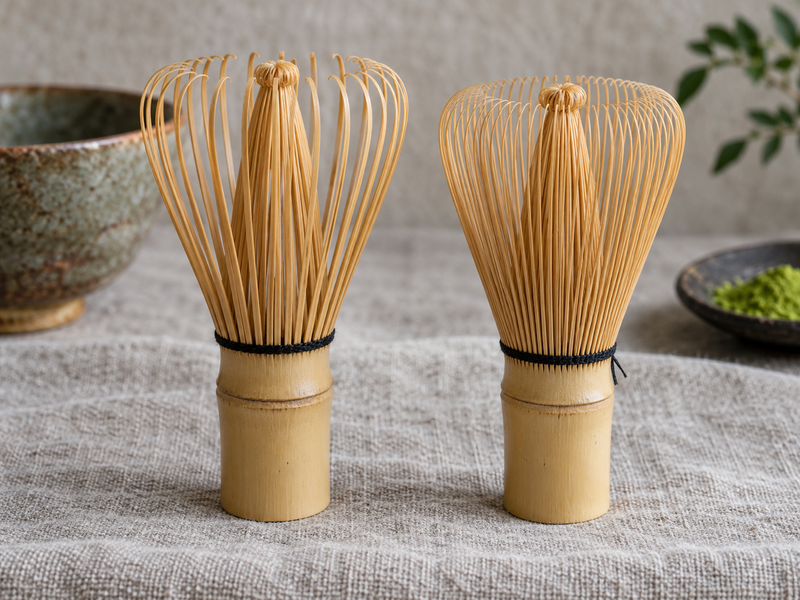
A bamboo whisk can look impressive in a product photograph while arriving with bent, split or uneven tines. Inspect several samples from the pilot lot, not only a vendor’s showroom piece. The binding should be sound, the handle comfortable, and the tine tips able to move through the intended bowl without grinding against its sides. Make the proposed drink, rinse the whisk according to supplier instructions and let it dry. Then inspect again. A weak tine or difficult fit often becomes obvious during that short cycle.
Ask whether the approved whisk can be ordered separately. Retail customer service and café operations both need a practical answer when it wears or breaks. Keep a written dimension and material description with the master sample. If a vendor proposes another whisk of the same apparent size, retest it in the approved bowl. The pair matters more than a generic item name. For gift packaging, verify that the insert shields tines from pressure during delivery; a perfect whisk can still reach the user damaged.
4. Is the scoop useful and safely finished?
Treat a small tool as a working part
The scoop should transfer tea comfortably from the supplied pouch or tin into the bowl. Check reach and width at the pack opening; a pretty utensil that cannot enter the container cleanly makes the first cup messy. Inspect edges and finish for rough spots or splinters, and ask for suitable care directions. If packaging calls a scoop a dose measure, test several filled scoops against a scale using the actual powder. A scoop’s contents vary, so a printed exact mass claim needs validation rather than assumption.
Storage is part of usability. A scoop put away wet beside powder may create avoidable problems, while a scoop left loose in a box can rub against ceramic. Work through preparation, cleaning and repacking with the assembled kit. For a café, a scale should define the recipe during setup even if a scoop remains a convenient transfer tool. For retail, a card can give a practical approximation and tell users how to adjust taste. Keep the handling instruction honest about variability.
5. Do all components work as one system?
Observe a first-time user
The set should be judged as a chain of actions: open powder, portion it, add water, whisk, pour or drink, then clean and store the pieces. Place an assembled sample in front of somebody outside the buying team and watch without coaching. Note whether the user reaches for a missing tool, cannot fit the whisk in the bowl or misunderstands the printed sequence. A sifter can help with clumps but should have an explicit step and a clear cleaning method. A holder helps only when it fits the supplied whisk and the user knows its purpose.
Document the first-cup test with a short checklist and photographs. If the set is sold for iced lattes, use the advertised milk and ice sequence; do not pass it based solely on a small plain bowl of tea. The tea, recipe and tools should be approved together. Change any one of them and the test must be repeated. This system view is especially important for a buyer assembling components from multiple suppliers, because each vendor can deliver a component that meets its own specification while the finished set fails.
| Preparation step | What to watch | Possible correction |
|---|---|---|
| Open tea | Seal and access | Change pouch or card |
| Portion | Spills or uncertainty | Improve measure guidance |
| Whisk | Clearance and grip | Pair different tools |
| Pour | Drip and balance | Change bowl shape |
| Store | Drying and fit | Revise care layout |
6. Does the tea match the promised cup?
Sample the exact application
If the set includes matcha, request the planned product specification and a representative sample. Prepare it with the included tools and printed recipe. A powder chosen for sweetened milk drinks may not suit a kit that promises a plain whisked bowl, and a small sample pouch may give a beginner little room to practice. Check pack closure, net weight, lot identification, date information and storage directions. Match the printed claims to documentation for the actual tea, not merely the supplier’s broader catalog.
Businesses can work with a supplier such as Matcha Village on ingredient grade, blends, bulk supply or private-label pack formats, but the finished set needs its own acceptance test. Decide who checks tea lots at assembly and who releases the final packed unit. If tea and accessories come from different vendors, keep the assembly plan and labels synchronized. The bowl and whisk may remain in stock longer than a particular tea lot; ensure that stock rotation does not quietly leave gift sets with less remaining shelf life than the commercial plan assumed.

7. Are care directions and material records clear?
Make after-use guidance specific
A mixed-material kit cannot rely on one vague washing instruction. Ask suppliers for material descriptions and any food-contact records needed for the destination market. Confirm the care method for the specific ceramic finish, bamboo whisk, scoop, sifter and holder. Test the printed instructions with an uninvolved user: after making tea, do they know what to rinse, what to wash, what to dry and where to store each item? A simple card can prevent damage and disappointment that a generic “care with love” sentence cannot.
Review market-specific claims and labels with the chosen materials and tea pack in hand. Do not infer a certification from a company’s profile when it has not been confirmed for the actual product. For café use, align the instructions with the site’s cleaning program and replacement schedule. For home use, emphasize complete drying and practical storage without making unsupported durability promises. Keep revised care wording under the same artwork control as the recipe, so a material substitution does not leave outdated directions in the box.
8. Will the packed set survive the route?
Test the filled unit, not a drawing
Packaging quality is visible only after handling. The insert should stop the ceramic bowl from striking the scoop, keep the whisk from being crushed and protect a tea pack’s seal. Pack a realistic sample with final components, then send units through the planned parcel or wholesale route. Inspect the opened box in the order a customer would see it. Record chips, shifted pieces, bent tines and damaged cartons by location. A neat computer rendering cannot reveal those faults.
Outer carton dimensions and case quantity are part of the controlled product. A box may perform well alone yet fail when several units shift in an outer carton. Revise the insert or case pack after a failed trial and repeat the route check. Include damage handling in the delivered cost calculation. A slightly more protective pack can be cheaper than repeat replacements; an oversized box can add freight without improving arrival condition. Use the observed failure pattern to choose, rather than assuming more material is always better.
| Transit evidence | Inspection point | Response if it fails |
|---|---|---|
| Bowl chips | Rim and foot | Improve rigid support |
| Bent tines | Whisk cavity | Reduce lid pressure |
| Tea damage | Pack seal | Separate hard edges |
| Shifted items | Insert fit | Change cavity shape |
| Crushed cases | Outer carton | Revise case packing |

9. How should a buyer inspect a pilot batch?
Sample across cartons and production time
Do not evaluate only one perfect sample sent before production. Agree on the inspection method and defect categories before packing begins, then select units from different cartons and positions in the pilot batch. Count missing parts, bowl defects, whisk damage, tea seal failures and print errors separately. Photograph representative findings and compare them with the approved master sample. A small pilot will not prove every future batch will perform identically, but it can expose problems in assembly and packing while changes are still affordable.
Include a first-cup test using a randomly chosen packed unit. That catches functional mismatches that visual inspection can miss. Check carton labels and count against purchase documents. If the tea lot changes during the run, verify the correct label and record the transition. Send results back to the supplier with clear acceptance decisions and corrections, not just a list of complaints. Retail buyers should also let store staff open a unit; they may spot display or handling issues that procurement overlooks.
| Pilot record | Minimum detail | Use at reorder |
|---|---|---|
| Sample source | Carton and unit | Trace variation |
| Defect type | Component and location | Target correction |
| First cup | Recipe and observation | Preserve function |
| Artwork | Version on pack | Avoid wrong print |
| Decision | Accept or correct | Compare next batch |
10. How is quality kept stable at reorder?
Preserve a complete approved reference
Keep a master packed set with a bill of materials, dimension notes, tea identity, packaging layout, instruction revision and photographs. Require suppliers to flag any proposed component or material change before production. A replacement ceramic bowl with a similar color can have a narrower interior; a different tea pouch can affect labels and insert fit. If a change touches preparation, care or packing, repeat the corresponding test. Approving individual substitutes by photo can miss the way components interact.
Review customer feedback and returns by cause rather than treating every complaint as general dissatisfaction. Repeated chipped rims point toward protection or ceramic handling; repeated first-cup confusion points toward instructions or recipe; damaged whisk tines may implicate the insert. Use that evidence to improve the next version deliberately and update specifications at the same time. Stable quality does not mean refusing every change. It means keeping the customer experience controlled and explainable through each change.
| Change | Repeat this check |
|---|---|
| Bowl shape | Whisk and pour trial |
| Tea pouch | Label and insert fit |
| Whisk | Tine and bowl pairing |
| Outer carton | Delivery route test |
FAQ
Q1. Is handmade variation automatically a defect? No. Agree on acceptable appearance variation while rejecting functional faults.
Q2. Can a supplier certificate replace a first-cup test? No. Documentation and functional testing answer different questions.
Q3. What should be inspected on a whisk? Tines, binding, fit with the bowl and condition after a preparation and rinse cycle.
Q4. Should every packed unit be opened? Use an agreed sampling plan and targeted checks, with more attention after a change or failure.
Q5. What changes trigger another test? Changes to bowl, whisk, tea, recipe, care wording or packaging can affect the finished experience.
Quality becomes manageable when a buyer can describe, test and repeat it. Approve a working cup, inspect a shipped unit and save a complete master sample. Then use clear records and supplier change notices to keep later orders as usable as the first.