
A matcha protein bar has to carry tea flavor through a dense mix of protein, sweetener, binder and fat. Color can fade, texture can harden, and a bar that tastes pleasant when fresh may feel dry after storage. For a snack brand, the useful test is the complete wrapped bar at the point a customer opens it. These ten steps frame powder selection, formulation and release as one product-development problem rather than a green variation of an existing bar.
Contents: Concept · Base · Powder · Dose · Mix · Texture · Flavor · Safety · Pack · Launch
1. What Job Does Matcha Do in the Bar?
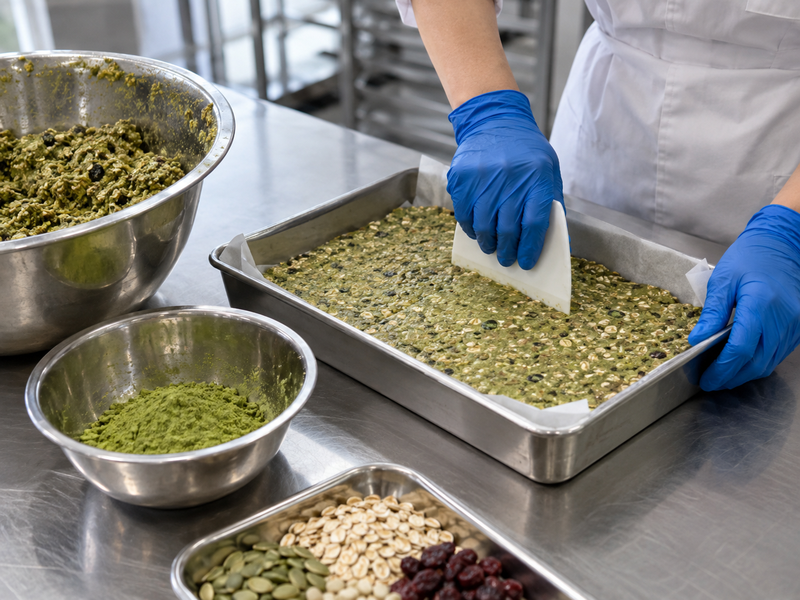
Choose flavor before making a claim
Matcha may be the leading flavor, a partner to vanilla or coconut, or a smaller component that adds color and a tea note. State which role the brand wants. A strong green bar can draw attention, but a customer will judge the bite and ingredient list. Decide serving weight, target protein profile, sweetness and whether the bar will be eaten before exercise, at a desk or as a dessert-like snack. Those choices shape texture and packaging. They also determine whether a matcha powder can contribute enough flavor in a dense base.
Eat a whole bar. A small tasting square can hide a bitter or chalky finish that becomes tiring by the final bite. Compare the new bar with the brand’s reliable plain control. Ask whether matcha improves the product and whether the bar still performs its main nutritional and sensory job. Avoid building marketing copy around an assumed functional benefit. Any caffeine or nutrition statement should come from the actual serving and appropriate data.
2. Which Protein and Binder Base Fits Matcha?
Keep the base stable during early trials
Whey, pea and other proteins can bring different flavors and texture. Binders such as syrups, fruit pastes or fibers also affect sweetness and hardness. Start with a base that the manufacturer already understands. Add matcha as the main variable and record the impact. A strong plant-protein flavor may mask tea; a sweet base may make the matcha taste thin. Do not change protein source, binder and powder at once. A clean control helps the team identify which ingredient created an improvement or a defect.
Check after wrapping. Some bars firm up as moisture redistributes; others become sticky. A matcha bar should be compared with the plain control under the same pack and storage conditions. If the powder seems to dry the mix, trial a small binder adjustment after selecting a promising dose. Recalculate nutrition for every meaningful formula change. A development team should not promise a protein target from the control formula after adding other ingredients and changing portion size.
| Base element | Development question | Full-bar check |
|---|---|---|
| Protein source | Does its flavor compete with tea? | Aftertaste and texture |
| Binder | Does it soften or oversweeten? | Bite after storage |
| Fat component | Does it support mouthfeel? | Coating and shelf feel |
3. Which Matcha Powder Survives the Formula?
Trial lot-linked samples in the same bar
Request several matcha samples with specifications and relevant quality records. Use the same bar formula and powder dose for each trial. A powder that tastes excellent as a drink may disappear among protein and binder. Another can keep its tea identity but make the bar gritty. Compare aroma, color, bitterness and particle feel after the bar has set and after a storage interval. Cost per kilogram matters less than cost per saleable bar at a dose that consumers can enjoy.
Plan for the next lot. A commercial snack may be produced over many months. Keep the approved powder sample and a wrapped bar as references. Ask the supplier how it handles lot variation and whether it can meet forecast volume. A substitute should be tested in the complete bar, not approved from a green color comparison. If the package says organic or specifies origin, verify those statements for the finished product and target market.
4. How Much Matcha Belongs in One Bar?
Build a dose ladder around the eating experience
Make three nearby levels and keep bar weight constant. Record grams of matcha per bar and percentage of the full formula. The lower version may lack tea flavor; the upper may bring bitterness or a dusty bite. Compare fresh bars and wrapped bars at planned storage points. Taste blind where possible. If a vanilla coating or nut inclusion hides matcha, decide whether the flavor partner or powder level should change. More powder is not the only route.
Calculate the serving honestly. If marketing plans to state caffeine content, testing or reliable formula data must support the number for the finished bar. Powder level can vary if the line deposits unevenly, so portion control matters. Nutrition and ingredient lists also need revision as doses change. A named flavor should be noticeable at a sensible dose; a dark green bar with little tea taste is a weak product proposition.
| Dose trial | Hold fixed | Decide |
|---|---|---|
| Low | Base and portion weight | Is matcha recognizable? |
| Medium | Base and portion weight | Is the bite balanced? |
| High | Base and portion weight | Is bitterness or dryness excessive? |
5. How Should the Powder Be Distributed?
Prevent dark pockets in a dense mass
Sift compacted matcha and blend it with compatible dry ingredients before it meets a thick binder, or use another validated addition method. Record the sequence and mixer settings. A small batch can look even when hand-mixed; a production kettle may leave green streaks near the wall. Cut bars from different parts of the slab and inspect each cross-section. The first and last bars from a line should carry similar color and flavor.
Do not rely on longer mixing alone. Extra shear may heat the mass or change the bar’s structure. If clumps remain, fix powder handling and addition order. If a preblend uses liquid, count it in the formula and retest storage behavior. A photo of a neat top surface can hide a dense dark patch inside. Cross-sections and portion weights give the team evidence it can use.
6. What Texture Should a Customer Get?
Test bite at several temperatures
A refrigerated sample, a room-temperature bar and a bar carried in a bag can feel very different. Define the intended eating condition and compare chew, crumbliness, stickiness and mouth coating. Matcha should not add a chalky finish on top of an already dry protein base. A coating can improve the first bite while concealing a poor center, so taste coated and uncoated versions during development. Record the time after production when the texture settles.
Cut the bar cleanly. Observe edge cracking and fines during forming and cutting. Waste from broken pieces can outweigh a small powder saving. If an inclusion such as crisp cereal improves texture, check whether it stays crisp in the chosen binder. Do not write “soft” on a pack until storage trials show that softness lasts through the intended sales period.
| Texture fault | Where to look | Possible trial |
|---|---|---|
| Chalkiness | Final bite | Powder dose or base change |
| Hardening | Later storage points | Binder and pack review |
| Stickiness | Wrapper opening | Surface and moisture review |
| Crumbling | Cutting and eating | Binder or forming review |
7. Which Flavors Support the Tea?
Use one partner with a clear purpose
Vanilla can soften a protein base, coconut can make a bar feel richer, and citrus can brighten a dry finish. Each also shifts what matcha contributes. Trial a plain matcha version first, then add one partner at a time. If a flavor is needed only to hide bitterness from a poor powder, reconsider the powder. A useful pairing leaves tea recognizable by the second bite. Taste after storage, when volatile aromas may have changed.
Keep inclusions manageable. Large nuts, chocolate pieces or fruit can complicate cutting and labeling. They may add allergens and change the moisture balance. The product brief should say what a consumer will actually taste and see. A “matcha vanilla” bar is honest if both flavors are present; a bar with only a faint tea note should not lead its description with matcha solely because it is green.
8. What Quality and Label Checks Are Needed?
Assess the final food and its market
The matcha supplier should provide ingredient specifications and lot-linked records. The bar manufacturer remains responsible for finished-product safety, nutrition, allergen controls and claims. Qualified staff should validate the process and shelf life for the exact formula and wrapper. A protein bar may cross borders, and labeling rules vary. Do not assume that “natural energy” or a caffeine figure can be used without evidence and market review.
Trace the batch. Connect powder lot, protein and binder lots, production run and finished pack code. Keep retained samples for investigations. If an ingredient source changes, review whether flavor, texture and nutrition still match the approved product. A new matcha lot can affect green shade, but a color difference is only one part of the acceptance decision.
| Record | Why keep it |
|---|---|
| Matcha specification | Defines incoming material |
| Formula and portion weight | Supports nutrition and cost |
| Allergen review | Supports safe labeling |
| Storage study | Supports sale period |
9. How Does the Wrapped Bar Age?
Test the real pack and distribution route
Wrap trial bars in the intended material, then assess appearance, opening behavior, flavor and chew at planned intervals. A barrier that protects the product may also trap moisture in a way that changes texture. Light through a clear window can affect how green the bar looks. Shipping and temperature variation can crack a coating or make the wrapper stick. A bench bar sitting on parchment cannot answer those questions.
Open it like a customer. Check whether the bar pulls free cleanly and still smells of tea. Taste the middle and edge. Photograph the wrapped bar under normal store lighting and compare with marketing artwork. If the product needs a shorter sale window than the existing bar range, plan that commercially before printing a large inventory of wrappers. Shelf-life decisions require the manufacturer’s validated evidence for the exact finished product.
10. What Must Be Approved Before Scale-Up?
Give production a measurable target
The launch file should include powder supplier and accepted lot characteristics, full formula by weight, addition order, mixing endpoint, forming and cutting method, portion tolerance, wrapper, safety plan, sensory target and storage evidence. Calculate cost per saleable bar, including breakage and rework. Purchasing can then evaluate a powder substitution without guessing what matters. Marketing can describe the actual flavor and nutrition of the bar that production will make.
Repeat on the line. Run an intermediate production trial and sample bars from early, middle and late portions. Compare them after wrapping and storage with the approved pilot. If a different operator cannot achieve the same texture and tea flavor, the formula or process sheet still needs work. A matcha protein bar earns a permanent place in a range when a customer can open it weeks later and get the bite the development team approved.
| Launch approval | Evidence |
|---|---|
| Matcha supply | Sample and specification |
| Nutrition and label | Final formula review |
| Line performance | Yield and portion records |
| Storage | Wrapped-bar study |
| Sensory | Full-bar tasting over time |
FAQ
Q1: Can matcha be added to a protein bar? Yes. Test it in the complete bar because protein and binder can change flavor and texture.
Q2: Does matcha increase protein? Matcha is used mainly for tea flavor and color here. Protein claims should be based on the full tested formula.
Q3: Why is a matcha bar chalky? Powder dose, protein base and mixing can all contribute. Compare controlled versions and a plain control.
Q4: Can a matcha bar claim a caffeine amount? Only with reliable data for the finished serving and review under the sale market’s rules.
Q5: What should a manufacturer ask a supplier? Request lot-linked samples, a specification, relevant test records and commercial supply terms.
The site’s matcha nutrition facts guide helps separate ingredient and finished-food data. The SERP reference recipe is a kitchen starting point; a wrapped commercial bar needs line and shelf-life testing.