
Matcha kombucha combines a fermented drink with powdered tea that does not dissolve. The result can taste lively, but the development team must control fermentation, powder dispersion and the drink’s behavior after packaging. A recipe that tastes good on bottling day may continue changing in the bottle. This guide is for beverage businesses planning trials. Qualified fermentation and food-safety staff should set the actual process and release limits for every market in which the product will be sold.
Contents: Concept · Base · Powder · Addition · Flavor · Sediment · Alcohol · Pack · Safety · Launch
1. What Kind of Matcha Kombucha Are You Making?
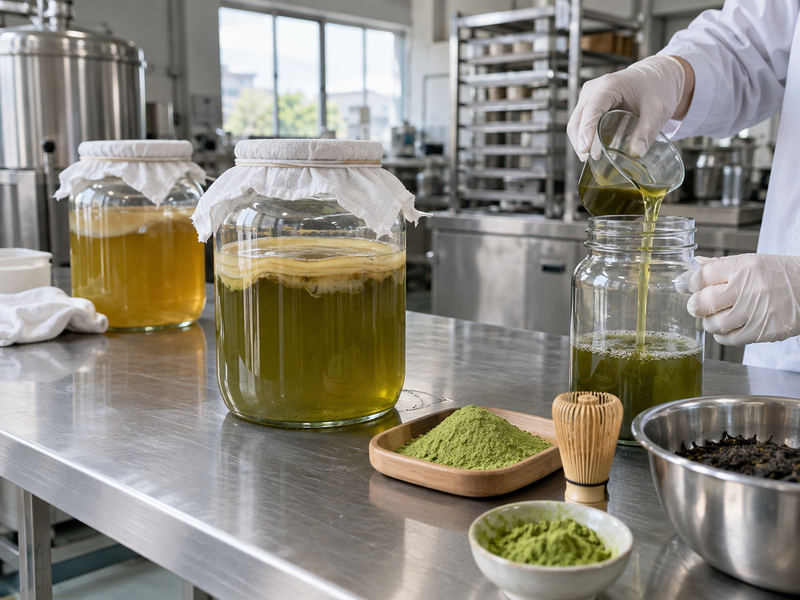
Decide whether matcha leads or supports
A matcha kombucha can be a tea-forward fermented drink, a fruit kombucha with a green accent or a cafe mix made from finished kombucha and freshly dispersed matcha. Each format has a different processing and stability problem. Write a product brief with intended flavor, sweetness, visual appearance, container and sales channel. A cloudy green drink may be acceptable to a customer who expects kombucha; a bottle with a compact dark layer may not be. Do not build the label before the team has seen the product after realistic storage.
Taste the whole bottle. A sip of fresh pilot liquid can hide a strong acidic finish or gritty last pour. Evaluate a normal serving, then the last portion from the container. If the concept includes fruit, make a plain matcha version first so the tea’s role is clear. A cafe-made serving and a sealed commercial bottle need separate development briefs. The latter must go through qualified process, alcohol and shelf-life review rather than borrowing a cafe recipe.
2. Which Fermented Base Should You Use?
Start with a controlled base the team understands
Use a kombucha base with a documented fermentation process, ingredient list and quality history. Matcha should be one measured variable in the trial. A base that already varies widely in acid or residual sweetness will make it hard to judge powder choice. Record the base batch, its relevant process measurements and sensory profile before adding matcha. If a brand purchases kombucha from another manufacturer, it needs the information required to assess what happens after the tea powder is added.
Keep process ownership clear. Adding powdered matcha may change handling, filtering, filling and shelf appearance. The fermentation team and product team should agree who approves those changes. Do not infer safety from a pleasant sour taste. Qualified staff should define the controls and testing needed for the exact final beverage. A trial with an unstandardized household culture may inspire a flavor idea but does not establish a commercial process.
| Base question | Reason to document |
|---|---|
| Which production batch? | Links the matcha trial to known material |
| What is its flavor profile? | Separates fermentation variation from tea variation |
| What processing follows? | Determines final product assessment |
3. Which Matcha Powder Fits the Drink?
Compare samples in the finished base
Ask for lot-linked matcha samples and test them at one dose in the same kombucha base. Acid can make tea bitterness feel different from a milk drink. Powder fineness affects visible sediment and mouthfeel. Taste cold, after the normal serving time and after the proposed storage points. A powder that gives a vivid green immediately may not keep the same color in an acidic fermented beverage. Record what the finished product does rather than relying on a grade description.
Ask for supply evidence. A commercial product needs a repeatable powder, specification and relevant test records. Keep a retained sample from the chosen lot and repeat a short formula trial when a new lot arrives. If the label refers to organic status or geographic origin, support it with appropriate documents for the destination market. The supplier’s claim about its tea is only one part of the finished beverage’s claim review.
4. When Should Matcha Enter the Process?
Compare addition points under controlled conditions
Adding matcha before fermentation, after fermentation or at cafe service produces different outcomes. Powder can settle, interact with foam and complicate cleaning. Make small controlled trials under the oversight of staff who understand the fermentation process. Record how powder is prewetted, where it enters, mixing equipment and hold time. Do not add matcha to a production tank simply because it blended smoothly in a glass. The team needs to know whether the first and last filled bottles have the same tea dose.
Protect traceability. Every trial should connect matcha lot, fermented base batch and finished-pack code. If a sample later changes flavor or pressure, the team must know which process it came from. A cafe adding matcha to a finished, approved kombucha at service should still set a measured method and handle the mixed drink under its food-safety procedures. That route may be simpler than developing a new shelf-stable package, but it is not the same product.
| Addition route | What to observe |
|---|---|
| Before fermentation | Effect on the controlled process |
| After fermentation | Sediment, filling and storage behavior |
| At service | Repeatable dose and immediate drink quality |
5. How Do You Balance Acid and Tea?
Taste the base before adding fruit or more sugar
Kombucha brings acidity and sometimes residual sweetness. Matcha can add green aroma and a dry finish. Make a dose ladder with a stable base before adjusting sweetener. Taste a full serving at the intended temperature. If a fruit addition is planned, add one fruit system at a time and compare whether the tea remains recognizable. A highly flavored drink may need only a modest matcha role; the label should reflect the actual formula rather than suggesting tea dominates when it does not.
Check later samples. Fermented beverages may change after filling depending on process and storage. The development team should revisit sweetness, acid impression and tea aroma at planned stability points. Do not tune the formula only for bottling day. A flavor that is balanced when fresh can become sharp or flat later. Keep sensory notes beside measured process data so the team can identify whether a problem comes from fermentation or from the matcha addition.
6. How Will You Handle Powder Sediment?
Define an honest visual standard
Matcha is powdered leaf and does not fully dissolve. A bottle may show fine sediment even when the drink is otherwise well made. Decide what consumers can reasonably expect and test the chosen pack under normal storage. Check the top, side and bottom after several time points. Note whether a gentle inversion redistributes the powder and whether that instruction would be appropriate for the product. A hard layer that requires vigorous shaking is a different problem from a light haze.
Sample through a fill run. The first bottle may carry less powder than the last if the tank settles. Pull and compare early, middle and late fills. A high-shear mix may improve dispersion but affect gas, foam or equipment cleaning. Trial changes one at a time with qualified process staff. If sediment remains acceptable, the package can describe the drink plainly; it should not pretend powdered matcha is a clear extract.
| Observation | Trial question |
|---|---|
| Fine haze | Does it remain pleasant to drink? |
| Soft bottom layer | Does gentle movement redistribute it? |
| Hard sediment | Is dose uniform through the run? |
| Floating ring | Are foam and powder interacting? |
7. What Alcohol and Claim Checks Are Needed?
Test through the entire intended life
Kombucha can contain alcohol from fermentation, and the level can change after bottling if fermentation continues. In the United States, the Alcohol and Tobacco Tax and Trade Bureau explains that its alcohol-beverage requirements can apply if kombucha reaches 0.5% alcohol by volume at any point, including after bottling. That is a reason for a validated monitoring plan, not a shortcut to a universal recipe. Other markets have their own rules. Regulatory staff should review the intended claims and tests for each destination.
Do not equate matcha with a health claim. Caffeine, sugar and any functional statements need data for the finished serving and market-specific review. A label saying “non-alcoholic” or “alcohol-free” requires careful evaluation of the complete process and storage behavior. The product team should not infer its status from a single fresh bottle test. Keep measurements connected to the batch and storage conditions.
8. How Will the Package Behave Over Time?
Test gas, closure and color together
Glass and cans give different visibility and handling. A clear bottle shows matcha color and sediment but exposes the product to light. A can hides the liquid until opening, so taste and appearance still need checking. The closure, headspace and process must be compatible with any continuing gas production or the method used to control it. Qualified packaging and process teams should test the exact package. A laboratory cup cannot represent pressure or filling behavior in commercial distribution.
Ship a trial case. Observe the product after realistic movement and temperature exposure under the approved protocol. Check leaks, excess pressure, color, sediment and sensory quality. Keep samples from the same fill run at reference conditions so transport effects can be distinguished from normal aging. A package choice should be based on the drink the customer opens, not the one that looked attractive on the filling line.
| Pack check | Evidence |
|---|---|
| Closure and pressure | Qualified packaging trial |
| Color | Storage comparison in actual pack |
| Sediment | Early and late fill samples |
| Label | Claims supported in sale markets |
9. What Must the Quality Team Validate?
Treat the matcha version as its own product
Food-safety staff need to assess the full formula, fermentation process, matcha addition, packaging, storage and intended shelf life. That includes the relevant microbiological and process measurements. A safe base kombucha does not automatically validate a new version with powder added at a different point. The quality team should decide which measurements belong at incoming material, in process and at release. These are product-specific decisions under applicable law and professional guidance, not values to copy from an online recipe.
Keep change control practical. A new matcha lot, sweetener, fruit component or pack can affect the product. Record what changed and which trials need repeating. Trace the finished bottle back to both the kombucha base and matcha lot. If a complaint arrives, retained samples and batch records should let the team investigate it. Separate a sensory defect from a safety question; a bottle may look normal yet still require testing.
10. What Evidence Supports a Commercial Release?
Approve the drink at the end of its route
The launch file should contain the formula by weight, base and matcha specifications, addition process, filling controls, alcohol and other required test plans, sensory standards, packaging checks, shelf-life evidence and label review. Costing should use the saleable bottle yield, not only ingredient price. A second production team should be able to repeat the pilot on line-relevant equipment. If a sample changes materially during storage, revise the process and test again before making commercial claims.
Let a complete bottle decide. The first pour and final pour should both taste intentional. The customer should see a product whose sediment and color match its honest description. A controlled matcha kombucha can be a distinctive beverage, but fermentation and powder make it a more demanding development project than a simple tea flavor addition.
| Release record | Owner |
|---|---|
| Matcha and base lots | Purchasing and production |
| Formula and process | Product team |
| Safety and alcohol plan | Quality and regulatory teams |
| Pack and stability | Packaging and quality teams |
| Final label | Regulatory and marketing teams |
FAQ
Q1: Does matcha dissolve in kombucha? No. It remains as fine leaf particles, so dispersion and sediment need testing.
Q2: Can matcha be added after fermentation? It can be trialed, but the exact process, mixing and final-product safety require validation.
Q3: Is matcha kombucha always alcohol-free? No. Fermentation can produce alcohol, and levels may change after bottling. Test and review claims for the sale market.
Q4: Can a cafe mix matcha with finished kombucha? Yes as a separate service concept, using a measured recipe and approved handling procedures.
Q5: What supplier documents matter? Request a lot-linked matcha sample, specification, relevant quality records and supply terms.
The site’s matcha solubility guide explains why particles remain visible. The SERP reference article provides a household flavor idea; commercial fermentation requires a separate validated process.