
A matcha scone needs enough tea flavor to justify its name, yet the crumb must still feel like a scone. Too much powder can make the finish dry; too much icing can turn the tea into a green backdrop. For a bakery or cafe, the development task is to choose a base formula, run controlled bake trials and judge the product at the time customers will eat it. The ten checks below put texture, color and commercial yield in the same conversation.
Contents: Style · Powder · Dose · Fat · Mix · Shape · Bake · Finish · Storage · Launch
1. What Kind of Matcha Scone Are You Selling?
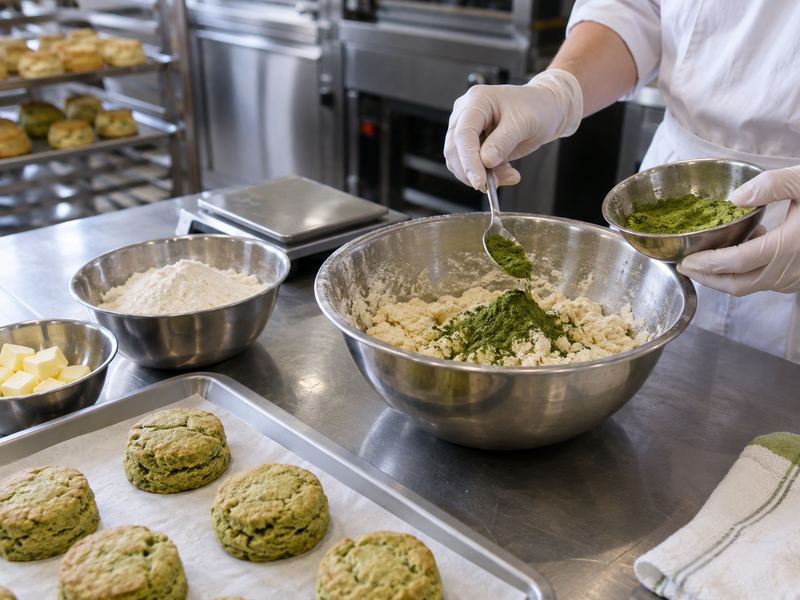
Choose a serving occasion and base recipe
A small cafe scone eaten warm with coffee differs from a packaged scone shipped to stores. Decide whether the target is a plain tea-forward bake, a fruit-studded item or a sweet glazed treat. Start with a base scone recipe the bakery already makes reliably. Bake it as a control on the same day as the matcha trials. That reference reveals whether a dry crumb comes from the powder or from the oven, flour, handling or storage. Set a target weight and whether the scone will be split, topped or served as it leaves the tray.
Eat it as a customer would. A warm sample straight from the oven can make any scone seem tender. Taste after cooling, after display and with the planned drink. If the product is wrapped, open a wrapped sample the next day. The tea flavor, crust and interior may feel different. A product brief should describe a pleasant bite and clean finish, not just an appealing green photograph. The brief also guides whether a glaze or inclusion has a job.
2. Which Powder Works After Baking?
Compare saleable scones, not dry samples
Request several lot-linked matcha samples and bake them into one fixed recipe at one dose. A powder can look bright before baking and turn muted in the oven. Another can hold color yet taste astringent. Make blind comparisons after the scones cool. Note tea aroma, bitterness, visible specks and crumb color. Ask the supplier for a specification and records appropriate for food manufacturing. Grade labels can guide a conversation, but the oven and the customer’s mouth should make the final decision.
Count yield. A fine powder that mixes evenly may reduce green streaks and rejected pieces. A cheaper powder that requires a higher dose or creates a rough finish may cost more per saleable scone. Calculate the powder cost using the approved portion weight and the number of pieces accepted from a batch. Keep a retained powder sample and an approved finished scone reference so the bakery can compare future lots before changing a menu item.
| Powder trial | Keep fixed | Judge after cooling |
|---|---|---|
| Sample A | Dose, base dough, oven | Flavor, color, crumb and yield |
| Sample B | Dose, base dough, oven | Flavor, color, crumb and yield |
| Sample C | Dose, base dough, oven | Flavor, color, crumb and yield |
3. How Much Matcha Belongs in the Dough?
Test a narrow range around the first acceptable dose
Record matcha as a share of flour weight and as grams per finished scone. Bake a low, middle and higher dose with the base recipe otherwise unchanged. More powder can strengthen flavor but also add dry solids and a bitter finish. Do not add extra sugar during this first comparison; doing so makes it impossible to tell whether the powder dose is right. Taste the complete scone and inspect the cut crumb. A dose that looks vivid in a thin test biscuit may be too intense in a large cafe portion.
Keep the target specific. If matcha should lead, ask tasters whether they recognize tea before reading the product name. If the scone has white chocolate or berries, test whether matcha still contributes something beyond color. A bakery can choose a softer tea profile, but it should do so consciously. Once the dose is chosen, adjust liquid or sweetness in separate trials if the crumb needs help. Record every change; recipe memory is unreliable after several busy baking days.
4. How Should You Handle Fat and Liquid?
Protect the base scone structure
Scones depend on the relationship between flour, fat, liquid and handling. Matcha adds powder to that system. Compare dough feel with the plain control: does it come together without excess flour, or is it crumbly before shaping? If the matcha version needs a small liquid change, make a separate trial at the chosen powder dose. Keep fat type and temperature steady. A warm, overworked dough can spread or become tough, which should not be blamed on matcha without evidence.
Measure what goes onto the bench. Bakers often add flour during rolling or cutting without counting it. For a small batch, weigh that bench flour or use a method that minimizes it. Extra flour can make a matcha scone especially dry. A plant-based version may use a different fat and liquid system; do not treat it as a one-for-one substitution. Approve that version as its own product with its own texture and label review.
| Variable | Control in the trial | Sign of trouble |
|---|---|---|
| Fat temperature | Same starting condition | Spreading or greasy crumb |
| Liquid | Weighed addition | Dry cracks or sticky dough |
| Bench flour | Known amount | Unexpectedly dry interior |
5. What Mixing Method Protects a Tender Crumb?
Distribute matcha before adding liquid
Sift matcha with the dry ingredients if the powder is packed. This reduces dark green pockets and gives each portion a similar tea dose. Use the bakery’s established scone method for incorporating fat and liquid. Mix only to the endpoint that produces a coherent dough; a long mix to force uniform color may toughen the crumb. Record the appearance of the dough and the number of folds or handling steps if those are part of the process.
Cut a few raw portions. A streak visible inside raw dough will probably remain visible after baking. If the exterior is even and the inside is not, revisit dry distribution. Scale-up changes mixing energy; a bowl method may not transfer directly to a production mixer. Have a line baker repeat an intermediate batch, then inspect portions from different points in the bowl. A simple process that produces an even dough is more useful than a fragile trick that only works for the developer.
6. Which Size and Shape Fit Service?
Portion for the display case and the customer
A large wedge looks generous but can make the matcha flavor tiring and the center hard to bake without drying the edge. A small round may sell well with an afternoon drink but cost more labor per kilogram of dough. Test at least two portion sizes using the same formula and compare bake, eating experience and selling price. Weigh each raw piece. Uniform size makes oven results and cost calculations meaningful; visual estimates are rarely precise across a full tray.
Check what the pack can hold. A wedge with a delicate glaze may break or stick to film. A round scone may fit a standard bakery bag. If the venue serves it with butter or jam, allow enough surface for that use. Photograph the final size beside the actual cup or package. The right portion is the one a customer wants to finish, that a baker can repeat and that survives the chosen sales route.
| Shape option | Benefit | Test |
|---|---|---|
| Wedge | Familiar cafe look | Center bake and breakage |
| Round | Easier portion control | Edge dryness and packaging |
| Mini | Tasting or catering | Labor and unit cost |
7. How Will the Scone Bake Without Drying?
Use a properly baked crumb as the limit
Green dough changes appearance in the oven. Do not stop baking early solely to retain color. Use the base recipe’s quality and safety criteria, then compare a modest range of settings and times. Cut representative scones after cooling. A browned edge may be acceptable; a gummy center is not. Note the difference between edge and center positions on a tray. A full oven load can behave differently from a single pilot tray, so confirm the result under normal production conditions.
Look after cooling. A crust that feels crisp when warm can soften in packaging. A crumb that feels tender at the oven exit may dry as steam escapes. Evaluate the scone at the real serving time. If color is less bright than marketing hoped, show the product honestly rather than pushing matcha dose beyond a good flavor. The bakery’s goal is a scone people reorder, not a color chip.
8. Does a Glaze Help or Hide the Tea?
Decide what the finish contributes
A thin glaze can bring moisture, sweetness or visual contrast. It can also hide a dry scone and dominate matcha. Taste an unglazed control first, then add a measured glaze amount. Record how much adheres to each piece and whether it stays presentable during display. A matcha glaze adds more tea but may make the top look much darker than the crumb; a citrus glaze can sharpen the finish. Choose a pairing that makes the product easier to understand from the first bite.
Check ingredient language. A glaze may introduce dairy, soy or another allergen absent from the base scone. A retail product needs the appropriate ingredient and allergen review for the sale market. A bakery case needs staff who can answer accurately. Avoid decorating with dry matcha powder merely for a photograph if it creates a bitter, dusty first bite. A clean surface with a simple finish may serve the product better.
| Finish | What to test |
|---|---|
| No glaze | Baseline tea flavor and crumb |
| Thin sweet glaze | Balance and pack sticking |
| Citrus glaze | Acid versus tea flavor |
| Dry matcha dust | Bitter first bite and handling |
9. What Happens After the Scones Cool?
Test display and packaging separately
An open cafe case and a wrapped wholesale scone have different moisture behavior. Hold trial pieces in each proposed format and inspect them at the planned sale times. Taste the center and edge, watch glaze, and note whether aroma fades. If a wrapped scone collects condensation, the packing temperature or material may need review. If an open-case piece becomes dry, portion size or formula may need adjustment. The sale window should be set through the bakery’s normal quality and food-safety process for the exact product.
Follow the delivery route. A tray moving from a central bakery to stores may experience stacking and vibration. Pack a test case and inspect at the destination. Count broken pieces rather than judging one perfect survivor. If freezing is part of the business, test thawing and rewarming with the finished product. A shelf-life claim drawn from a plain scone may not fit a matcha version with a different glaze or filling.
10. What Must a Second Baker Repeat?
Turn the trial into a short production sheet
Record matcha supplier and lot standard, dry ingredient method, powder dose, liquid adjustment, mixing endpoint, portion weight, pan layout, bake, cooling and finish. Include a photograph of acceptable crumb and crust, plus a cost sheet based on saleable pieces. Purchasing needs a plan to qualify a substitute powder if the approved lot changes. Marketing needs a photograph taken at the normal sales point, not under unusual lighting.
Give the recipe away. Have a second baker make a full tray from the sheet without verbal help. Compare raw portions, baked yield and day-after eating quality with the approved trial. If the second batch is different, revise the instruction at the exact step where interpretation varied. A dependable matcha scone should taste like tea, feel tender enough to finish and look like the item shown on the menu.
| Launch record | Purpose |
|---|---|
| Powder specification | Qualifies incoming lots |
| Formula and process | Repeats the dough |
| Yield count | Sets real cost |
| Display test | Defines sale quality |
| Staff handoff | Confirms another baker can repeat it |
FAQ
Q1: Can a bakery use culinary matcha in scones? Yes, if it performs well in the finished bake. Test flavor, color, texture and supply at the intended dose.
Q2: Why are matcha scones dry? Powder dose, liquid, extra bench flour, mixing and baking can all contribute. Compare one variable at a time with a plain control.
Q3: Should matcha scones be glazed? Only if the glaze improves the complete bite and survives the sales route. Taste an unglazed control first.
Q4: Can matcha scones be frozen? Trial freezing and thawing with the exact formula and pack. Check texture and appearance before setting a process.
Q5: What should a bakery request from a matcha supplier? Ask for lot-linked samples, a specification, relevant quality records and repeatable supply terms.
For broader bakery powder choices, see types of matcha. The SERP reference scone recipe is a home-scale starting point; commercial production needs yield and display checks.