
Halal matcha buying calls for two parallel checks. The powder must taste and behave as the brand needs, and the precise product and production path must meet the requirements of the intended customer and market. Plain powdered tea may look straightforward, but a latte blend can contain flavors, creamers and other components; packing or processing may also change the certification scope. Treat a supplier’s general halal statement as the start of a review, then connect current evidence to the actual SKU and shipment.
Contents: Product · Market · Certifier · Ingredients · Process · Records · Quality · Pack · Supply · Review
1. Which Matcha Product Do You Need?
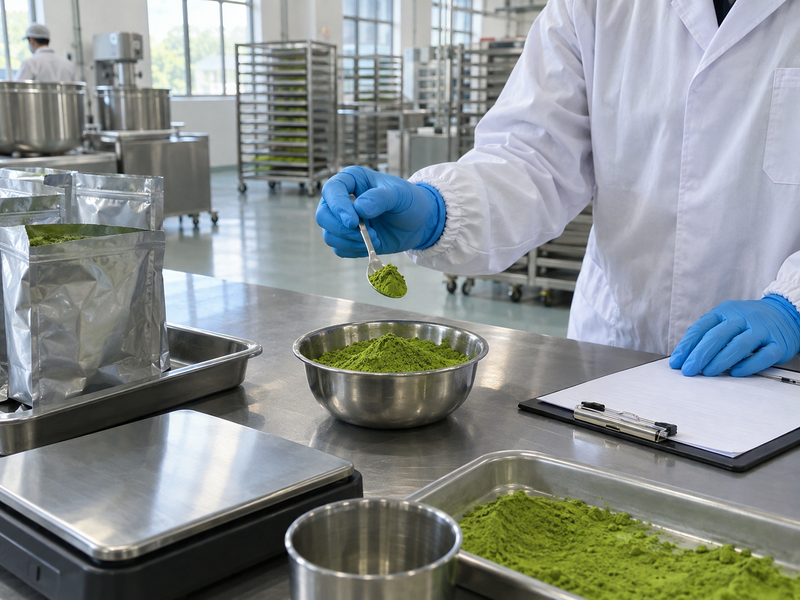
Identify the finished item
Write down whether the order is for plain matcha powder, a premixed latte powder, an ingredient for food production or a ready-to-drink product. Give each candidate its exact supplier name, SKU, formula version and pack size. The status of raw matcha cannot automatically be applied to a sweetened drink made with it. Likewise, a certificate for one blend does not necessarily cover a new flavor. Keep tasting samples labeled by lot so procurement can request documents for the product the development team actually selected. This avoids discussing a good sample and a different certificate as though they were one item.
Decide where it will be used
A food manufacturer incorporating the powder into another certified item may need a different evidence package from a retailer selling the pouch directly. Ask the final customer what record or symbol it expects. If the powder will be repacked under a private label, include the proposed filling location in the brief before artwork begins. A plain product definition makes later conversations with the supplier and certifier shorter. It also prevents marketing from writing a claim for a format that has not yet been approved.
| Intended item | First evidence request | Extra question |
|---|---|---|
| Plain powder | Exact product certificate | Is this pack covered? |
| Latte blend | Formula and product certificate | Are all additions reviewed? |
| Finished drink | Finished SKU certification | Is the process included? |
2. What Does Your Destination Market Require?
Ask before choosing a logo
Halal certification acceptance can depend on the importing market, product category and customer. Obtain written requirements from the retailer, distributor or relevant authority before committing to a certifier and print design. One certificate should not be described as accepted everywhere. If several markets are planned, put them on the sourcing brief at the outset; the supplier may need to plan documentation and production accordingly. The buyer should also ask whether a certificate must cover the finished retail pack or whether ingredient-level evidence is enough for the specific commercial use.
Keep acceptance separate from preference
Some customers prefer a named certifier even where a broader market route is available. Record that commercial requirement separately from formal import requirements. The Malaysia Halal portal is one example of an official resource for a particular market; it does not settle requirements elsewhere. Ask a competent local partner to review the actual pack and certificate for each destination. A supplier can supply evidence, but the brand selling the product owns the decision about where and how to place its claim.
3. Who Certified the Exact Product?
Verify the current certificate
Request the certifying body’s name, certificate number where issued, product schedule and validity dates. Compare the exact product name and company with the supplier quotation. Contact the certifier or use its verification service when available. A generic logo on a website may belong to another product or an older production arrangement. Islamic Services of America describes product review and facility inspection as steps in its certification process. That is why the product and site matter; a buyer should not reduce the decision to the visual presence of a symbol.
Read limits in the record
Some certificates list particular items, sites or categories. If the intended matcha is absent, ask for clarification rather than inferring it from a similar name. Save the document and verification date in the approved-supplier file. Set a reminder ahead of expiry for continuing purchases. A certificate accepted for the first shipment may need an updated version later. When a supplier says renewal is in progress, decide with the customer and certifier whether the claim can be used; do not silently ship based on the expectation that approval will arrive.
| Record field | Match against | Action if unclear |
|---|---|---|
| Product name | Sample and order | Ask for exact SKU listing |
| Facility | Production path | Request scope confirmation |
| Validity | Shipment timing | Verify current status |
| Symbol | Package artwork | Obtain approved use guidance |
4. What Is in the Full Formula?
Do not stop at the tea component
Plain matcha has a short ingredient list. A latte blend, protein bar ingredient mix or flavored syrup may contain flavors, carriers, emulsifiers and processing aids. Ask the supplier for sufficient formulation information to establish what the certifier reviewed. Confidential recipes can be handled through an agreed disclosure route without giving a sales team unnecessary details. What matters is that the approved product corresponds to the formulation being ordered. If a proposed blend changes, request evidence that the changed version remains in scope before using the same artwork or sales claim.
Watch substitutions
An ingredient can change suppliers without changing the public product name. Put notification terms in the supply agreement for changes that may affect halal status, labeling or product performance. The certifier decides how an ingredient or process change is assessed; a buyer should not attempt a religious ruling from an incomplete ingredient list. The buyer can, however, insist on traceable approvals. ISA’s description of halal production controls discusses raw materials, separation, packaging and labeling as parts of the reviewed process. Build the information request around the whole product, not only its green tea powder.
5. Where Is the Product Made and Packed?
Draw the simple route
Ask where the tea is sourced, ground, blended, filled and sealed. Identify contractors and shared facilities. The buyer does not need a factory engineering manual, but it does need to know whether the certified production route matches the proposed order. If a bulk bag is certified and the brand will repack it, discuss that operation with the certifier before treating the retail pouch as covered. A second packing site can be a material change even when no ingredient changes. Keep the facility names with the approved certificate and purchase specification.
Reconcile the actual shipment
On receipt, compare the carton, product label, lot number and supplier against the approved documents. A pack bearing a different company name or site should be held for clarification. This is especially relevant where a manufacturer offers OEM filling for several brands. The incoming quality team can perform the check if it has a one-page approved-item sheet. If the powder is transferred to an internal container for production, preserve its lot identity. Traceability makes both religious certification review and ordinary quality investigation more reliable.
| Production stage | Ask for | Why it matters |
|---|---|---|
| Grinding or blending | Facility and formula version | Match certified scope |
| Filling | Packer and pack format | Check retail claim |
| Shipping | Lot and product label | Reconcile delivery |
6. Can You Match Records to the Lot?
Build one buyer file
Store the current certificate, exact product schedule, specification, ingredient statement and sample approval under a single SKU. Link purchase orders and received lot numbers to that file. A sales email promising halal status is not a substitute for a current record. When a distributor asks for evidence, the team should be able to send the approved version quickly and know what not to send. A tidy file also makes it clear when a certificate renewal, new pack or modified formula requires fresh review.
Check the lot’s quality documents
For the matcha itself, request the agreed lot quality documentation, such as a certificate of analysis where specified. That document addresses measured quality attributes; it does not replace halal certification. The halal record and the lot record answer different questions and should both map to the item delivered. If a product claim refers to origin or organic status as well, keep separate supporting records for those. The buying team should resist a single “compliance” folder in which unrelated documents are treated as interchangeable proof.
7. Does the Matcha Perform in the Final Recipe?
Blind-test qualified candidates
Once the certification path is viable, prepare each candidate at equal powder mass in the intended product. Test an iced latte in the actual milk, or a pastry in the actual bake. Compare green color, tea aroma, bitterness, particle feel and residue after a normal wait. Do not select by certificate alone if the resulting drink disappoints customers. Conversely, do not launch an excellent-tasting powder with an unresolved claim. Keep sensory notes linked to the lot and formula so repeat orders have a usable target. Invite both development and purchasing to the approval tasting.
Confirm a second lot
Matcha is an agricultural product, so evaluate a second lot or a realistic production sample where possible. Ask the supplier to define an acceptable sensory range and provide samples when a material source or blend changes. Matcha Village can discuss B2B powder grades and blend requirements through its matcha product range, but halal status for a selected SKU must be verified from current product-specific evidence. A successful trial combines a credible certification route with a drink or food people want to buy again.
| Trial point | Measure or observe | Keep in file |
|---|---|---|
| Fresh sample | Aroma, color, taste | Lot and recipe |
| Finished recipe | Processing effect | Method and serving |
| Repeat lot | Variation | Comparison notes |
8. What Can You Print on the Pack?
Use approved symbols and wording
Send the finished artwork, not just a typed claim, through the relevant certifier and market label review. Confirm the symbol, product name, company and any category wording. A halal logo copied from a sales brochure may be the wrong version or outside the approved use. Keep the signed-off print proof in the buyer file. Include online listings, cartons and sell sheets in the review because customers can see and rely on those claims too. If the product is sold in several markets, maintain an approved version for each destination.
Review surrounding statements
“Halal,” “organic,” origin and nutritional statements need their own evidence. The certification of a powder does not support a broad claim that a cafe’s entire menu is halal. A product page should say exactly what the certificate covers. Marketing can still describe the tea’s color, aroma and preparation in plain language without expanding the religious claim. If a supplier’s certification status changes, identify who removes or updates online copy while physical inventory is assessed. Claims should follow the product and its approved route, not the enthusiasm of a launch campaign.
9. Can the Supplier Maintain the Approved Route?
Discuss supply continuity
A certified sample is useful only if the supplier can fill orders through the same approved process. Ask about lead time, available pack sizes, expected volume, change notification and renewal responsibilities. If the business needs a private-label pouch, clarify which party owns certification, artwork approval and packer coordination. Review the first production run before promising a fixed launch date. An alternate source can be valuable, but it needs its own product, quality and certification review rather than inheriting approval from the first supplier.
Keep cost comparisons complete
Compare price per acceptable finished drink or food, not only price per kilogram of powder. Include dose, waste, packaging, freight and any extra process required to maintain the approved route. A cheaper powder may need a larger tea dose to be noticeable. A delayed certificate may add launch costs. Balance those facts against flavor and supply reliability. The decision should be recorded in a way a new buyer can understand six months later, when the first champion of the product may no longer manage it.
10. How Will You Handle Changes and Renewal?
Put triggers into the agreement
Require notice before a change in ingredients, manufacturing or packing site, certifier, product name or certified status. Set a hold point for claims until updated evidence is reviewed. Schedule a routine certificate check before expiry and at relevant customer renewals. If a shipment arrives under a new SKU, do not treat it as an administrative detail until the product is matched to approval. Assign one person to keep the certification file current and another to release artwork. A simple two-person check is easier to maintain than a long policy no one opens.
Revisit the actual product
Periodically compare a received lot against the approved taste sample and the latest certificate. Review the pack customers see, including any distributor-applied label. A powder can remain certified yet drift in color or bitterness; it can also taste fine while its documentation has lapsed. Both cases need action. The best halal matcha for a brand is the product it can identify, verify, use successfully and reorder through a controlled route. Make that continuity part of the launch brief rather than an afterthought.
| Change | Immediate check | Release evidence |
|---|---|---|
| New blend ingredient | Certifier scope | Updated product approval |
| New packing site | Process coverage | Current site record |
| New market | Acceptance and label | Destination review |
| Certificate renewal | Validity | New certificate or verified listing |
FAQ
Q1: Is all plain matcha automatically halal? Do not rely on that assumption for a commercial claim. Verify the exact product and processing route against the customer’s requirements.
Q2: Does a certified powder make a latte halal? Additional ingredients and preparation conditions matter. Assess the finished product under the relevant certification approach.
Q3: Can a supplier logo replace a product certificate? Request current product-specific evidence and verify it with the certifier where possible.
Q4: Is one halal certificate accepted worldwide? Acceptance varies. Check the destination market and customer before printing a pack or promising distribution.
Q5: What happens if the supplier changes its packer? Review whether the new operation is within certification scope and obtain updated approval before carrying the claim on that pack.