
A sachet line can make attractive packs while giving away powder or sending underfilled units to a carton. Matcha sachet fill weight control needs more than a target set on the filler screen. Define the declared net content, measure the empty pack, sample at startup and through the run, then trace every reject back to a time and cause. The YPAK sachet guide notes that fine matcha can aerate, bridge and vary at the filler. The method below turns those observations into a repeatable line record, with legal net-content criteria reviewed for the sales market.
Contents
- 1. What does the fill plan need to control?
- 2. How should declared net weight be translated into a target?
- 3. How should empty-sachet tare be measured?
- 4. What happens at startup approval?
- 5. Where should in-run samples be taken?
- 6. How can a team detect feeder drift?
- 7. What should happen to checkweigher rejects?
- 8. How do you measure powder giveaway?
- 9. Which changes require a new fill trial?
- 10. What belongs in the approved line sheet?
1. What does the fill plan need to control?
Distinguish net content from machine dose
The pack label declares product weight, not the combined weight of tea and film. A filler setpoint may deliver an average dose, but the line must also understand variation between individual packs. NIST Handbook 133 is the current US procedural reference for checking net contents of packaged goods. Its FAQ explains both an average requirement and an individual-package requirement in US inspection. Other markets use their own rules, so a quality or legal lead should approve the site’s acceptance criteria.
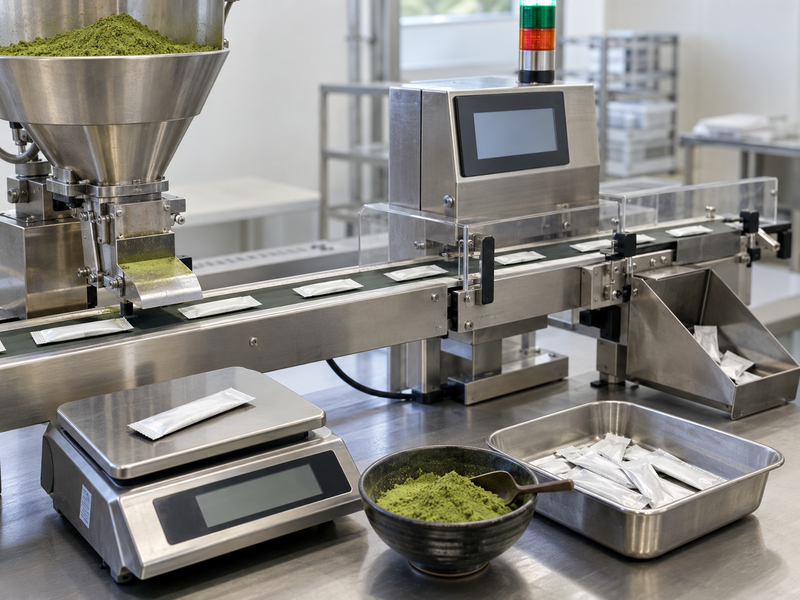
Write down declared weight, product code, film code, filler, checkweigher, scale and sampling method before a run. Decide whether the control sample is a sealed pack weighed against a tare estimate or an opened pack whose contents are weighed directly. Record the uncertainty and practical limits of the method. Keep the units straight. A gross weight printed by a checkweigher cannot be compared directly with a net declaration until packaging weight has been accounted for. The line sheet should allow an operator to reproduce the calculation without guessing.
| Quantity | Meaning | Record source |
|---|---|---|
| Declared net content | Product stated on pack | Approved artwork |
| Tare | Empty film and seal weight | Sampled empty packs |
| Gross weight | Sealed filled pack | Checkweigher or bench scale |
| Estimated net | Gross minus tare | Controlled calculation |
2. How should declared net weight be translated into a target?
Choose a running setpoint from real variation
Do not set the filler exactly to the printed weight and assume every pack will comply. Run a representative trial at the intended speed and measure the distribution of individual net weights. The chosen setpoint must account for observed variation, approved rejection limits and the applicable market’s rules. NIST’s US guidance warns that an average above the label does not excuse unreasonable individual shortages. The exact limits and inspection method belong to the market review, not a generic blog number.
Separate the label declaration from an internal control target. The control target is a process setting that can change after a validated trial, while the declaration is part of approved artwork. If the trial spread widens after a hopper refill, a higher setpoint may hide a feeding problem and increase giveaway. Fix the cause before adding grams. Use the histogram. A sample mean alone can conceal a long underweight tail. Plot individual results by time, including startup and end of run, and have the quality lead approve the operating range.
| Decision | Input | Approval question |
|---|---|---|
| Label weight | Market and artwork review | Correct declaration? |
| Filler target | Trial distribution | Meets internal criteria? |
| Reject setting | Validated checkweigher data | Catches suspect packs? |
| Recheck rule | Site quality procedure | Who releases held product? |
3. How should empty-sachet tare be measured?
Sample packaging across the roll or pouch lot
Tare can change with film thickness, seal width, print coverage, cut length and a new roll or supplier lot. Sample empty sachets made on the line, including normal seals and cut length, rather than weighing a scrap of flat film. If preformed pouches are used, sample them from different points in the packaging lot. Record individual empty weights, their average and spread. Use a scale suited to the small net content and verify its condition through the site’s calibration program.
NIST Handbook 133 includes tare procedures for package testing, but an in-process control routine should be written for the actual line. If tare variation is large relative to a small 2 g or 3 g tea dose, opening selected packs and weighing contents directly may be needed to validate checkweigher estimates. Those numbers are examples of small formats, not a legal standard. Recheck after a splice. A new film roll can alter tare while the product dose stays constant, causing the gross-weight signal to mislead staff. Record the time and roll number for every change.

4. What happens at startup approval?
Hold packs until the line demonstrates control
At startup, confirm the correct powder lot, sachet film, artwork, code, target and recipe. Check scale and checkweigher status under the site’s procedures. Run enough packs to reach stable feed, then draw a documented sample from consecutive production. Weigh individual packs using the approved tare method and open some to confirm actual net content if the plan requires it. Record line speed, hopper level and feeder setting. Do not merge startup material silently into the accepted lot.
The YPAK guide recommends testing at startup, refill and end of run because powder behavior changes. Use that as a sampling design prompt rather than borrowing its broad advice as a pass limit. Have quality or a designated trained operator sign the startup result before cartons leave hold. Check the first accepted carton. A passing bench sample means little if the reject device is disabled or cartons contain packs made before approval. Record where the hold boundary begins and ends.
| Startup item | Evidence | Release owner |
|---|---|---|
| Correct SKU and film | Lot and artwork match | Line lead |
| Scale status | Site verification record | Quality lead |
| Net sample | Individual results | Quality lead |
| Reject challenge | Device response | Trained operator |
5. Where should in-run samples be taken?
Sample process transitions, not only the clock
The sampling plan should cover regular intervals and events likely to change fill behavior: hopper refills, film changes, pauses, speed changes and the last part of the run. Record sample time and pack sequence so a suspect period can be isolated. An average taken across the whole shift can hide one short underfill episode. Sample size and frequency should follow the site’s validated process and market requirements, not a universal number from a webpage.
Keep individual measurements, not only a pass stamp. Plot results in time order and annotate adjustments. If the team changes an auger setting, take a fresh sample before releasing more product. Compare sealed-pack estimates with occasional direct product weights to catch tare drift. Sample the transition. A line can look stable at steady speed while the first dozen packs after a refill differ sharply. Include a written response when a sample fails: hold the affected interval, investigate, correct and resample under the quality procedure.

6. How can a team detect feeder drift?
Link weight changes to line conditions
Fine powders can compact, aerate or bridge as the hopper empties or refills. The YPAK reference describes this variation as a reason to evaluate the actual filler. Track hopper level, auger or feeder setting, agitation setting, line speed and visible dust along with pack weights. If weights steadily fall over a run, check feed consistency and material condition before changing the target. If only packs after a pause shift, record the pause and restart method.
Use a simple time plot of each sample mean and individual extremes. Compare against the approved internal control range. Do not apply a statistical rule copied from another product without validating it for this equipment and dose. Inspect seals as well; powder that misses the pack may contaminate the seal while reducing net weight. Watch the hopper. A trace with repeated dips at low hopper level gives maintenance and operations a more useful lead than a single shift average. Retain the powder and film lot numbers so a later investigation can separate material from machine effects.
| Drift clue | Check next | Possible action to trial |
|---|---|---|
| Gradual weight fall | Hopper level | Review feed method |
| Jump after refill | Powder aeration | Review refill routine |
| Spread widens | Bridging or vibration | Inspect feeder condition |
| Low weights plus dusty seals | Nozzle and airflow | Review deposit path |
7. What should happen to checkweigher rejects?
Keep rejects traceable and separate
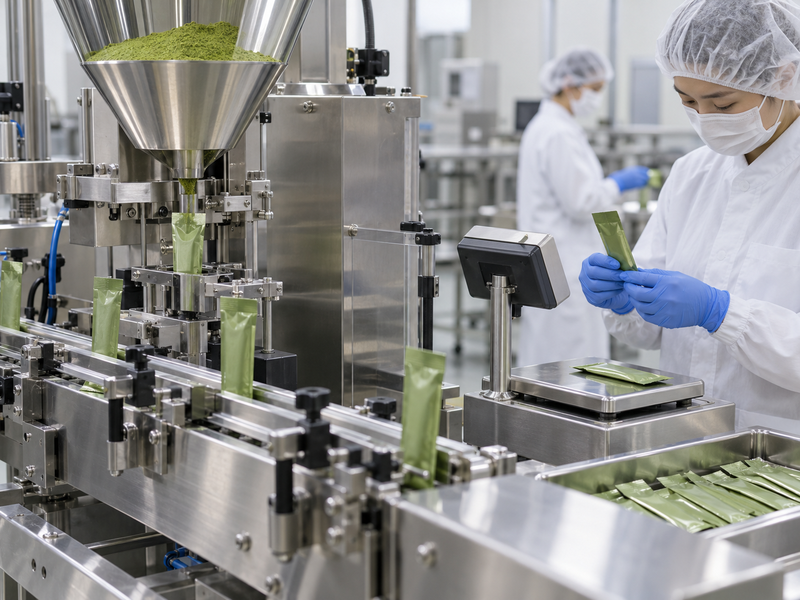
Challenge the checkweigher and reject device with site-approved test packs at startup and after relevant changes. Record the response, not just a green status light. Collect rejects in a controlled container with a count, time range and reason code. An underweight signal may come from low product dose, changed tare or a faulty measurement; each needs different investigation. Do not return rejected sachets to the accepted flow through an informal visual check.
Reconcile produced units, accepted units, rejects, samples and destruction or rework according to the site’s written procedure. If the reject rate rises, stop and inspect the trend before continuing at the same speed. Hold product since the last known acceptable check if the quality procedure calls for it. Trace every reject. A rejected pack without a time or reason cannot help the team identify the affected cartons. Our equipment calibration and maintenance guide covers wider instrument controls; the line sheet must connect those controls to this specific net-weight decision.
8. How do you measure powder giveaway?
Count the grams above the chosen control target
Giveaway is product delivered beyond the amount needed to meet the approved net-content plan. Calculate the observed average net weight from a representative accepted sample, subtract the declared net weight for an exploratory measure, and multiply by saleable unit count to show the scale of excess powder. That arithmetic does not replace legal compliance testing; it helps management compare operating scenarios. Include rejected powder, spills and cleaning loss in a separate total so giveaway is not confused with all material loss.
For example, a trial might compare two feeder settings using the same powder lot and film. Record individual weights, rejection rate, seal defects and powder loss around the nozzle. A slightly lower average that creates more underweight rejects may cost more than it saves. A higher average that compensates for wide variation should send the team back to the feeder. Price the spread. Improving repeatability often reduces giveaway more safely than moving a setpoint toward the label. Use actual ingredient cost, not an invented margin, when quantifying the opportunity.
| Loss category | Calculation basis | Keep separate from |
|---|---|---|
| In-pack giveaway | Accepted average minus declaration | Rejects |
| Reject loss | Product in rejected packs | Giveaway |
| Spill and dust | Weighed cleanup where feasible | In-pack dose |
| Startup loss | Held or discarded initial packs | Stable run |
9. Which changes require a new fill trial?
Treat material and setup changes as process changes
New matcha grade, sweetened blend, powder lot, film structure, pouch size, auger, nozzle, hopper level rule or line speed can shift the weight distribution. Write triggers for a restart check and for a more extensive validation trial. A minor setpoint correction inside an approved range may need a documented resample; a new formula or filler part may need a broader run. Quality leadership should define those levels before production.
Keep change records with old and new settings, reason, time and affected pack range. Test at normal speed and at the transitions that caused trouble in the original trial. Update the tare sample if film changes. Check seal quality alongside weight, since reducing dust at the nozzle can affect both. Do not inherit yesterday’s numbers. An identical screen setting can deliver a different net dose when powder density or film weight changes. Ask the supplier for relevant lot information and validate performance on the line rather than assuming grade names guarantee flow.
10. What belongs in the approved line sheet?
Make every decision traceable to a measurement
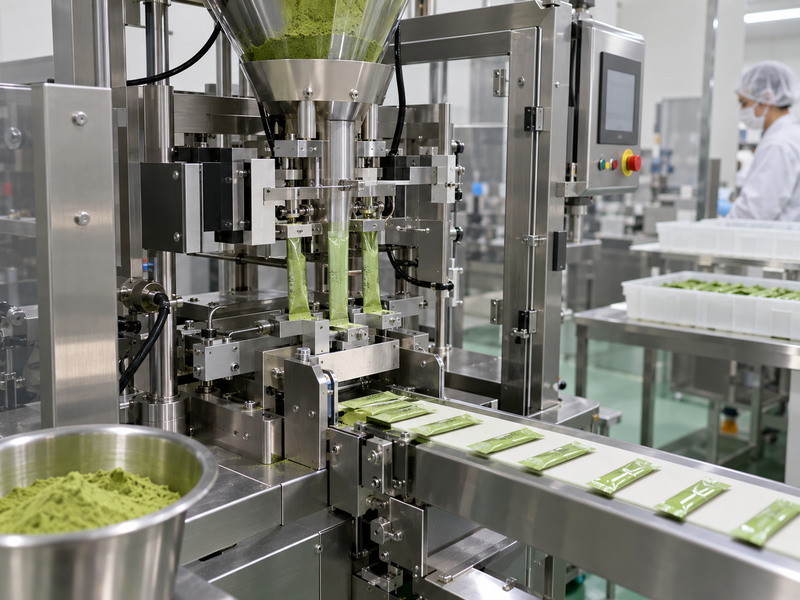
The sheet should list SKU, declared weight, market, powder and film lots, equipment IDs, scale status, tare method, internal target, reject challenge, startup sample, routine and event-based sampling, action limits, hold rules and approving roles. Include a worked net-weight calculation using the actual unit of measure. Retain individual results and the time of each adjustment. A line lead should be able to identify the last accepted interval without reading a full day’s notes.
Review the plan against the applicable market’s net-content rules and the site’s quality system. The NIST net-contents FAQ provides US context; it is not a universal tolerance table. Matcha Village can supply a powder specification and lot data for a buyer’s trial, but the packer must validate fill behavior on its own equipment. Run one more shift. If a second operator produces the same weight pattern and reject response, the control plan is ready for routine use.
FAQ
Q1: Is gross sachet weight the same as net matcha weight? No. Net content excludes film and seals; verify the tare method.
Q2: Why do weights change after a hopper refill? Powder condition and feed behavior may change. Sample the refill interval and review the feeder.
Q3: Can average overfill compensate for underweight packs? Do not assume so. US guidance has both average and individual-package requirements, and market rules differ.
Q4: How should rejects be handled? Segregate, count, time-stamp and investigate them under the site’s procedure.
Q5: When should tare be checked again? Recheck after film or pouch-lot changes and whenever gross-weight trends no longer match direct product weights.