
A brand can compare the price of a mill with an OEM quote and still miss most of the decision. A matcha factory build vs OEM study needs one defined production boundary, verified output, building and quality costs, and quotes for the same finished product. The Japan Matcha Agent reference separates packing, milling and fuller tencha processing scopes. Use that distinction, then replace generic cost claims with local site bids and actual supplier offers. Matcha Village supplies matcha and OEM options; buyers should compare any offer on product specifications, documents, service and total delivered cost.
Contents
- 1. What exactly would the company build?
- 2. What finished product must both routes deliver?
- 3. How should demand and capacity be modeled?
- 4. Which facility and equipment costs belong in the build case?
- 5. Which labor and quality costs continue each year?
- 6. What should an OEM quotation include?
- 7. How do you compare cost per saleable kilogram?
- 8. What risks change the preferred route?
- 9. Can a staged route reduce uncertainty?
- 10. What should the decision memo contain?
1. What exactly would the company build?
Draw the production boundary
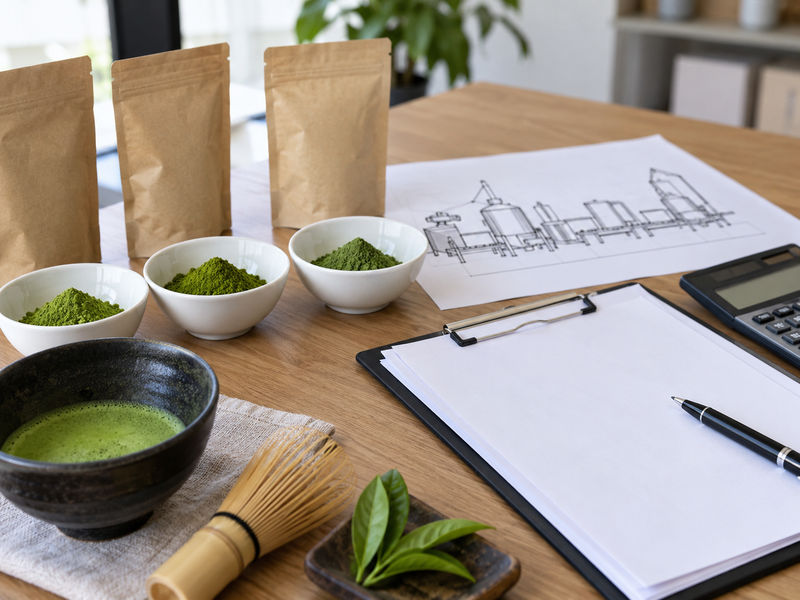
Packing finished matcha into sachets is a different project from milling tencha, and both differ from tencha finishing. The reference article describes those boundaries. Write a start and end point for the proposed site. Will it receive finished powder, milling-ready tencha or less processed leaf? Will it blend, sieve, fill retail packs, run laboratory checks or arrange external tests? A vendor cannot quote a comparable plant until those decisions are fixed.
List what sits outside the boundary, too: farming, raw-leaf processing, import clearance, artwork, distribution and customer service. A “mill price” excludes rooms, installation and material handling. Conversely, an OEM quote may include packing and testing but omit freight or market-specific labeling. Draw the handoffs. The team needs to see who owns each material and document from supplier lot to finished case. The FDA current good manufacturing practice overview identifies plant design, equipment, sanitary operations and production controls as food-manufacturing concerns in the US; local rules and the site’s product scope require review.
| Boundary | Incoming material | Core activities |
|---|---|---|
| Pack only | Finished matcha | Inspect, fill, seal, code |
| Mill and pack | Prepared tencha | Mill, sieve, blend, pack |
| Finish, mill, pack | Tencha needing finishing | Sort, finish, mill, pack |
2. What finished product must both routes deliver?
Make specifications comparable before prices
An in-house line and an OEM must be judged against the same product. Define application, flavor, color, particle characteristics where relevant, pack size, packaging structure, label content, lot coding and documentation. Ask the product team to approve one sample and a versioned specification. A grade name alone cannot capture the powder’s performance in a latte, bakery mix or frozen dessert. If multiple SKUs are planned, list them separately with annual demand and changeover needs.
Record the destination markets. Ingredient and labeling requirements, test panels and claims may differ, and neither route should be assumed compliant because another buyer sells a similar product. The FDA CGMP page describes US manufacturing controls, but it does not approve any particular facility or product. Use regulatory specialists for market review. Freeze the comparison brief. If the in-house bid includes a retail tin and the OEM price covers a bulk bag, the apparent cost gap is meaningless. Our matcha wholesale specification-sheet guide can help organize the product data.
| Product field | Build proposal | OEM quote |
|---|---|---|
| Approved powder specification | Same version | Same version |
| Packaging and artwork | Full format | Full format |
| Testing and COA | Named tests | Named tests |
| Destination market | Named country | Named country |
3. How should demand and capacity be modeled?
Use saleable output, not brochure speed
Forecast demand by SKU and month, including a conservative case and a peak period. For a build option, ask equipment vendors to demonstrate output using representative material and the intended quality specification. Then subtract cleaning, maintenance, changeover and rejected product from rated hours. The reference article offers a useful capacity concept: equipment count multiplied by verified hourly output, available hours, uptime and saleable yield. The values must come from trials or bids rather than a generic published mill rate.
Check whether upstream tencha supply can support the proposed line. A full schedule on paper has no value if suitable material is unavailable in the required lots. Model both average and peak utilization; an expensive line idle most weeks can make a high-volume unit-cost projection misleading. Use a low-demand case. It shows whether the business can carry fixed costs while the brand grows. Request the same demand profile from OEM bidders so they can state minimum order quantities, batch sizes and lead times under realistic ordering patterns.
4. Which facility and equipment costs belong in the build case?
Quote the whole operating site
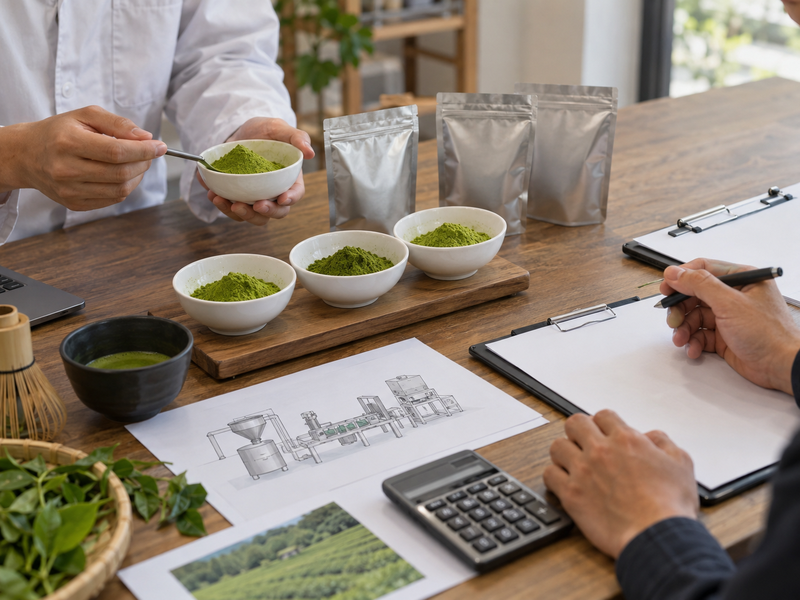
Request separate budget lines for building work, controlled storage, production rooms, material movement, dust management, milling or filling, coding, inspection, utilities, installation and commissioning. Add spares, validation trials, staff training and working capital. Local site conditions can change electrical service, drainage, structural loading and environmental-control costs. A machine supplier’s equipment price should not be mistaken for a delivered, commissioned food facility.
For each line, record whether the quote covers supply, installation, local service and acceptance testing. Have a qualified facility and safety team review dust and worker controls. OSHA notes that combustible-dust hazards can arise from food powders, but a specific matcha blend and installation need site assessment. Do not choose protection equipment from a general cost article. Check the interfaces. An otherwise complete quote may leave the buyer responsible for ductwork, air balance, foundations or import duties. Ask vendors to mark exclusions in writing so the financial model can carry them explicitly.
| Build cost block | Bid evidence | Common omission to check |
|---|---|---|
| Rooms and utilities | Local design quote | Electrical and air systems |
| Process equipment | Vendor quote and test | Installation and spares |
| Quality setup | Lab or service quote | Test method and retention |
| Commissioning | Acceptance protocol | Operator training |
5. Which labor and quality costs continue each year?
Count the full operating team
An owned line needs operators, maintenance, sanitation, quality review, procurement, inventory control and management. The number of people depends on shifts, equipment and market requirements, so use a staffing plan from the local facility design rather than a generic ratio per tonne. Include training, turnover, replacement coverage and outsourced laboratory services. If the site mills, add material preparation, mill cleaning and yield review.
Working capital also belongs in the decision. Tencha or powder inventory, packaging, retained samples and finished goods consume cash before customers pay. Use the finance team’s own carrying-cost assumptions. Record downtime and waste from realistic production trials. Quality costs include incoming checks, in-process samples, finished-lot release and investigations; the OEM price may include some of these, but buyers still need supplier oversight. Count the quiet shifts. A factory carries staffing, rent and maintenance even when demand is low. Compare those fixed costs with an OEM arrangement that may have higher unit prices but lower owned infrastructure.
6. What should an OEM quotation include?
Ask every provider to price the same scope
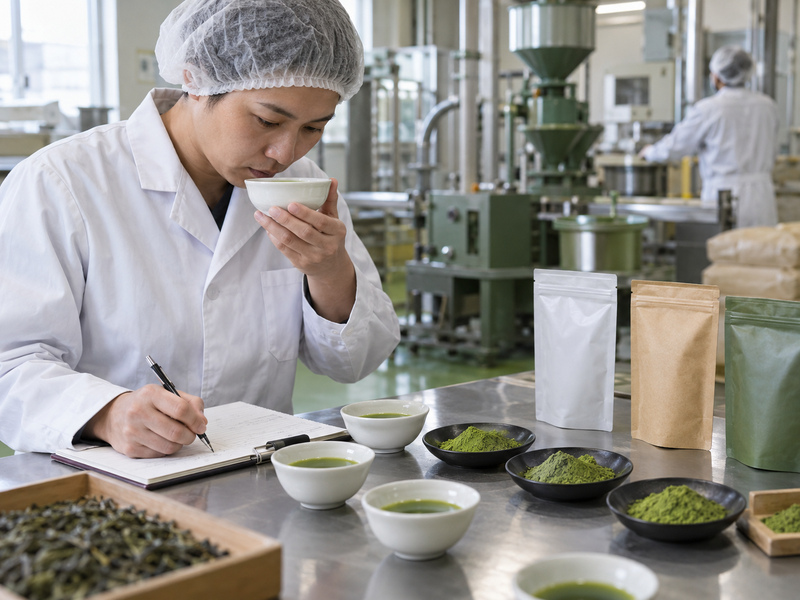
Send a versioned brief with product specification, packaging, forecast volume, batch size, tests, labels, documents, destination and delivery basis. Ask OEM providers to separate development charges, sample rounds, tooling, minimum order quantities, unit price, storage, change fees and freight. State who buys and owns raw tea and printed packaging. A low product price can be offset by expensive custom film or a minimum batch the brand cannot sell.
Request a process flow, quality agreement outline, lot-traceability method and lead-time assumptions. Visit or audit as appropriate to the buyer’s supplier program. Matcha Village can discuss raw material, blended products, OEM and private-label supply, but every proposed capability and certification should be confirmed for the specific product and market before it enters a sales claim. Ask for exclusions. “Finished product” can mean filled pouches at the factory gate or landed retail cartons with documents; the quotation must state which. Our OEM matcha supplier guide covers other supplier selection questions.
| OEM quote item | Buyer asks | Comparison effect |
|---|---|---|
| MOQ and batch size | Per SKU and pack | Inventory exposure |
| Tooling and artwork | One-time and repeat fees | Launch cost |
| Testing and documents | Per lot and market | Release cost |
| Delivery basis | Named place and rule | Landed cost |
7. How do you compare cost per saleable kilogram?
Use a common denominator
For a build route, total annual fixed operating cost, depreciation or the finance team’s capital charge, variable materials, packaging, testing and freight. Divide by forecast saleable kilograms, not theoretical mill output. For OEM, add quoted product price, development amortization, freight, duties where applicable, buyer-side quality work and inventory carrying cost. State the currency and period for every assumption. A side-by-side table should show cost at low, expected and high demand.
Do not invent a universal break-even volume. The crossing point depends on actual bids and utilization. Model a delayed launch, a higher reject rate and a second SKU with short runs. The latter may increase cleaning and changeover cost for the owned plant, while an OEM may charge a separate small-batch premium. Show the numerator. A single cost-per-kilogram figure hides whether its difference comes from rent, powder yield or transport. Have finance review the model and keep quoted versus assumed values visibly separate.
| Scenario | Owned line | OEM |
|---|---|---|
| Low demand | Fixed cost spread over fewer kg | Check MOQ burden |
| Expected demand | Use verified saleable yield | Use quoted batch mix |
| Peak demand | Check overtime and capacity | Check lead time and allocation |
8. What risks change the preferred route?
Model supply and execution, not only price
An owned plant gives direct control over scheduling and process development but places equipment, staffing, safety and raw-material risks on the operator. An OEM can provide existing capability, yet the buyer depends on the supplier’s capacity, minimums and change-control discipline. Neither route guarantees consistent tea if the underlying material supply is weak. List the risks that could interrupt a promised customer delivery, then assign an owner and a mitigation cost.
Consider the destination market’s labeling and origin rules before making a location claim. Milling imported tencha in one country or packing finished powder in another may affect wording; obtain market-specific advice. The reference discusses this issue for Japanese-origin positioning, but its guidance cannot be copied to every country. Price the fallback. A build case should include maintenance and outside production if a critical machine stops. An OEM case should include qualification of an alternative supplier or agreed reserve stock where feasible. Compare the cost and feasibility of those measures with the main scenario.
9. Can a staged route reduce uncertainty?
Buy information before buying the full site
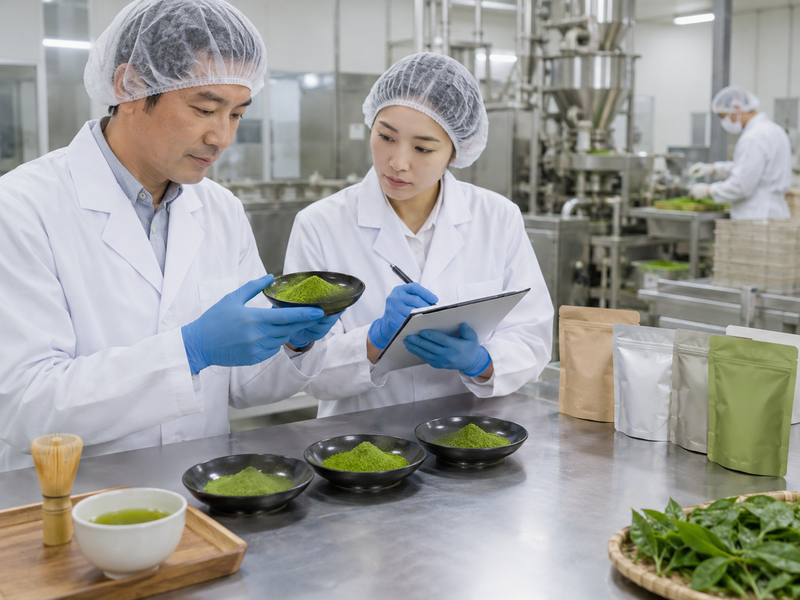
A brand may start with finished matcha from an OEM, then bring packing in-house after real sales justify the line. Another may operate a packing room and keep milling with a specialist. These are options to model, not automatic recommendations. Each stage changes responsibilities for incoming inspection, storage, blending, release and traceability. Write a transition plan so the team can see what data would trigger the next investment.
For example, require a full year’s SKU demand history, measured pack costs, a proven raw-material supply and a local facility bid before approving a mill study. Those are proposed decision gates, not industry thresholds. During OEM production, collect lot consistency, reject, lead-time and change-request data. The data will make a future plant model more credible. Keep the specification portable. A clear product brief and test methods help compare suppliers and a prospective in-house line on the same outcome. Avoid buying equipment merely because demand is forecast to grow.
| Stage | Evidence gained | Next decision |
|---|---|---|
| OEM finished goods | Demand and quality history | Continue or study packing |
| Own packing | Fill cost and waste data | Continue or study milling |
| Own milling | Process control data | Review full facility return |
10. What should the decision memo contain?
Make the recommendation auditable
The memo should identify scope, products, markets, demand cases, vendor quotes, site bids, capacity trial results, staffing, quality plan, total delivered cost and major assumptions. Keep quotations attached with dates and validity periods. Show the cost model’s formula and a sensitivity table. Name the unresolved questions that require technical, regulatory or finance review before commitment.
State a recommended route only after the evidence is comparable. If an OEM offer lacks testing or a build bid excludes utilities, seek corrected quotes rather than filling gaps with confident guesses. Assign milestones for sample approval, pilot runs and contract review. Matcha Village can respond to a product and volume brief with appropriate supply options; the buyer’s decision still rests on its own demand, site and commercial terms. Make the next action concrete. Request the missing bid, run the material trial or approve the scoped pilot, then update the memo with what the result changes.
FAQ
Q1: Is a packing room the same as a matcha factory? It is one possible scope. Milling and tencha finishing add processes, rooms and controls.
Q2: Can a published plant-cost figure settle the choice? No. Use local site bids, equipment tests and comparable OEM quotations.
Q3: What capacity number belongs in the model? Use verified saleable output after uptime, changeovers and rejects.
Q4: Should a buyer compare only unit prices? Include development, testing, packaging, freight, inventory and buyer-side oversight.
Q5: When might a staged approach help? When demand or product mix remains uncertain and OEM data can inform a later investment.