
A bright window and a neat stack of tins may look like good merchandising, yet a matcha retail display must also protect the product inside each pack. Retailers need shoppers to understand flavor, use and price without exposing saleable stock to avoidable heat or sunlight. The practical solution is a small, well-labeled display supported by controlled back stock and a rotation log. Morihata’s retail storage article raises the freshness problem; this guide translates it into a repeatable shelf plan for tea shops, supermarkets and café counters.
Contents
- 1. What job should the display perform?
- 2. Which products belong together?
- 3. How do you protect saleable matcha?
- 4. What information should shoppers see?
- 5. How should stock rotate on the shelf?
- 6. How can samples support a purchase?
- 7. What should staff know about each product?
- 8. How do you use accessories without clutter?
- 9. Which display measures should managers track?
- 10. How do you launch and review the plan?
1. What job should the display perform?
Pick one shopper decision at a time
A customer at a shelf may ask whether the product suits a latte, a plain whisked bowl or baking. A trade buyer may ask about pack size and repeat supply. The display should answer the dominant question at that location. A supermarket bay can separate ready-to-drink mixes from pure matcha powder; a tea shop can explain differences among pure powders through tasting notes and preparation cards. Avoid crowding a small shelf with every supplier claim. A green wall of nearly identical tins makes selection harder, even if it looks full in a photograph.
Set a measurable aim: choose a target such as greater conversion from matcha inquiry to purchase, fewer shelf-expiry losses or more sales of a starter set. The aim determines which products and signs matter. If customers routinely ask “Which one works with milk?” put application guidance near the price. If products remain unsold until close to their date, reduce display quantity and replenish more often. A shelf plan should specify how many facings each SKU gets, where reserve stock lives and who inspects it. Good visual presentation is useful only when staff can maintain it every day.
| Shopper question | Shelf answer | Staff backup |
|---|---|---|
| Which powder suits a latte? | Application card | Prepared sample recipe |
| What is the price per use? | Net weight and example dose | Calculator or recipe card |
| How do I prepare it? | Short tool sequence | Live demonstration |
| Is this the same product? | Clear SKU label | Lot and pack specification |
2. Which products belong together?
Group by use, then by pack size
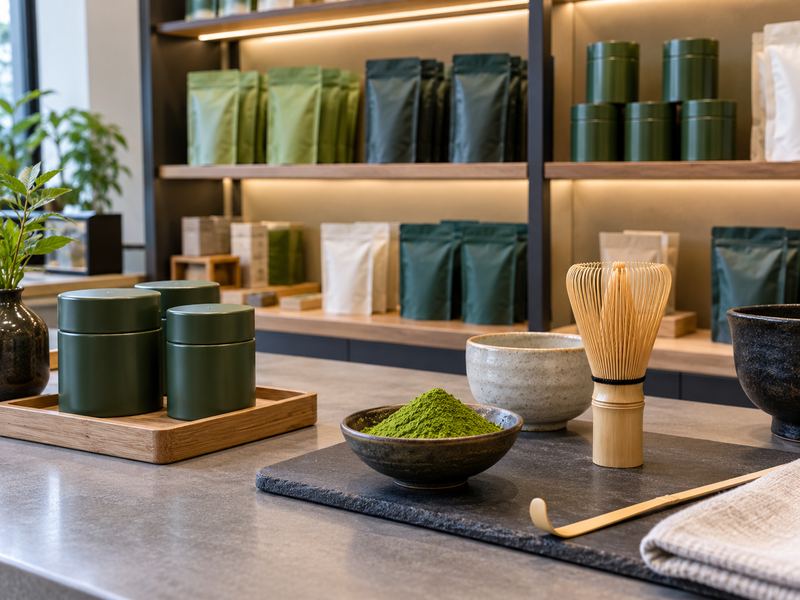
Retailers often group matcha by a loosely defined grade. That may not help a buyer choosing between an unsweetened powder, a latte blend and a baking ingredient. Start with intended use and ingredient list. Within pure powder, separate small consumer tins from foodservice packs. Put sweetened blends in a distinct area so customers do not mistake them for pure matcha. If your assortment contains hojicha or genmaicha powder, label them plainly rather than treating every green or brown tea powder as matcha.
Keep the shelf honest: “ceremonial” and “culinary” are widely used commercial terms, but they do not replace a specification. Show whether a product contains only tea or includes sugar, milk solids or flavorings. Compare products at a similar serving dose when discussing cost. A 30 g tin and a 500 g pouch do not have the same purchase purpose. Matcha Village offers pure matcha grades, blends and private-label formats; a retail buyer should select a narrow starting range from those options and expand only after learning what sells. Each added SKU needs shelf space, training and inventory control.
3. How do you protect saleable matcha?
Treat the pack as part of the quality system
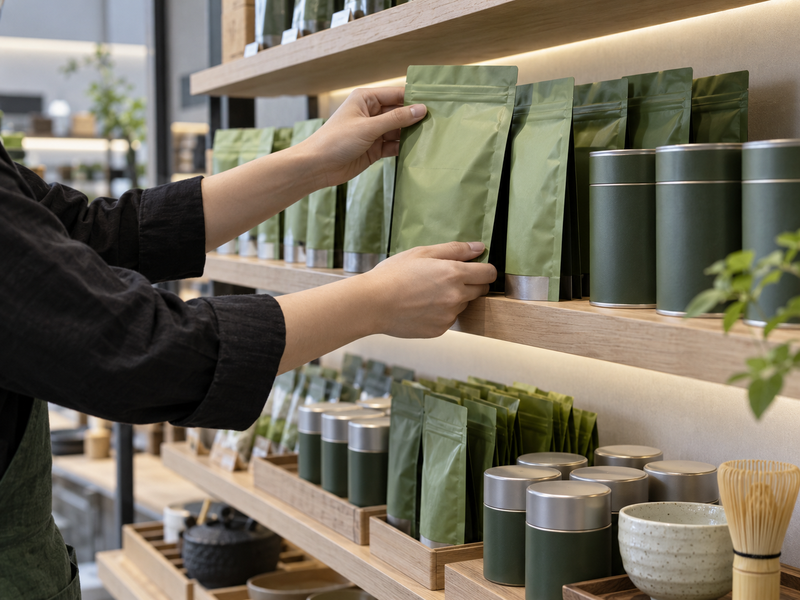
Matcha’s fine powder exposes considerable surface area after milling. Published tea research has studied how storage conditions affect its chlorophyll, color and other quality markers; see the Tea Research Journal study record. For a retailer, the immediate actions are simpler: keep packs sealed, follow the supplier’s storage instructions, avoid direct sun and heat, and separate sample stock from saleable inventory. Do not assume an attractive clear jar protects the powder inside. If shoppers need to see the color, use a designated demonstration sample rather than opening each saleable tin.
Check the actual shelf: use a thermometer and observe direct light through the day. A shelf near a window may receive strong afternoon sun even if it is shaded at opening. Ask the supplier whether its packaging has an opaque barrier and whether refrigeration is recommended for unopened packs. If cold stock must move to room temperature, follow its handling advice before opening to limit condensation. Do not invent a universal storage temperature or opened-pack life. Record the pack date, condition and any discoloration or odor at inspection, then investigate a suspect lot through the supplier rather than selling it on appearance alone.
| Exposure | Shelf question | Practical control |
|---|---|---|
| Sunlight | Does direct light reach stock? | Move saleable packs |
| Heat | Is shelf beside equipment or glazing? | Check location through day |
| Moisture | Are packs opened or damaged? | Separate sample and sale stock |
| Odor | Are aromatic products nearby? | Protect open demonstration powder |
4. What information should shoppers see?
Make product differences legible from one step away
Use a short shelf card for each SKU: product name, ingredient type, net weight, price, intended use and a basic preparation route. The package itself needs the label information required in the market where it is sold. In the United States, the FDA food labeling guide explains federal packaged-food requirements; other jurisdictions differ. A shelf card cannot repair a deficient package label. Retailers should review translated labels and allergen declarations before putting imports on display.
Show evidence, not adjectives: if the card says “organic,” confirm the certification and scope applicable to that pack. If it says “recyclable packaging,” verify what component the claim describes and where customers can recycle it. The FTC Green Guides explain why environmental claims need clear qualifications. Avoid health promises and unsupported caffeine comparisons. A shopper can act on “unsweetened powder, 30 g, suited to whisking” more readily than “pure energy and wellness.” If staff must explain every phrase on a card, rewrite it.
5. How should stock rotate on the shelf?
Preserve lot identity while replenishing
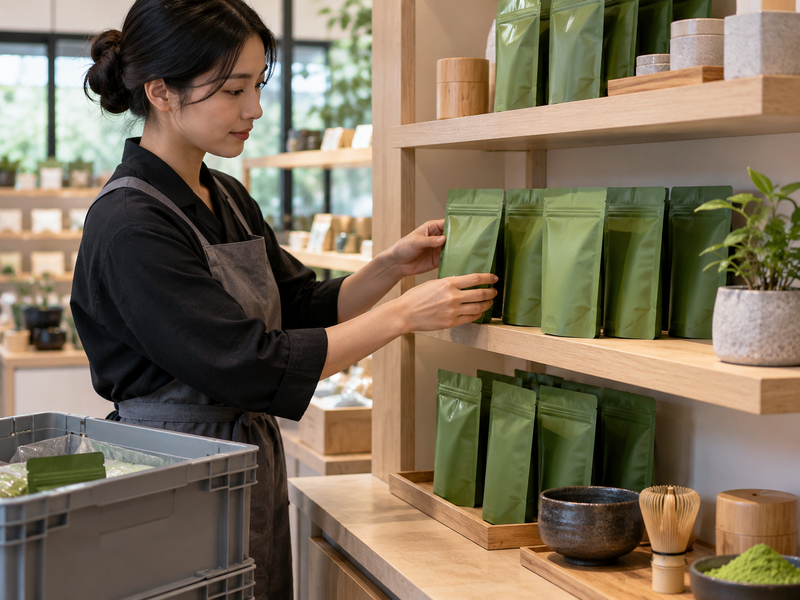
Set a minimum and maximum number of saleable packs on display. Replenish from back stock according to the documented date policy and the supplier’s shelf-life information. Use a first-expiring, first-out check where product dates support it, and do not hide newer stock in front of older packs. Keep the lot code accessible so a quality question can be traced. If a shopper returns a pack with broken seal or heat damage, quarantine it under the store’s returns policy rather than placing it back on the shelf.
A small control works: one staff member can check facings, pack condition and dates at opening. Another verifies any refill at handoff. Record the number of packs added and removed; compare that with point-of-sale data to identify unexplained movement. A display that is always full may be overstocked, especially if the product turns slowly. Move reserve stock closer only when sales justify it. Retail display and inventory management connect, but they are distinct tasks: a shelf can look orderly while its back room contains the lot that will expire next.
| Daily check | Record | Escalation trigger |
|---|---|---|
| Package condition | Intact or damaged | Broken seal or leakage |
| Date and lot | Oldest saleable unit | Product approaching policy limit |
| Facings | Packs per SKU | Repeated empty or overfull space |
| Shelf environment | Light and heat observation | Direct sun or hot equipment |
6. How can samples support a purchase?
Sample the drink the shopper wants to make
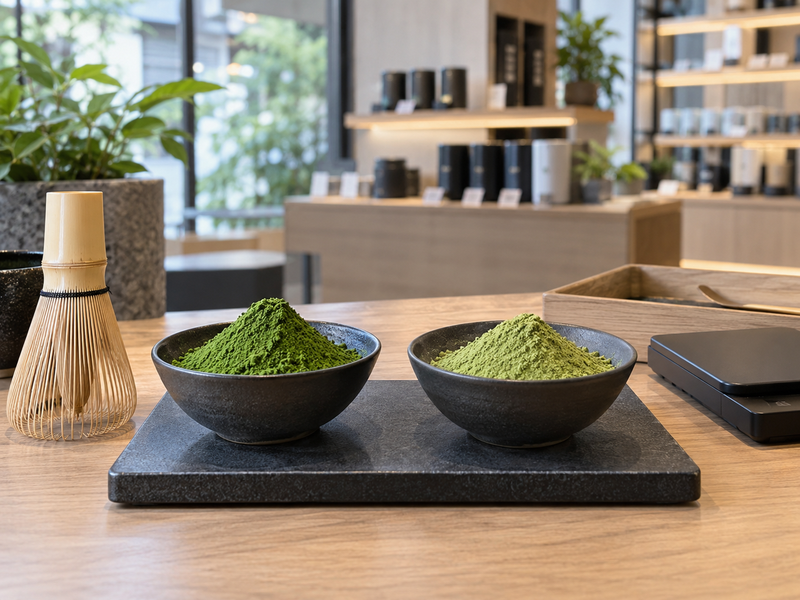
Offer a plain-water matcha sample when a customer is comparing tea flavor. Offer a small latte sample when the purchase is for milk drinks. Keep the recipe, powder dose and cup size written down so staff do not improvise stronger cups on one shift and weaker cups on another. Sampling can answer questions that packaging cannot, but it consumes stock and staff time. Record samples served and sales after a trial period to judge whether the program pays for itself.
Use separate stock: designate an open sample pack with its lot and opening date, then follow your food-safety procedure for preparation and disposal. Do not pour unused sample back into a retail tin. The FDA Food Code gives a model for retail food handling; local requirements and recipe ingredients determine the detailed controls. If sample lattes include milk or plant drinks, train staff on allergens and utensil separation. A small scheduled demonstration may be easier to control than an unattended all-day station. Explain clearly when a sampled drink uses sweetener or a blend so shoppers do not attribute that flavor to plain matcha powder.
7. What should staff know about each product?
Give staff a short comparison sheet
Training should cover ingredients, intended application, preparation, pack size, current price and storage instructions for every displayed SKU. Staff need not perform a tea ceremony or memorize a supplier brochure. They should be able to answer why one powder fits a plain bowl and another is sold for baking, then admit when a technical claim needs supplier confirmation. Keep a sample of each package label at the counter and update the sheet when a SKU changes.
Practice the real question: ask a staff member to guide a shopper who wants a low-sugar iced latte, a bakery buyer who needs a bulk pack and a customer allergic to milk. The answer should start with ingredients and use, not a vague quality ranking. For a wholesale inquiry, staff should collect the intended application, monthly volume, country and documentation needs, then refer it to the sales team. Matcha Village offers bulk and private-label options, but staff should not promise a specific certification or lead time without a current document and quote. A shelf can generate qualified leads when its people know what to ask.
| Shopper type | Ask first | Useful response |
|---|---|---|
| Home whisking customer | Plain or milk drink? | Demonstrate suitable powder |
| Café buyer | Dose and weekly volume? | Compare bulk formats |
| Gift shopper | Tools already owned? | Offer a complete set |
| Allergy concern | Which ingredient matters? | Read exact label, avoid guessing |
8. How do you use accessories without clutter?
Build a small preparation path
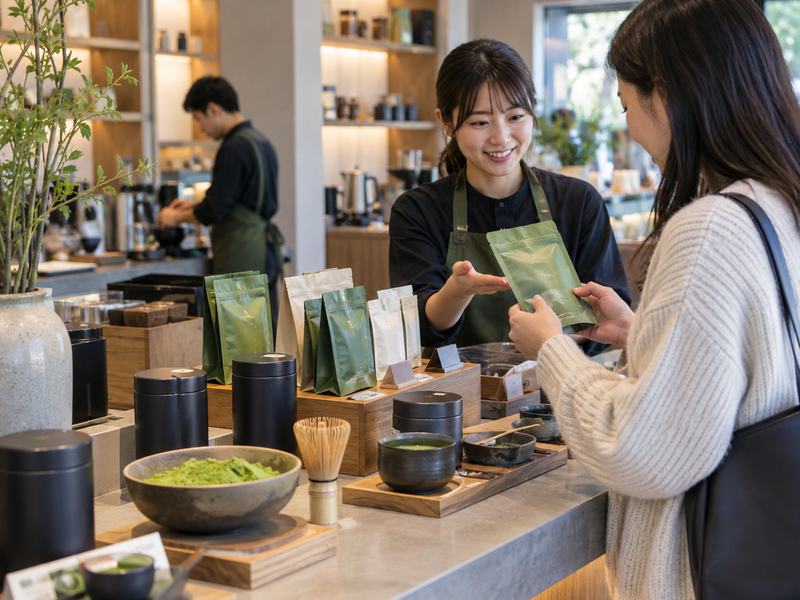
A whisk, sifter and bowl can make a matcha display easier to understand. Show them beside a short preparation card and price each item clearly. A starter bundle may suit shoppers who want everything at once, but leave individual items available where possible. Keep accessories from blocking ingredient lists or taking the cool, shaded area needed for saleable powder. If the shelf has limited space, display one open tool set and keep boxed stock nearby.
Test the arrangement: ask someone unfamiliar with your range to find a powder and the tools needed for its preparation. Watch without coaching. If they cannot tell what is included in a bundle or confuse decorative bowls with products for sale, change the labels. Merchandise accessories according to function, not a promise of authenticity. A café operator buying kilograms of matcha may need a commercial scale and mixing vessel, not a consumer gift set. Make that path clear on a separate trade card. The display should let both shopper types reach the next relevant decision without reading every sign.
9. Which display measures should managers track?
Use sales and quality together
Track units sold per SKU, shelf days before sale, out-of-stock periods, returns and packs removed for quality concerns. Pair those measures with an inquiry log: what do shoppers ask before buying or leaving? A display that raises interest but sends customers away because prices are unclear needs a different fix from one that never attracts attention. Compare performance across comparable weeks, not one launch weekend with a demonstration.
Calculate the shelf cost: include display fixtures, sample powder, staff time and inventory tied up in facings. A high sales count can still hide expensive spoilage if too many packs spend weeks under warm lights. Conversely, a modest display may work well if it brings repeat wholesale inquiries. Review each SKU separately before changing the entire bay. Photograph the arrangement at each test period and record price or promotion changes. Without that record, a manager may credit a new shelf card for sales that rose because a competitor ran out of stock.
| Metric | Source | Decision it supports |
|---|---|---|
| Units per SKU | Point of sale | Assortment size |
| Date-related removals | Shelf log | Facing quantity |
| Shopper questions | Staff tally | Sign wording |
| Sample-to-purchase | Event log | Sampling format |
10. How do you launch and review the plan?
Start small and inspect it in operation
Choose a location away from direct sun and obvious heat sources. Approve the pack labels and short shelf cards. Select a limited range, set facing quantities, and assign daily condition and rotation checks. Train staff with actual products and a documented sample recipe. After two to four weeks, compare sales, questions, out-of-stock periods and removals with the starting baseline. Adjust one element at a time where practical so the team learns what caused the result.
Leave a clear handoff: keep a one-page shelf plan with a photograph, SKU list, replenishment rule and contact for quality concerns. Ask your supplier for current product specifications, pack formats and storage guidance before a promotion expands the display. The final decision is whether the shelf helps customers choose while preserving the quality they will take home. If the most attractive position exposes packs to sun, move the stock and use a sign or sealed display sample to keep the category visible.
Packaging choices in our matcha packaging guide affect the shelf plan.
FAQ
Q1: What should a matcha retail display explain?
Show the product type, ingredients, intended use, pack size, price and a basic preparation path.
Q2: Can matcha tins sit in a sunny window?
Protect saleable packs from direct sun and heat; use a display sample or sign in exposed spaces.
Q3: Should a store open stock for sampling?
Use a separate identified sample pack and follow the store’s food-safety and disposal procedures.
Q4: How many SKUs should a retailer start with?
Start with the smallest range that covers clear customer uses, then expand from observed sales and questions.
Q5: Which shelf measure matters most?
Read sales alongside quality removals and stock age. A full shelf is not proof of healthy turnover.