
How much matcha per day is a question with no reliable single scoop count. A teaspoon is an imprecise unit, caffeine varies across powders, and a person may consume caffeine from coffee, soda or other tea as well. A brand can help by stating a reproducible serving and, where it makes a caffeine statement, supporting it with product-specific data. It should not turn a general population reference into personal medical advice.
Contents: Dose · Caffeine · Reference · Other sources · People · Menu · Packs · Testing · Training · Claim
1. What Does One Matcha Serving Mean?
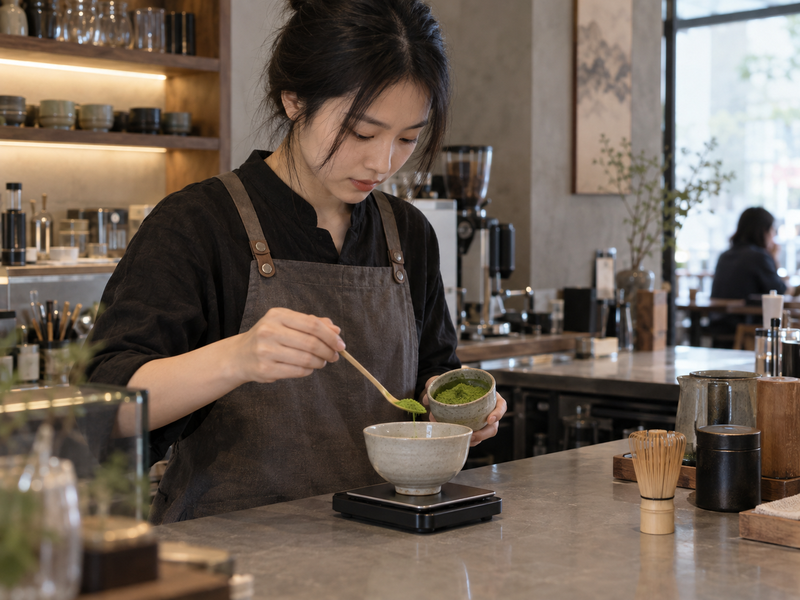
Weigh the powder used in the actual drink
Many daily-use answers start with “one or two cups,” but cup volume alone does not tell a buyer how much tea was consumed. A small bowl and a large latte can contain the same weighed powder dose. Conversely, two visually similar drinks can use different doses. Write the recipe in grams and record whether the measure refers to pure matcha or a sweetened mix. A scoop of mix may contain only a fraction of that weight as tea.
During development, weigh several staff-prepared servings. A level scoop, heaped scoop and compressed scoop can differ enough to undermine a printed serving. Choose one preparation method and train it. If a sachet controls the dose, verify fill weight against the product specification. These steps do not decide how much a person should consume, but they give that person and the brand a meaningful unit to discuss.
| Serving description | What it tells you | What remains unknown |
|---|---|---|
| One cup | Drink count | Tea grams and caffeine |
| One teaspoon | Approximate volume | Actual powder weight |
| One weighed serving | Powder grams | Lot-specific caffeine |
| One premix sachet | Total mix weight | Matcha fraction unless disclosed |
2. How Does Caffeine Change the Answer?
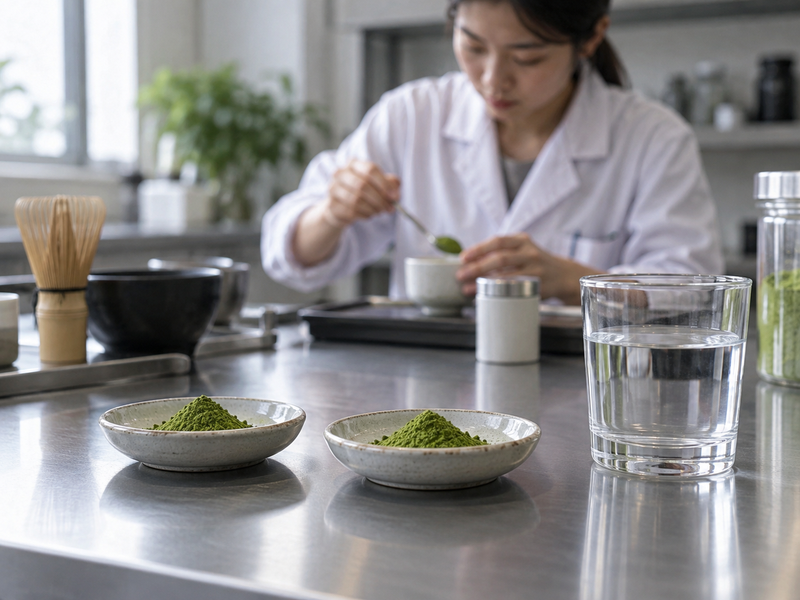
Dose and concentration both matter
To estimate caffeine from a powder, the team needs two inputs: the grams used and a defensible caffeine content for that powder. A different harvest, blend or supplier may produce a different result. If a recipe doubles its matcha dose, the expected caffeine from the powder also changes, even if the cup stays the same size. A large volume of milk does not remove the caffeine contributed by the tea.
Ask the supplier whether a quoted amount is per gram of plain powder, per suggested serving or per finished beverage. Those are not interchangeable. Retain the analytical method, sample identification and result units. A sales sheet saying “low caffeine” without a defined comparison or supporting data is a weak basis for a label or menu statement. For guidance on the data behind a panel, see our matcha nutrition facts article.
3. Is There a Universal Daily Matcha Limit?

Do not convert a general caffeine reference into a matcha rule
The US FDA says 400 milligrams of caffeine per day is not generally associated with dangerous effects for most healthy adults. The same page emphasizes that people differ in sensitivity and that some conditions or medicines can matter. That figure is not a prescribed target, and it does not say that any particular number of matcha bowls is safe for everyone. Without the powder’s caffeine data and the person’s other sources, a cup count is guesswork.
The useful commercial response is a clear serving, an honest caffeine basis where stated, and restrained wording. Avoid “drink up to X cups daily” claims derived from dividing 400 by a generic internet number. A consumer looking for individual advice should consult an appropriate health professional, especially when pregnancy, a medical condition or medication changes the situation. A brand’s job is to make its product information accurate and understandable.
| Statement | Suitable interpretation | Problematic leap |
|---|---|---|
| General FDA reference | Context for many healthy adults | Personal matcha prescription |
| Product caffeine result | Data for specified lot or range | Promise for every future lot |
| Serving on a panel | Basis for declared amounts | Recommended daily intake |
| Café recipe | Intended preparation | Proof every barista makes it identically |
4. What Other Caffeine Sources Count?

Look beyond the matcha cup
A person may have coffee in the morning, matcha after lunch and a caffeinated soft drink later. Some foods, supplements and medicines may also contribute. A product page that discusses “daily matcha” in isolation can therefore be misleading. The FDA’s consumer guidance asks people to consider all sources. For a café, the practical implication is to avoid presenting a tea drink as if it were the only caffeine a customer could consume that day.
On menus, distinguish a single matcha dose from a drink with added espresso or other caffeinated ingredients. If the beverage is customized, staff should know which options add caffeine and which simply change flavor or volume. For packaged blends, inspect every ingredient before making a total-caffeine statement. A separate added-caffeine ingredient must be included in the estimate. Keep the product communication simple: what is in this serving, how the serving is made and where to find more detail.
| Possible source | Where to check | Why it matters |
|---|---|---|
| Coffee or espresso | Drink recipe | Adds to total intake |
| Other tea | Menu or home preparation | Tea types vary |
| Soft drink or energy drink | Product label | May be consumed the same day |
| Supplement or medicine | Product information and clinician | Needs individual review |
5. Who Needs a More Individual Answer?

Leave medical decisions to qualified advisers
Caffeine sensitivity is not uniform. Pregnancy and breastfeeding, medical conditions, age, medication use and a history of sleep or anxiety problems may affect what a person chooses. The product team should not infer a personal threshold from population-level guidance. Avoid reassuring blanket statements such as “safe for everyone” or “no side effects,” even when a powder has a measured caffeine level.
For customer-service staff, a useful script is factual: identify the weighed powder serving, share supported caffeine information if available, and direct a person seeking medical advice to a qualified clinician. Train staff not to improvise a cure, performance promise or daily limit. If the business serves children or markets to vulnerable groups, have the relevant legal and health teams review product positioning. This approach gives customers information they can use without asking a barista to act as a clinician.
6. How Should a Cafe Describe Its Serving?

Build the statement from the recipe
Start with the standard powder weight per drink. Record any size options and whether a large size uses more tea or only more liquid. If customers can request extra matcha, treat that as a separate dose. The cup name alone is not enough: “large” has no universal meaning across cafés. A menu statement should reflect what the kitchen actually prepares, not an ideal laboratory version.
Check the recipe against service practice. Observe staff during a busy period, weigh samples and review whether tools cause drift. A well-written specification fails if the scoop is missing or a new worker is told to estimate by eye. If the café states caffeine, use product data appropriate to its current matcha and explain when a figure is an estimate or range. Update the statement after a supplier change. The goal is a repeatable drink and a statement that can be defended.
| Menu choice | Internal record | Customer-facing implication |
|---|---|---|
| Standard size | Tea grams, liquid, additions | Defined serving |
| Large size | Whether tea dose changes | Avoid assumed double caffeine |
| Extra matcha | Increment in grams | Additional caffeine contribution |
| Tea-plus-espresso | Both ingredient doses | Combined caffeine sources |
7. What Should a Packaged Brand Print?

Connect the serving to the actual pack
The FDA explains that a Nutrition Facts serving reflects the amount customarily consumed, not a recommendation. Packaging teams should follow the rules of the market where the product is sold rather than choose a serving simply to make numbers look small. A sachet’s net weight, the preparation directions and the panel should refer to the same product and quantity. If a multipack is sold, verify servings-per-container as well.
Pure powder and premixes need different communication. Directions for a sweetened latte mix should not imply that the entire scoop is matcha. Caffeine claims should come from the full formula when other caffeinated ingredients are present. If a suggested daily use is printed, obtain a specific regulatory and scientific review for that wording. Claims on an e-commerce page deserve the same attention as claims on the pouch: both can shape a buyer’s understanding.
8. When Should a Supplier Test Caffeine?

Test when a quantitative promise depends on it
If the brand intends to state milligrams of caffeine per serving, request a current, traceable analytical basis. The test should identify the product, lot, method and units. One sample may help characterize a lot, but a continuing printed claim needs a plan for normal variation and supplier changes. Ask how the supplier sets a specification range and how it checks future shipments. A figure copied from a different brand’s blog does not establish the content of a new private-label powder.
Testing may also be useful when blending teas from several sources or changing the tea dose in a finished mix. Preserve a sample of the reviewed lot and the calculation that translates powder concentration into the declared serving. Do not overstate precision. An honest range can be more useful than a single exact-looking number if the raw material varies. The appropriate label format still depends on local rules.
| Evidence | Minimum useful detail | Why it matters |
|---|---|---|
| Lab report | Lot, method, units, date | Traceability |
| Formula | Tea grams per serving | Translates concentration to drink |
| Specification | Expected range | Future-lot control |
| Change log | Supplier or recipe revision | Signals need for retest |
9. How Can Staff Make Servings Consistent?
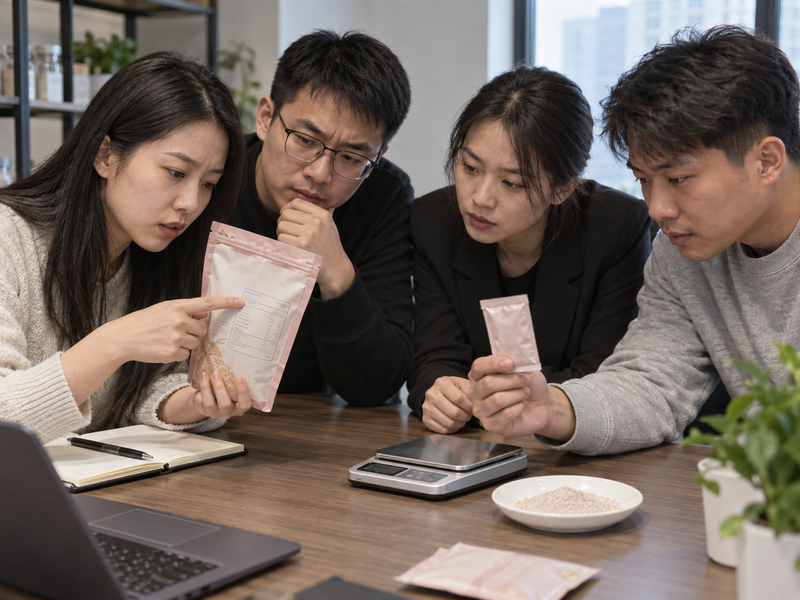
Design for the rush, not the photo shoot
Weighing each cup may be practical for some service models and too slow for others. If the operation uses portioned sachets or calibrated scoops, validate them against a scale during training and periodically in service. Humidity, packing and a worn scoop can affect the amount picked up. A fixed powder-water concentrate can reduce variation, but it also needs a recipe, holding controls and a clear dose per finished cup.
Write the standard operating procedure in the language staff use: powder amount, liquid amount, mixing step, final volume and allowed modifications. Include a simple check when a batch is prepared. For multi-site chains, compare output from different locations. Consistency supports taste and cost control as well as more credible product information. If an employee doubles the powder to “make it greener,” the recipe and any caffeine statement no longer describe that drink.
10. What Should a Buyer Ask Before Approving a Claim?
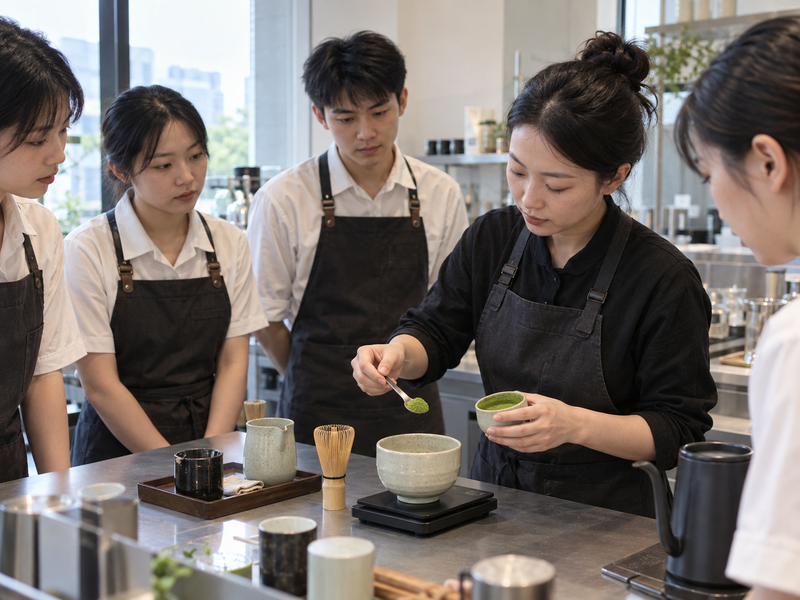
Review the exact words and the evidence behind them
Collect the final formula, declared serving, current caffeine data if used, draft package or menu copy and destination-market review. Then read the claim as an ordinary customer would. “One cup a day” can sound like health advice even if the marketer intended a serving suggestion. “Caffeine-free” is inappropriate for a regular matcha product without exceptional evidence and regulatory review. A claim about calm focus also needs more than a list of tea compounds.
Keep a record of who approved the copy and when it must be revisited. A new matcha supplier, changed scoop size, extra-caffeine ingredient or revised product name can all make old language inaccurate. Matcha Village’s own product materials describe manufacturing and private-label supply options, but a buyer should request data for the exact SKU rather than assume one company-wide caffeine figure. Clear product facts help customers make their own decisions; broad daily-use promises do not.
Frequently Asked Questions
Q1. How many teaspoons of matcha are safe each day?
A teaspoon is an imprecise weight measure, and individual caffeine needs differ. Weigh the powder, use product-specific caffeine information and seek personal medical advice when needed.
Q2. Does a bigger matcha latte always have more caffeine?
No. It depends on whether the larger drink contains more matcha or simply more liquid. Ask the café for its recipe or serving information.
Q3. Is the FDA’s 400 mg figure a matcha limit?
No. It is general caffeine context for most healthy adults, not a recommended amount of matcha or a guarantee for every person.
Q4. Can a premix sachet be treated as the same weight of pure matcha?
No. The sachet may contain sugar, milk ingredients or flavoring. Use the formula’s actual matcha content and full caffeine contribution.
Q5. What data should a café ask its supplier for?
Request a product specification, serving basis, ingredient statement and a traceable caffeine result or supported range if the café plans to state caffeine amounts.