
Matcha pretzels work when the green coating tastes like tea and the pretzel underneath still breaks with a clean crunch. Too much coating hides the salty base; too little leaves an uneven appearance. A snack brand also needs pieces that separate cleanly after packing and survive distribution. Develop the coating and the base as a pair. The checks below focus on white-chocolate-covered crisp pretzels, with proposed trials for tea intensity and pickup rather than a claimed factory-ready formula.
Contents: Format | Coating | Trial | Dispersion | Pickup | Setting | Quality | Packaging | Cost | Approval
1. What kind of matcha pretzels are you making?
Choose a base and coverage pattern
This product can mean a baked tea-flavored pretzel or a crisp pretzel covered with tea chocolate. Specify the coated version in the development brief. Then choose miniature twists, sticks or larger shapes. Each presents a different surface area and breakage risk, so equal weights of base may take up different amounts of coating.
Matcha Konomi’s white chocolate pretzels show the coated snack idea. For a commercial product, weigh coverage and define the shape before scaling. A drizzle, half dip and full coat create different balances even when the green mixture stays identical.
| Coverage | Customer experience | Production question |
|---|---|---|
| Drizzle | More exposed salt and crunch | Is tea present in each bite? |
| Half dip | Visible base with a green end | Can operators hold a consistent line? |
| Full coat | Stronger sweet coating impression | Do holes stay open? |
Choose a base with an approved size range and salt level. Retain an uncoated sample from every trial lot so a change in crunch can be traced to the pretzel or the coating process.
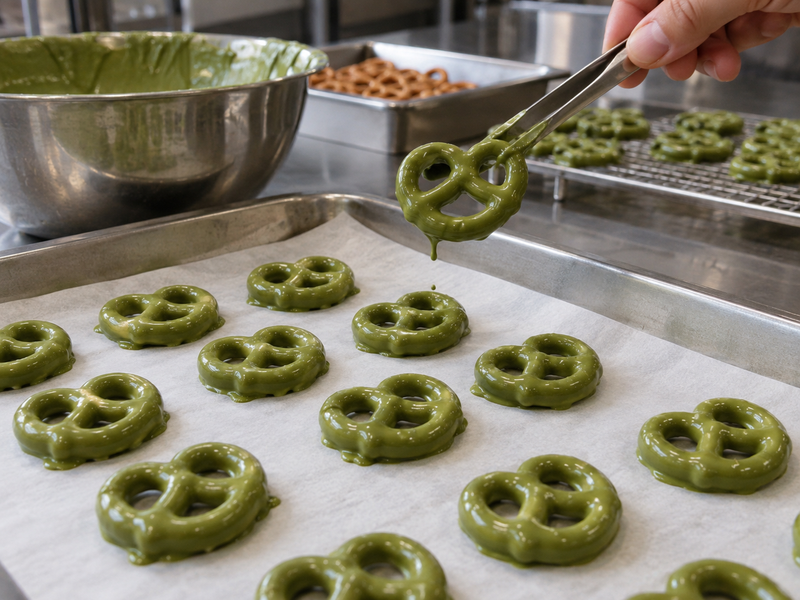
2. Should you use white chocolate or a compound coating?
Approve the material and its process together
White chocolate and compound coatings can require different handling. Read the supplier’s ingredient declaration and technical instructions before heating. A product described casually as white chips may not have the same composition or working properties as a couverture intended for enrobing. Match the selected material to the equipment and intended product name.
Callebaut’s tempering guide explains tempering as pre-crystallizing cocoa butter and provides product-specific temperature curves. Follow the actual chocolate supplier’s method. A generic temperature copied from another chocolate should not become the factory setting. Compound coatings require their own supplier instructions rather than an assumed chocolate tempering process.
Compare sweetness, melt and firmness in the finished pretzel. Ask whether the green coating leaves a waxy impression or masks the salt. The Matcha Village chocolate guide can help frame the tea application discussion. Tell the supplier which coating system is being used. A powder that disperses well in a water-based drink still needs evaluation in this fat-containing mixture.
3. How can you screen matcha dose in the coating?
Keep the coating code fixed
As a proposed small trial, prepare three separate portions of 250 grams of the same coating and add 2.5, 5 and 7.5 grams of plain matcha. These are untested screening levels. They are expressed as additions to the starting coating mass, so the final percentages are slightly different. Keep the pretzel base, coverage and setting procedure unchanged.
| Proposed sample | Starting coating | Added matcha | Main question |
|---|---|---|---|
| A | 250 g | 2.5 g | Is tea recognizable? |
| B | 250 g | 5 g | Is sweetness balanced? |
| C | 250 g | 7.5 g | Does texture become powdery? |
Taste the set coating by itself and on the pretzel. Record both tea intensity and handling viscosity. A dose that tastes appealing may make the mixture difficult to drain from the twist openings. Avoid thinning one sample without recording the change, because that affects coating pickup and the final bite.
If the selected dose needs a thinner material, consult the coating supplier and run a separate adjustment trial. Adding a household oil casually can change setting behavior and the product’s declared ingredients.
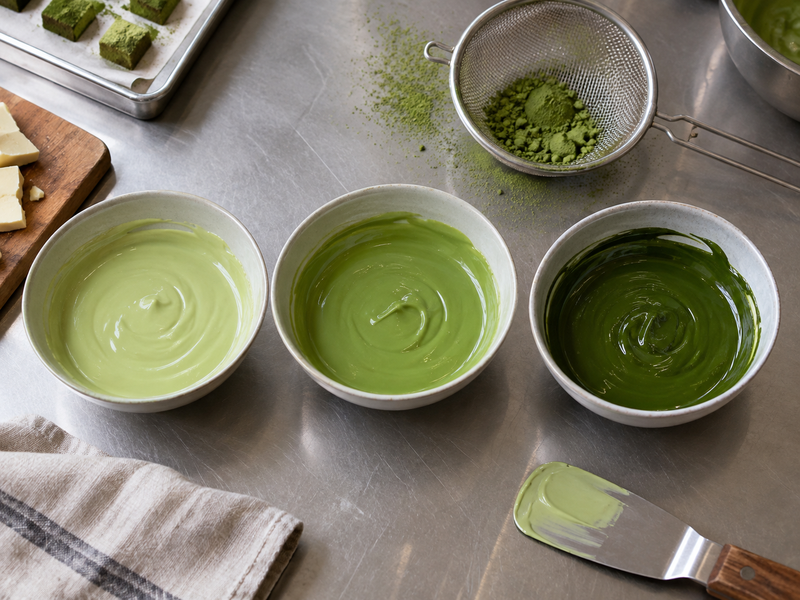
4. How do you keep green powder from forming specks?
Prepare dry ingredients before melting
Sift matcha and inspect it for compacted lumps. Keep utensils and the working area dry. Introduce the powder using the chosen coating supplier’s compatible method, then scrape the bowl and inspect a thin smear on a clean surface. A smooth-looking bowl can hide concentrated tea pockets that become visible after the coating sets.
Do not make a water paste for direct addition to chocolate. This recipe route needs a dispersion method suited to its fat-containing base. If a supplier offers a prepared tea ingredient, obtain its full declaration and handling instructions before treating it as interchangeable with plain powder.
Record the mixing tool and sequence. An immersion tool, paddle and hand spatula can introduce different amounts of air and apply different mixing action. Use the minimum method that gives even dispersion without splashing or unnecessary aeration. Compare samples near the beginning and end of the coating run. If tea settles or the mixture thickens during working, investigate the holding and mixing procedure with the coating supplier rather than adding unmeasured liquid to restore flow.
5. How do you control coating weight and shape?
Measure pickup on a group of pieces
Weigh a representative group of uncoated pretzels, coat them under the selected method and weigh the same group after setting. The difference is coating pickup. Use enough pieces to reduce the influence of one unusually small twist. Keep broken bases out of the comparison unless fragments are an intentional product format.
| Pickup control | Record | Inspect |
|---|---|---|
| Base size | Weight and piece count | Coverage variation |
| Dipping depth | Defined coverage line | Half-dip consistency |
| Drain motion | Time and number of taps | Thick feet and filled holes |
| Working condition | Supplier process range | Gradual weight drift |
As an arithmetic example, 100 grams of bases becoming 160 grams of finished snack carries 60 grams of coating. Coating is then 37.5% of the finished mass. This calculation is not a recommended target; select the target from the eating trial and pack economics.
Inspect the underside where excess coating collects. A large foot can break off inside a pouch or make the piece unpleasantly sweet at one end. Adjust the drainage method before altering the matcha dose.
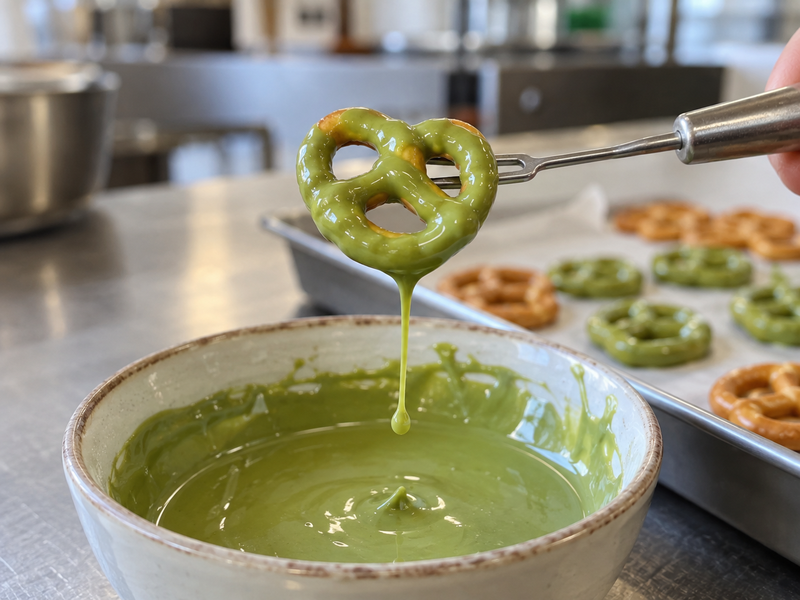
Use finished pickup to calculate tea per pack when writing the formula record. For example, the trial containing 5 grams of tea added to 250 grams of coating contains 5 grams in 255 grams of green mixture. If a hypothetical 50-gram pack contains 20 grams of that mixture, its calculated tea ingredient contribution is about 0.39 gram. This is formulation arithmetic, not a measured caffeine or nutrient value. Actual pickup and distribution must be checked, and any nutrition declaration needs its own appropriate calculation or testing process.
6. What should you check while the coating sets?
Follow the selected material’s instructions
Use the chocolate or coating supplier’s setting conditions as the starting point and verify them in the actual room or cooling equipment. Record tray spacing and loading. Crowded pieces can touch before setting, while uneven cooling can produce appearance differences across a tray. Keep the set samples identified by batch and position.
Evaluate release from the working surface, firmness and visible streaks. A coating that seems dry to the touch may still mark when handled or packed. Establish a handling point through the supplier’s process guidance and your own trial. Avoid using prolonged refrigeration as an automatic fix for every setting problem, because the full temperature route affects the product.
Inspect pieces after they return to the intended packing environment. Look for moisture, dull areas or sticking that did not appear inside the cooling equipment. These observations need investigation rather than a diagnosis from appearance alone. Keep one plain coating sample from the same batch; it helps determine whether the pretzel base or tea addition is associated with the defect.
7. How do you evaluate crunch, salt and tea together?
Use a complete piece for the sensory decision
Ask tasters to bite through a complete pretzel and record the order of sensations. Tea can be obvious in a coating shard yet almost absent beside a heavily salted base. A thicker coat may improve tea recognition while making the snack too sweet. Compare these attributes separately so the next change addresses the actual complaint.
| Attribute | Useful question | Comparison sample |
|---|---|---|
| Crunch | Does the base break cleanly? | Uncoated pretzel |
| Salt | Does it dominate the tea? | Lower-salt base trial |
| Coating melt | Does it clear from the mouth? | Plain coating |
| Tea finish | Is it distinct without harshness? | Lower-dose sample |
Run the tasting at the intended consumption condition. A cold sample may feel firmer than the product on a shop shelf. Keep portion size consistent and avoid asking tasters to judge several large servings in succession.
Include a small handling check. Let someone open the proposed pack and remove a piece. Count fragments and coating flakes left behind. That experience can affect the product review even when the flavor scores well.
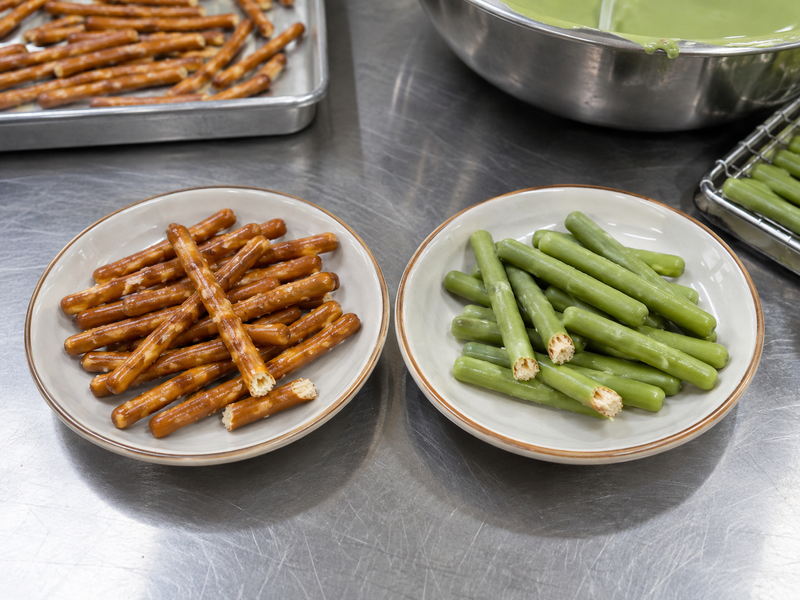
8. What does a practical packaging trial look like?
Test the snack inside its shipping case
Select food-contact packaging for the intended snack and distribution conditions. Evaluate the barrier, seal and physical protection with the packaging supplier. A clear pouch gives visibility but should still be assessed for the product’s appearance and flavor over the proposed life. Do not infer a shelf life from dry ingredients alone.
Pack representative pieces at the intended fill weight. Include normal headspace and the planned outer case. Subject samples to the actual handling route or a suitable distribution test, then examine breakage, sticking and surface marks. Compare an unopened control held under approved conditions with the handled sample.
Keep quality observations separate from safety validation. Pretzel crunch, coating appearance and tea aroma can change at different rates. The declared storage period requires assessment of the complete product, process, packaging and route. If the snack will travel through warm warehouses, include those conditions in development before quoting an ambient retail program. A sample handed over in an air-conditioned office cannot represent the entire supply chain.
9. How do you cost a finished pretzel pack?
Include unused coating and broken pieces
Weigh coating prepared, coating deposited and material left in the bowl or equipment. Apply the kitchen’s approved rework policy rather than assuming every remainder can return to the next batch. Track base breakage before dipping separately from damage after setting so the source of loss remains visible.
| Cost item | Record | Decision supported |
|---|---|---|
| Pretzel base | Usable weight and fragments | Supplier and shape |
| Green coating | Deposited mass and remainder | Coverage and batch size |
| Labor | Accepted pieces per hour | Dipping method |
| Packaging | Film, labels and rejects | Pack format |
For a proposed 50-gram retail portion, calculate how many accepted portions the actual finished batch provides. Include intentional overfill in the costing exercise if the packing system requires it. Do not calculate packs from the original base weight alone.
Compare tea samples at their selected dose and successful coating pickup. A stronger powder might reduce the tea quantity yet thicken the coating differently. The cost decision needs the finished portion and labor measurement, not an ingredient price ranking.
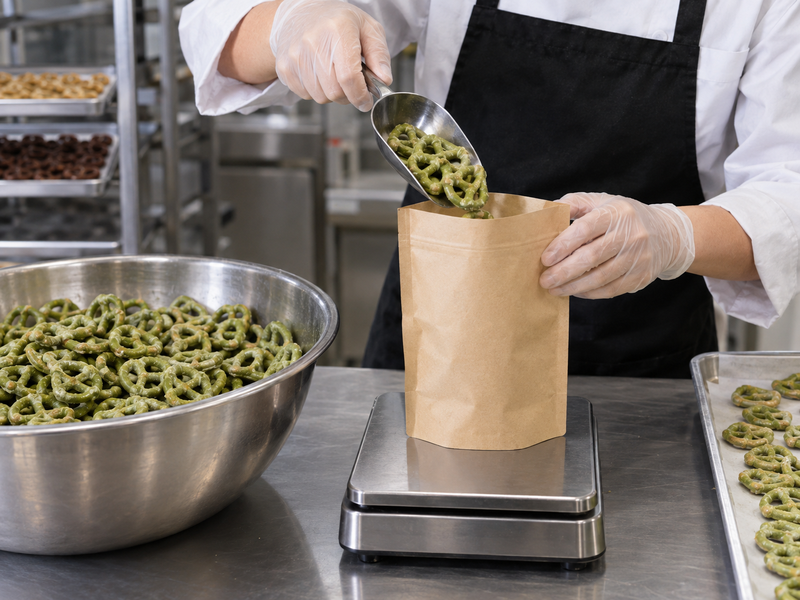
Examine where breakage occurs inside the case. Damage concentrated in the lowest retail packs suggests a different investigation from scattered broken twists throughout every pouch. Record case orientation, fill arrangement and the position of each inspected pack. A thicker coating may appear to protect the base but also changes sweetness and cost. Test the packaging arrangement before using more coating as the default correction. Retain photographs of the opened case and its damaged pieces so the packaging supplier can assess the actual pattern rather than a general complaint about fragile pretzels.
10. What should be approved before a commercial order?
Link the coating record to the ingredient order
Approve the base code, coating code, matcha code and their exact proportions. Attach the dispersion method, supplier processing instructions, pickup range and setting observations. Keep photographs of acceptable coverage and defects such as blocked holes or excessive feet. Specify whether broken pieces may enter the finished pack.
Review the complete ingredient and allergen declarations, including the base, coating and decorations. Confirm that the intended product name matches the chosen coating and destination requirements. A switch from chocolate to compound coating should trigger a new review of both process and label.
Send Matcha Village the selected tea addition, coating system and expected production volume. Request the commercial specification associated with the successful sample. Run a confirmation batch through the planned dipping or enrobing equipment, then pack it in the intended case. Have production record coating pickup, accepted pack yield and distribution-test findings before purchasing releases the full ingredient order.
Frequently asked questions
Q1: Can tea be added to dark chocolate instead?
It can be trialed, but cocoa flavor and appearance change the product. Develop a separate sensory target.
Q2: Should matcha be mixed with water first?
Use a dispersion method compatible with the selected coating. A water paste is unsuitable for direct addition to this chocolate route.
Q3: Why are the twist holes filled?
Check coating flow, pickup and draining technique. Increasing tea can also change handling and needs evaluation.
Q4: Is compound coating interchangeable with white chocolate?
No. Follow its own ingredient declaration and processing instructions, and review the product name for the market.
Q5: What does the packaging sample need to include?
Use actual coated pieces, the intended fill weight, sealed retail pack and outer case. Assess the complete route.