
Matcha bagels need a distinct tea flavor inside a dough that still shapes, boils and toasts like a bagel. Increasing powder until the crumb looks green can leave a drying finish or make a stiff dough harder to handle. A useful bakery trial checks the plain bagel, the toasted half and the intended filled portion. Connect those eating conditions with flour choice, shaping and accepted yield so the ingredient purchase rests on the finished product.
Contents: Menu | Ingredients | Trial | Mixing | Shaping | Boiling | Baking | Service | Cost | Approval
1. What should matcha bagels deliver on the menu?
Decide how customers will eat them
A plain breakfast bagel, a cream-cheese sandwich and a sweet dessert bagel need different flavor balances. Set the service format before choosing tea intensity. A powder that tastes strong in a plain half may be obscured by a heavy filling. A subtle bagel can work with a mild spread but disappear beside strongly seasoned ingredients.
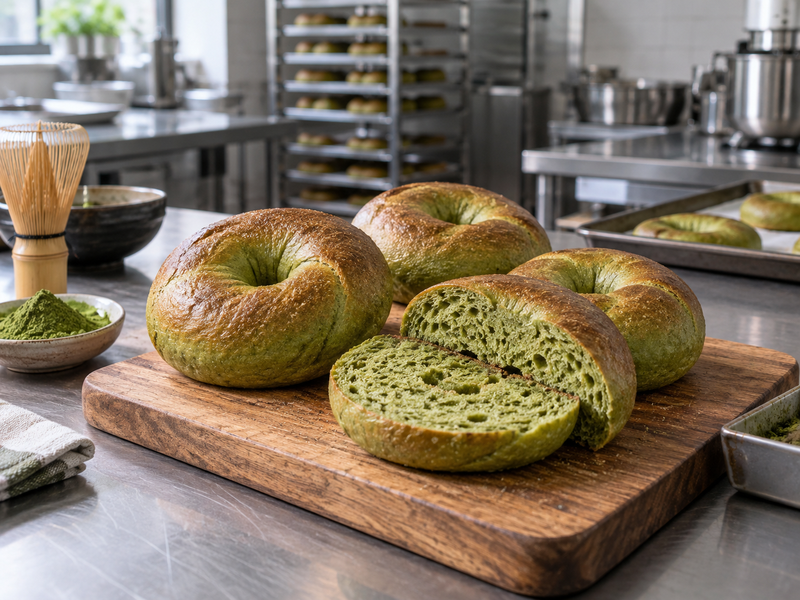
Baking With Butter’s matcha bagels provide an example of tea added to a lean bagel dough. For a commercial menu, define the desired chew, crust thickness and portion size independently. Photograph a cross section and record how the bagel behaves after the actual toaster cycle used at the counter.
| Menu format | Evaluate | Avoid judging only |
|---|---|---|
| Plain bagel | Tea finish and chew | Green color |
| Mild spread | Flavor through filling | Untopped crumb |
| Savory sandwich | Whole-bite balance | Ingredients alone |
| Sweet filled bagel | Sweetness and tea contrast | Promotional appearance |
Choose one primary service format for development. Additional variants can follow after the base bagel earns a place on the menu.
2. How should flour and matcha be selected?
Keep flour performance visible
Use a bread flour already suited to the bakery’s bagel process and retain its product code. Flour protein information can guide purchasing, but the dough still needs testing on the actual mixer. Avoid changing flour and tea supplier together unless the purpose is to compare complete ingredient systems.
King Arthur Baking’s bagel recipe uses bread flour and a stiff dough, followed by a water bath before baking. Those features provide process context. Its particular times and quantities should not become settings for a different commercial dough or piece size without testing.
Request plain matcha with a traceable sample code. Tea contributes flavor and solids; it does not perform the structural job of flour. The Matcha Village bulk ingredient guide can help frame the enquiry. State that the powder will pass through mixing, proofing, boiling, baking and possibly toasting. Ask for enough sample to repeat a successful trial under a normal production load. Keep a retained portion of the approved sample for the next shipment comparison.
3. What small dough trial can you run?
Use baker’s percentages
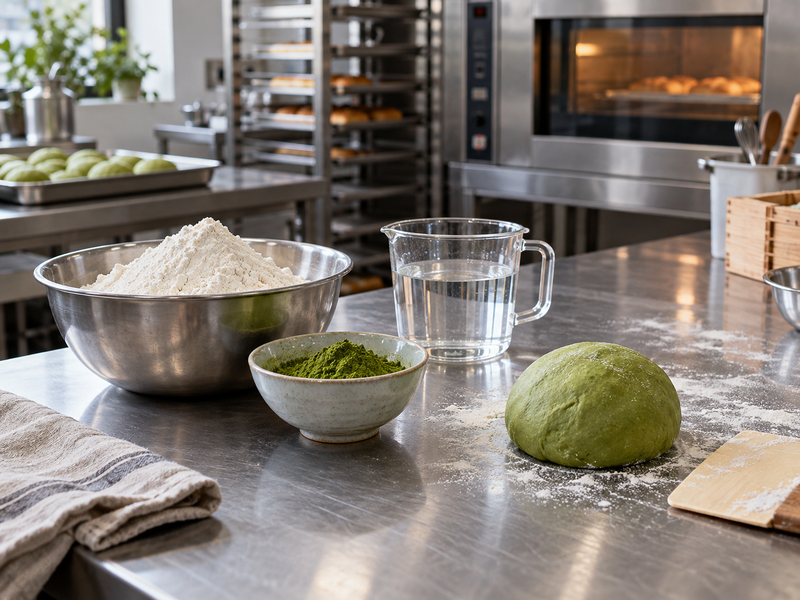
The table below is a proposed small test dough, not a validated recipe. It gives a development team a weighable starting point if it lacks an approved plain bagel base. Keep a plain control and compare the two tea additions in separate batches. Adjust only after recording how the initial dough mixes and shapes.
| Ingredient | Proposed weight | Baker’s percentage |
|---|---|---|
| Bread flour | 500 g | 100% |
| Water | 300 g | 60% |
| Sugar | 15 g | 3% |
| Salt | 10 g | 2% |
| Instant yeast | 4 g | 0.8% |
| Matcha, trial A or B | 10 g or 15 g | 2% or 3% |
These percentages use flour as the denominator. They are not percentages of finished dough. Yeast level and fermentation conditions need adjustment to the bakery’s schedule and supplier instructions. This proposal does not establish a cooking or holding process.
Weigh the dough after mixing and record piece yield. Note water temperature and finished dough temperature. If more water is tested, identify it as a new variant rather than quietly changing the original formula. That preserves a useful comparison for the next bake.
4. How do you control a stiff green dough?
Watch the mixer and the dough surface
Blend matcha evenly with flour unless the bakery has established another dispersion method. Follow yeast supplier instructions and the selected base process. A stiff dough can place a substantial load on equipment, so work within the mixer’s rated capacity. A small bowl turning freely does not demonstrate that a full bowl will behave the same way.
Record mixing stages and inspect for dry pockets, tearing and uneven color. Use the bakery’s normal strength checks to judge development. Avoid adding water solely because this dough seems firmer than a sandwich loaf; the intended bagel structure needs its own standard. Unrecorded flour added during handling also changes the formula.
Cover the dough during approved resting and fermentation steps. A dry skin becomes another shaping variable. Compare plain and tea doughs at the same stage. If the tea version is harder to extend, investigate one adjustment at a time. Changing rest and hydration simultaneously prevents the team from identifying which change helped. Repeat the preferred adjustment in a fresh batch before transferring it to the production sheet.
5. How do you keep the hole and portion consistent?
Measure before the water bath
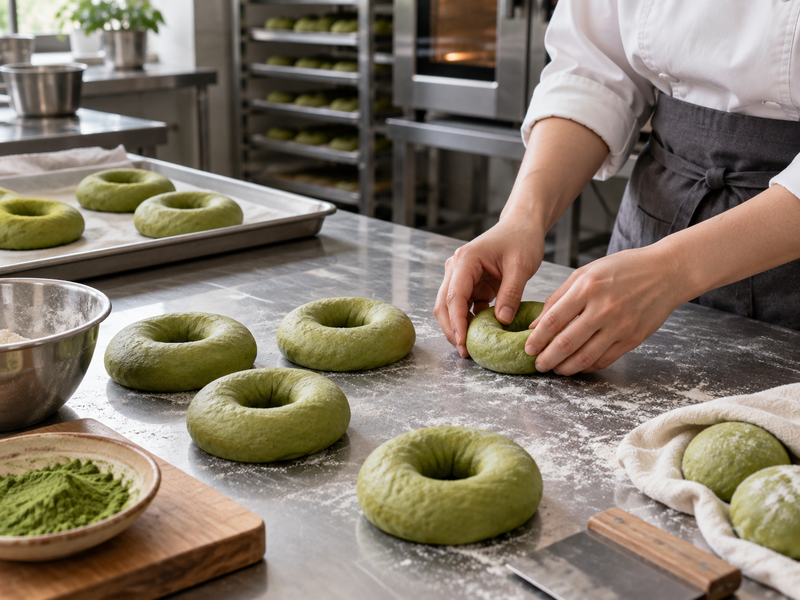
Divide by weight and choose one shaping method for the trial. A punched center and a rope joined into a ring can leave different seam and hole behavior. Train operators on the selected method and photograph the shaped piece. Record outer diameter and hole size at shaping and again before boiling.
| Measurement | Check point | What it reveals |
|---|---|---|
| Piece mass | After dividing | Portion consistency |
| Outer diameter | After shaping | Operator variation |
| Hole opening | Before boiling | Relaxation and proof effect |
| Seam condition | After boiling | Join strength |
A narrow hole can close as dough expands. Establish a raw shape that produces the intended baked opening. Keep surface dusting consistent because excess flour can travel into the bath and complicate handling.
Inspect pieces from the beginning and end of the shaping run. They may experience different waiting times even with an identical recipe. If that difference becomes visible, test smaller shaping groups or a revised sequence. Keep the batch identification attached to each tray so the boiling operator knows which pieces belong together.
6. What should the boiling trial compare?
Fix the bath before changing residence time
Use the bakery’s established bagel bath as the control. Record water quantity, sweetener if used, vessel size and the number of pieces loaded together. Temperature recovery changes when an operator adds several cold pieces at once. Keep loading and turning order consistent during a comparison.
Choose two or three residence times around the existing successful process and compare crust, surface and shape after baking. These are quality trials; the complete cooking process still needs validation. A published boiling time does not automatically transfer to another dough, portion or vessel.
Drain each bagel consistently before placing it on the tray. Water under one piece can complicate the base-color comparison. Record whether dough wrinkles, sticks to the tool or loses shape during lifting. Start without toppings when judging tea and surface appearance. Sesame, salt or sweet coatings can conceal a defect that belongs in the plain bagel investigation. Once the base is accepted, add the intended topping at a weighed dose and check both adhesion and its effect on the finished bite.
Map the handoff from proofing tray to bath to oven. Pieces waiting for an occupied bath continue through their own holding interval, while drained pieces may wait for oven space. Record those intervals during a normal-size trial. A single operator can unintentionally create three groups with different handling histories inside one nominal batch. Choose a smaller transfer group if that helps reproduce the approved process. Confirm that the chosen group size fits the skimmer, bath and baking tray without forcing the operator to stack or crowd soft pieces.
7. How do you assess the bake and cut crumb?
Separate browning from green color
Use a profile that produces a properly baked bagel under the bakery’s validated procedure. Record tray arrangement, loading and any rotation. Inspect the base as well as the upper crust. A uniform top can hide a pale underside associated with drainage or tray conditions.
| Observation | Compare with | Investigation area |
|---|---|---|
| Green powder pockets | Raw dough samples | Blending and mixing |
| Closed holes | Pre-boil shape | Shaping and fermentation |
| Wrinkled surface | Bath handling record | Proof and residence conditions |
| Dense ring section | Plain control | Development and baking |
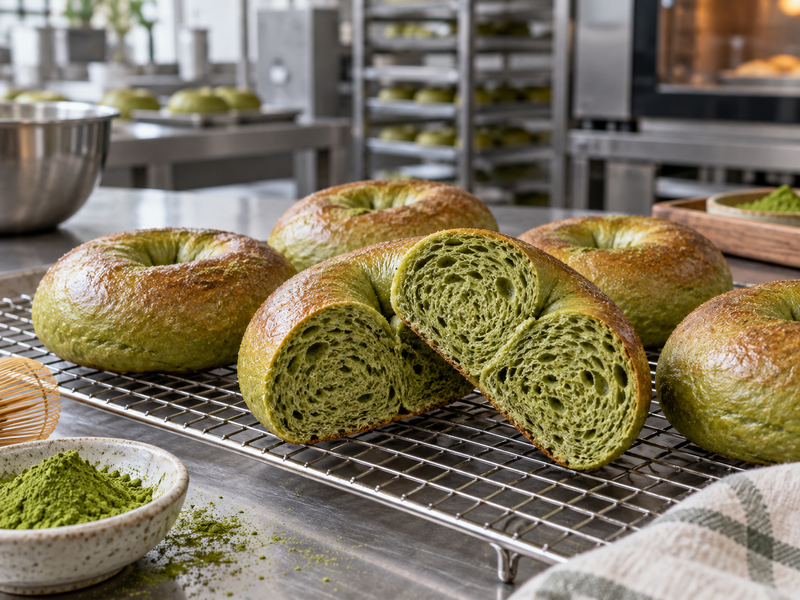
Cut after the approved cooling stage and compare the same part of the ring. The seam can differ from the opposite side, so identify where samples came from. Assess chew and tea finish without a topping, then retain halves for service testing.
If crumb looks dull, compare powder, formula and heat exposure in controlled trials. Reducing bake solely for brighter color can create another defect. Select tea that works within the process required for the product. Ask tasters to describe bitterness and dryness separately from crust toughness.
8. How should you test toasting and fillings?
Use the cafe’s counter equipment
Toast the bagel in the actual service equipment at the intended slice thickness. Record whether staff start from fresh, chilled or frozen product under the approved handling procedure. Evaluate the cut face, edge hardness, aroma and the customer’s ability to bite through a filled portion. A pale green fresh slice can look and taste different after a strong toaster cycle.
Apply filling by weight. Compare a light and heavier portion of the intended spread to find where tea stays recognizable. Retain an untopped half as a reference. A stronger dose is not automatically a better sandwich; bitterness may become more noticeable with a salty or acidic filling.
Test assembly and takeaway handling together. A bagel that looks appealing on a board may squeeze filling out of a narrow pack. Record finished height and how the wrapper opens. Validate each filling’s storage and service requirements individually. The base bagel procedure does not determine the safety or shelf life of a completed sandwich. Keep that distinction clear when a distributor asks for a packed product.
9. How do you cost bagels after slicing and service?
Count the portion the cafe sells
Include rejects after shaping, boiling, baking and slicing. A split seam may be edible but unsuitable for the agreed appearance and pack. Set acceptance before costing so the development team does not count pieces the cafe would withdraw. Record the reason for each rejected piece.
| Cost stage | Measure | Commercial effect |
|---|---|---|
| Dough | Accepted baked pieces | Base ingredient yield |
| Slicing | Clean halves | Breakage loss |
| Toasting | Time and rejected halves | Counter capacity |
| Filling | Actual applied mass | Finished portion cost |
A hypothetical batch cost of 240 currency units with 80 accepted bagels gives a base cost of 3 units each. If service rejects reduce sales to 72, that becomes about 3.33 before filling and overhead. These figures explain the calculation rather than expected bakery performance.
Compare matcha at the dose that passed the whole-bite trial. Include extra mixing or handling associated with each option. Powder price alone can miss the cost of a slower dough process. Show purchasing the accepted portion cost beside the ingredient quotation.
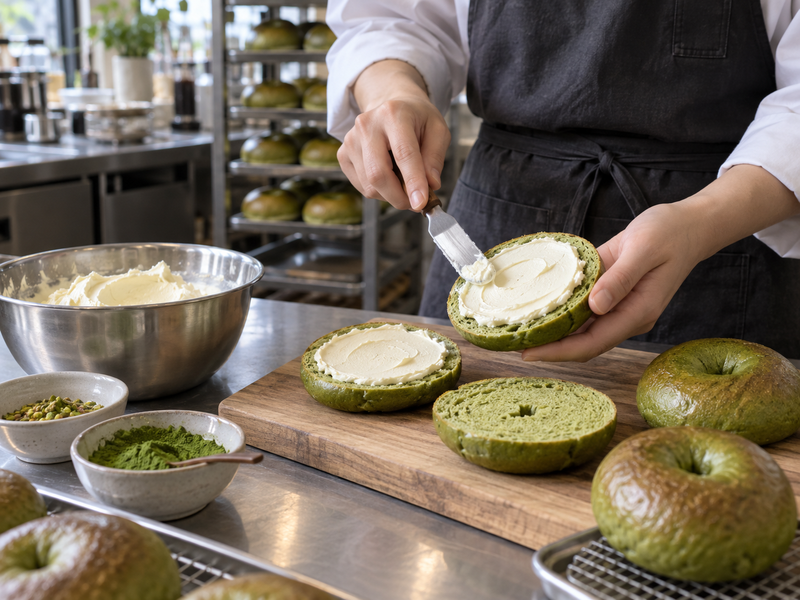
Account for service format when setting the portion specification. A bagel sold whole by a retail bakery can tolerate a different shape range from a sandwich that must sit level in a narrow tray. Measure the thickness of both halves after slicing. An off-center cut may leave one half that toasts rapidly and another that stays soft under the same setting. Ask the service team to cut a sample run using its actual tool. Record uneven halves and breakage separately from baking rejects before deciding whether a slicing guide would improve consistency.
10. What should a repeat-order specification contain?
Preserve the process behind the accepted bite
Write flour and matcha codes, formula weights, mixing method, piece mass and shaping standard together. Add bath composition, loading pattern, residence conditions and oven profile. Include photographs of raw rings, baked exteriors and cut crumb. Attach slicing, toasting and filling instructions for a cafe menu item.
Handle substitutions through a controlled approval step. A switch to sweetened tea powder or a different flour deserves a fresh dough trial. Review the complete ingredient declaration and destination requirements for toppings and fillings. Keep sample identities on retained ingredients so the next shipment can be compared with the accepted bake.
Send Matcha Village the approved dose, commercial batch size and expected order frequency. Request the specification linked to the sample used. Run the next trial with a normal mixer load and the actual service team. Have the bakery lead record shaped yield, accepted baked pieces and the toasted sandwich result before approving repeat orders.
Frequently asked questions
Q1: Do matcha bagels need sweet fillings?
No. Test the intended savory or sweet combination and choose tea intensity from the complete bite.
Q2: Can matcha replace bread flour?
It does not supply the same structure. Treat replacement as a separate trial rather than a direct substitution.
Q3: Why does the hole close?
Initial shape, relaxation and expansion can contribute. Compare hole size before boiling and after baking.
Q4: Should every bagel use the same boiling time?
The dough, portion and equipment determine the process. Compare controlled times around a reliable base method.
Q5: Can frozen bagels be approved from fresh samples?
No. Evaluate the actual freezing, storage and toasting route, and validate the complete handling process.