
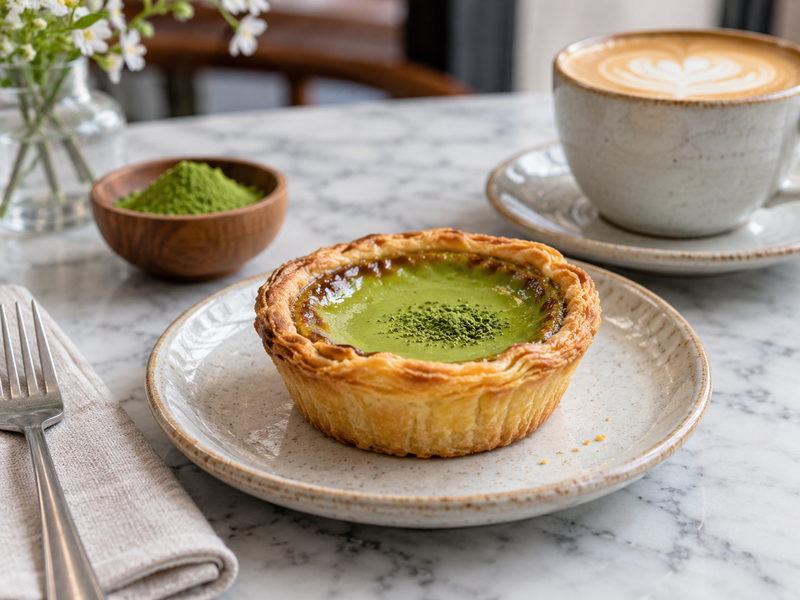
A matcha egg tart has little room for a weak formula. Customers see the custard surface, feel the pastry shell and taste matcha in one bite. If the tea clumps, the filling separates or the shell softens before sale, garnish cannot rescue it. Start with an egg tart your bakery already makes well and change the custard in controlled trials. Aiya America’s matcha egg tart recipe gives a useful small-batch reference. For foodservice production, the harder work is making the green custard consistent across trays, shifts and the selling window.
Contents
- 1. What should a matcha egg tart taste and feel like?
- 2. Which pastry shell should a bakery use?
- 3. How should matcha be dispersed in custard?
- 4. How can the custard formula be balanced?
- 5. How should shells be filled consistently?
- 6. What indicates the custard is properly baked?
- 7. How can the shell stay crisp for sale?
- 8. How should a team test matcha powder lots?
- 9. What should a production scorecard include?
- 10. What belongs in the final purchase brief?
1. What should a matcha egg tart taste and feel like?
Define the contrast
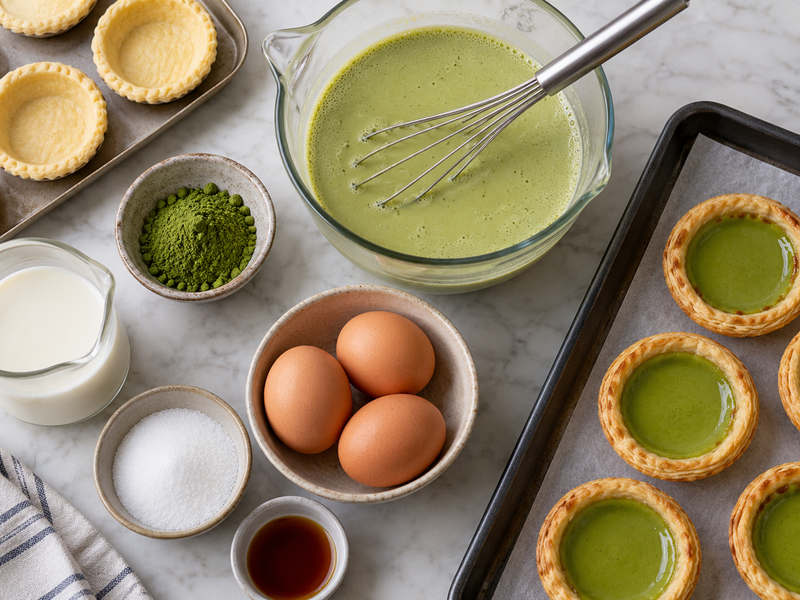
An egg tart works through contrast: tender custard inside a distinct pastry shell. Matcha adds tea aroma and a green color, but it should not turn the filling chalky. Decide whether the menu is based on a flaky Portuguese-style shell, a short Hong Kong-style shell or an existing house pastry. These are different eating experiences and require separate acceptance standards. Aiya America’s recipe offers a consumer route to the flavor. A bakery must judge the tart as a whole: shell, filling, surface and behavior after display.
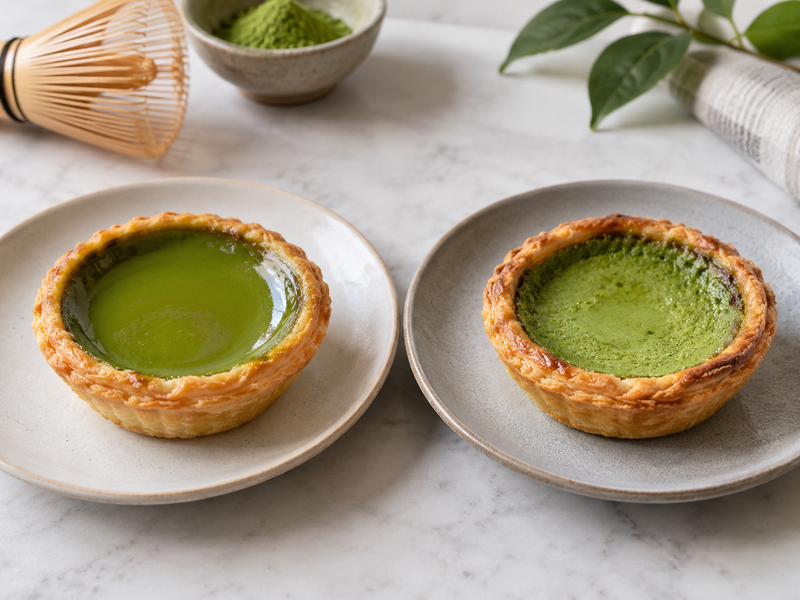
Cut before approving. Taste a tart warm and another at its planned selling temperature. Note whether matcha appears before egg, after egg or only as color. Check for a smooth center without dry pockets. The top need not match a plain tart’s brown spots if that appearance hides the green tea, but the custard still needs a validated bake. A sweet dusting may sharpen the first visual impression while making the tea hard to taste. Give tasters coded samples with different powder doses and ask them to score tea clarity, sweetness, shell texture and willingness to order again.
2. Which pastry shell should a bakery use?
Keep the shell constant in early tests
Changing shell and custard together leaves a team unsure which change caused a soggy base. Use an approved shell for the first matcha trial and record its size, raw weight, dock or blind-bake method and storage state before filling. A thin laminated shell may create dramatic flakes but can break during transport. A short pastry shell can be sturdier and easier to pack, though its bite is different. Choose according to the shop’s service model rather than a photograph of another bakery’s tart.
Run ten plain custard tarts and ten matcha versions from the same shell batch. Compare bottom color, leakage and release from the mold. If both groups soften, focus on shell process, filling volume or display conditions before blaming matcha. If only the matcha group fails, review the added powder and how it entered the custard. A shell supplier should provide consistent dimensions and ingredient information. A team making shells in-house should track cutter size, sheet thickness and trim reuse, since those choices affect unit weight and labor cost. Keep one accepted plain shell as a control during development.
| Shell option | Useful trait | Trial concern |
|---|---|---|
| Laminated pastry | Flaky bite | Breakage and butter leakage |
| Short pastry | Stable shape | Dense eating texture |
| Bought shell | Fast production | Size and supply variation |
| House shell | Formula control | More labor and training |
3. How should matcha be dispersed in custard?
Prevent dry green specks
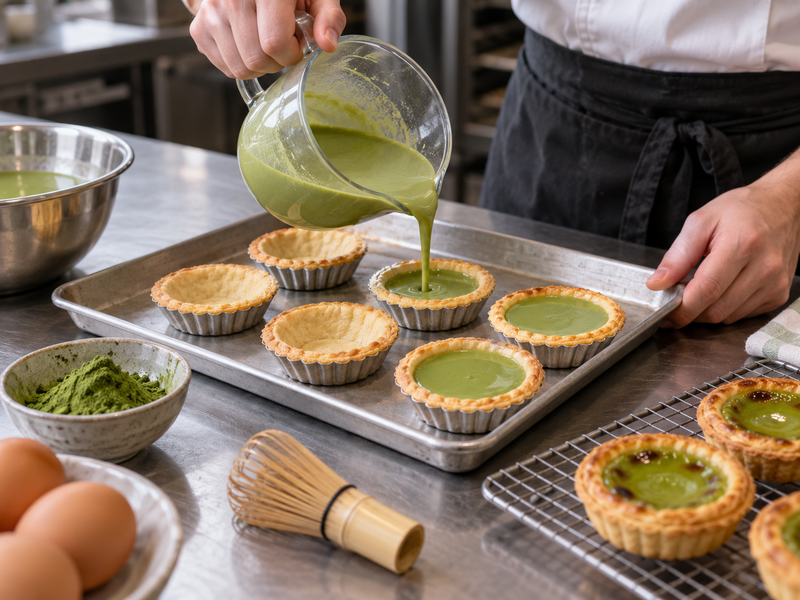
Matcha does not dissolve like sugar. Fine particles must be dispersed evenly, and a dry scoop tipped into a large cold liquid bowl can form stubborn lumps. Sift the measured powder, then wet it with a small measured portion of recipe liquid before combining with the rest. Alternatively, blend it with a dry ingredient before liquid addition if your process supports that route. Compare the two methods in small batches, keeping total formula weights equal. Strain through the screen specified in your recipe and record whether retained green paste indicates poor dispersion or simply a screen that is too fine.
Do not add extra water off the record to make a matcha paste. Custard setting depends on ingredient balance, so unrecorded liquid changes the experiment. Also avoid high-speed mixing that incorporates unnecessary air and leaves surface foam. Check the raw mix under bright light, then bake samples from the first and last portions of the jug. If the final tarts carry more green sediment, the mix needs a defined stir and fill method. Matcha Village can provide powder samples for bakery testing, but the supplier’s grade label cannot replace this dispersion test in your custard.
| Dispersion step | Control | Failure sign |
|---|---|---|
| Powder weighing | Grams per batch | Color swings between batches |
| Sifting | Approved screen | Dry flecks |
| Wetting | Recipe liquid amount | Unrecorded dilution |
| Final mixing | Time and tool | Foam or sediment |
4. How can the custard formula be balanced?
Change one ingredient at a time
Egg, dairy or alternative milk, sugar and matcha all influence the finished filling. A high sugar level may make the green color attractive while hiding tea flavor. Extra matcha can make a thin custard seem thicker before baking and leave an astringent finish afterward. Build a small matrix: hold the original house custard constant, then test two or three matcha doses by weight. If neither yields a good result, adjust sweetness or dairy in a second round. Do not change several variables and then claim the powder caused the difference.
Record volume as well as taste. The final amount deposited into each shell affects set time and shell moisture. Aiya’s consumer recipe may fit a particular mold; your bakery may use a larger tart ring or a shallower display case unit. For a café chain, select a formula that staff can measure with a scale and a marked depositor. Avoid vague instructions such as “add matcha until green.” Judge color after the full process, including cooling and display. If a powder becomes dull or bitter during the bake trial, compare another lot or grade before adding colorants.
5. How should shells be filled consistently?
Measure deposit and leave room for movement
Fill height changes both eating quality and the chance of spills. Mark an acceptable line on a sample shell and weigh the deposited custard in several units. A jug can work for a small café batch, while a depositor may help a production line. Either tool needs a record of actual portion variation. If the first filled shell receives a smooth mix and the last receives settled powder, stir according to a written rule between deposits. Test that rule rather than letting each operator improvise.
Watch the tray before it enters the oven. Custard on the shell rim can burn and make release difficult. A shaky transfer can mix pastry flakes into the filling. Place trays on a stable level surface and compare shell placement across positions. If the bakery uses frozen shells or pre-baked shells, record starting temperature; these choices change the bake and should not be mixed within one trial. Count spills and underfilled units in the pilot yield. The accepted fill level should survive carrying, oven loading and the finished cut test, not just look attractive while the tray remains on the bench.
| Filling check | Record | Defect prevented |
|---|---|---|
| Mix before deposit | Stir method and interval | Sediment gradient |
| Portion | Grams per shell | Uneven set and cost |
| Fill line | Height below rim | Spill during transfer |
| Shell start state | Chilled, frozen or baked | Variable bake |
6. What indicates the custard is properly baked?
Validate the whole tray
A smooth green surface can conceal an under-set middle. Select tarts from the tray center and edges, cool them for the same period and cut through the filling. The custard should hold its shape without a liquid center or grainy overbaked edge. Matcha color may make familiar browning cues less useful, so the bakery should document texture and any temperature checks in its approved food safety procedure. Avoid publishing a universal oven time or core temperature for every tart; equipment, shell size and formula differ. The FDA Food Code is a US retail food model, while local authorities and the business’s process plan govern actual controls.
If edge tarts set before center tarts, note rack position and loading pattern. If every tart cracks, examine heat profile, fill depth and formula. If a skin forms while the center stays runny, a hotter top alone may not solve it. Repeat a passing oven program on another production day before assigning it to staff. Document cooling as part of that program because carryover heat and condensation alter the apparent set and shell texture. The accepted sample should be checked at the temperature customers will receive.
7. How can the shell stay crisp for sale?
Test the finished selling route
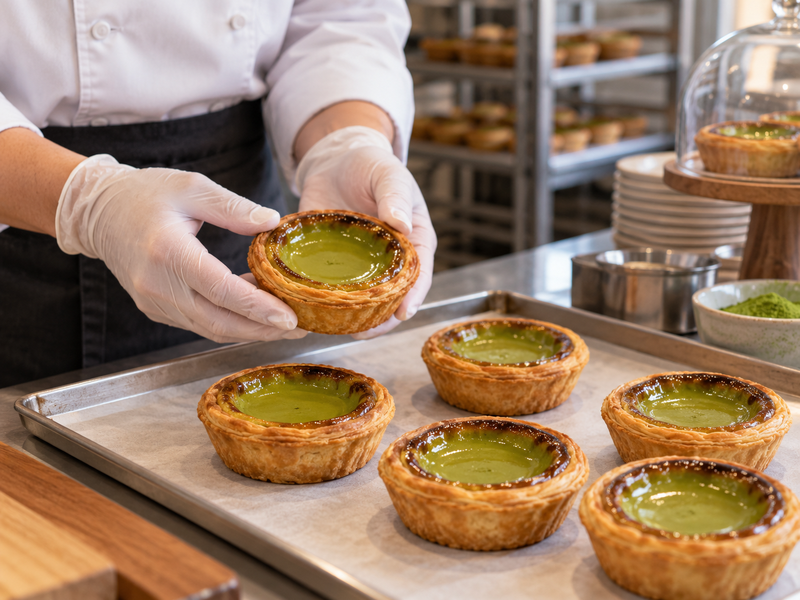
Custard and pastry exchange moisture after baking. A tart that cuts crisply after cooling can soften in a closed box or humid display. Trial the actual route from oven to case to customer package. Taste one tart when ready for sale and others later in the planned window. Record bottom texture, sidewall strength, surface appearance and tea aroma. A vented carton may protect flakiness better than a sealed pack but may expose the product to other handling conditions. Choose packaging with a food safety and quality team rather than solving only the photograph.
For multi-site supply, run a delivery test with the exact tray and stack height. Inspect both top and bottom tiers after transport. A short pastry shell might survive that trip better than a fragile laminated shell, even if the latter wins at the bakery counter. If the tart requires chilled display, test its flavor and texture at the chilled serving temperature. Warm tasting notes cannot stand in for cold retail acceptance. Define a reject sign for soggy base or leaking custard and train staff to remove those units before sale.
| Sales route | Check after holding | Possible decision |
|---|---|---|
| Open case | Base crispness | Shorter display window |
| Closed box | Condensation | Vent or later packing |
| Chilled case | Flavor clarity | Adjust serving suggestion |
| Delivery tray | Breakage count | Change shell or pack |
8. How should a team test matcha powder lots?
Test in baked custard, not only water
Ask each supplier for a representative lot sample and its supporting documents. Prepare a plain water tasting to identify obvious aroma or bitterness, then put every candidate into the same custard formula. Bake on the same day when possible and code the tarts for blind evaluation. Record powder dose, color after baking, graininess, tea clarity and flavor after the planned hold. A whisked bowl of matcha may rank differently because egg, dairy, sugar and oven heat change the context. Keep the selected powder’s lot and a retained sample with your purchasing record.
If the bakery needs a certified or specially tested ingredient, request documents matched to the destination market and lot rather than assuming every product in a supplier catalog has the same status. Matcha Village lists several grade and certification options, but your quality team should verify what applies to the specific powder supplied. FDA food allergen guidance also reminds US sellers to assess the complete tart, not only tea powder; egg, milk and wheat may be present. Recheck the formula when a new powder lot changes sensory performance or ingredient paperwork.
9. What should a production scorecard include?
Count accepted tarts and explain rejects
Make enough test tarts to see variation across a tray and between operators. Record shells started, shells broken, units filled, units baked and units accepted. Keep defect categories separate: leaking custard, uneven color, cracked surface, raw center, soggy bottom and damaged rim point to different corrections. Photograph representative examples. A tasting score should include shell crispness, matcha clarity, sweetness, custard smoothness and appearance after holding. Ask both a baker and a counter worker to score samples before group discussion; their daily tasks reveal different problems.
Calculate ingredient cost per accepted tart using actual batch weights and invoice prices. Include matcha dose, shell waste and packaging. A cheap powder may require more grams per unit to remain recognizable, which can erase its apparent price advantage. Run the accepted formula on a second day and compare results. If a different baker or oven load produces a very different tart, the method is not ready for a larger order. Trial records give the buyer a clear basis for supplier choice and forecasted powder use.
| Scorecard line | Unit or observation | Decision |
|---|---|---|
| Custard portion | Grams per shell | Fill consistency |
| Cracked or leaking units | Count per tray | Formula or oven change |
| Tea flavor | Coded tasting score | Powder choice |
| Saleable yield | Accepted / started units | True unit cost |
10. What belongs in the final purchase brief?
Connect powder supply with the bakery method
The powder brief should state the application, target flavor, expected grams per tart, batch size, monthly volume, packaging preference and destination market. Request a lot-linked sample, specification, ingredient statement, storage guidance and relevant test records. Tell the supplier whether the custard will be baked, chilled or distributed, since each step changes the acceptance test. Matcha Village can discuss culinary and other matcha options for bakery applications; approval should still rest on a finished tart made with the proposed lot.
Staff need a card that specifies shell, custard formula, powder dose, dispersion method, fill line, oven program, cooling, holding and reject examples. Have a baker who did not develop the tart make a trial batch from that card. If the finished units match the accepted sample across the tray and selling window, the business has a credible launch process. Keep the formula and supplier lot tied together; review changes before they enter normal production. Ask for powder samples against the written custard target rather than buying solely from a color photograph or grade name.
Our matcha tart production guide covers another baked custard format.
FAQ
Q1: Can pure matcha replace a sweet matcha blend in an egg tart?
It can be tested, but the formula must be rebalanced because a blend may contain sugar or other ingredients.
Q2: Why are there green specks in the custard?
Dry matcha may not have dispersed fully. Weigh, sift and wet it with a measured part of the recipe liquid before mixing.
Q3: How can a bakery keep shells crisp?
Validate shell bake, cooling, filling amount, display and packaging together. Judge the tart at the point of sale.
Q4: Does a bright green surface prove good matcha?
No. Taste the complete tart and check powder documentation, custard texture and color after holding.
Q5: What should a buyer request before ordering bulk matcha?
Request a representative lot sample, specification, ingredient and storage information, and documents required by the destination market.