
Matcha powder wettability concerns the initial contact between powder and liquid under defined conditions. Buyers need to distinguish wetting from later dispersion and settling before comparing samples. A controlled introduction trial records what operators can reproduce. GEA’s published method defines wetting time through specified powder quantity and water temperature. It covers dairy powders. GEA wettability method.
Contents
- 1. What should matcha powder wettability mean in your trial?
- 2. Which liquid should be used for comparison?
- 3. How should temperature and quantities be controlled?
- 4. What introduction order should be tested?
- 5. How should floating powder and dry islands be recorded?
- 6. How should mixing conditions be reported?
- 7. How do wetting and dispersion differ in acceptance?
- 8. How should foam and transfer loss be handled?
- 9. What should the supplier sample brief contain?
- 10. How should the accepted method enter production?
1. What should matcha powder wettability mean in your trial?
Define the initial contact endpoint
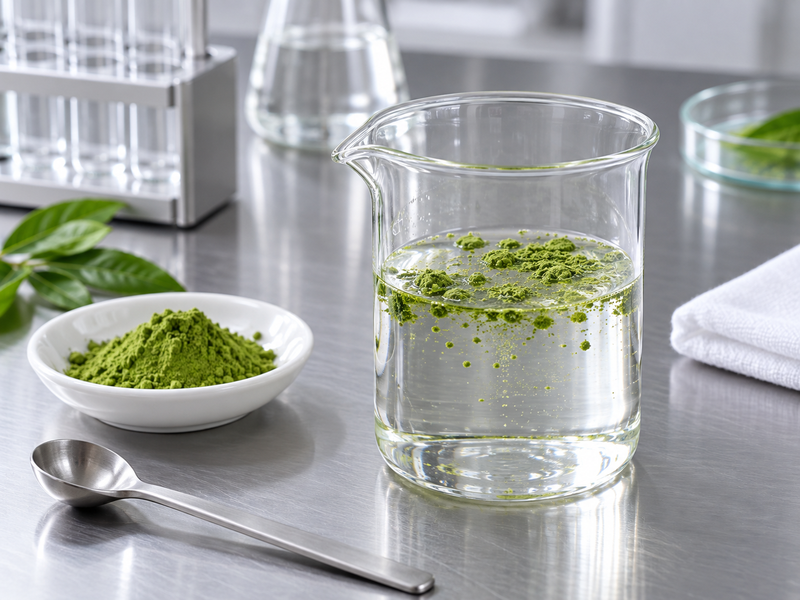
Write down what staff will observe when powder meets liquid. Your endpoint might be the disappearance of visible dry surface powder under an agreed procedure. Another endpoint may concern the absence of dry centers in sampled clumps. These observations answer different questions. Define each one before the trial so reviewers can interpret the record.
For matcha powder wettability, keep the starting conditions visible. State whether the trial uses still liquid, an operating mixer or a separate premix step. A powder that appears wet after vigorous mixing has not necessarily met a still-liquid wetting endpoint. The buyer should describe the tested procedure without assigning a broad “instant” label.
Agree what counts as wetted. Ask development and production to review the endpoint together. Record a suitable photograph or video where your company permits it, using the same viewpoint across candidates. Treat the image as supporting observation, with the written conditions and timing retained beside it.
| Observation | Suggested record | Distinct question |
|---|---|---|
| Dry surface powder | Defined wetting time | Initial contact |
| Remaining clumps | Size and dry-center observation | Dispersion work |
| Later sediment | Separate timed observation | Suspension behavior |
2. Which liquid should be used for comparison?
Match the application matrix
Choose the actual liquid or a clearly identified development medium. Water, dairy milk and a plant-based beverage create different trial contexts. Record the product identity, formulation and preparation used. When the recipe contains sugar, fat or other ingredients, state whether they are already present when the powder enters the liquid.
Your matcha powder wettability comparison should use the same liquid condition for each candidate in the initial test. A supplier’s result in water can help frame a question, but it does not describe a buyer’s formulated base automatically. Ask the supplier which medium and conditions support any wetting claim it makes.
Keep the liquid recipe fixed. In an illustrative beverage development plan, a buyer could test candidates in its intended oat base after a water screen. Label both conditions and retain their results separately. This is a suggested trial design, not evidence that one liquid or powder will always wet faster.
3. How should temperature and quantities be controlled?
Record the conditions staff can repeat
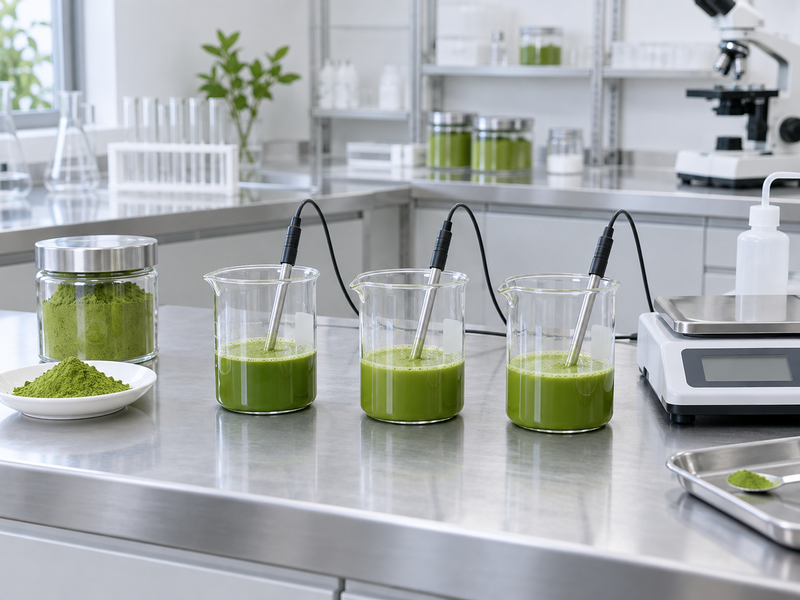
Measure the liquid temperature at the point your procedure defines and record it with powder mass and liquid quantity. Use appropriate measuring equipment and consistent vessels. A stated “warm water” condition leaves too much room for variation. Your technical team should choose conditions that reflect the intended operation and the question being tested.
Matcha powder wettability reports should retain these fields even when they include a concise time result. GEA’s published method states powder amount and water temperature with the result and describes its dairy product scope. GEA method A 5 a. Use it as an example of method reporting, without importing its dairy acceptance criteria as matcha limits.
Measure rather than infer the temperature. For an illustrative trial, staff could record the liquid temperature immediately before adding a defined powder mass. Keep the actual value and any deviation from the plan. If a condition drifts, identify that run rather than compare it as though every candidate received identical treatment.
| Condition | Record | Keep comparable |
|---|---|---|
| Liquid | Identity and quantity | Same base |
| Temperature | Measured value | Agreed trial condition |
| Powder | Mass and lot | Same introduction quantity |
4. What introduction order should be tested?
Describe the sequence precisely
Record whether staff add powder onto liquid, liquid onto powder or powder into an existing premix. State the introduction duration and where it enters the vessel. A large dump and a controlled feed are different procedures even when total mass matches. Choose the comparison sequence before evaluating candidates. For matcha powder wettability, test an alternative order separately if your team sees a practical reason. Retain the baseline result so reviewers can see whether the powder or the changed procedure produced the improvement. Do not adjust introduction order for one candidate during an initial comparison without labeling that difference.
Keep each sequence in its own record. A hypothetical trial could compare direct introduction with a small premix before the main batch. That proposal does not promise improved performance. It asks whether the extra step helps under your recipe and equipment conditions, and whether production can use the procedure within its operating schedule.
5. How should floating powder and dry islands be recorded?
Observe the surface with defined timing
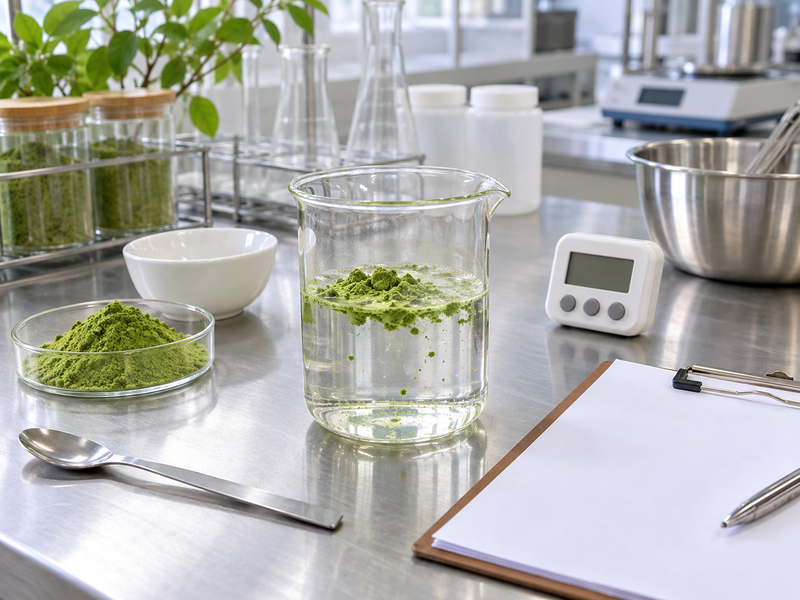
Agree observation points that answer your production question and record what remains visible. Surface coverage, distinct dry islands and powder attached to the vessel wall can be useful fields. Use the same vessel and viewpoint. A general note saying “mixed well” hides the amount of work needed before dry powder disappears.
Your matcha powder wettability record can include time to the defined endpoint and unresolved observations at the chosen stop point. Label a run that did not reach the endpoint within the trial period. Do not assign it a made-up completion time or treat an arbitrary observation period as a universal matcha standard.
Keep incomplete results readable. Staff should describe what they saw and the conditions used. In an illustrative comparison, one sample could retain visible islands at the stop point while another reaches the endpoint. This example explains the recording format; actual rankings require measured observations from the buyer’s trial.
| Surface observation | Record format | Review question |
|---|---|---|
| Visible dry islands | Description and timed image | Endpoint reached? |
| Wall attachment | Location and amount description | Transfer or wetting issue? |
| Unfinished run | Stop time and condition | More process work needed? |
6. How should mixing conditions be reported?
Describe equipment and energy input
Record mixer identity, attachment, vessel and relevant settings. State when mixing starts relative to powder introduction and how long each stage runs. Keep the actual procedure beside the wetting result. A hand whisk, bench mixer and production powder induction device provide different conditions, so their results need separate labels.
For matcha powder wettability, a supplier should state how it measured the claimed performance. Ask whether the result came from still liquid or an assisted mixing process. If the buyer trials several settings, preserve each condition and result rather than report only the quickest run. Equipment procedures determine which settings staff may use.
Separate wetting from mixing work. GEA describes equipment that introduces powder below the liquid surface as part of its mixing design. GEA food ingredient processing. That equipment example shows why introduction conditions belong in a trial record; it does not establish a performance claim for every matcha formulation or mixer.
7. How do wetting and dispersion differ in acceptance?
Use separate endpoints
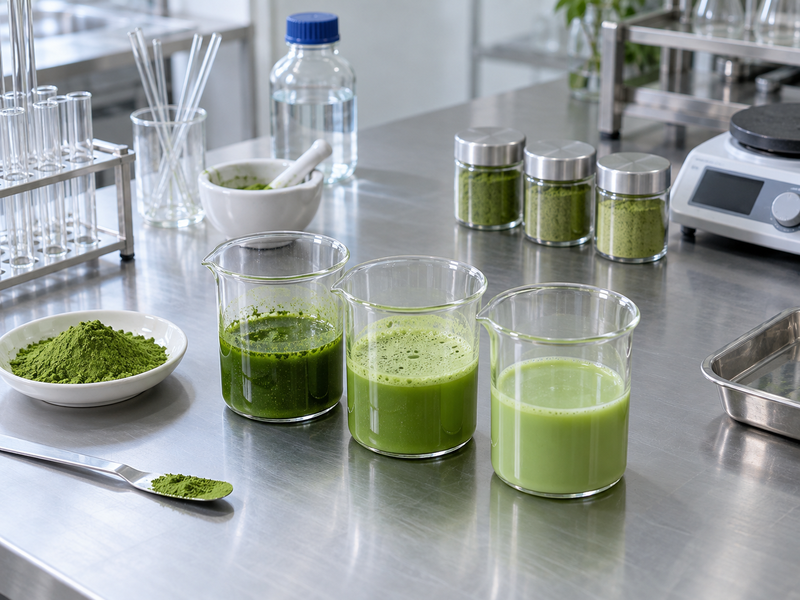
A powder can contact liquid while leaving clumps that need more mixing. Your team should define the wetting observation and the later dispersion observation separately. Record any check for dry centers using a repeatable procedure. Avoid declaring complete dispersion because surface powder has disappeared or because the drink has an attractive foam.
Matcha powder wettability is one part of the buyer’s handling review. Keep the wetting endpoint separate from later settling. Use the matcha solubility guide for the related distinction in beverage preparation. If the finished product requires a defined texture or suspension result, test that result under its own method and conditions. A short wetting time cannot answer every question about a bottled beverage or dessert formulation.
Ask which endpoint the claim addresses. In an illustrative worksheet, staff can record surface wetting, residual clumps and later sediment in different columns. This keeps the work visible without combining unrelated properties into one score. The buyer can then decide which observations require a different introduction method or another supplier sample.
| Endpoint | Observe after | Do not infer |
|---|---|---|
| Wetting | Defined initial contact | Complete dispersion |
| Dispersion | Agreed mixing sequence | Long-term suspension |
| Settling | Separate holding period | Wetting speed |
8. How should foam and transfer loss be handled?
Record side effects of the procedure
Add foam, vessel residue and material loss to the trial record when they affect production. A faster wetting result may still need review if the chosen mixing sequence creates difficult filling conditions. Record what your operation observes rather than assume a faster endpoint always reduces total processing time. For matcha powder wettability, keep recipe and equipment effects visible. If staff change mixing or introduction conditions, compare the relevant side effects as well. Production may need a different handling sequence from a development bench. State which observations the small trial can support and which require a larger run.
Measure the full task where useful. An illustrative development plan may record time through wetting, mixing and transfer separately. That information helps the buyer examine the total operation. Do not invent a percentage saving or promise a cycle reduction before the trial has recorded actual material and operating observations.
9. What should the supplier sample brief contain?
Give the supplier a usable question
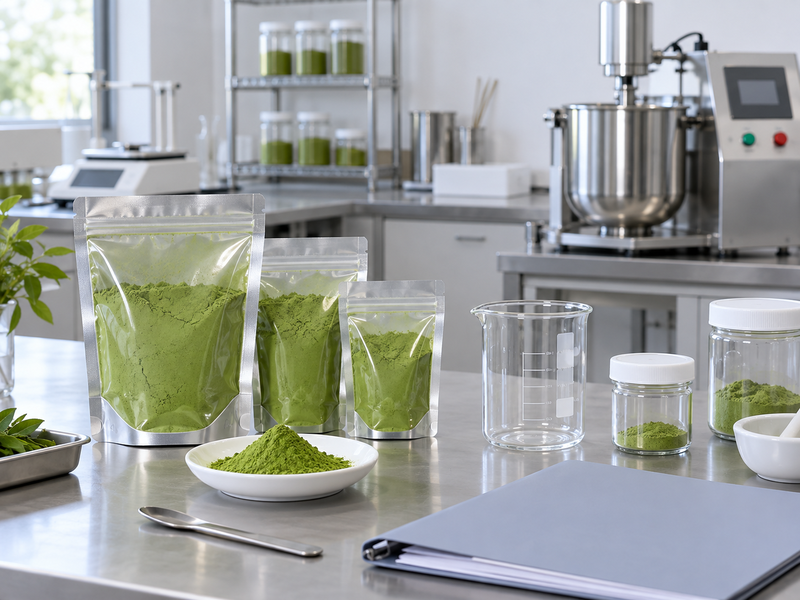
Send the liquid identity, powder concentration, temperature, introduction sequence and mixing arrangement. Describe the wetting endpoint and later application requirements separately. Ask for sample identity and any preparation affecting powder behavior. The supplier can then select candidate products or explain which evidence is available for the proposed use.
Matcha powder wettability should be discussed for the exact ordered product. If the supplier proposes a treated powder or blend, ask for its composition and product description. A changed ingredient arrangement needs its own review. Avoid assuming every sample belongs to the approved pure powder configuration because the trade name remains familiar.
Request the sample’s actual preparation. Ask Matcha Village about application selection, blends and sample support. Use those options to request a defined comparison. Ask which candidate matches your product brief and how it was prepared, then test it under your planned conditions before accepting a general handling statement.
| Sample brief field | Send | Ask back |
|---|---|---|
| Liquid and temperature | Trial conditions | Relevant supplier evidence |
| introduction and mixing | Actual procedure | Sample preparation |
| Endpoint | Defined observations | Product and lot identity |
10. How should the accepted method enter production?
Save the tested sequence
Record the accepted product, lot, liquid base and introduction procedure. Include the measured conditions, mixer setup and endpoints used for the decision. If production uses different equipment, plan the relevant confirmation before calling the method ready for routine use. Keep any unresolved clump or transfer questions visible.
Your matcha powder wettability requirement can reference the agreed trial method and report fields. Add a numerical acceptance criterion only when the application evidence supports it. Ask the supplier for notice of changes in composition or preparation that may affect the result. Preserve the approved sample record as the comparison baseline.
Give operators a complete preparation instruction. State quantities, introduction sequence and permitted mixing settings in the format production uses. Purchasing needs the matching product code and supplier requirement. Development needs the trial record. Connect these documents so a later recipe or sample change reaches the team responsible for checking the method.
FAQ
Q1: What is matcha powder wettability?
It concerns initial powder contact with liquid under a defined quantity, temperature and introduction procedure.
Q2: Does wetting prove complete dissolution?
Use separate definitions and observations for wetting, dispersion and the behavior of the finished beverage.
Q3: Can a dairy powder method become a matcha limit?
Check the method’s scope. Use relevant reporting ideas while developing and evaluating a procedure for the actual matcha application.
Q4: Should introduction order stay fixed between samples?
Keep it fixed for the initial comparison, then label any alternative sequence as a separate trial condition.
Q5: What should operators record if wetting remains incomplete?
Record the stop time, visible condition and procedure used instead of inventing a completion time.
Send a liquid introduction brief with a defined wetting endpoint and separate dispersion observations. Request identified samples and preparation details. Compare them under matched conditions, then retain the accepted sequence and production confirmation with the product specification so future recipe or powder changes receive a relevant review.