
Matcha powder flowability describes how powder moves under specified handling conditions. A supplier’s general “free flowing” statement cannot answer whether your hopper will discharge consistently. Test the actual equipment, fill level and operating sequence. Freeman Technology’s powder guidance describes distinct test conditions for powder movement. Freeman powder characterization.
Contents
- 1. What should matcha powder flowability mean in your trial?
- 2. Which equipment details should be recorded?
- 3. How should powder samples be prepared?
- 4. How should the loading sequence be tested?
- 5. How do you observe bridging and interrupted discharge?
- 6. How should feeder output be measured?
- 7. What happens at refill and low hopper level?
- 8. Which laboratory tests may support the trial?
- 9. How should changes in equipment settings be compared?
- 10. What should your supplier acceptance record contain?
1. What should matcha powder flowability mean in your trial?
Name the required movement
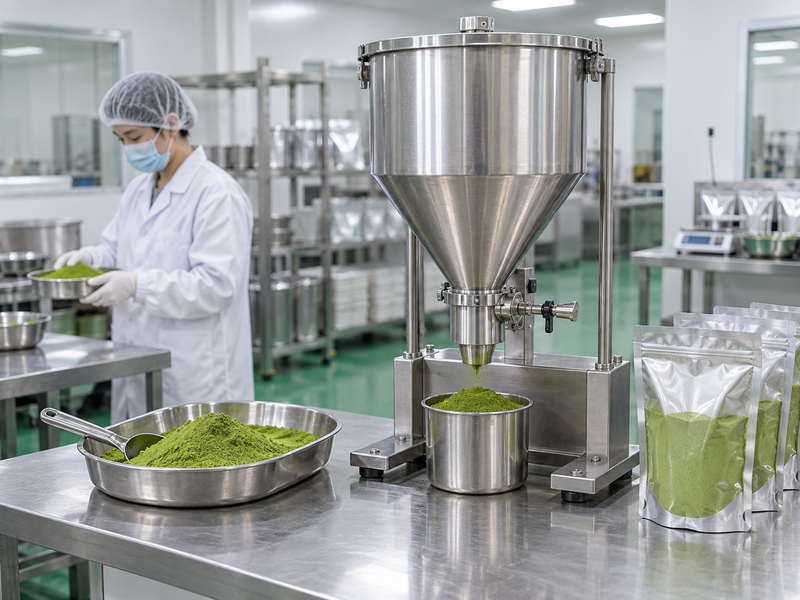
Describe the operation you need the powder to perform. It may move from a bag into a hopper, discharge into a feeder or dose into a package. Each question involves different conditions. A buyer should define the movement, intended rate and observed endpoint before comparing supplier samples. Keep the equipment configuration with the trial brief.
For matcha powder flowability, record the practical problem you are trying to avoid. Intermittent discharge, a stable powder arch and inconsistent dose mass deserve separate observation fields. Staff should report what they see instead of mark every interrupted feed as the same type of blockage. That detail helps technical reviewers ask better follow-up questions.
Define the successful run. Choose acceptance criteria through your own production and technical review. They may concern required throughput, dose spread or operator intervention under stated conditions. Avoid a universal score or particle size limit that lacks a demonstrated connection with your particular hopper and feeding operation.
| Operation | Observe | Keep fixed |
|---|---|---|
| Bag loading | Transfer and residue | Loading procedure |
| Hopper discharge | Continuity and interruption | Hopper configuration |
| Feeder dosing | Delivered mass sequence | Settings and sampling |
2. Which equipment details should be recorded?
Describe the setup staff can reproduce
Record hopper geometry, outlet, contact material and the feeding device used. Include relevant attachments and operating settings permitted by the equipment manufacturer. A supplier needs enough information to understand the application without receiving your entire production design. Photographs can support the record, but written identifiers make later comparisons easier. Your matcha powder flowability trial should state whether the equipment measures output by volume or mass and how it controls delivery. Record refill arrangements and the normal operating range. If the trial uses a small development rig, identify differences from the production line so reviewers do not overstate what the trial demonstrates.
Keep a setup record beside the results. An illustrative review might compare two powders in one feeder while a later production line uses another screw design. The earlier observation remains useful, but the new configuration requires its own evidence. Avoid describing successful movement in one device as proof of success in every feeder.
3. How should powder samples be prepared?

Preserve the handling history
Ask for sample lot identity, packaging and any preparation before dispatch. Record opening, transfer and holding conditions before the trial. A sample deliberately loosened by hand may differ from a production bag entering routine handling. Decide which state represents the operation and use the same preparation for all candidates in that comparison.
For matcha powder flowability, record whether staff sifted, mixed or otherwise treated the powder. Those changes may be part of a legitimate production method, but they need a separate trial condition. A candidate that passes only after an extra operation should not be presented as passing the untreated comparison.
Retain the preparation record. Ask production to follow the approved loading method rather than improvise during a difficult run. If an adjustment is needed, stop or change conditions under the equipment’s procedures and document the alteration. Keep the powder observation separate from the equipment diagnosis. The matcha clumps guide addresses a related handling question. Record any residue or loss through the site’s normal material accounting.
| Sample field | Record | Comparison question |
|---|---|---|
| Identity | Product and lot | Same offered material? |
| Preparation | Sifting or other treatment | Same state across candidates? |
| History | Opening and holding | Relevant to production? |
4. How should the loading sequence be tested?
Match the production approach
Write the loading procedure used in routine work. State powder quantity, transfer device and the sequence for starting the feeder. Loading can create a powder state different from the supplier’s laboratory preparation. Keep the trial close to the intended operation and record deviations when a development rig cannot reproduce a step.
Matcha powder flowability observations should include the period after loading and before normal discharge. Note whether the team waited, vibrated or activated an approved agitation device. Record those settings rather than describe the hopper as ready without explanation. They form part of the conditions under which the sample was tested.
Observe the complete loading cycle. In an illustrative trial, one candidate may need a slower bag transfer to limit spillage. That operational requirement belongs in the comparison even if discharge later appears steady. Record staff time and material loss where your decision includes those factors, using actual trial observations rather than assumed savings.
5. How do you observe bridging and interrupted discharge?
Record the event precisely
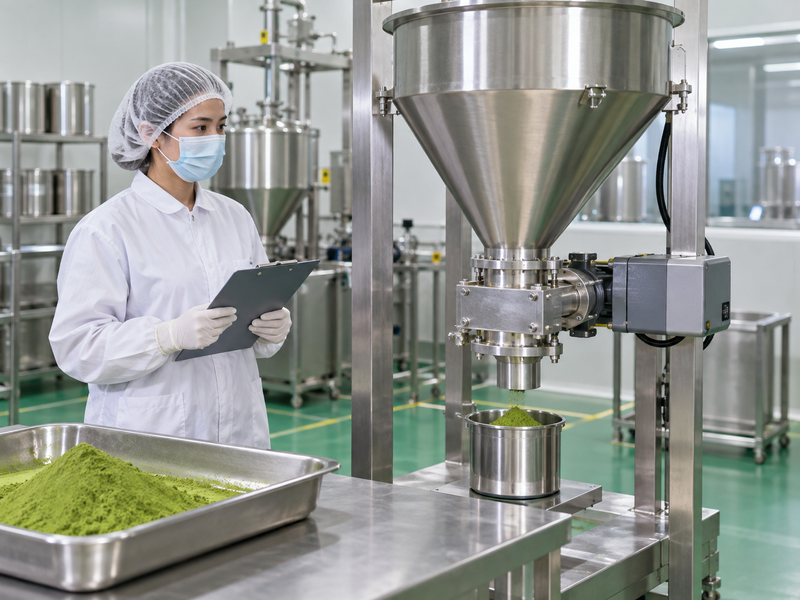
Define the observation terms with the staff running the trial. A stable arch over an outlet, an empty central channel and a stopped feeder can produce different records. Operators should report the visible condition, equipment state and timing. Technical reviewers can then investigate whether the observation reflects powder behavior, setup or another issue.
For matcha powder flowability, record how much material remained and which operating condition preceded the interruption. Keep any intervention within the equipment’s authorized procedures. Staff should not reach into operating equipment or bypass its controls to keep a trial moving. A run requiring intervention needs that fact in its result.
Count interventions as trial evidence. Use a simple event log with the sample, point in the run, observed condition and approved response. This identifies whether interruptions recur during refill, low fill or normal feeding. It also prevents a final average output from hiding downtime or repeated operator assistance.
| Event field | Record | Purpose |
|---|---|---|
| Condition | Visible powder and equipment state | Describe interruption |
| Timing | Run point and fill condition | Locate repeat pattern |
| Response | Authorized intervention | Compare operating burden |
6. How should feeder output be measured?
Keep the time and mass sequence
Choose a measurement plan suited to the operation, using appropriate equipment and your technical team’s sampling requirements. Record individual delivered masses or output over defined intervals. Keep the intended rate and actual operating settings beside the observations. A final total alone can conceal short interruptions and changes during the run. Your matcha powder flowability comparison should include the full sequence used for the acceptance decision. If staff change feeder speed, label the new condition and preserve the earlier data. Compare candidates at the conditions your production plan allows. A powder that meets throughput only under a different setup may still be useful, but that configuration belongs in the decision.
Read the pattern before the average. In a hypothetical trial sheet, equal total output could come from steady delivery or several bursts after pauses. This example illustrates a reporting problem; it does not describe measured matcha behavior. Use the recorded sequence to decide which operating result fits your process.
7. What happens at refill and low hopper level?
Include the operating boundaries
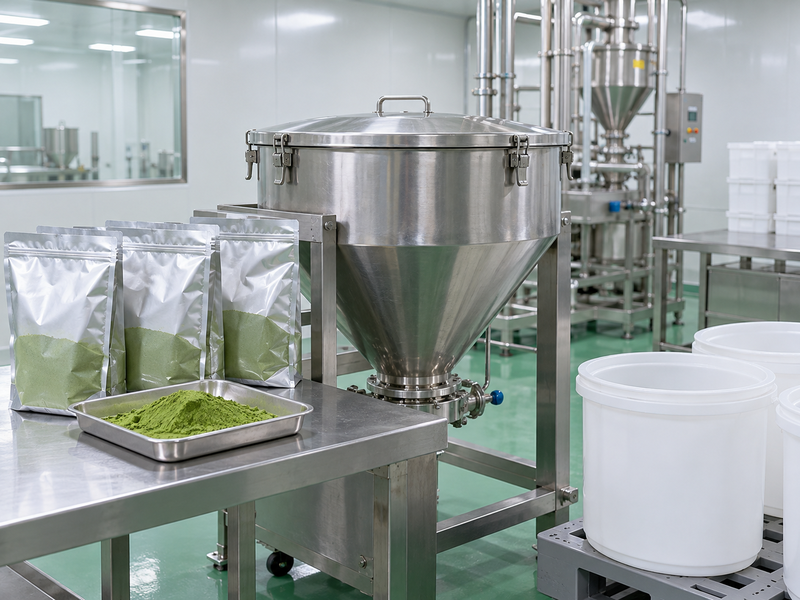
Plan observations around normal refill and the lowest operating level your equipment permits. Record the amount loaded and the material remaining. A trial performed only with a comfortably full hopper may miss conditions that occur near the end of a production batch. Use the manufacturer’s operating guidance when defining the trial boundaries.
Matcha powder flowability can be compared through these phases using the same powder preparation and feeder settings where practical. Record any setting change that forms part of normal production. Do not force an unchanged setting when the approved equipment procedure calls for an adjustment. Your comparison should describe the intended operation accurately.
Keep phase labels on the measurements. Staff can mark pre-refill, post-refill and low-level observations on one sequence. Review whether interruptions or dose changes cluster in a phase. If the development trial cannot cover the full operating range, state that limitation and plan the missing production check before broader acceptance.
| Run phase | Observe | Supporting record |
|---|---|---|
| Routine feed | Output sequence | Settings and mass |
| Refill | Change after loading | Quantity and timing |
| Low level | Discharge and residue | Remaining material |
8. Which laboratory tests may support the trial?
Ask what the measurement represents
Ask the supplier or laboratory which method it proposes and which handling question the method addresses. Powder flow tests can examine different states and stresses. Freeman Technology’s literature discusses consolidated, conditioned and aerated powders and limits of applying one measurement broadly. Freeman powder flow literature. Keep the laboratory’s explanation beside the report.
For matcha powder flowability, laboratory evidence can help investigate a trial observation, but a method name alone does not predict your equipment’s output. Request sample preparation, test conditions and reporting units. Ask how the laboratory connects the result with the hopper or feeder question you identified.
Use tests to answer a defined question. A technical reviewer may choose additional measurement after repeated interruption under a known setup. Record the reason for that work. Avoid selecting a supplier solely because a report labels its powder favorably without showing relevance to the operation you intend to run.
9. How should changes in equipment settings be compared?
Separate candidate and process effects
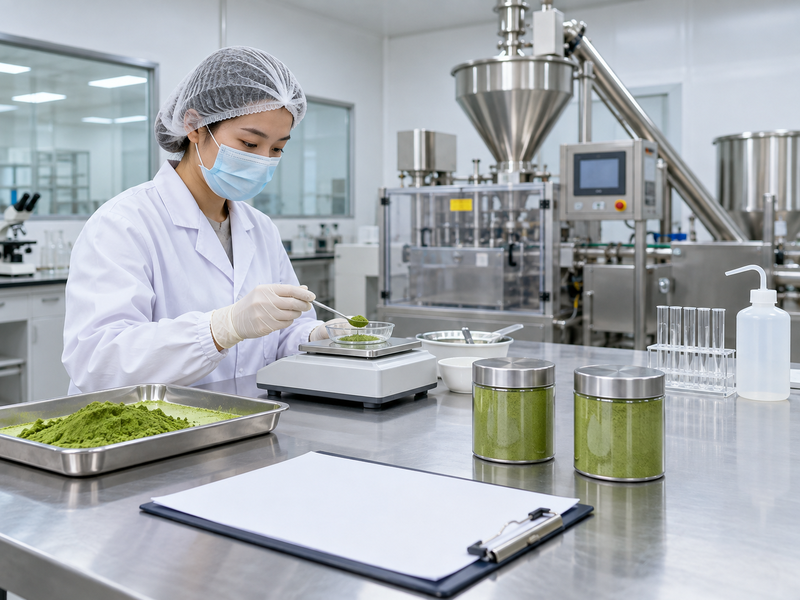
Plan which settings remain fixed during the initial comparison and which your team may change later. Record the original run before adjusting the process for a candidate. That preserves a fair baseline while allowing development staff to investigate whether a practical setting change solves an observed problem. Keep all authorized settings within equipment guidance.
Matcha powder flowability approval can include the settings needed for successful operation. Ask production whether those settings fit its wider line requirements. An adjustment that improves one powder may affect cleaning, throughput or another product. Record these consequences from actual review rather than assume the equipment change has no cost.
Save the accepted setup. Send Matcha Village the relevant hopper and feeder brief with your sample request. Ask which candidate products and supporting evidence it can offer, then evaluate them in your process rather than infer flow from grade names or fine powder descriptions.
| Comparison stage | Settings | Decision record |
|---|---|---|
| Initial comparison | Agreed fixed baseline | Candidate observations |
| Development adjustment | Recorded permitted changes | Revised results |
| Accepted operation | Approved final configuration | Production instruction |
10. What should your supplier acceptance record contain?
Approve a defined operating result
Record product, lot, preparation, equipment, settings and run conditions. Attach the output sequence and event log used for the decision. State which throughput and intervention requirements the sample met. Keep any incomplete production checks visible. A successful development run should be described within its tested scope rather than become a claim about every future line.
Your matcha powder flowability specification can refer to the accepted trial and any agreed laboratory reporting method. Discuss how the supplier communicates changes that may affect handling. Keep normal lot acceptance and repeat trial requirements proportionate to your application and the evidence your team obtained.
Give production a reproducible instruction. Staff need the preparation and setup that produced the accepted result. Purchasing needs the corresponding product code and requirements. The supplier needs an agreed notice route for relevant changes. Keep those records connected so a new sample or operating arrangement receives review before routine use.
FAQ
Q1: What is matcha powder flowability?
It describes powder movement under stated handling conditions, including the equipment and preparation used.
Q2: Does finer powder always flow better?
Do not infer equipment performance from fineness alone. Compare the actual handling operation and relevant measurement evidence.
Q3: Can a full hopper trial cover low-level operation?
Include the permitted low-level and refill conditions in the trial or record them as outstanding checks.
Q4: Should operator intervention appear in the result?
Record authorized interventions and their timing, since they affect practical production performance.
Q5: What should a supplier receive before sampling?
Send the handling question, equipment description, powder preparation and required output observations.
Prepare a hopper and feeder brief with fixed comparison conditions and a permitted adjustment stage. Request identified samples, then record output through routine feed, refill and low level. Keep the accepted setup, intervention record and product requirement together so production and purchasing can repeat the decision on a relevant future sample.