
Matcha water activity describes the equilibrium vapor pressure relationship between a sample and pure water under matched conditions. Buyers need it distinguished from moisture percentage. A method-linked report and controlled sampling make supplier comparisons useful. FDA’s technical guide defines water activity and discusses temperature control during measurement. FDA water activity guide.
Contents
- 1. What does matcha water activity measure?
- 2. Why should moisture content be reported separately?
- 3. Which measurement method should be specified?
- 4. How should measurement temperature be handled?
- 5. How should the powder sample be handled?
- 6. What checks should support the instrument reading?
- 7. How should supplier reports be compared?
- 8. How should acceptance criteria be selected?
- 9. What should the purchasing specification contain?
- 10. How should disagreements be resolved?
1. What does matcha water activity measure?
Define the reported property
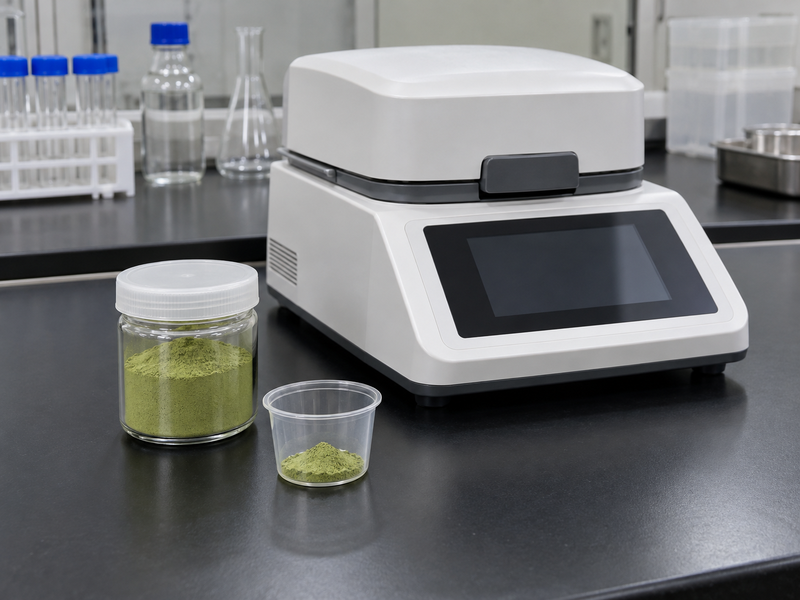
Water activity, commonly written as a_w, relates the equilibrium vapor pressure of a product to that of pure water under the same conditions. It is a ratio reported without a mass unit. FDA’s technical guide describes this definition. FDA water activity definition. Keep the sample temperature and method beside the value when reviewing a supplier report.
Matcha water activity answers a different question from the total moisture result. Buyers sometimes receive both in a specification and assume one can replace the other. Ask the laboratory what it measured and how the result should be written. Avoid converting a moisture percentage into a water activity value without product-specific supporting evidence.
Name the property before comparing results. A supplier report should identify the sample, method and conditions clearly enough for your reviewer to distinguish the measurements. A decimal value alone does not establish the instrument setup, powder handling or acceptance basis. Request those fields before ranking candidate products.
| Reported property | Typical expression | Buyer question |
|---|---|---|
| Water activity | Unitless ratio | At which temperature and method? |
| Moisture result | Stated mass basis | What analytical procedure? |
| Relative humidity | Percentage with conditions | What measurement context? |
2. Why should moisture content be reported separately?
Keep the two requirements distinct
A moisture measurement addresses a quantity determined through its stated method and reporting basis. A water activity measurement addresses the equilibrium relationship described above. Request each field separately when both support your application review. The laboratory should explain the relevant procedure rather than use one generic “moisture” heading for two different results. For matcha water activity, do not assume equal moisture percentages imply equal activity values across different powders or formulations. Your technical team may examine paired results to investigate the product, but a general supplier table cannot establish a conversion. Keep any product-specific relationship within the conditions and evidence used to develop it.
Retain separate method fields. In an illustrative specification, the buyer can list moisture method and basis in one row and water activity method and temperature in another. This is a record design, not a recommended numerical limit. Your product and process requirements determine whether both measurements belong in routine acceptance.
3. Which measurement method should be specified?
Ask for instrument and procedure identity
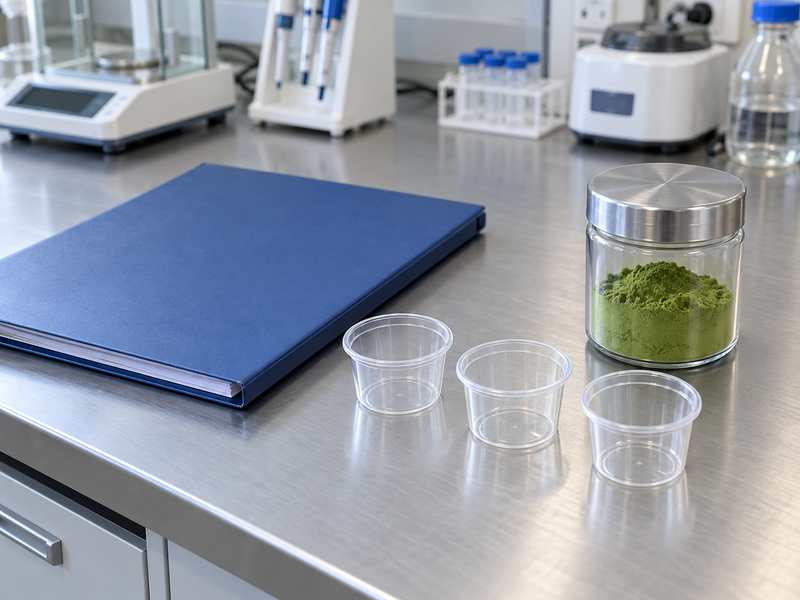
Request the named procedure, current revision and instrument principle used by the laboratory. Ask how it prepares the powder, fills the sample cup and determines a completed reading. Your technical reviewer should check that the method is suitable for the material and question. Avoid prescribing a procedure from a supplier’s promotional summary alone.
Matcha water activity reports should identify method deviations and unusual sample conditions. If two laboratories use different instruments or procedures, ask how the results can be compared for the buyer’s purpose. A side-by-side exercise on matched samples may be useful, but its design and interpretation need technical review.
Agree the method before setting the requirement. A purchasing limit detached from a procedure can produce avoidable disputes. Ask the supplier which method it can provide and discuss comparability with the buyer’s laboratory. Record the accepted reporting arrangement and the route for notifying a later method change.
| Method field | Request from laboratory | Record purpose |
|---|---|---|
| Procedure | Name and revision | Defines measurement |
| Instrument principle | Identified approach | Supports method comparison |
| Completion rule | Stated endpoint | Explains reported reading |
4. How should measurement temperature be handled?
Record the actual controlled condition
Agree the measurement temperature and ask the laboratory to report the condition it used. Sample and instrument handling should follow the procedure. FDA’s technical guide discusses the need for close temperature control in water activity measurement. FDA measurement discussion. Do not import the guide’s historical equipment examples as instructions for a current instrument.
For matcha water activity, matched temperature is part of a useful supplier comparison. A result from one condition should not be ranked against another without review. Ask whether the report includes actual measurement temperature, nominal setting or both. Preserve any explanation supplied by the laboratory.
Keep temperature beside the result. An illustrative buyer worksheet could reject a comparison row as incomplete when its temperature field is blank. That decision concerns evidence quality, not the powder’s suitability. Request the missing condition and allow the technical reviewer to determine whether a repeat measurement is needed.
5. How should the powder sample be handled?
Preserve identity and exposure history
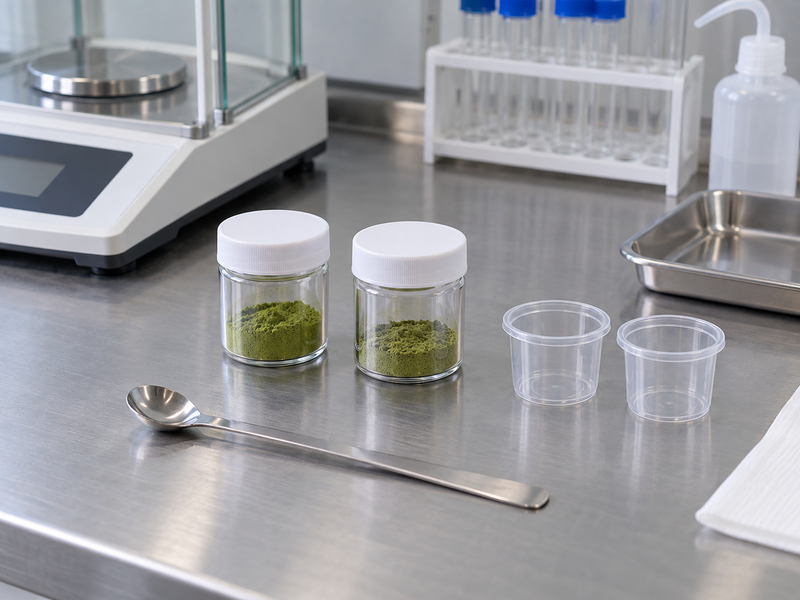
Record the sampled lot, package, collection time and handling before analysis. Use the laboratory’s approved sample container and procedure. Avoid leaving the powder exposed while staff prepare unrelated paperwork. A buyer needs to know whether the reported portion represents the delivered material or a sample that received a different handling history.
Matcha water activity review should include any conditioning or preparation before measurement. Ask who performed it and why. If the laboratory measures powder from an opened working container, label that context. The result may answer an operational question while differing from a check of the sealed incoming ingredient.
Separate incoming and working samples. In an illustrative trial, a buyer might examine a sealed delivery portion and a production working portion. Retain their identities and conditions separately. The comparison can help investigate the operation, but it does not establish a universal relationship between exposure time and activity for every matcha powder.
| Sample field | Record | Comparison boundary |
|---|---|---|
| Lot and package | Source identity | Delivered material |
| Handling | Opening and transfer | Exposure history |
| Preparation | Conditioning if used | Measured state |
6. What checks should support the instrument reading?
Request the method’s verification evidence
Ask the laboratory how it checks instrument performance under the selected procedure. Request the relevant summary of reference checks, maintenance and result review. The buyer needs enough evidence to understand the measurement’s reliability without collecting every laboratory service record. Keep the review linked to the instrument and method used for the sample. For matcha water activity, a printed instrument value should not close questions about an incomplete or unusual run. Ask how staff handle unstable readings and method deviations. Request repeated analysis when the technical reviewer identifies a reason, using the laboratory’s documented procedure. Preserve the original observation and the reason for repeating it.
Read the laboratory comments. A report may include qualifications about sample condition or measurement completion. Keep those comments beside the value when entering results into a spreadsheet. Do not remove them to make supplier rows appear consistent. A qualified result may require a different comparison or another sample.
7. How should supplier reports be compared?
Match fields before ranking numbers
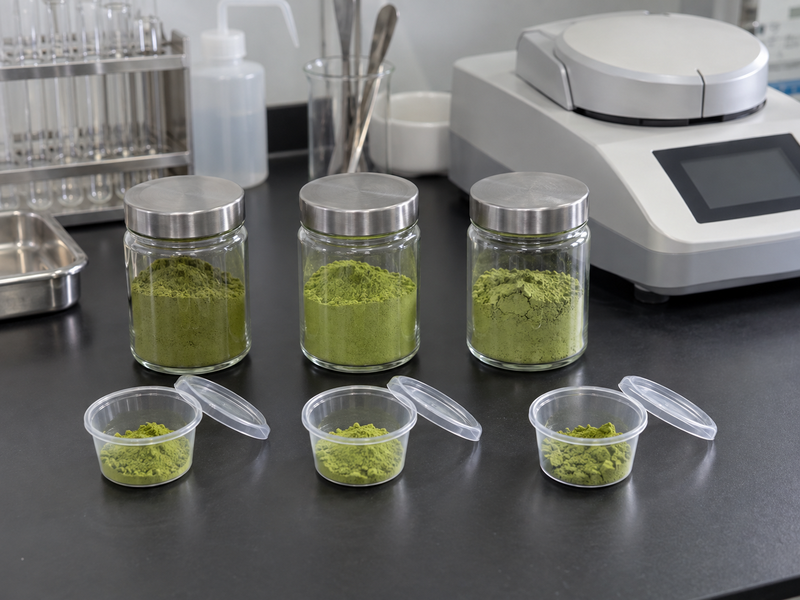
Put product identity, lot, sample handling, method and temperature into the comparison sheet. Check these fields before examining the values. If a field differs, ask whether the technical reviewer can use the comparison. Do not reward the lowest reported number merely because the spreadsheet makes it easy to sort.
Your matcha water activity comparison should record repeat results and any summary the laboratory provides. Keep numerical acceptance criteria tied to the buyer’s technical basis. A hypothetical value used to explain a form should be labeled illustrative and kept outside the evidence supporting product approval.
Keep the reporting fields beside the measured result. The certificate of analysis guide covers the broader lot report. Where supplier and buyer results disagree, review sample identities and procedures before assuming a production problem. Ask the laboratories for the relevant information and retain their explanation. The decision should state whether the disagreement was resolved or remains an open item.
| Comparison field | Matched? | Follow-up if different |
|---|---|---|
| Sample state | Incoming or working material | Clarify purpose |
| Method | Procedure and revision | Technical comparison |
| Temperature | Reported condition | Review or repeat |
8. How should acceptance criteria be selected?
Require a product-specific basis
Ask your technical team what question the water activity requirement answers for the ingredient and finished application. Use relevant product and process evidence when selecting criteria. A value borrowed from another food or an online article does not establish a matcha acceptance limit. Keep the rationale and method connection in the specification review.
Matcha water activity alone should not become a blanket statement about safety, shelf life or retained flavor. Your company’s food safety and product development processes consider the relevant evidence for those claims. If the buyer needs a defined storage or finished product outcome, plan an appropriate study rather than infer it from a single ingredient reading.
Ask what supports the criterion. Water activity research may use a particular powder, package and exposure condition. Read the complete method and results before applying a finding to your order. Ask your technical reviewer whether those conditions match the proposed ingredient and use.
9. What should the purchasing specification contain?

Write the full reporting requirement
State the property, method, measurement temperature, sample context and reporting format. Add a numerical criterion only after the buyer’s technical review establishes its basis. Identify how results connect with the offered or delivered lot and what happens when a report is incomplete. Keep analytical acceptance separate from commercial shipment release until the responsible reviewers decide.
For matcha water activity, agree notice when the supplier changes the procedure, laboratory or relevant sample preparation. The buyer needs to judge comparability with previously accepted results. A new instrument may provide useful measurements, but the change should not disappear within a generic COA field without explanation.
Request current product-specific evidence. Ask Matcha Village about sample and quality document support. Ask what water activity measurement it can provide for the chosen product and method. Do not claim that every product or shipment receives the measurement merely because the company offers quality documentation.
| Specification item | Content | Owner |
|---|---|---|
| Measurement | Method and temperature | Technical reviewer |
| Sample identity | Lot and handling context | Supplier and laboratory |
| Acceptance | Supported criterion and action | Buyer approval team |
10. How should disagreements be resolved?
Review the evidence in sequence
Check product and lot identity, sampling history, method and temperature before requesting more analysis. Ask both parties to preserve the information behind their reported values. A disagreement cannot be interpreted fairly when one sample came from an opened working container and another came from a sealed bag under different measurement conditions.
Your matcha water activity agreement should identify who reviews the comparison and how an agreed repeat check is arranged. State material status while the question is unresolved. Keep any repeat result with its method and sample record rather than replace earlier data without explanation. The approval file should show the reason for the disposition.
Close the specific reporting question. The outcome may correct a field, clarify a method or require new sampling. Record that outcome and any change to the specification. Give purchasing the approved requirement and quality the supporting evidence so a similar question can be handled consistently on a later order.
FAQ
Q1: What is matcha water activity?
It is the equilibrium vapor pressure ratio for the sample relative to pure water under matched conditions.
Q2: Is it the same as moisture percentage?
Keep them separate. They describe different properties and require their own methods and reporting fields.
Q3: Why must measurement temperature appear?
Temperature is part of the measurement conditions needed for a meaningful comparison between reports.
Q4: Can one value establish shelf life?
Use relevant product and process evidence. A single ingredient reading does not establish a finished product’s shelf life.
Q5: What should buyers request from the supplier?
Request lot identity, sample context, method, temperature, result qualifications and any agreed acceptance basis.
Send a method-linked reporting brief with the sample context and measurement temperature. Ask the supplier which evidence it can provide for the ordered product. Have your technical team review comparability and acceptance rationale, then retain the approved requirement and disagreement procedure with the lot document review.