
Matcha powder recipes are easy to collect and harder to put into production. A formula that looks vividly green in a home bowl may taste weak after milk, heat or a long display period. For cafés and food brands, a useful recipe needs a measured tea dose, a clear method and a plan for repeat lots. The seven examples below are development starting points, not validated commercial formulas. Each should be tested with the actual matcha, ingredients, equipment, package and food-safety controls before it is sold.
Contents: Set-up · Base · Soda · Oats · Yogurt · Granola · Bites · Glaze · Scale · Powder
1. What Should Be Fixed Before Testing Recipes?
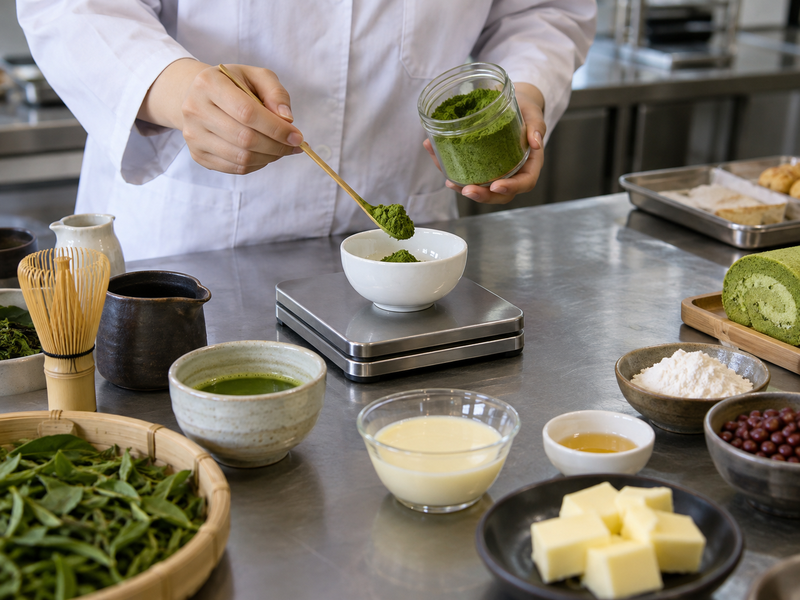
Choose one powder and one way to measure it
Select a representative production sample of pure matcha powder and record its lot. Weigh the powder rather than relying on a spoon; different grinds and packing levels can make a spoonful vary. Define the base ingredients, portions and equipment before changing matcha dose. Otherwise, a sweeter yogurt or a longer bake can be mistaken for a powder difference. Taste the powder in water first to check for obvious defects, then evaluate it in the target product.
Set a purpose for each recipe. A café drink should be quick to make and pleasant at handoff. A retail snack needs a stable package and a label supported by the final product. The small formulas below use familiar ingredients and conservative amounts as trial points. They do not specify a commercial shelf life or safety process. A qualified production team must validate any packaged food or beverage. Track sensory results, color, texture, cost per serving and waste so a promising idea can become a repeatable item.
| Pilot control | Record | Reason |
|---|---|---|
| Matcha | Product and lot | Repeatability |
| Dose | Grams, not spoon size | Cost and flavor |
| Process | Time and tool | Texture |
| Finished unit | Weight or volume | Fair comparison |
2. How Do You Make a Basic Matcha Concentrate?
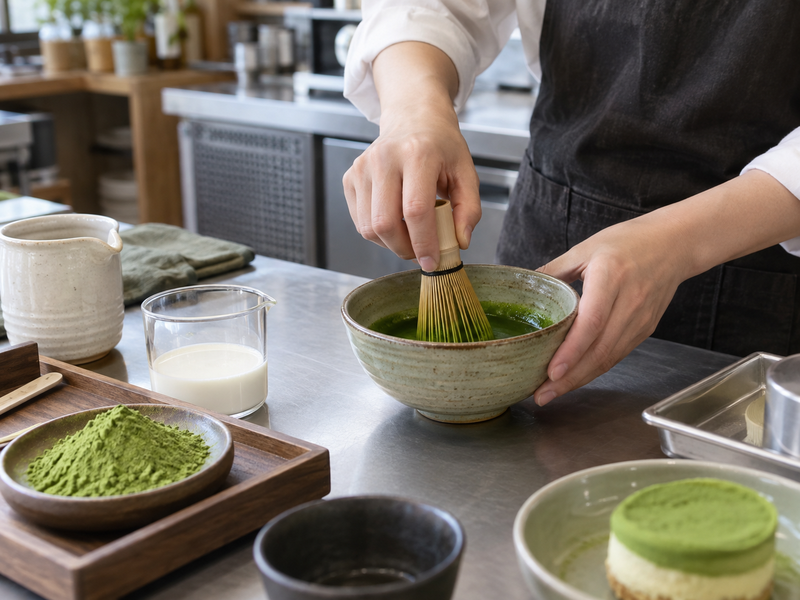
Recipe 1: a flexible tea base
For a small trial, whisk 2 grams of matcha with 60 milliliters of water until the bowl has no dry pockets. Sift soft compacted powder first if necessary. Taste the base plain, then decide whether to use it as a short drink or add it to a larger formula. Water temperature should follow the supplier’s starting guidance and the flavor target selected by the team. Record it. A base made with an unknown amount of water changes the strength of every recipe that follows.
This is a suspension of tea particles, so some settling can occur. Use the base promptly in a café or set a documented hold and re-mixing rule after testing it. If a large batch is made, compare cups from the beginning and end of service. The concentrate is not a preservation method. It simply gives powder a smooth first contact with liquid before ice, milk or other ingredients make mixing harder.
For product development, this base is useful because it separates powder performance from other flavors. A bitter or gritty base deserves attention before it enters a dessert.
3. How Do You Build a Matcha Citrus Soda?
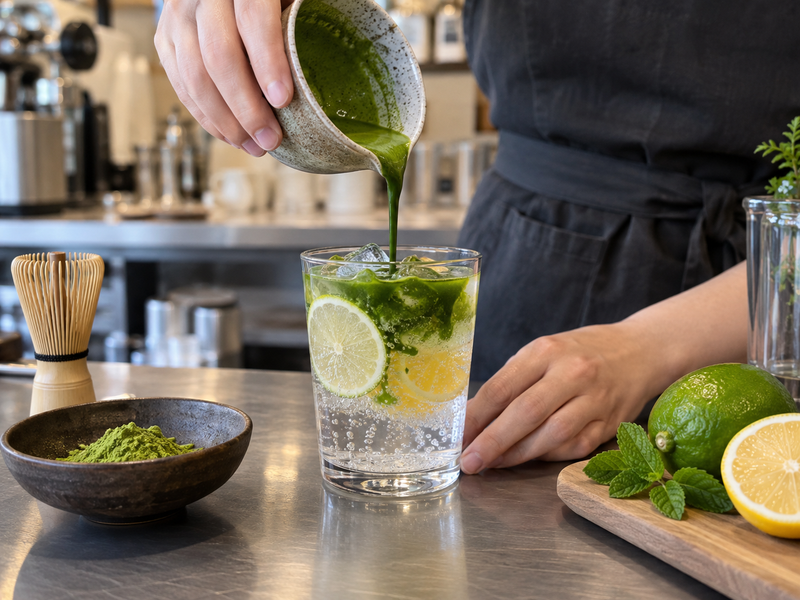
Recipe 2: keep the tea identifiable
Start with one portion of the smooth base above. In a separate test cup, combine it with about 150 milliliters of chilled sparkling water, measured ice and a small measured amount of citrus syrup or juice. Add the sparkling water last to limit foam loss. Taste immediately and after a short carry time. Acidity can change the tea’s perceived bitterness and color, so compare a low and a higher citrus level. If the drink tastes only of citrus, reduce the flavoring or use a powder with a more noticeable tea character.
For a café, decide whether the matcha is mixed through the cup or poured as a visible layer. A layer may look attractive but can leave uneven flavor unless customers stir. Specify that service step. Keep a standard cup size and ice amount so the drink does not vary between shifts. A bottled sparkling version is a different project: carbonation, acidity, process and shelf life need professional validation in the final package.
The name on the menu should reveal sweetener if the syrup is part of the standard formula. “Citrus matcha soda” is more honest than a plain-tea description for a sweetened drink.
| Soda variable | Starting test | Check |
|---|---|---|
| Matcha base | One measured portion | Tea presence |
| Sparkling water | About 150 ml | Dilution |
| Citrus | Two measured levels | Acid balance |
| Ice | Fixed scoop or weight | Carry-time flavor |
4. How Do You Make Matcha Overnight Oats?
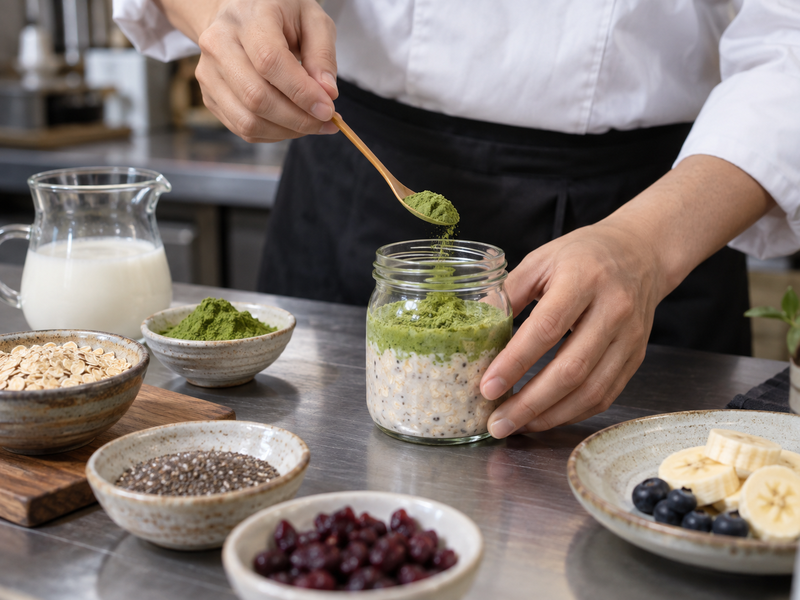
Recipe 3: spread the tea through the liquid first
For one pilot portion, mix 2 grams of matcha into 120 milliliters of milk or a chosen plant drink until smooth. Stir that liquid into 50 grams of rolled oats and a measured sweetener if the product needs one. Chill under the operation’s food-safety procedure, then taste the next day. The numbers are development points. Oats absorb liquid, and different milks can produce a thick or loose result. Adjust one variable at a time and record the final serving weight.
Matcha can collect in green streaks if dry powder is folded directly into wet oats. A smooth liquid base helps the product look and taste consistent. Fruit or nuts can be added after the plain version is approved, but each addition changes allergens, label and shelf-life questions. For a refrigerated retail pot, a café recipe is not enough; validate the finished pack, microbial safety and display period through a qualified team.
Taste the product both cold from storage and after a few minutes at serving temperature. Tea flavor can be perceived differently as the oats warm.
5. How Do You Make a Matcha Yogurt Swirl?
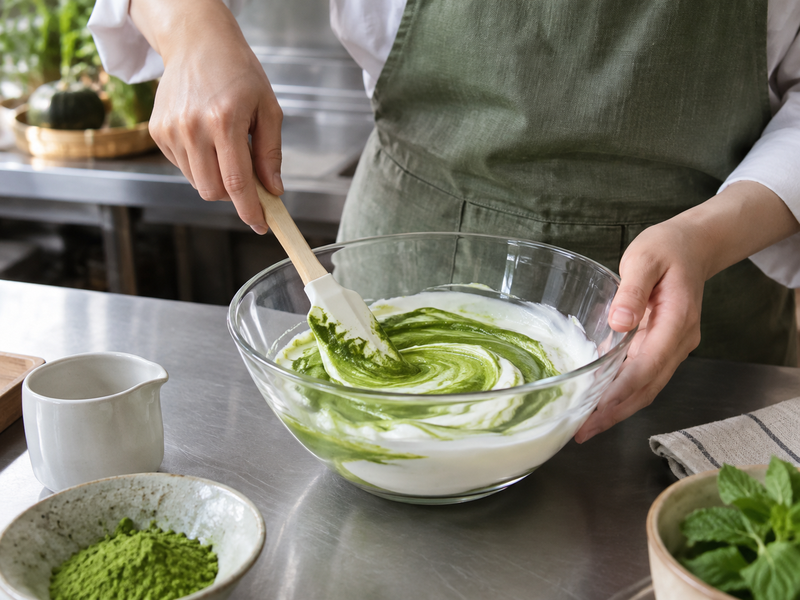
Recipe 4: separate visual appeal from uniform taste
Mix 1 gram of matcha with a small measured spoonful of water or yogurt to make a smooth paste, then blend it into 150 grams of plain yogurt for an initial trial. Adjust dose and sweetener based on the yogurt’s acidity and the target customer. A thick swirl can look appealing in a clear cup, but it may give one intensely green spoonful and several nearly plain ones. Decide whether the product is meant to be stirred before eating or blended uniformly.
Use the exact yogurt that stores or manufacturers will buy. A sweetened vanilla yogurt can cover tea flavor; a tangy unsweetened yogurt may make the matcha seem sharper. Check color after the intended display time under normal refrigeration and light. Keep any fruit layer separate during the first comparison so the team knows whether a change comes from the tea or the fruit preparation. A packaged yogurt snack requires its own safety, allergen and shelf-life review.
The recipe should state the matcha dose per finished pot, not only per mixing bowl. That makes ingredient declarations and cost calculations possible.
6. How Can Matcha Be Added to Granola?
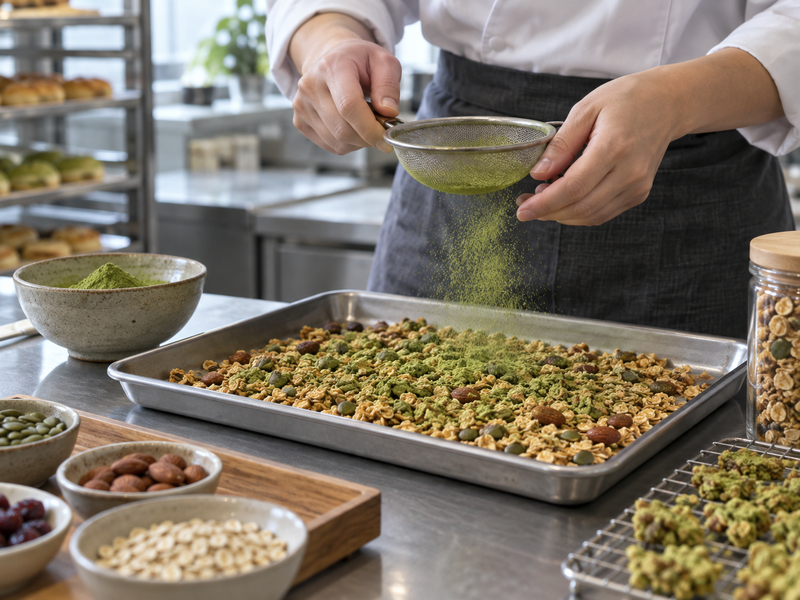
Recipe 5: protect the tea from needless heat
For a pilot, prepare a plain granola batch with the business’s normal validated baking method. After cooling, test a light coating made from 2 grams of matcha per 100 grams of finished granola combined with a suitable binder that fits the formula. This post-bake route is a starting hypothesis: it may preserve more recognizable tea aroma than mixing matcha into a long hot bake, but the binder and final moisture need testing. Compare it with a small matcha-in-bake trial if the operation wants an integrated color.
Check even distribution, dusting, clumping and the feel of the granola after packaging. A powdery surface may look green in a photograph but leave residue in a customer’s hand. A wet coating may change crunch and shelf life. Do not borrow the shelf life of plain granola. The final formula, package and process need validation. Record matcha cost per finished portion and whether the dose is high enough to taste alongside nuts, seeds and sweetener.
If the product is sold with an organic or origin claim, verify that every relevant ingredient and handling step supports the claim.
| Granola trial | Advantage to test | Risk to check |
|---|---|---|
| Add before baking | Integrated powder | Heat loss of color or aroma |
| Coat after baking | Tea-forward surface | Dusting or moisture |
| Blend into clusters | Distinct green pieces | Uneven dose per portion |
7. How Do You Make Matcha Nut-Butter Bites?
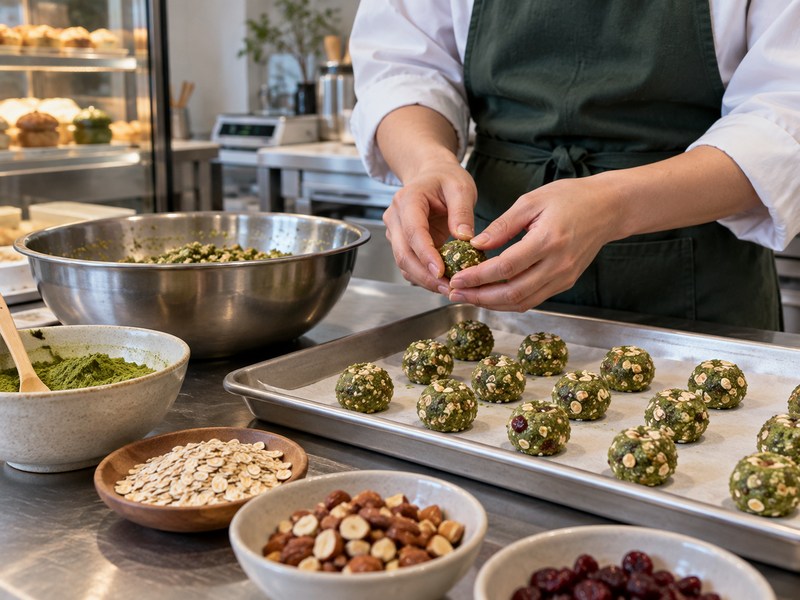
Recipe 6: use a measured cold-mix format
For a small test, combine 100 grams of nut or seed butter, 60 grams of finely milled oats, a measured sweetener or binder suited to the formula, and 3 grams of matcha. Mix until the tea is evenly distributed, then portion by weight. Adjust the binder and powder only after checking texture. The example is not a validated food-safety or allergen plan. Nut products need clear allergen controls and an appropriate production environment.
This format avoids baking, so tea color may remain easy to see. Still, fat and sweetener can cover aroma. Taste a bite after preparation and again after the planned storage period. Check whether the surface dries, becomes oily or collects loose green powder. A chocolate coating would change the recipe and may bury the matcha, so evaluate the plain bite first. Keep a per-piece matcha calculation; a large batch figure can sound impressive while each small portion contains very little tea.
For retail packs, test how pieces behave during transport and in the final package. A café tray and a shipped pouch impose different stresses.
8. How Do You Make a Matcha Glaze?
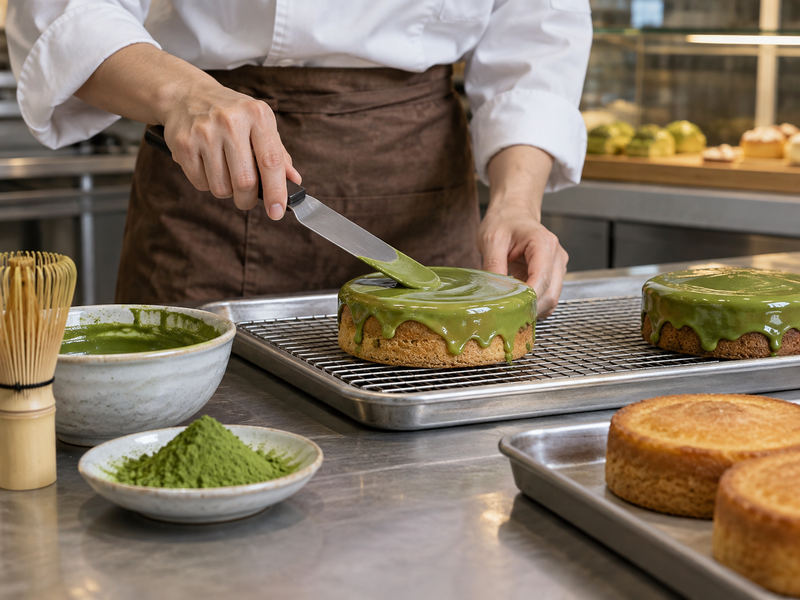
Recipe 7: blend powder into a small liquid phase
For a pastry pilot, sift 2 grams of matcha and whisk it into a small measured portion of liquid. Blend that base into 100 grams of the operation’s standard glaze. Apply it to a cooled test pastry and assess color, flavor and set after the usual display time. The glaze itself may contain sugar, dairy or other ingredients, so the finished product’s label and storage cannot be inferred from the matcha alone. Use the pastry team’s existing process as the starting point.
Test thickness before changing tea dose. A runny glaze might need a formula adjustment unrelated to matcha; adding more powder to make it greener can introduce bitterness or grit. Check whether the tea remains visible under bakery lighting and whether the surface changes color after display. Compare a thin coating and a thicker one at the same matcha concentration to see whether the visual effect comes from coverage rather than ingredient quality.
This is a flexible application for a powder whose subtle notes might be lost inside a long-baked cake, but the final product still needs its own taste and cost review.
| Glaze check | At application | After display |
|---|---|---|
| Color | Even green | No unexpected dulling |
| Texture | Smooth | No grit or cracking |
| Flavor | Clear tea note | Still balanced with pastry |
9. What Changes When These Recipes Are Scaled?
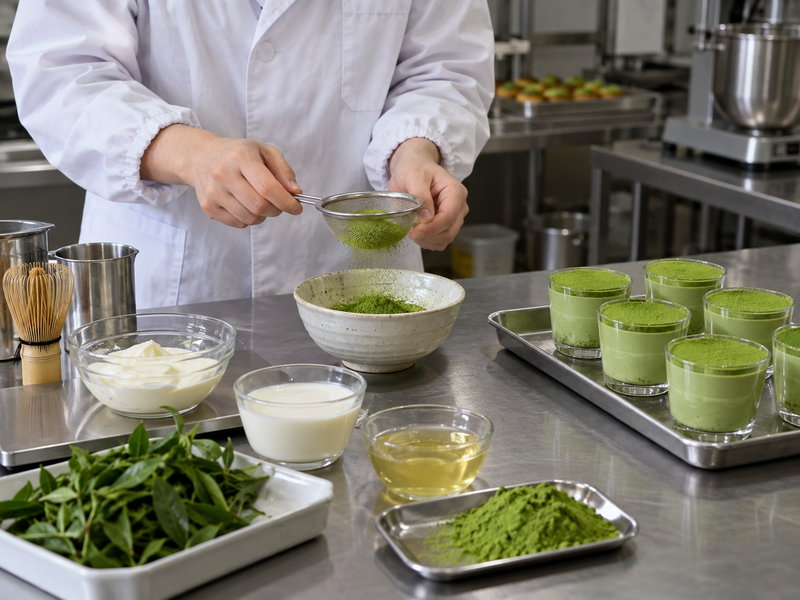
Convert kitchen ideas into controlled processes
Multiply ingredient weights to estimate a batch, then validate the larger process. A bigger bowl or mixer can leave dry powder at the edges. Powder can settle in a beverage pitcher and distribute unevenly across servings. A coating that works on ten granola portions may make large production equipment messy or inconsistent. Test the first, middle and last units from a pilot batch. Record ingredient lots, order of addition, mixing time, yield and waste.
Packaging and storage become part of the recipe at scale. A chilled oat cup, dry granola pouch and fresh café soda need different controls. Ask a qualified food technologist or manufacturer to review safety, shelf life and labels for packaged products. Keep sample photos under neutral light and taste the product at the point customers receive it, not only when it leaves the mixer. The target is a repeatable product with a truthful menu or pack description.
For OEM work, agree on how the matcha powder lot can change and how a replacement batch will be approved before production starts.
10. Which Powder Belongs in Each Application?
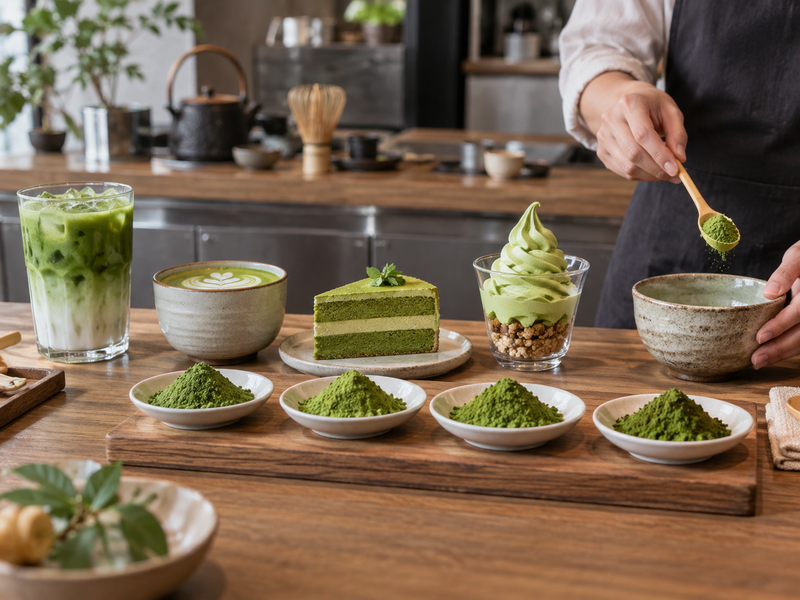
Match performance to the process
Plain and lightly flavored drinks expose harshness and coarse texture. Yogurt and oats add acidity or body. Granola and glaze may need stronger color and flavor to survive surrounding ingredients. Request a small set of representative powders rather than assuming the same expensive grade is best everywhere. Test each at the same initial dose, then compare the cost at the dose that meets the product target. Matcha Village’s company material describes pure matcha, latte and other application formats; ask for the exact specification and production sample relevant to each pilot.
Keep product identity clear. A sweetened premix is not interchangeable with pure matcha gram for gram. Check ingredients, certifications, test documents and pack size. A café may use one powder across several recipes to simplify inventory, but only if it performs in all of them. A manufacturer may prefer separate grades to control cost and color. Either approach should be documented in a purchasing specification and reviewed when a lot changes.
| Application | First powder check | Finished-product check |
|---|---|---|
| Water or soda | Smooth flavor | Balance after dilution |
| Yogurt or oats | Dispersion | Color and texture after hold |
| Granola | Aroma after process | Dusting and crunch |
| Glaze | Fine texture | Display color |
FAQ
Q1. Can one matcha powder be used in every recipe?
It can be tested across formats, but a powder that is excellent in water may not be economical in a sweet food. Compare performance and cost in each final formula.
Q2. Why does matcha streak in yogurt or oats?
Dry powder can form pockets when added to a thick base. Mix it into a small liquid or yogurt portion first, then blend that smooth base into the full batch.
Q3. Should matcha be added before or after baking granola?
Test both methods in the actual process. Post-bake coating may protect tea aroma but can affect dusting and shelf life; baking it in can alter color and flavor.
Q4. Are the amounts above ready for commercial production?
No. They are pilot starting points. Validate sensory quality, safety, shelf life, labels and process with the actual ingredients and package before sale.
Q5. What is the best way to compare recipe costs?
Calculate matcha and other ingredient use per finished serving at the dose that tastes right. Include waste, packaging and labor, not only powder price per kilogram.
For more home recipe ideas, see What to Cook Today’s matcha recipe collection. For bulk ingredient selection, see our matcha buyer guide. Record every pilot formula before it becomes a menu or retail claim.