
A matcha drinks menu can become difficult to run long before it looks crowded to guests. Each new syrup, milk, size, and topping creates a recipe, inventory, and training decision. A small café needs a clear set of drinks with shared preparation where it helps and meaningful differences where customers notice them. Start with the bar’s capacity and the cup you can make consistently, then build the menu around it. Our matcha beverage formulation guide helps teams compare powders and ingredients in the finished drink.
Contents
- 1. What customer choices should the menu cover?
- 2. Which drink should be the anchor?
- 3. How many matcha products are needed?
- 4. How should sizes and sweetness work?
- 5. Which variations deserve separate names?
- 6. Can the station make the proposed menu?
- 7. What should every recipe card contain?
- 8. How should menu copy describe ingredients?
- 9. How should the pricing grid be built?
- 10. When should the menu be revised?
1. What customer choices should the menu cover?
Map needs before names
List the common guest decisions: straight tea or milk, hot or iced, sweetened or without added sweetener, familiar or exploratory. The menu does not need a separate named item for every combination. It needs a clear route to a drink that fits each important need. Observe actual orders and questions for a few weeks if the café already sells matcha. If it is a new program, run a short test with a small set rather than assuming an online list matches local demand.
The supplier menu-planning article offers one commercial approach, but its numeric sales and timing claims should not be transferred to your site without verification. Build your own map with guests, station capacity, and ingredient overlap. A café with a small bar may need a particularly focused lineup. A drink belongs when it answers a real choice and can be explained in a sentence at the counter.
2. Which drink should be the anchor?
Make the most repeatable cup first
Choose one core matcha drink likely to sell regularly, such as an iced latte or a straight tea depending on the café’s customers. Develop it with a weighed powder dose, measured water and milk, chosen cup, and passing flavor standard. A good anchor is not necessarily the most photogenic item; it is the drink staff can make reliably and customers understand. Test it at peak service before building several variations on it.
The anchor gives the buyer a reference for selecting matcha. Powder should be evaluated in that cup, not only in a supplier tasting bowl. Record dispersion, aroma, flavor, color, and cost per serving. If another drink needs a different powder, justify the extra inventory and training. A stable anchor also makes seasonal trials clearer: staff can compare a pumpkin or citrus version against the same approved base. Without that reference, every new menu item starts from a different guess.
| Anchor check | Record | Passing evidence |
|---|---|---|
| Powder dose | Grams per cup | Repeatable flavor |
| Build | Tool and sequence | No clumps |
| Service | Ticket time | Works during rush |
3. How many matcha products are needed?
Separate application fit from grade language
One matcha may serve straight tea and lattes acceptably; another café may choose separate products because the straight cup and large milk drink need different flavor profiles. Test candidate powders in the actual formats with the same measured dose before deciding. A grade word alone does not tell the buyer how tea will taste under milk or syrup. Ask suppliers for specifications and samples representative of the proposed order, then document which product goes into each recipe.
Every additional matcha SKU adds storage, labeling, ordering, and staff-error risk. If two products are used, keep containers clearly identified and place them where the correct choice is easy. Watch whether the premium product is being used in a drink where its distinguishing character disappears. Do not declare one product universally superior; compare sensory result and cost in the finished cup. Recheck the lineup when a new lot arrives, since agricultural ingredients can vary.
4. How should sizes and sweetness work?
Avoid an uncontrolled matrix
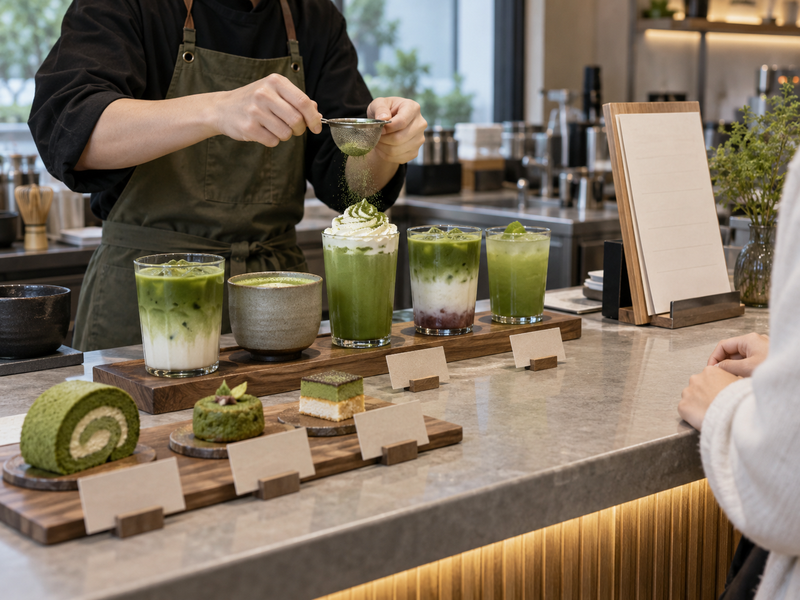
Every extra size multiplies recipes when powder, milk, ice, and syrup do not scale in a straight line. Start with one approved size per main format, then add another only after tasting and costing it separately. A larger iced latte may use more ice and milk but need a different matcha dose to preserve flavor. Write the finished fill level and actual liquid amount. Staff should not treat a large cup as a small recipe with free-poured milk.
Define house sweetness and a small number of measured adjustments. A sweetened latte blend may already contain sugar, so “unsweetened” can be inaccurate even with no added syrup. Calibrate pumps or measure syrup by volume. Put the same choices on the menu, ordering screen, and recipe card. A guest should know whether “less sweet” changes added syrup or requires a different base. A clear option grid makes ordering faster and costing more reliable.
| Choice | Recipe implication | Menu wording check |
|---|---|---|
| Larger size | Retest dose, milk and ice | State available size |
| Less sweet | Defined syrup reduction | Know base ingredients |
| Milk alternative | New cost and flavor test | Explain actual option |
5. Which variations deserve separate names?
Require a meaningful difference
A flavored drink should add a distinct taste or occasion that guests can recognize. A vanilla latte and a lightly sweetened house latte may overlap too much to justify separate boards, buttons, and stock. Test variations side by side with the same base and ask tasters to describe the difference without seeing the names. If they cannot, offer one as a measured modification instead. A seasonal special can earn a temporary slot if it attracts different orders and uses ingredients efficiently.
Consider the work behind the name. A cold-foam item needs batch preparation, chilled storage, and a topping yield check. A sparkling matcha needs a carbonated mixer and a gentle build. A smoothie needs a blender and cleaning. Put those requirements beside estimated demand before committing to the menu. A short list of distinct items can feel more generous than a long list of nearly identical sweet drinks because guests can actually understand the choice.
6. Can the station make the proposed menu?
Rehearse several orders together
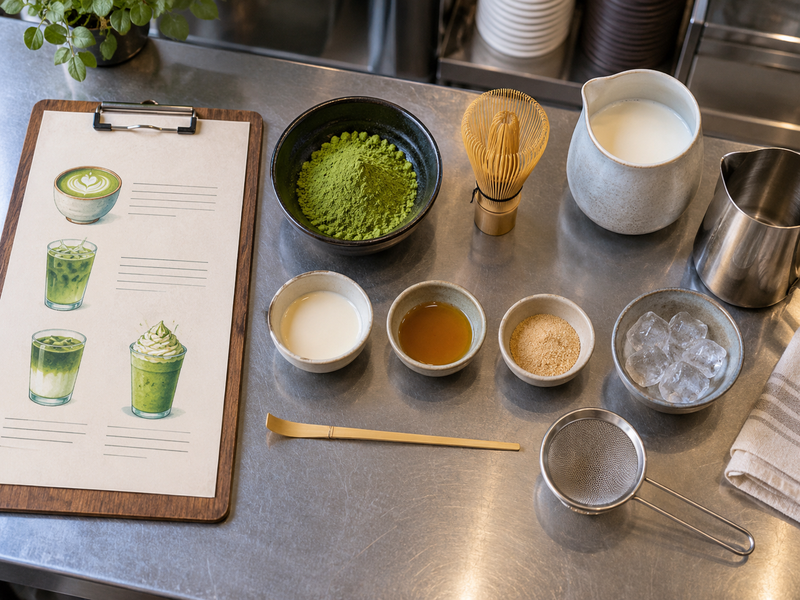
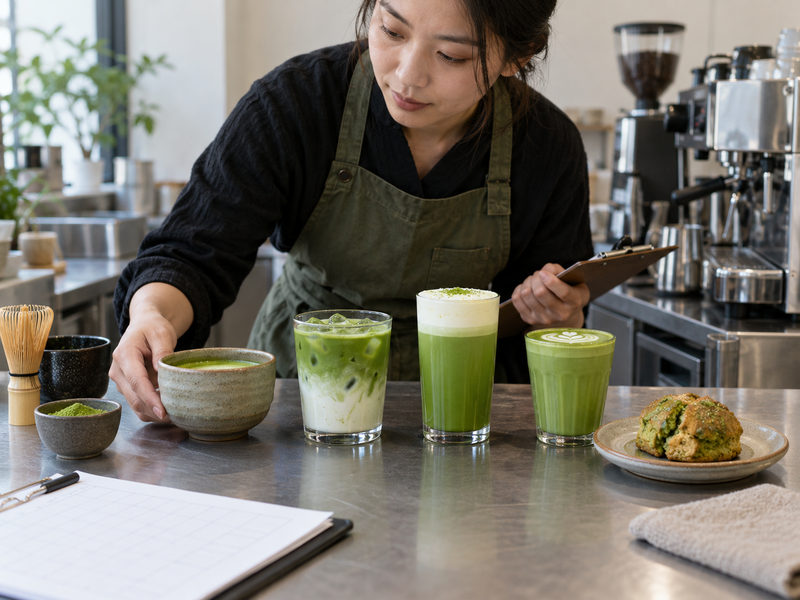
Draw the station with matcha, scale or portions, water, mixing tool, milk, ice, cups, sweetener, and cleaning area. Then run a mock queue containing different drink families and modifications. Time the full ticket, including tool reset and restocking. A recipe that takes a minute in an empty test kitchen may create a bottleneck when the same worker also takes payments and prepares coffee. Move tools or narrow the menu before asking staff to compensate with shortcuts.
Check cold storage and ingredient handling with the site lead. Perishable milk, prepared bases, and toppings need a procedure appropriate to the location. The FDA Food Code is a US model reference; local adopted requirements govern a specific café. Make menu decisions from the actual equipment and staffing. If the bar cannot support two specialty toppings during peak, offer one or restrict the feature window rather than relying on heroic service.
| Station element | Capacity question | Trial evidence |
|---|---|---|
| Mixing point | Can two orders overlap? | Queue rehearsal |
| Chilled storage | Is stock within reach? | Restock time |
| Cleaning | Can tools reset safely? | Full ticket timing |
7. What should every recipe card contain?
Describe the saleable cup
Each card should name the matcha product, grams of powder or blend, water amount and preparation method, milk or mixer volume, sweetener, ice where relevant, cup size, assembly order, and passing appearance. Add the exact allowed modifications. A photo is helpful for fill and color, but it cannot replace measurements. The card should be short enough to use at the station and dated so an older version cannot quietly return.
Ask staff from more than one shift to make the drink without verbal help. Compare flavor, fill, and time. If cups vary, identify the unclear instruction or unreliable tool. A “scoop” may need calibration; a “splash” may need milliliters. Keep the ingredient and allergen record linked to the cards, particularly when premixes or alternative milks are used. The menu, point-of-sale button, and recipe card should all describe the same item. That connection prevents remakes and makes a supplier change easier to manage.
8. How should menu copy describe ingredients?
Answer the question a guest actually has
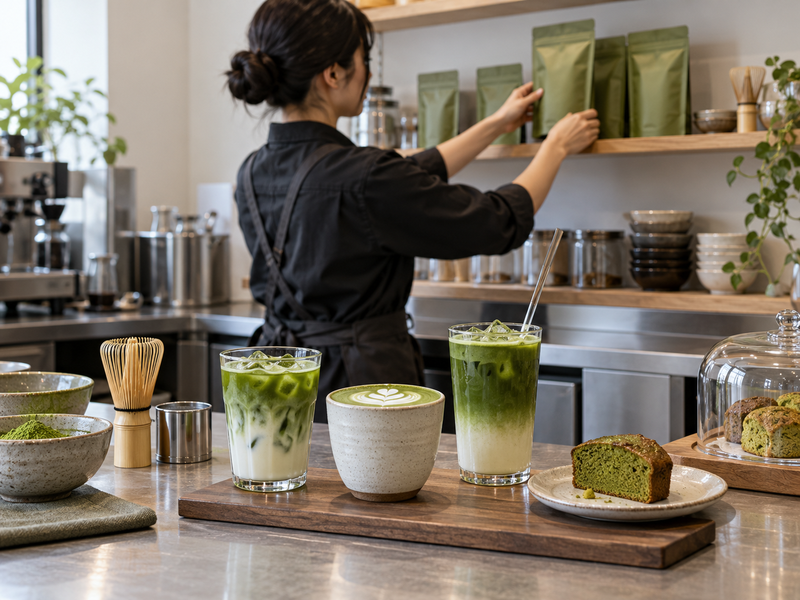
Name the main base, sweetness, and serving style in plain language: matcha with steamed milk; iced matcha with a measured vanilla syrup; straight whisked tea. Avoid broad health or energy promises. Matcha contains caffeine, but a generic online cup figure cannot establish the amount in your recipe. If a numeric statement is desired, connect product-specific supplier data to the weighed dose and have the claim reviewed for the target market.
Make ingredient language match substitutions and premixes. “No added sugar” requires checking every part of the drink, not only the final syrup step. Staff should be able to answer common questions about dairy, nuts, and sweetness from an approved ingredient record. Keep copy short enough for a guest standing in line. If a menu item needs a paragraph to explain why it differs from the drink beside it, the architecture may be too complicated. Clear copy is part of service speed.
| Menu phrase | Verify from | Avoid implying |
|---|---|---|
| Unsweetened | Complete ingredient list | No sugar when base is sweetened |
| Dairy-free option | Product and handling | No cross-contact automatically |
| Matcha strength | Recipe dose | Medical effect |
9. How should the pricing grid be built?
Cost each served version
Calculate matcha grams times current cost per gram, then add milk, syrup, mixer, topping, cup, lid, and expected waste. Repeat for every size and common substitution rather than copying one percentage across the board. A larger iced cup may use only slightly more matcha but much more milk and packaging. A topping may add labor and batch waste that a simple ingredient worksheet misses. Use current invoices and actual portion measurements.
Compare contribution and ticket time across the menu. A drink that looks profitable from ingredient cost alone may slow the bar or produce many remakes. Record the costs of special equipment and staff training in the broader launch decision. Price using the business’s policy and local market; there is no universal matcha markup. Review the grid when supplier prices or portion standards change. The most useful sheet lets management see exactly which recipe input caused a margin shift.
10. When should the menu be revised?
Watch sales, waste, and guest questions
Review orders by item and size alongside ingredient waste, remakes, stockouts, and common questions. A drink that sells little but introduces customers to straight matcha may still have a deliberate role. A flavored latte that overlaps the anchor and uses a unique syrup may not. Make changes in controlled steps: new wording, then placement, then recipe or price if evidence supports it. Changing all at once makes the outcome difficult to interpret.
Revisit the menu after a new matcha lot, milk supplier, cup, or station layout changes. Retest affected drinks and update cards and copy together. Keep a version record with the reason for additions and removals. The goal is a menu that helps guests order confidently and helps staff produce the same cups across shifts. A focused list can grow when measured demand and station capacity justify it; it should also shrink when a variation stops earning its space.
| Review signal | Possible cause | Next action |
|---|---|---|
| Repeated sweetness questions | Copy unclear | Revise description |
| Slow peak tickets | Too many steps | Simplify build or lineup |
| High syrup waste | Weak variation demand | Remove or share ingredient |
FAQ
Q1. How many items should a matcha drinks menu have? Begin with the number your guests can understand and your station can make reliably. Test demand before adding variations.
Q2. Can the same powder be used for every drink? Possibly. Taste it in straight tea, milk, and any other planned format before deciding whether another product is needed.
Q3. Should every drink have hot and iced options? Only when both versions have separately tested recipes and fit the bar’s workflow.
Q4. How should sweetness be shown? State the house default and offer measured adjustments that the ingredient list and ordering system can support.
Q5. What matters more than a headline margin? The served recipe, waste, ticket time, remakes, and whether customers understand and reorder the drink.
Keep the menu easy to order and make
A good matcha drinks menu links clear guest choices to a workable station and a current cost sheet. Build one dependable anchor, add distinct variations, and keep every recipe and description aligned. The result is a menu the team can serve well on its busiest day, not only during a launch tasting.