
Matcha moisture content reports describe a result produced by a stated analytical method and reporting basis. Buyers need those details before comparing suppliers. A shared method, controlled sampling and clear calculation fields reduce avoidable disagreement. METTLER TOLEDO distinguishes loss on drying, which includes volatile mass loss, from water-specific Karl Fischer measurement. Moisture analysis techniques.
Contents
- 1. What should matcha moisture content mean on a report?
- 2. Which analytical method should buyer and supplier agree?
- 3. What drying conditions belong in the record?
- 4. How do wet and dry reporting bases differ?
- 5. How should the sample be collected and sealed?
- 6. How can different laboratories compare results?
- 7. How should moisture results enter a mass balance?
- 8. What acceptance criterion should the buyer use?
- 9. What fields should the supplier report include?
- 10. How should method changes and disputes be handled?
1. What should matcha moisture content mean on a report?

Identify the measured quantity
Ask the laboratory what it means by “moisture” in the selected procedure. A drying method measures mass lost under its defined conditions. A water-specific technique addresses water through another measurement principle. The report should identify the method rather than leave the buyer to assume every percentage represents the same analytical quantity.
For matcha moisture content, keep product, lot and sample context beside the result. A number from an incoming sealed bag answers a different sampling question from a portion taken after production handling. Each can be useful when its purpose is clear. The buyer should request the reporting fields needed for the intended acceptance decision.
Ask what the method measures. METTLER TOLEDO’s technical explanation distinguishes gravimetric loss on drying from water-specific Karl Fischer measurement. Moisture and water techniques. That distinction supports a method question; it does not establish which procedure or numerical limit fits every matcha ingredient.
| Report term | Clarify | Keep with result |
|---|---|---|
| Moisture | Selected procedure | Method and sample |
| Loss on drying | Mass lost under conditions | Drying parameters |
| Water content | Water-specific procedure | Method suitability |
2. Which analytical method should buyer and supplier agree?
Choose the comparison procedure
Ask the supplier what procedure its laboratory uses and whether it can report a named reference method. Your technical team should decide which method fits the powder and intended requirement. Avoid selecting an instrument merely because its result appears faster or its report resembles an earlier COA. The measurement’s purpose comes before the equipment choice.
Matcha moisture content comparison needs the method name, revision and any stated deviation. If the buyer uses a different technique, ask how the laboratories can establish a useful comparison. Matched sample work may support that discussion, with the design and interpretation reviewed by qualified personnel.
Agree the method before the limit. A purchasing requirement detached from analytical conditions can create disagreement even when both parties follow their own procedures correctly. Write the chosen method into the specification and ask how the supplier will communicate changes. Keep the supporting review so later staff can understand why that procedure was accepted.
3. What drying conditions belong in the record?
Retain preparation and endpoint details
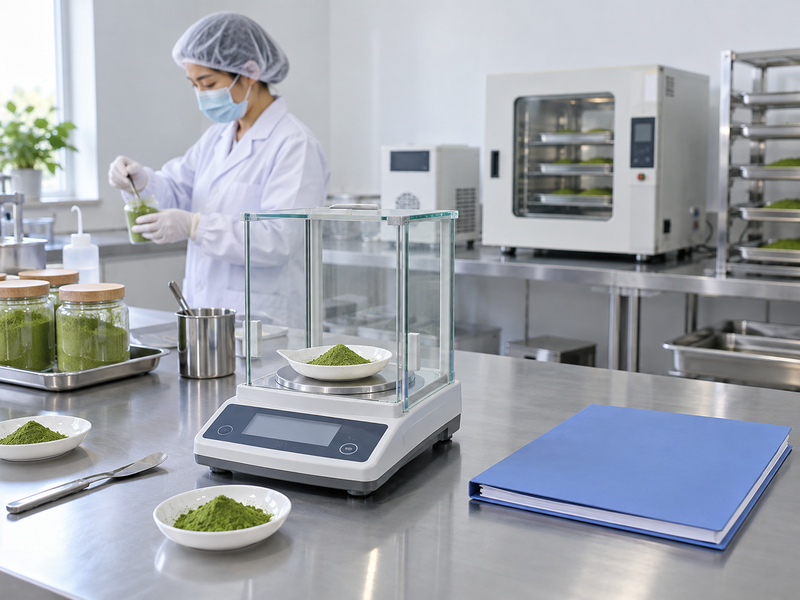
For a loss-on-drying method, request sample mass, preparation, drying program, temperature and completion rule as applicable. Ask how the laboratory handles cooling and weighing where the procedure requires those steps. Keep the actual method details instead of describing the analysis as “oven moisture” or “moisture analyzer” with no further explanation.
Your matcha moisture content report should state whether the sample received mixing, grinding or other preparation before analysis. The laboratory should explain how it distributes powder in the measuring vessel when relevant. Differences in layer preparation and endpoint can complicate comparisons. Let the technical reviewer determine whether the procedures are equivalent for the intended purpose.
Keep the endpoint visible. METTLER TOLEDO’s loss-on-drying guidance identifies preparation, drying parameters and switch-off criteria as method development factors. Loss on drying method guidance. Use that reporting context without importing a generic drying temperature as a universal matcha method.
| Drying field | Request | Comparison role |
|---|---|---|
| Sample preparation | Mass and distribution | Defines measured portion |
| Drying conditions | Program and temperature | Defines mass-loss treatment |
| Completion | Time or endpoint rule | Explains final reading |
4. How do wet and dry reporting bases differ?
Name the denominator
A mass percentage needs a stated denominator. On a wet basis, the relevant mass is divided by the initial sample mass. On a dry basis, it is divided by the remaining dry mass as defined by the calculation. Ask the laboratory which basis it reports and whether the method supports the terminology used. For matcha moisture content, a hypothetical sample with 100 grams initial mass and four grams reported water gives four percent on a wet basis. With 96 grams remaining dry mass, the dry-basis calculation gives about 4.17 percent. These values illustrate arithmetic and are not a matcha limit or measured supplier result.
Label the denominator beside the value. If the procedure measures volatile loss rather than water specifically, identify that quantity accurately in the calculation. A unit conversion can clarify the reported basis, but it cannot change what the analytical method measured. Keep the original result and calculation trace together.
5. How should the sample be collected and sealed?
Preserve the intended material condition
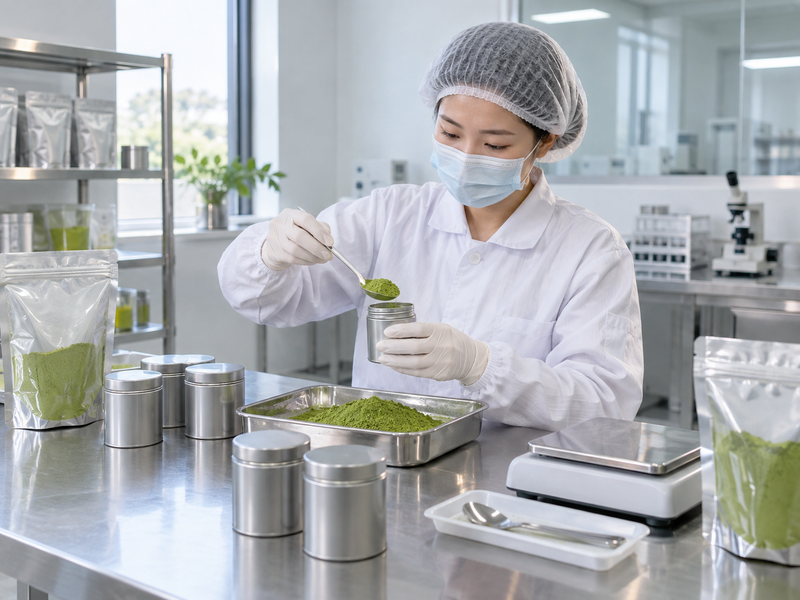
Agree the sampling point and procedure with your technical team and laboratory. Record the source lot, package and collection time. Use a suitable sealed container and the laboratory’s handling instructions. The buyer needs a portion that represents the question being asked rather than a casually gathered sample with an unknown exposure history.
Matcha moisture content checks can examine incoming material or powder after a defined operation. Label those contexts separately. If staff collect several portions, record whether they remain individual samples or form a composite under an approved plan. That distinction affects what the reported result can tell the buyer about the material.
Keep collection and analysis linked. Match each report with the sampled lot. The matcha traceability guide addresses the wider material record. Record opening, transfer and dispatch information where required by the plan. If an unexpected package condition raises questions about the sample, tell the laboratory and reviewer before they interpret the result as representative of routine delivered powder.
| Sampling field | Record | Evidence question |
|---|---|---|
| Source | Lot and package | Which material was sampled? |
| Collection | Point and handling | What state was examined? |
| Dispatch | Container and timing | Was the plan followed? |
6. How can different laboratories compare results?
Resolve method differences before ranking lots
Ask each laboratory for its method, reporting basis and sample preparation. Compare those fields before examining a numerical gap. If the procedures differ, your technical team may arrange a matched-sample exercise or another appropriate review. Keep the scope of that comparison clear and preserve individual results and qualifications. For matcha moisture content, one laboratory may report drying loss while another uses a water-specific technique. Differences can reflect method questions rather than a production change. Ask for an explanation supported by the actual procedures and samples. Avoid declaring the supplier’s material out of specification until the agreed acceptance basis is applied.
Retain the original reports. A buyer spreadsheet should include comments and method differences rather than copy only percentages. Record why any repeat work was requested. If a new procedure replaces an older one, keep the comparability review with the specification update so a later disagreement can be examined against the same evidence.
7. How should moisture results enter a mass balance?

State the calculation assumptions
Use the defined reporting basis when calculating material quantities. A hypothetical one-kilogram sample with four percent measured water on a wet basis contains 40 grams water under that assumption. The remaining mass is 960 grams. These numbers demonstrate the calculation; they are not typical matcha composition or a production yield claim.
Your matcha moisture content worksheet should identify whether the analytical result measures water or drying loss. If it measures total volatile loss, do not relabel the calculated quantity as water without supporting evidence. State any assumption used for a development calculation and keep it separate from measured product information.
Check units before using the result. A buyer may need dry ingredient calculations when comparing formulation inputs, but sensory intensity or processing performance does not follow directly from dry mass. Keep the calculation’s purpose narrow. Your application trial provides separate evidence about how the actual powder performs in the intended recipe.
| Hypothetical quantity | Wet-basis example | Calculation |
|---|---|---|
| Initial mass | 1,000 g | Stated sample mass |
| Measured water | 4% | 1,000 × 0.04 = 40 g |
| Remaining dry mass | 960 g | 1,000 minus 40 |
8. What acceptance criterion should the buyer use?
Require an application and method basis
Ask your technical team what the moisture requirement supports for the powder and intended process. Use relevant product evidence when selecting a range or limit. An online storage recommendation does not establish an analytical acceptance criterion. Record the agreed method, basis and rationale beside any number added to the purchasing specification.
Matcha moisture content should not become a blanket safety or shelf life statement. A drying result alone cannot answer every question about the ingredient or finished product. If your company needs another property, such as water activity, give it a separate method and requirement. Keep product development and food safety decisions within their appropriate evidence reviews.
Ask what the criterion controls. A requirement intended to support formulation calculations may need different evidence from one used for a manufacturing concern. State the purpose clearly and request the supplier’s relevant reporting capability. Avoid declaring one universal percentage acceptable for all matcha grades, packages, markets and applications.
9. What fields should the supplier report include?
Write the required record format
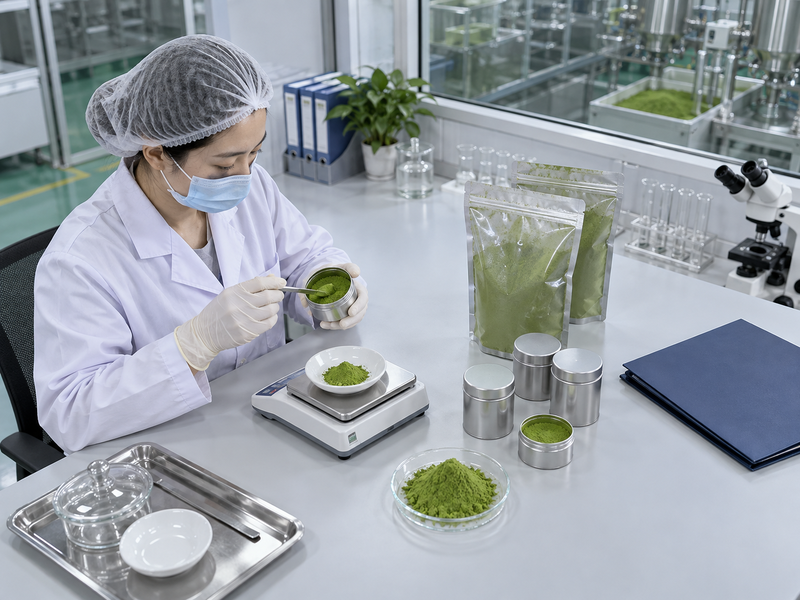
Request product code, lot, sample context, method, result, reporting basis and analysis date. Include drying conditions or a referenced procedure with enough detail for comparison. Ask the laboratory to preserve qualifications and deviations. Your team can then distinguish a complete result from a percentage copied into a generic supplier table.
For matcha moisture content, agree how the supplier reports repeated measurements and an unresolved result. A purchasing form should state what information remains missing and who must resolve it. Keep analytical acceptance and commercial dispatch decisions connected through the buyer’s approval process rather than assume the order can proceed while method questions remain open.
Request evidence for the selected product. Ask Matcha Village about sample and quality document support. Ask which moisture procedure and lot-linked report it can provide for your chosen powder. The company’s general offer does not establish that every shipment receives the same method or complete test panel.
| Report field | Required detail | Buyer use |
|---|---|---|
| Identity | Product, lot and sample | Connect with order |
| Method | Procedure and conditions | Compare results |
| Basis and comments | Denominator and qualifications | Interpret value |
10. How should method changes and disputes be handled?
Keep the accepted comparison baseline
Agree notice before changes in method, reporting basis, laboratory or relevant sample preparation affect routine reports. Ask the supplier what comparison evidence it can provide. A faster method may support the operation, but your team should examine its relationship with the accepted procedure before treating results as interchangeable.
Your matcha moisture content agreement should identify the review owner and material status while a dispute remains unresolved. Check sample identity, collection and procedure before requesting repeated testing. Record why a repeat was needed and keep both outcomes. An approval file should show the reasoning behind the disposition rather than retain only the favorable result.
Close the method question in the specification. If the review changes the accepted procedure or basis, update the document revision and notify relevant staff. Purchasing needs the revised requirement. Quality needs the evidence. Production needs any affected calculation instruction. Keep those records linked with the ordered product and future change notices.
FAQ
Q1: What should matcha moisture content reports identify?
They should identify the sample, analytical method, reporting basis, result and relevant qualifications.
Q2: Does loss on drying measure only water?
It measures mass lost under the drying conditions, which can include other volatile components. Read the method before labeling the result.
Q3: Are wet-basis and dry-basis percentages identical?
They use different denominators. Preserve the original result and state any conversion assumptions.
Q4: Can two laboratories compare percentages directly?
Check methods, sample conditions and reporting bases before interpreting a difference between their values.
Q5: What should happen when the supplier changes method?
Request notice, relevant comparison evidence and a recorded buyer decision before treating the new results as equivalent.
Send a moisture reporting brief with the agreed method, sample context and basis. Request an identified sample and current report for the ordered powder. Have your technical team review acceptance and calculation needs, then retain the approved specification and method change route beside the supplier’s lot documents.