
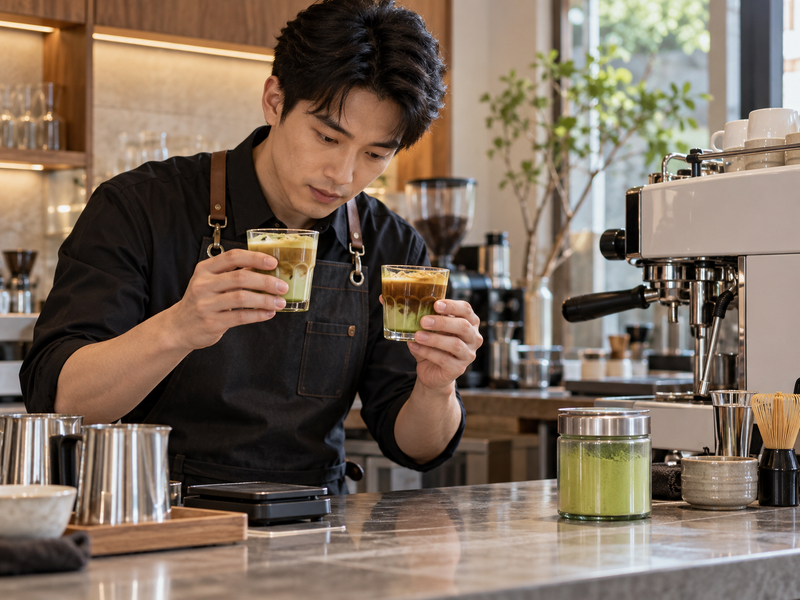
A coffee bar can put matcha beside its espresso machine and still end up with a drink that tastes like neither ingredient. Coffee contributes roast and bitterness; matcha brings grassy, savory and sometimes sweet notes. Milk and syrup decide which survives. A buyer choosing matcha powder for coffee service needs to test the complete drink, the bar workflow and the cost of the measured dose. The powder that wins a straight-tea tasting may be the wrong choice for a menu built around espresso and milk. This guide sets out a practical buyer’s trial for coffee shops and beverage chains.
Contents
- 1. What does “matcha for coffee” mean on a menu?
- 2. How should coffee buyers shortlist matcha powders?
- 3. How can matcha and espresso be balanced in one drink?
- 4. Which milk and sweetener choices deserve separate recipes?
- 5. What differs between hot and iced coffee-shop applications?
- 6. How should the bar prepare matcha during a rush?
- 7. How should the buyer calculate cost per cup?
- 8. What supplier documents and lot controls matter?
- 9. What should be measured in a store pilot?
- 10. When is the powder ready for a multi-site rollout?
1. What does “matcha for coffee” mean on a menu?
Clarify the product before comparing powders. Some cafés want a matcha latte as a coffee alternative. Others want a dirty matcha that combines espresso and tea, or a cold drink with a coffee cream layer. Those are different formulas with different taste targets. A powder for a plain matcha latte must stand up to milk without coffee. A powder for a dirty matcha has to remain noticeable beside espresso. A supplier cannot recommend a useful sample from the phrase “good café matcha” alone.
Write a one-page brief with the intended drinks, cup sizes, milk choices, sweetness options and target ingredient cost. State whether the menu will describe the powder’s origin or certification. If a coffee shop wants to serve both a straight matcha and an espresso combination, test each separately. A single powder may work across the menu, but do not assume it. The result has to earn its place through the finished cup and a service method staff can repeat.
| Menu item | What matcha must do | Key trial |
|---|---|---|
| Matcha latte | Carry flavor through milk | Plain hot and iced cup |
| Dirty matcha | Balance espresso roast | Mixed and layered tasting |
| Coffee cream matcha | Stay clear beneath topping | Complete sip after stirring |
| Straight matcha | Taste clean in water | Water-only sensory panel |
2. How should coffee buyers shortlist matcha powders?
Request commercial-lot samples in the packaging size a café would actually use. Blind-code them and prepare a fixed test set: water, the house dairy milk, the main plant milk and one espresso combination. Use scales rather than heaped scoops. Keep powder grams, water, espresso shot parameters, milk and syrup identical. The goal is to learn what changes with the powder rather than with the barista. Write down color, aroma, bitterness, mouthfeel and clumping, then taste again after the drink cools or the ice melts.
Choose a short list by application fit, not a vague grade hierarchy. “Ceremonial” can be a marketing term with inconsistent standards across suppliers. Ask for a current specification, lot identity and ingredient declaration. If a vendor says its powder is unusually fine, test how quickly it disperses in your tool and whether it leaves sediment in a takeaway cup. Keep the winning sample for comparison with the first delivery. A blind result can overturn a purchasing team’s favorite origin story without any argument about labels.
| Sample check | Fixed condition | Record |
|---|---|---|
| Straight tea | Same powder dose and water | Aroma and aftertaste |
| House latte | Same milk and sweetness | Tea visibility |
| Espresso mix | Same espresso recipe | Balance with roast |
| Iced hold | Same ice and wait time | Dilution and color |
3. How can matcha and espresso be balanced in one drink?
Start with the two components separately. Taste the approved matcha base at its intended strength, then taste the espresso shot under the bar’s normal extraction settings. Combine them at measured ratios and let the panel describe what they perceive. If the coffee dominates, increasing sugar may make the drink sweeter without making the matcha clearer. Try changing the tea dose, coffee amount or the powder itself, one variable at a time. A stronger tea can also sharpen bitterness, so the target is balance rather than maximum intensity.
Test the mixed drink as a customer would consume it. A layered cup photographs well, but the first and last sips may be very different. Stir it, taste it with the intended straw or lid, and repeat after several minutes. An iced dirty matcha can change as espresso cools and ice melts. Record the recipe that holds up, then decide whether layering belongs in the serving instructions or only in a marketing photograph. The cup should not depend on a customer knowing the right way to mix it.
4. Which milk and sweetener choices deserve separate recipes?
Milk changes texture and can mute tea or coffee. Test the house dairy milk and the specific plant milk SKUs the shop offers; “oat milk” is not one standardized ingredient. A formula that works with one barista oat milk may taste flat with another. Keep serving volume and temperature fixed during the comparison. Pay attention to the finish: a drink can smell inviting at the counter but leave an unpleasant combination of roast and matcha aftertaste once it warms.
Build a reduced-sugar version deliberately. Removing syrup can expose a rough edge that the standard recipe hides. If the powder is a sweetened mix rather than pure matcha, the shop has less control over that change. Request the ingredient statement and train staff to explain it accurately. Separate recipe cards may be needed for dairy, plant milk and unsweetened service. A substitution button on the point-of-sale screen is a promise the bar has to be able to make in a repeatable cup.
| Variable | What it can change | Bar action |
|---|---|---|
| Dairy milk | Body and sweetness | Fix brand and volume |
| Plant milk | Flavor and foam | Approve exact SKU |
| Syrup | Masking of tea or coffee | Weigh standard portion |
| Sweetened premix | Ingredient control | Review declaration and label |
5. What differs between hot and iced coffee-shop applications?
Heat can bring out astringency in matcha, while ice weakens concentration over time. Test a hot matcha latte and an iced one from the same powder, even if the menu treats them as variants of one item. Disperse powder in a measured small volume of water before adding milk. Check for clumps at the bottom of the cup. Record the final drink temperature and how long the cup can sit before taste changes in a way your customers would notice.
For iced drinks, include ice weight and a realistic holding period. A sample served immediately in a development kitchen does not represent a delivery order. Put the cup under a lid, carry it in a standard carrier and taste at arrival. If the latte still works but the espresso version becomes muddy, keep separate formulations or remove the weaker item. A narrow menu of drinks that survive normal service is stronger than several variants that only work when the developer is standing over the bar.
6. How should the bar prepare matcha during a rush?
Map the steps from receiving a ticket to handing over a cup. Powder storage, scale, water, mixing tool, milk and espresso should be reachable without staff crossing each other. Matcha powder near steam or a wet counter can clump and deteriorate. Use a clean, dry dosing station and a written closing procedure for open packs. If pre-portioned powder is useful, test how portions are stored, rotated and protected before assuming they save time.
Run a timed simulation with ordinary staff, not only the head barista. Include espresso machine demand from other orders. A mixed coffee-and-matcha drink can consume two busy stations at once, creating a hidden queue. Record preparation time, spills, clumps and remakes. Adjust the sequence before changing the ingredient: a better place for the scale or a clearer handoff may fix the delay. Training should specify powder grams and mixing cues so a new employee can make the same cup without a private demonstration from its inventor.
| Workflow step | Common bottleneck | Control to test |
|---|---|---|
| Dosing | Variable scoops | Scale or approved portion |
| Dispersing | Powder clumps | Fixed water and tool |
| Espresso | Machine queue | Sequence with other orders |
| Assembly | Milk and ice travel | Station placement |
| Cleaning | Wet tools left at bar | Rinse and drying routine |
7. How should the buyer calculate cost per cup?
Use the actual recipe. Multiply powder grams by the supplier’s price per usable gram, then add espresso, milk, syrup, ice, packaging and normal waste. Compare candidates by the cost of a cup customers will accept. A powder with a lower price per kilogram may require a larger dose to show through coffee. Another may save powder but demand extra mixing time. Costing only the bag hides these tradeoffs.
Model the effect of large cups and substitutions. If a café offers an extra espresso shot or plant milk, check whether the current matcha dose still works and what the new ingredient cost becomes. Include remakes during pilot service and the cost of training a complex recipe. These are planning assumptions until actual sales data arrive, so label them as such. Keep the worksheet simple enough for a store manager to update when invoices or pack sizes change. A profitable formula depends on repeatable portions, not a single laboratory estimate.
8. What supplier documents and lot controls matter?
Ask for a specification that identifies the exact powder, its ingredients, packaging, storage guidance and lot coding. Request test documentation needed for the buyer’s market and product claims. If a coffee chain advertises organic or a specific origin, verify that the supplied lot and supporting documents match the claim. Do not infer certification from a green label or a generic company certificate. Quality and purchasing teams should agree on who reviews documents before a product enters stores.
Retain a properly stored sample from the approved lot and test new deliveries in the standard house latte. Coffee-shop teams notice changes in color and taste quickly, but memory is a poor reference. A side-by-side cup gives the supplier a specific issue to investigate. Discuss lead time, minimum order, and fallback plans before peak season. Matcha Village offers B2B powders and blends; a buyer should still validate each candidate in its own coffee and milk system rather than buying on a catalogue description alone.
| Approval item | Evidence to retain | Why it helps |
|---|---|---|
| Product identity | Specification and ingredient list | Prevents blend confusion |
| Lot identity | Code and delivery record | Traces variation |
| Sensory standard | Approved retained sample | Supports comparison |
| Claims | Current relevant documents | Supports menu and packaging review |
9. What should be measured in a store pilot?
Set a small number of pass criteria before training the pilot store. Include taste in hot and iced formats, handoff time during a rush, clump and remake rates, powder use per sold drink, and customer comments that mention flavor rather than only appearance. Compare the house matcha latte with the espresso combination if both are planned. A flashy layered drink may earn a photo but few repeat orders; measure actual purchases and whether customers reorder at the intended price.
Observe preparation in person or through a normal operations review. Are staff weighing powder or improvising? Does the espresso station block tea drinks? Does the powder container stay closed? If a problem occurs only at one site, check equipment and training before rejecting a supplier lot. If several sites report the same flavor drift with a new lot, escalate a sample comparison. A useful pilot produces a short list of specific recipe or workflow changes, not a general verdict that the drink is “popular.”
10. When is the powder ready for a multi-site rollout?
Roll out after the same approved recipe works across operators, equipment and at least two supply lots or a documented lot-comparison process. Give every site a recipe card, a visual standard and the exact permitted ingredient substitutions. Define a remake rule and a route for reporting unusual color, taste or clumping. The central team should be able to trace a complaint to the powder lot and the store’s preparation record without guessing which scoop was used.
Choose the powder that supports the menu’s purpose. If matcha is the hero drink, a clean tea flavor matters even when espresso is absent. If the coffee combination is the focus, balance under espresso is the decisive test. The best matcha powder for coffee is the one that produces the approved cup during a busy shift, with a cost and supply plan the business can sustain. Keep the trial notes; they make the next supplier comparison faster and more honest.
FAQ
Q1: Should a coffee shop use ceremonial matcha? Test the powder in the actual drinks. A grade label alone cannot predict flavor in milk or beside espresso.
Q2: Can matcha and espresso share one recipe card? The mixed drink needs its own measured recipe, even if its matcha base matches the house latte.
Q3: Is sweetened matcha mix suitable for coffee? It can be, but compare ingredient control, sweetness flexibility, finished-cup cost and label needs.
Q4: Why does iced dirty matcha taste weak later? Ice dilution and strong coffee can mask tea. Test at realistic holding times before changing dose.
Q5: What should a buyer keep from the trial? Keep formula weights, tasting notes, approved lot sample, specification, cost sheet and pilot results.
A retail powder comparison can suggest tasting criteria; read this matcha review. For commercial sourcing context, see our latte buying guide.