
The best matcha for lattes is the powder that meets a defined finished-drink standard at an acceptable cost and supply risk. A sample that tastes refined in water may disappear behind milk, while a vivid green powder may leave grit at the bottom of a takeaway cup. Set the drink target, compare coded supplier samples in the real recipe, and verify that the chosen result can be reproduced. Finished-product trials and lot records provide stronger buying evidence than a grade label alone.
Contents: 1 · 2 · 3 · 4 · 5 · 6 · 7 · 8 · 9 · 10
1. What does “best matcha for lattes” mean commercially?
Define the drink before the powder
A café chain, bottled beverage brand, and foodservice distributor can all ask for the best matcha for lattes yet mean different things. One wants a distinct tea note under sweetened oat milk; another wants stable appearance in an unsweetened dairy drink. State the target serving size, base, sweetness, temperature, pack, and sales window. Then rank the sensory attributes that matter: tea flavor, bitterness, green appearance, mouthfeel, and settling. An attractive dry powder is only an input to that result.
Write a pass condition. Record acceptable variation for prepared cups using evidence from pilot trials. Include operational limits such as mixing time, staff skill, and dosing accuracy. A buyer who writes “high quality green matcha” has no clear grounds for accepting or rejecting a future lot. A buyer who specifies a reference latte and preparation method can compare suppliers on terms that matter to customers.
| Buying context | Leading criterion | Practical test |
|---|---|---|
| Café service | Repeatable cup at speed | Operator build trial |
| Bottled latte | Process and storage fit | Filled-pack study |
| Distributor | Broad customer usability | Trials in common bases |
2. Which grades and sensory profiles merit sampling?
Use labels as a starting map
“Ceremonial,” “premium,” and “culinary” are commonly used market labels, but suppliers do not apply one universal grading system. Ask what each supplier means by its grades and request samples across plausible price levels. Taste the powders first in a simple preparation for orientation, then in the intended latte. A delicate powder may lose its character in a sweet base. A stronger tea profile may hold through milk while bringing an astringent finish that some customers dislike.
Compare at a fixed dose. Record grassy or seaweed-like notes, toasted notes, bitterness, aftertaste, and perceived body without assuming one profile is objectively superior. Then test the most promising candidates near a dose that achieves the same tea intensity. This two-stage screen shows both formulation fit and effective cost. Retain coded samples and supplier lot information so the tasting result remains traceable when procurement requests a commercial quote.
3. How do milk, sweetener, and serving temperature affect choice?
Let the target recipe decide
Milk fat, protein, and plant-base ingredients influence texture and the perception of tea flavor. Sweetener can soften bitterness while masking the aroma a brand wants customers to notice. Hot service releases aroma differently from iced service; ice later dilutes the cup. Test supplier powders under the same formula and at the same serving temperature. A powder selected in warm water should not be approved for an iced vanilla latte without another trial.
Control substitutions. If stores may use dairy and oat bases, qualify each combination or set separate doses. Record the exact base specification rather than relying on a generic category. For a hypothetical comparison, hold finished drink mass, sweetener, and mixing method steady across samples; change only the powder. If a different base wins, run that change in a later round. The best matcha for lattes is conditional on the formula the brand will actually sell.
| Recipe factor | Possible effect | Trial control |
|---|---|---|
| Milk or plant base | Body and perceived color | Same brand and lot |
| Sweetener | Bitterness balance | Fixed mass and concentration |
| Ice or heat | Dilution and aroma | Defined serving time |
4. What powder properties affect bar and factory use?
Look at handling, not only taste
Matcha is suspended finely ground tea. Powders can differ in wetting, clumping, particle feel, and settling. A bar team may have only a short premix step; a factory may use a vessel, recirculation, and a validated heat process. Test the powder with the actual equipment and sequence. A drink that is smooth after extended laboratory blending may still leave dry flecks when made during peak service.
Inspect the last sip. Note residue at the bottom of a cup after the normal drinking interval. For packaged products, follow sediment and remix behavior through storage. Ask whether an acceptable amount of settling can be communicated to customers and reproduced across lots. Compare color both dry and prepared, since milk changes apparent green. Particle behavior can increase waste and customer complaints even when initial flavor is good, so include it in purchase criteria.
5. What documents should a matcha supplier provide?
Build a traceable file
Request a current product specification, ingredient identity, origin and lot traceability, packaging details, storage conditions, and a representative lot-linked sample. Ask for relevant food safety records and analyses required by the destination market and intended application. Claims about organic status or other certification need appropriate current evidence if the brand plans to use them. A supplier’s marketing page cannot replace a document review by the buyer’s quality team.
Set change notice rules. Milling, blending, raw material sourcing, and package changes may affect flavor, color, or dispersibility. Agree on notification before substitution and on a procedure for testing new lots against an approved reference. Retain both powder and finished-latte samples where practical. This helps a buyer separate a raw-material change from a store training problem when a later cup tastes different.
Clarify which records arrive with every lot and which are supplied only at qualification. An import buyer may need documents before shipment, while a café purchasing locally may receive them through a distributor. Name the responsible party and timing in the supply agreement. Otherwise a correct document arriving after a shipment can still delay a launch.
| Document or sample | Buyer use | Check before approval |
|---|---|---|
| Specification | Defines purchased item | Version and acceptance terms |
| Lot-linked sample | Application trial | Matches quoted product |
| Quality records | Market and safety review | Relevant scope and currency |
6. How should buyers run a fair sample comparison?
Blind the first decision
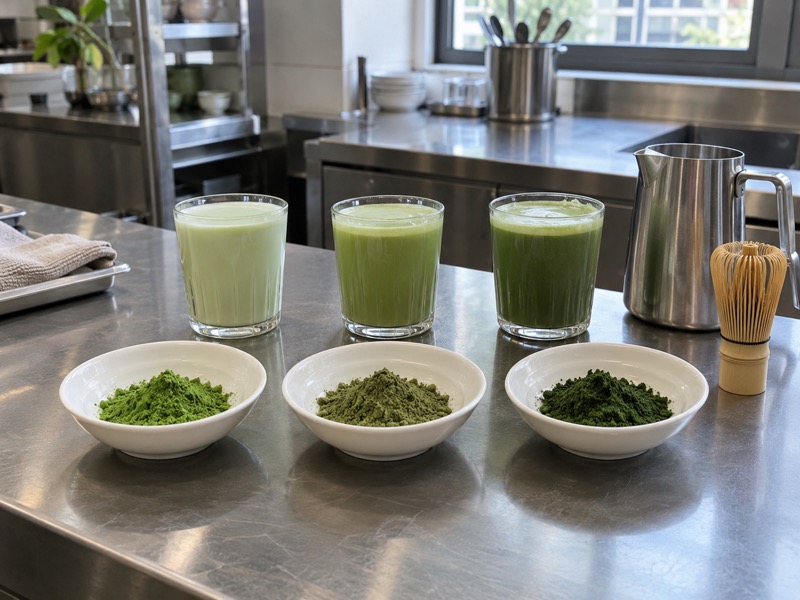
Code candidate powders so tasters cannot see price or grade. Randomize order and prepare every cup at the same dose, finished mass, base, temperature, and mixing method. Ask tasters to score tea identity, bitterness, mouthfeel, color, and aftertaste individually before discussion. Repeat the preferred set on another day or with another operator. A single pleasant cup can reflect small differences in preparation, not a reliable supplier advantage.
Price after sensory screening. Once candidates meet the drink brief, adjust dose in a controlled second round to identify the lowest acceptable usage level for each. Then calculate cost per accepted cup. Include dispersibility and realistic service time, since a cheaper powder that needs an extra mixing step may raise labor or waste. Save recipes and observations. The result should point to a chosen powder and a tested preparation, not only a ranked list of samples.
7. What are common latte defects and their causes?
Diagnose before switching grade
A dull green cup can come from powder, base opacity, processing, light, or storage. Harsh bitterness can reflect powder profile, dose, sweetener balance, or serving temperature. Grit can result from coarse-feeling particles or inadequate wetting. Heavy sediment may be normal for a suspension yet unacceptable for a long-held retail bottle. Record where and when each defect appears rather than blaming “low grade” as a catchall explanation.
Run one correction at a time. If a cup is gritty, remake it with the same powder and a controlled premix step. If grit persists, compare another powder at equal dose. If a latte tastes weak, verify final drink mass before increasing matcha. A bigger dose may create bitterness and cost problems while hiding an overfilled cup. Use retained lot samples and process records to determine whether a failure began with material or execution.
| Defect | Check first | Controlled follow-up |
|---|---|---|
| Weak tea | Finished mass and base | Fixed-mass remake |
| Grit | Wetting and residue | Process-only change |
| Dull green | Light and lot retain | Same-recipe comparison |
8. How does scale change the ideal choice?
Include supply behavior
A powder can win a small tasting and still be unsuitable for a national chain if lead times, lot consistency, or document support do not meet the launch plan. Ask for expected lot size, order lead time, packaging, storage conditions, and change-control practice. Test a second lot before committing if timing permits. For a café network, validate the recipe with several normal operators and equipment setups. For manufacturing, evaluate the powder through the actual mixing and process route.
Control the transition. Record the approved supplier item and lot, a reference finished drink, and the steps for incoming-lot checks. If the supplier must change a blend, trigger a new application trial before use. A backup source is useful only if it meets the same product standard. Procurement should distinguish a sample request from a production specification; successful bench work does not validate a production run or a packaged shelf life.
Before a chain rollout, check whether different locations have the same scales, mixers, cup sizes, and water source. A formulation may be sound while equipment differences create visible variation. Choose a small set of representative sites for the pilot and compare their results with the reference cup. Add a training or calibration step only where the evidence points to one.
9. How should price be compared across powders?
Calculate effective drink cost
Take each accepted powder’s dose per saleable serving and multiply by its quoted unit price. Add measured losses from preparation, overfill, rejected cups, and packaging where relevant. A low cost per kilogram can disappear if a higher dose is needed for the desired tea flavor. Conversely, an expensive powder may make sense if it performs at a lower dose and improves consistency. Keep the sensory acceptance standard fixed while doing this comparison.
Include hidden work. Note whether staff must sift, premix for longer, or discard more sediment. In a factory, calculate saleable yield after processing, not just theoretical formula cost. Compare supplier terms for minimum order, lead time, and storage life because inventory carrying and waste matter. Do not treat an untested replacement as equivalent merely because its price is attractive.
| Cost item | Measurement basis | Common oversight |
|---|---|---|
| Powder | g per accepted cup | Comparing price per kg only |
| Waste | Actual shift or batch loss | Using theoretical yield |
| Labor | Repeatable preparation time | Ignoring extra wetting step |
10. What should be approved before placing an order?
Link purchase to product standard
Approve the finished latte formula, supplier item, quality specification, service or process method, and lot acceptance plan. Confirm that the supplier sample tested is representative of the item and commercial supply offered. Keep a signed sensory reference and record color, flavor, grit, and settling checks under defined conditions. Quality and regulatory staff should review documents and proposed label language for the sales market before a purchase order locks in an ingredient claim.
Run the final trial. Make a controlled pilot with the people and equipment that will launch the drink. Check acceptable dose, cost per saleable serving, preparation time, and variation across cups. For a flavored menu, repeat the test with the vanilla matcha latte formula; a plain latte result may not transfer. If it fails, isolate the variable and retest rather than buying by grade name. The practical answer to “best matcha for lattes” is the powder that repeatedly makes the agreed drink and can be supplied on agreed terms. For U.S. packaged-food claims and labeling context, see the FDA food labeling guide.
Reference: Best Matcha for Lattes: How to Choose the Right Grade. Used as topic context; this purchasing framework is original.
FAQ
Q1: Is ceremonial matcha always best for lattes?
No. Grade labels differ among suppliers. Compare powders in the intended milk base at a controlled dose.
Q2: Can one matcha work for hot and iced lattes?
Possibly, but validate both. Temperature and ice dilution can change flavor and appearance.
Q3: How many supplier samples should a buyer compare?
Enough to cover plausible flavor and price positions, then retest finalists and another lot where possible.
Q4: Why does a latte taste bitter despite a premium grade?
Dose, base, sweetness, temperature, and powder profile all matter. Test one variable at a time.
Q5: What belongs in a matcha purchase specification?
Include item identity, lot traceability, sensory and physical criteria, required quality records, pack, storage, and change notice terms.