
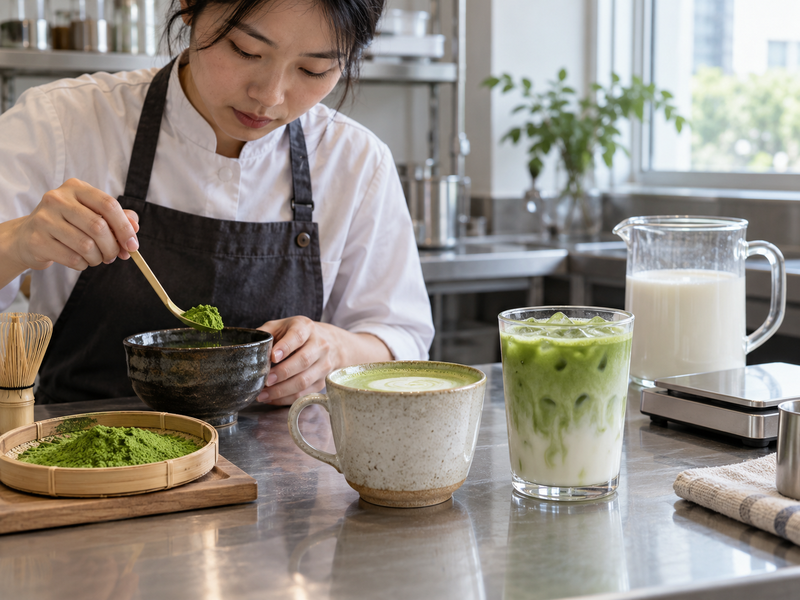
A milk tea chain can make a convincing sample with almost any bright green powder. The harder test is the hundredth cup: the same taste after ice melts, the same color under the shop’s lights, and the same preparation time with a new employee at the counter. Choosing matcha powder for milk tea starts with that finished cup rather than a grade printed on a bag. This guide gives beverage teams a practical way to compare powders, set hot and iced formulas, and approve a supplier against actual service conditions.
Contents
- 1. What job must matcha powder do in a milk tea drink?
- 2. How should a buyer compare candidate matcha powders?
- 3. What makes a reliable hot matcha milk tea formula?
- 4. How should an iced version be tested differently?
- 5. When do pearls and flavored toppings change the powder choice?
- 6. How much sweetness should a formula carry?
- 7. What changes when dairy is replaced with plant milk?
- 8. Can the formula survive a busy service period?
- 9. What should the supplier agreement specify?
- 10. How should a chain decide whether the milk tea is ready to launch?
1. What job must matcha powder do in a milk tea drink?
Milk tea changes how matcha tastes. Dairy or plant milk softens bitterness and adds its own sweetness, while syrup can hide a weak tea until the ice dilutes it. A powder that tastes elegant in water may disappear in a large, cold cup. Another may stay vivid but become harsh when the drink warms. Set the job before requesting samples: define cup size, milk, sweetener, target price, and the taste you want after a normal holding period.
Decide whether the drink is a tea-forward matcha milk tea, a sweet flavored beverage with matcha color, or a bottled product designed for later consumption. Each asks something different of the powder. For a café counter, speed and dispersion matter. For a packaged drink, processing, sediment, and shelf-life testing enter the decision. Put these expectations in a brief that a supplier and your operations team can both read. A sample judged without its intended formula tells you surprisingly little.
| Product format | Main powder test | Failure to watch |
|---|---|---|
| Hot milk tea | Flavor against warm milk | Tea disappears or turns harsh |
| Iced milk tea | Color and taste after dilution | Pale cup near the last sip |
| Boba drink | Tea clarity beside toppings | Sugar and pearls bury matcha |
| Packaged beverage | Dispersion through processing | Sediment or flavor drift |
2. How should a buyer compare candidate matcha powders?
Ask for samples from current commercial lots, not only a showpiece sample. Give each a neutral code and prepare them with one fixed recipe. Weigh powder and syrup, use the same milk SKU, control water temperature, and serve in identical cups. Record aroma, bitterness, green color, mouthfeel, and whether the tea remains recognizable after five and fifteen minutes. A blind tasting prevents a famous origin or attractive package from deciding the result before anyone drinks it.
Run the same candidates through a second recipe that stresses the ingredient. A larger cup, stronger flavored syrup, or plant milk can reveal weaknesses hidden by the standard latte. Keep a reference sample from the leading powder and repeat the test when the first bulk shipment arrives. When a supplier changes production lots, that reference gives the quality team a common starting point. Do not reduce the decision to cost per kilogram: a higher dose, extra sweetener, or frequent remakes can make the cheaper powder cost more per sellable cup.
| Test variable | Keep constant | Record |
|---|---|---|
| Powder dose | Gram weight | Tea strength and bitterness |
| Milk | Brand, fat level and volume | Flavor balance and texture |
| Syrup | Formula and gram weight | Whether sweetness masks tea |
| Ice | Weight and cup size | Dilution at service time |
| Mixing | Tool and duration | Clumps and service time |
3. What makes a reliable hot matcha milk tea formula?
A hot formula needs the powder dispersed before it meets the full milk volume. Start with a small, measured amount of water and whisk or mix until the suspension looks smooth. Add warmed milk in a controlled sequence and taste before adding the full sweetness allowance. If the tea tastes flat, adding more syrup usually moves the drink further from a tea-forward profile. Try a different powder or adjust the dose within the product’s acceptable cost and sensory range.
Write the recipe in weights and volumes that staff can reproduce. “One scoop” is not a specification when the scoop can be heaped or compressed. Include the milk SKU, cup size, mixing tool, water temperature range, and final serving temperature your operation uses. A hot drink can emphasize a powder’s astringency that seemed mild in a cold trial, so test both after the drink has sat for several minutes. Have an employee who did not develop the recipe make three cups. Differences between those cups expose instructions that need work.
4. How should an iced version be tested differently?
Ice is an ingredient, not a decoration. It changes the drink’s effective concentration as it melts, and it changes the apparent color in a clear cup. Fix ice weight and starting temperature during trials, then taste immediately and after the period customers normally carry the drink. Record both results. A formula that looks excellent for the first photograph may finish as lightly flavored milk before the customer reaches the bottom.
Test preparation order as well. Powder dispersed in a small amount of water can be poured over milk and ice, but an attractive layered look may not survive stirring or travel. If the drink is intended to be mixed, evaluate it mixed. For delivery, place the sealed cup in the same kind of carrier used by stores and repeat the taste after a realistic journey. Let a store team choose between two acceptable procedures only after measuring time, clumping, and waste. A recipe that depends on a skilled developer’s hand will be difficult to repeat across shifts.
| Iced trial | What to observe | Decision it informs |
|---|---|---|
| Freshly assembled | Color, aroma, visible clumps | Counter presentation |
| After stirring | Tea and milk balance | Intended customer experience |
| After ice melt | Strength and bitterness | Dose and ice weight |
| After transport | Separation and leaks | Delivery suitability |
5. When do pearls and flavored toppings change the powder choice?
Pearls, jelly, cream caps, and flavored syrups bring sweetness and texture. They also compete with matcha for attention. Build a plain matcha milk tea first, then add one topping at a time. If a pearl syrup already sweetens the bottom of the cup, the base drink may need less added sugar. If a salted foam sits on top, test a full sip with foam and tea together. Tasting only the base in a development lab misses the product customers will buy.
Avoid selecting a costly powder solely because it tastes exquisite in water when the final drink is dominated by brown sugar and toppings. Conversely, a low-cost powder with dull color or rough bitterness can make the drink look and taste cheap even under sweet layers. Use a simple triangle test with staff or target customers: serve two candidate powders in the complete drink without revealing which is which. Ask which they would purchase again at the proposed price, then compare that preference with ingredient cost and preparation speed.
6. How much sweetness should a formula carry?
Choose a sweetness level by tasting the finished beverage, not by matching a competitor’s number of syrup pumps. Weigh the syrup in a trial recipe and define a standard portion; pump output can change with syrup viscosity and maintenance. Offer reduced-sugar versions only after testing them separately. Removing syrup can expose bitterness or change the drink’s body. Staff need a recipe card for each option rather than a vague instruction to “use less.”
If a premix already contains sugar, treat the ingredient list and nutrition calculation differently from a pure, unsweetened matcha powder. A product name alone cannot tell buyers what is inside. Request the ingredient declaration and specification for every sample, and have the label team review the final recipe for each market. Do not promise a health benefit because the cup is green. A sweet milk tea remains a sweet milk tea; clear product information builds more trust than a wellness claim that the formula cannot support.
| Sweetness control | Practical check | Common mistake |
|---|---|---|
| Syrup weight | Weigh a standard serving | Counting pumps only |
| Premix composition | Read ingredient declaration | Assuming every powder is pure tea |
| Reduced-sugar option | Taste as its own SKU | Removing syrup without retesting |
| Topping contribution | Taste full assembled drink | Measuring base drink alone |
7. What changes when dairy is replaced with plant milk?
Plant milks differ in sweetness, fat, thickness, and flavor even within one category. An oat milk SKU can make matcha taste rounder while another can flatten its aroma; a soy milk may have a different aftertaste. Test the exact brand and formulation you intend to buy. Use the same tea dose, serving size, and mixing order as the dairy reference. Then judge whether a separate plant-milk recipe is needed instead of promising that every substitution will taste identical.
For a chain, substitution also affects training and allergen communication. Keep milk containers and utensils under the site’s food-safety procedure. Make sure the point-of-sale option, menu wording, and recipe card agree. Do a blind comparison after the drink has stood: some combinations separate or lose foam faster than the development team expects. Record what staff can control and what belongs in the ingredient specification. If a chosen milk changes, retest rather than assuming the tea powder failed.
8. Can the formula survive a busy service period?
The fastest-looking method in a quiet test may create a queue when several drinks arrive together. Time a complete order from powder retrieval to handoff with the real bar layout. Include weighing, dispersing, milk access, ice, toppings, lid, and cleanup. If pre-portioned powder helps, decide how portions are labeled internally, stored, and used before quality falls. Open powder bags should stay protected from moisture and heat near the bar.
Run a short simulated rush with trained and newly trained staff. Track drinks made, average handoff time, clumps, spills, and remakes. Change only one part of the workflow at a time. A stronger powder may lower dose but slow mixing; a ready-to-use blend may speed service but limit sweetness control. Make the tradeoff explicit. Store managers should receive a recipe and station guide that names the equipment actually installed, not a laboratory instruction that assumes every site owns the same whisk.
| Service measure | How to capture it | Useful response |
|---|---|---|
| Handoff time | Ticket to completed cup | Rearrange station or prep sequence |
| Clump rate | Cups with visible powder | Change dispersion step |
| Powder variance | Actual use versus recipe | Check dosing and spills |
| Remake rate | Remakes per test shift | Observe training and quality |
9. What should the supplier agreement specify?
Approve a powder against a written sensory and technical specification. Ask for ingredient composition, lot coding, packaging format, storage guidance, lead time, and the documents needed for your market. If you need organic, kosher, or other claims, request current documents for the exact product and relevant supply chain; a general company brochure is not enough. Decide how a changed lot will be sampled and who can approve a substitution before the first shortage occurs.
For multi-site supply, discuss pack size and ordering cadence with operations. A small pack may protect freshness at a low-volume store, while a central kitchen may need a different format. Compare landed ingredient cost per usable cup, including dosing loss and normal waste. Matcha Village supplies matcha and blend products for business customers, but the right choice still comes from an approved sample in the buyer’s own formula. Keep the signed specification and an approved reference sample so purchasing, quality, and store teams use the same standard.
10. How should a chain decide whether the milk tea is ready to launch?
Set pass criteria before the last tasting. The decision should cover flavor at service and after holding, color in actual packaging, cost per sellable cup, preparation time, waste, and acceptable supplier documentation. Test at least one busy store or realistic pilot bar, not only the product development kitchen. Let ordinary staff prepare the drink and record every deviation they need to make. If the drink requires extra syrup or a different milk on site, revise the controlled formula before launch.
Keep the launch menu narrow enough to learn from sales. A plain hot and iced version can show whether the powder works across temperature; one topping variation may test customer interest without multiplying training problems. Review complaints and remake reasons during the pilot, then compare the next delivery lot with the retained sample. The practical standard for matcha powder for milk tea is a cup that tastes like the approved one on an ordinary shift, at the price and speed the business planned.
FAQ
Q1: Is ceremonial grade required for milk tea? No. Test powders in the finished milk tea; the label does not predict performance under milk and syrup.
Q2: Can one powder serve hot and iced drinks? It can if both formulas pass flavor, color, dispersion, and dilution trials. Keep separate recipe cards.
Q3: Should a chain buy sweetened premix or pure matcha? Compare ingredient control, service speed, label needs, and finished-cup cost for both formats.
Q4: Why does an iced drink lose flavor? Ice dilution, low tea dose, and sweet toppings can reduce perceived matcha strength. Test the cup after holding.
Q5: What should be retained from the approved sample? Keep the lot identity, specification, recipe, tasting record, and a properly stored reference sample.
A small-batch drink example appears in this matcha milk tea recipe. For commercial sourcing context, see our matcha latte buying guide.