
A matcha powder factory can send a beautiful sample yet leave a food manufacturer unsure how later lots are controlled. Ask for a defined route from prepared tea to packed powder, then test the controls that affect your recipe. This checklist centers on milling, sieving, sampling and release because these steps determine whether the approved powder can be ordered again with confidence. The questions are suitable for a remote review or a site visit. The matcha powder sifting guide explains one finishing step to inspect after milling.
Contents
- 1. What material enters the milling room?
- 2. How is milling set for this product?
- 3. What happens before powder moves to the next step?
- 4. How does sieving fit the approved specification?
- 5. Where and when are samples taken?
- 6. Which results can hold a batch?
- 7. Who makes the final release decision?
- 8. How are rework and deviations recorded?
- 9. What links a packed unit to its batch?
- 10. How should buyers approve a process change?
1. What material enters the milling room?
Fix the material identity before discussing machines
Begin with the prepared tea, not the mill’s speed. Ask the supplier to identify the leaf material used in the proposed SKU, its intake code and the records that permit production. The term tencha describes tea prepared for grinding, but buyers should confirm the supplier’s actual process and terminology rather than assume every powder follows one traditional route. The Tezumi process overview describes shading, steaming, drying and finishing as a broad framework, while noting that practices differ. Use that framework to ask specific questions about this plant.
Request the accepted material specification and ask how staff keep different grades or origins apart. If an ingredient is blended before milling, record its component lots and formula version. If the incoming material sits in storage, check who verifies its condition before use. An intake log should connect the material code used on the floor with the code used by purchasing and quality. Without that link, a later particle-size report may describe powder whose source you cannot identify.
2. How is milling set for this product?
Ask for a controlled operating range
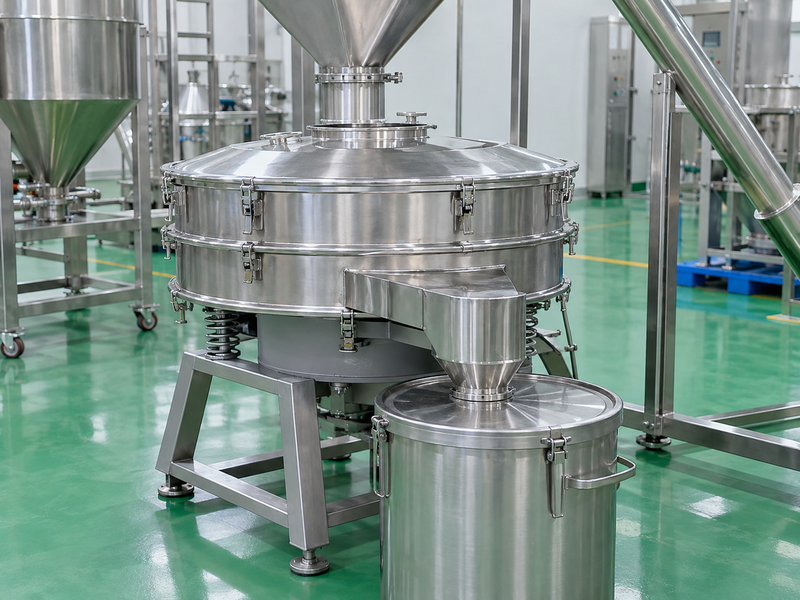
Milling equipment is only one part of a powder specification. Ask which settings operators monitor for the offered grade and where those values are recorded. The factory may control feed rate, machine condition, temperature exposure or other variables through its own validated procedure. You do not need to dictate every setting. You do need an answer showing how the approved sample translates into a repeatable production instruction.
Discuss how a run starts and ends. A startup sample may reveal an unstable condition; a changeover may require cleaning and verification. Ask what an operator does when an observed result leaves the permitted range. A credible response identifies a hold, an investigation and an authorized disposition. It does not rely on a vague claim that experienced staff can feel when a powder is right. In your trial, note whether texture and dispersion match the purpose for which the proposed item will be sold.
| Control point | Factory evidence | Buyer question |
|---|---|---|
| Setup | Approved product instruction | Which revision ran? |
| In-process check | Dated measurement | What triggers a hold? |
| Changeover | Cleaning record | How is a mix-up prevented? |
3. What happens before powder moves to the next step?
Follow the transfer, not just the grinding event
Powder can change condition during transfers and temporary holding. Ask whether ground material goes directly to sieving, blending or packing, and whether intermediate containers are closed and labeled. The label should show enough identity to prevent a bin of one grade entering another grade’s packing run. Confirm how the factory limits exposure to moisture, foreign odors and unrelated ingredients. A tidy milling photo cannot show how staff manage material between rooms.
Ask who authorizes each transfer and how weights reconcile. If the process includes a hold period, record its allowed duration and conditions for your item. Some plants combine powder from several milling runs into one finished batch; if so, ask how run identities remain visible in the final record. This matters when a defect appears in only part of a production day. Your buying team should be able to distinguish one finished lot with several controlled inputs from an unexplained pool of material.
4. How does sieving fit the approved specification?
Define what the step is meant to catch
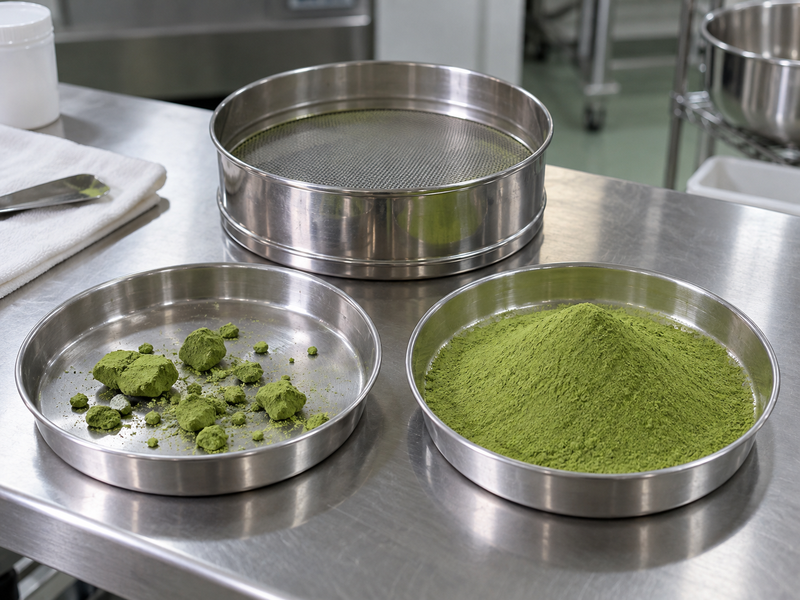
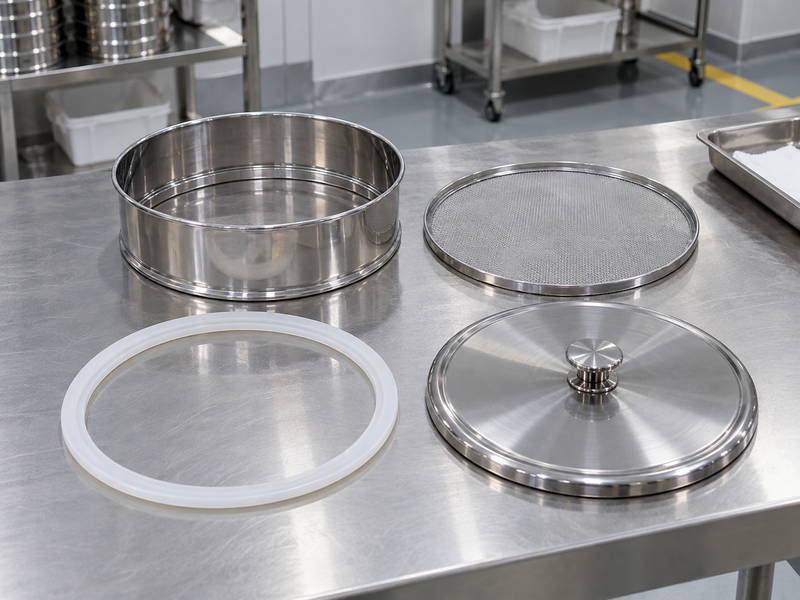
Ask what screen or separation step the factory uses for the proposed powder and what it is intended to control. A sieve may address agglomerates or material outside a chosen size range, but it should not become a substitute for adequate milling. Discuss inspection of the screen before and after use, handling of retained material and recording of unusual yield. If the supplier changes the screen, the buyer may need a fresh texture trial.
Your application determines what acceptance means. A smooth latte may expose grit that disappears in a cake. A bakery may care more about even distribution in dry mix than mouthfeel in water. Set up the same preparation method for the approved sample and later production samples. When comparing particle-size data, check the method and units. A single number with no sampling method can make unlike powders look comparable. Ask the supplier to explain how its specification connects sieving controls with the texture you actually need.
| Observation | Possible factory review | Buyer trial |
|---|---|---|
| Visible clumps | Sieving record and storage condition | Cold-mix preparation |
| Grit | Milling result and test method | Finished drink texture |
| Uneven dry blend | Transfer and mixing procedure | Production-scale blend |
5. Where and when are samples taken?
Make one sample represent one defined decision
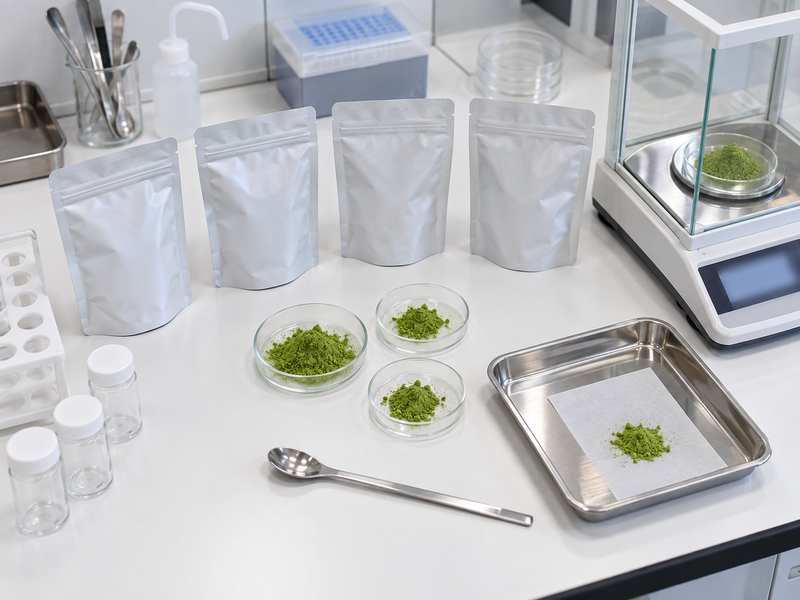
Ask for a sampling plan tied to batch size, process stage and intended test. A pre-milling leaf sample, an in-process powder sample and a finished packed unit answer different questions. The factory should be able to say who takes each sample, how tools are kept clean and how the sample is labeled. If a laboratory receives only an unlabeled cup, a good result is hard to connect with the shipped material.
For buyer approval, request a sealed sample from a known finished batch or a documented trial run. Record its product code, lot, pack date and specification version. Ask whether the commercial order will use the same route. If the sample came from a small test mill while the order will use another line, plan a bridge trial. Keep retained samples under defined conditions so a later complaint comparison remains meaningful. Avoid treating a pleasant taste as proof that the sampling and production route are settled.
6. Which results can hold a batch?
Set limits and ownership before results arrive
Make a release matrix for your SKU. It can include identity, sensory or physical checks and tests chosen by your quality team for the product and destination. Ask which limits come from the supplier’s normal specification and which are buyer-specific. Agree the units, methods and treatment of an out-of-limit result. A batch should remain clearly identified as on hold until an authorized person resolves the result. An attractive certificate of analysis cannot repair an unclear decision rule.
Different reports may be issued at different times. Ask whether packing can occur while results are pending, and whether dispatch is blocked until final release. Clarify who receives a revised report if a laboratory corrects a value or method entry. For U.S. importers, FDA’s FSVP guidance describes risk-based supplier verification obligations for covered importers. A factory’s release process supports that work but does not transfer the importer’s responsibility to the factory.
| Release item | Agreed source | Decision owner |
|---|---|---|
| Appearance and aroma | Approved reference | Factory quality and buyer |
| Physical property | Current specification | Factory quality |
| Requested lot testing | Agreed method and limit | Named quality reviewer |
7. Who makes the final release decision?
Separate production completion from approval
Ask for the role, authority and record used to release a finished lot. A production team may confirm that all bags were filled while quality confirms that records, results and deviations meet the applicable specification. Those are distinct events. Identify whether the factory can dispatch before buyer review or must wait for written acceptance. The arrangement should reflect your purchasing agreement rather than a late email after pallets are loaded.
Request a redacted example of a completed batch file. It should reveal where staff record material lots, process checks, yield, packaging codes, test status and approval. Check whether the person signing can see unresolved holds. If several products share a line, the release review should show changeover checks and the right label version. On your side, name one person to review the file; a shared mailbox without ownership can delay a shipment even when the factory has done its work.
8. How are rework and deviations recorded?
Ask what happens on an imperfect day
Every production system needs a way to record an unexpected result. Ask whether a batch can be re-sieved, reblended or repacked and under what approved procedure. Find out whether rework changes the lot identity and whether the buyer receives notice. A factory that says deviations never occur gives you less useful information than one that can walk through a controlled example with sensitive details removed.
Review the path from detection through investigation, disposition and corrective action. If a label was wrong, what prevented shipment and how were all affected units located? If powder was held after a sensory check, who decided whether another test could resolve the matter? Do not ask for a blanket right to use reworked material without defining the limits. Record which deviations require your approval before release and which can be handled under the factory’s documented procedure.
| Event | Record to request | Buyer decision |
|---|---|---|
| Screen damage | Hold and impact assessment | Accept, test or reject |
| Wrong pack code | Reconciliation and correction | Review traceability |
| Sensory difference | Investigation and comparison | Repeat application trial |
9. What links a packed unit to its batch?
Read the codes on actual packaging
Ask the supplier for a photograph of a real packed unit from the proposed line, with any confidential details covered. Check where the product code, lot and date are printed and whether ordinary warehouse handling can erase them. Confirm the inner pack, outer carton and shipping paperwork use reconcilable identifiers. A bar code may speed receiving, but it should not hide a missing human-readable lot reference.
Run one backward trace from a carton to the production file and input lots. Then pick an input lot and ask which finished lots contain it. This exercise tests the record system while the relationship is still easy to fix. Document how mixed pallets and partial cartons are labeled. Ask how retained units are stored and how a complaint sample will be compared with them. These practical details determine whether a later quality question can be answered within the time your customers expect.
10. How should buyers approve a process change?
Name changes that require a new decision
Write a change list with the supplier before the initial order. A new raw-material source, altered milling route, screen specification, blend composition, pack material or production site may affect your result. The supplier should tell you what changed, why it changed, which lots are affected and what evidence supports equivalence. Your quality and product teams then decide whether documents alone suffice or a new recipe trial is needed.
Keep a versioned approval record: sample ID, specification, pack version, test method and relevant process route. Do not describe a change merely as an improvement. A finer powder can alter mixing behavior, while a different pack can change storage handling. Set a notice point early enough for the buyer to decide before manufacture, not at shipment. Matcha Village’s stated product range includes several grades and blends; ask for the exact item’s current route and records when comparing them. That closes the gap between a good first sample and a dependable next order.
| Proposed change | Send before production | Buyer review |
|---|---|---|
| New milling line | Line identity and comparison data | Repeat texture trial if needed |
| New tea input | Source and sensory comparison | Review flavor standard |
| New inner pack | Material and seal sample | Test storage and handling |
FAQ
Q1. Does a finer powder always perform better? No. Compare texture and dispersion in the intended recipe and check whether the factory can repeat that result.
Q2. Can an in-process sample replace a packed sample? It can guide process checks, while a packed sample shows the material your team will receive.
Q3. What if a report says only “pass”? Ask for the underlying method, limit, unit, result and matching lot identity.
Q4. Must every deviation mean rejection? No. Your agreed procedure can allow investigation and disposition by authorized reviewers.
Q5. What should be retained after approval? Keep the coded sample, specification revision, trial record, batch documentation and agreed change route.
Choose a single proposed powder and ask the factory to walk you through its material, milling instruction, sampling plan and signed release file. Trial a coded packed sample in your product. When those pieces agree, your next purchase order can refer to a real approval record rather than the memory of a promising tasting.