
A China matcha powder factory can quote quickly while the buyer still lacks proof that its offer fits the destination market and finished product. Create one dossier for the exact SKU: application trial, manufacturing site, current documents, shipment plan and named responsibilities. Rankings of “top factories” can suggest names, but they cannot approve an ingredient. This guide shows how an importer or food brand can move from a promising introduction to an evidence-based order. The matcha supply chain guide covers handoffs beyond the production site.
Contents
- 1. Which business and site are offering the powder?
- 2. What exact product is included in the quote?
- 3. How can you validate origin and sourcing claims?
- 4. Which documents cover your destination market?
- 5. What should an export sample prove?
- 6. How do lot reports connect with the shipment?
- 7. Who handles labels and import information?
- 8. How should you compare shipment quotations?
- 9. What happens between approval and loading?
- 10. How can you protect the next order?
1. Which business and site are offering the powder?
Identify the parties before reviewing claims
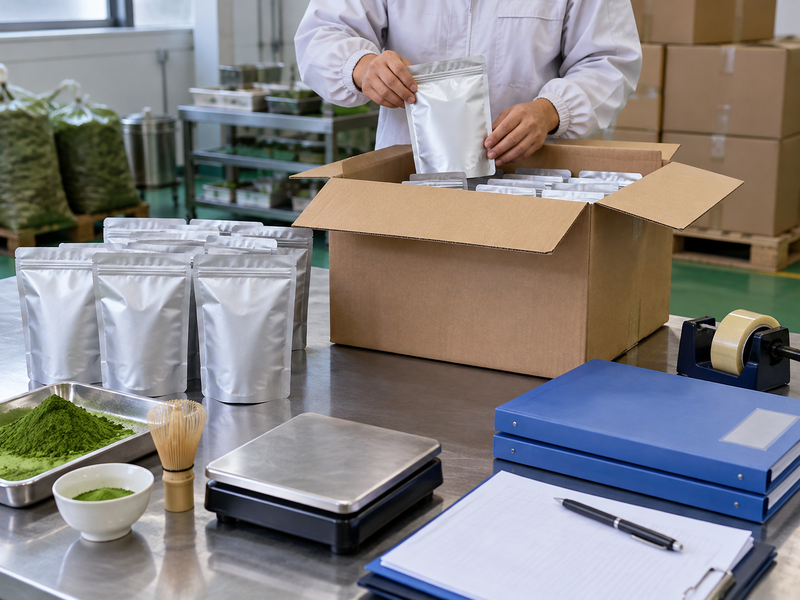
Record the legal seller, production site, packing site and exporter named in the proposal. They may be the same entity or several companies. Ask each party’s role in writing. If a trading company coordinates your order, it can still provide useful service, but you need to know who controls product release and who can answer a deviation question. A company profile, factory photograph and export invoice should not leave you guessing whether they describe one site.
Request a process map for the offered SKU and compare addresses on any audit or certificate. Confirm whether a document covers manufacture, packing, storage or only a different activity. Ask which contact can retrieve batch records and who signs commercial documents. This establishes a clear route when your importer requests clarification after shipment. A short video call with production and quality can help, provided you follow it with written product-specific evidence. Avoid treating an online factory ranking as verification of these relationships.
2. What exact product is included in the quote?
Match product code to use and pack
Ask for an item code, composition, current specification, available pack and quoted quantity. “Ceremonial” or “premium” by itself does not establish measurable acceptance criteria. A café chain may need color and flavor in a milk drink; a bakery might place more weight on performance after heating. A single-ingredient powder should not be confused with a sweetened latte blend. Confirm whether organic status, origin or a particular grade applies to the quoted item rather than the seller’s portfolio.
Create a one-page comparison sheet before requesting a lower price. If two suppliers quote different pack materials, delivery scopes or test packages, the numbers are not comparable. Ask whether product code changes are possible after order approval and how you will be notified. The quotation should reference the same specification revision used for sampling. If it cannot, pause the comparison until the seller resolves the mismatch.
| Quote field | Buyer should record | Why it matters |
|---|---|---|
| Item code | Exact proposed powder | Stops grade substitution |
| Composition | Matcha or formulated blend | Affects label and trial |
| Pack | Inner unit and carton | Affects handling and price |
3. How can you validate origin and sourcing claims?
Ask for the lot’s material story
China has more than one tea-growing area, and a factory address does not prove where a particular tea leaf grew. Ask what origin claim the seller makes for your SKU and which farm, intake or supplier records support it. If leaf from several areas is blended, request an accurate description that your brand can use. A broad regional story may be suitable for marketing research, yet a retail origin statement needs a defensible chain for the product in the bag.
Have the supplier choose one recent finished lot and trace its input materials backward. Check how incoming lots are identified, how mixed materials are recorded and whether origin is maintained through grinding and packing. If your label requires a single origin, write that condition into the specification. If no origin claim is planned, focus on consistent sourcing and controlled changes. Matcha Village’s supplied company material describes tea garden resources in Hangzhou; obtain records for the particular item before repeating any geographic claim on your own packaging.
4. Which documents cover your destination market?
Build a destination-specific file list
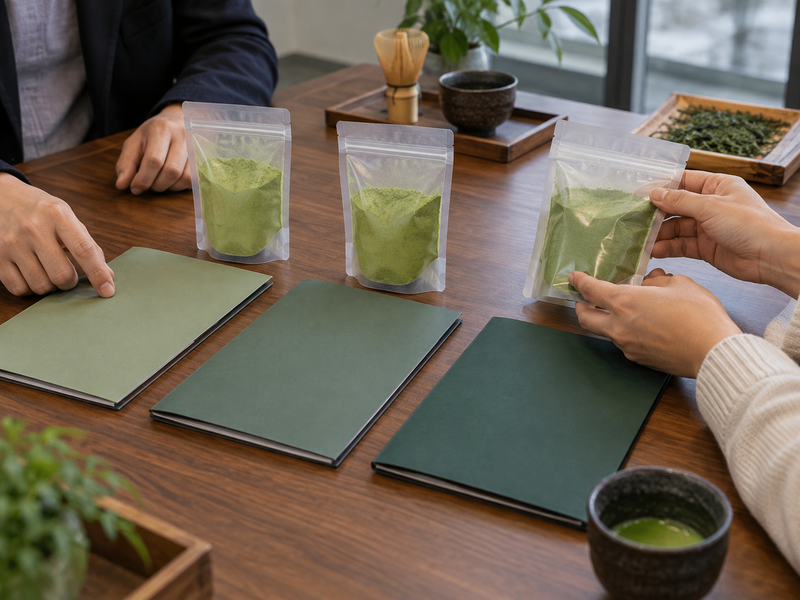
Ask your importer and regulatory colleagues what they require before sending the factory a document request. The list may include a specification, ingredient statement, lot reports, certificate details, commercial invoice information and packaging data. Do not assume a seller’s standard “export packet” fits every country. For covered U.S. food importers, the FDA explains FSVP supplier evaluation and recordkeeping. That obligation belongs to the importer under applicable rules, even if the factory supplies supporting evidence.
Review document scope rather than logo count. A certificate can be current but cover a different site, product or activity. Ask the supplier to name the document owner who will send updated files if a renewal occurs during your order. Keep a versioned list with requested, received and accepted status. Receiving a file is not the same as approving it. Flag translations and legal names early; inconsistent company names can stall review even when the underlying product looks promising.
| File | Scope check | Owner |
|---|---|---|
| Product specification | Exact code and revision | Buyer quality |
| Facility document | Site and activity | Supplier quality |
| Import file | Market and shipment | Importer or broker |
5. What should an export sample prove?
Make the sample resemble the order
Request a coded sample with product name, lot, pack date and specification revision. Ask whether it came from the same line and material route planned for the commercial order. A laboratory pouch made from a special small trial may help early formulation work, but it should not silently become the approved production reference. When possible, request a sealed unit in the proposed packaging so your team can evaluate both powder and opening conditions.
Test the powder in your actual product. For a café, use the same milk, ice, equipment and serving time as store staff. A manufacturer should run its process temperature and mixing sequence. Record dosage, visual appearance, texture, aroma and acceptance decision. Keep a sealed retain sample and a written trial method. If the factory proposes a substitute after your test, treat it as a new item. The purpose of sampling is to make a later shipment comparable, not merely to confirm that matcha tastes pleasant in water.
6. How do lot reports connect with the shipment?
Follow a number through every document
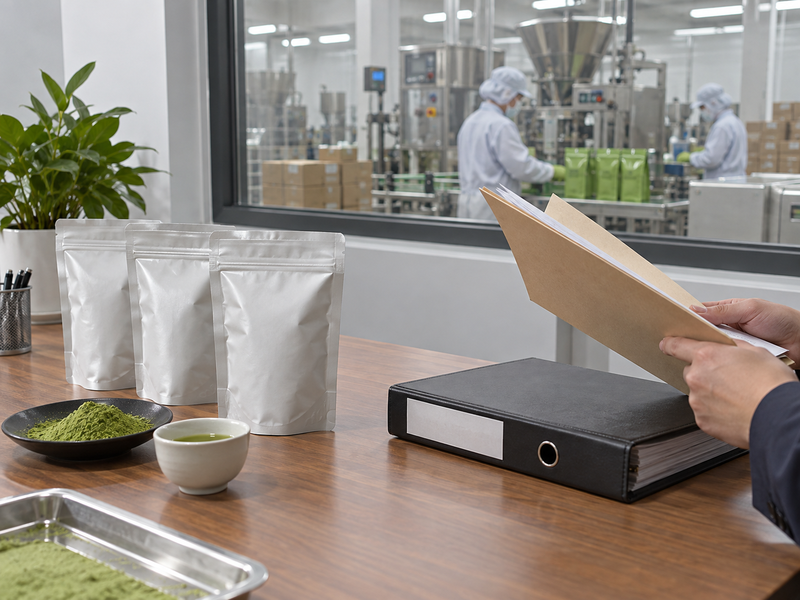
Ask for a sample certificate of analysis or other lot report for the proposed item. Review the product code, batch identifier, test date, method, units and limits. A list of “passed” items may be insufficient if your team cannot see which standard was used. Choose the requested tests from your product risk assessment and destination requirements. Do not copy another importer’s test list without deciding whether it applies to your recipe and route.
Before dispatch, reconcile the report’s lot with inner packaging, carton labels and shipping documents. If a shipment contains several lots, request each lot’s records and a packing list that shows how cartons are allocated. Determine whether the factory holds stock until tests and quality review are complete. If a report changes after a laboratory correction, ask how the buyer receives the updated version. A traceable paper trail makes both routine acceptance and later investigation much quicker.
| Identifier | Appears on | Buyer action |
|---|---|---|
| Product code | Quote, spec, pack | Confirm exact item |
| Lot number | Pack, report, packing list | Reconcile every unit |
| Spec revision | Sample, approval, order | Prevent silent change |
7. Who handles labels and import information?
Split artwork, printing and legal review
For bulk ingredient bags, agree the text and coding needed for your warehouse. For retail private label, name who owns claims, translations, ingredient declarations and final artwork approval in the receiving market. A Chinese factory may be able to print and pack a design; the importer or brand still needs its own qualified review of destination-market labeling. Do not let an old file circulate as “approved” after formula or pack changes.
Use a version number on both artwork and purchase order. Ask for a printed proof or packed mock-up before mass packing. Check where the lot and date appear, whether cartons remain scannable and whether the inner pack matches the approved specification. Define the process for disposing of obsolete labels. For organic or other regulated claims, match the claim to current product and shipment evidence before printing. A technically correct powder in the wrong labeled bag creates a different, avoidable problem.

8. How should you compare shipment quotations?
Put cost and responsibility on one page
Ask each seller to quote the same product, pack, quantity, shipment timing and named trade term with a specified place. Compare which party pays and arranges inland transport, export handling, freight, insurance and import clearance. Also ask when title and risk transfer under the agreed contract. A low price per kilogram can hide a pack change or a different delivery scope, so calculate landed cost using the importer and freight partner’s current inputs.
Do not ask the factory to promise a universal lead time. Confirm the event that starts production planning and the dates for sample sign-off, artwork, payment, material booking and packing. Request a draft document list for your broker. If demand may rise after launch, share a forecast range and ask how allocation is decided. This is more useful than asking whether the plant is “large enough.” Put any split delivery into a schedule that names expected lots and document handoffs.
| Comparison line | Standardize across offers | Confirm separately |
|---|---|---|
| Product | Code and specification | Allowed substitution |
| Commercial | Quantity and currency | Payment event |
| Delivery | Named term and place | Importer responsibilities |
9. What happens between approval and loading?
Create a handoff calendar
An approved sample does not automatically trigger a production slot. Ask for milestones and owners: final specification, packaging artwork, input allocation, production, lot testing, release, booking and loading. Put dates in a shared order record. If one approval arrives late, ask which later dates move. A sequence with dependencies is easier to manage than repeated emails asking whether the order is ready.
Before loading, request the final lot list, pack count, gross and net weights, dispatch documents and any required test files. Ask who checks carton condition and seal integrity. Clarify whether photographs serve only as visual confirmation or form part of your acceptance record. A sensible receiving plan also defines what your warehouse should do with damaged or unidentified cartons. The Codex hygiene principles offer a common framework for discussing controls across processing and handling, but your agreement must identify the actual records and people.
10. How can you protect the next order?
Save a controlled reference set
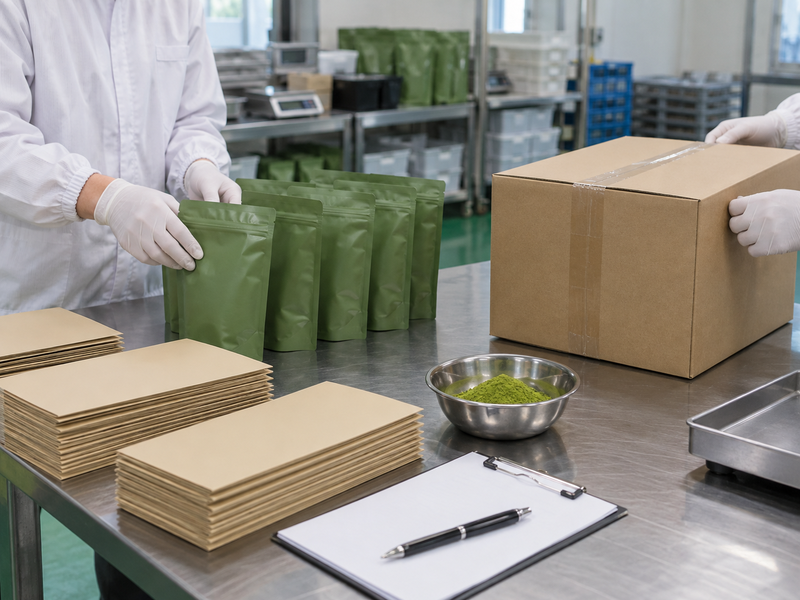
Keep the approved sample, recipe trial notes, specification revision, label version, pack specification and accepted lot document format together. The next purchase order should cite them. Ask the supplier to give notice before changing raw-material source, manufacturing site, formula, milling route or pack material. Your team can decide whether a document review or new product trial is needed. A change that suits one customer may affect another customer’s drink, shelf presentation or compliance file.
Set one contact for quality questions and another for order scheduling. Agree how complaints are reported, how affected lots are identified and when a response is expected. Track actual shipment performance against promised dates without treating a single late box as a permanent verdict. If you are evaluating Matcha Village, send your application and destination requirements and request current evidence for one named SKU. An order becomes easier to repeat when every approval refers to the same product, lot logic and handoff process.
| Saved approval | Recheck before reorder | Responsible team |
|---|---|---|
| Sample and specification | Item and revision still match | Product and quality |
| Pack artwork | Market text still approved | Brand and importer |
| Delivery plan | New dates and named term | Purchasing and logistics |
FAQ
Q1. Does a top-ten list verify a Chinese factory? No. Use it to find candidates, then check legal parties, sites, products and records yourself.
Q2. Is an export certificate enough for U.S. import? No single supplier certificate resolves every importer obligation. Review the applicable requirements with your U.S. team.
Q3. Can a factory source tea outside its home province? It may. Ask for the sourcing records behind the specific lot and describe origin accurately.
Q4. When should artwork be approved? Before production packing, with a controlled version and a physical or digital proof your brand has checked.
Q5. What makes a quote comparable? Match item code, specification, packaging, quantity, delivery scope and document package.
Choose one product and one intended market for the initial review. Trial its coded sample, reconcile its evidence and request a complete handoff schedule. That work gives your team a defensible reason to order and a clear way to handle the second shipment.