
A matcha factory turns prepared tea leaf into a powder that must work in your finished product. A tour or a bright sample can leave buyers without answers about repeat orders. Use the ten checks below to connect a proposed SKU with its material, process, records and commercial handoff. The Codex General Principles of Food Hygiene provide a useful basis for discussing documented food controls; your own quality team still decides what evidence it needs. Our matcha supplier audit sets out the wider supplier review that accompanies a factory check.
Contents
- 1. What product are you asking the factory to make?
- 2. Which operations happen at the stated site?
- 3. How does the factory identify incoming tea?
- 4. What process controls matter for your application?
- 5. How can you test a representative sample?
- 6. Which records support a release decision?
- 7. Can the factory trace a shipped lot?
- 8. What does capacity mean for your order?
- 9. How will packing and transport protect the powder?
- 10. What belongs in a repeat-order agreement?
1. What product are you asking the factory to make?
Put the application before the grade name
Start with the finished use. A café may whisk straight tea and mix a separate powder into milk. A bakery cares about flavor after heat, dough color and handling during weighing. A beverage producer may need dispersion in a cold liquid. These are different requests even if all three buyers ask for “premium matcha.” Tell the factory which recipe, equipment and serving conditions will determine approval. Ask it to identify a specific proposed item code rather than offering a loose grade description.
Record your nonnegotiable constraints beside preferences. A dairy-free formulation is a condition if the powder includes other ingredients; a preferred shade of green may need a range and a visual reference. Pure matcha and sweetened latte mixes should never share one specification by accident. Have procurement, formulation and quality sign off on the same brief before prices arrive. That small internal step prevents a fast quotation from becoming the wrong purchasing decision.
2. Which operations happen at the stated site?
Draw a real facility boundary
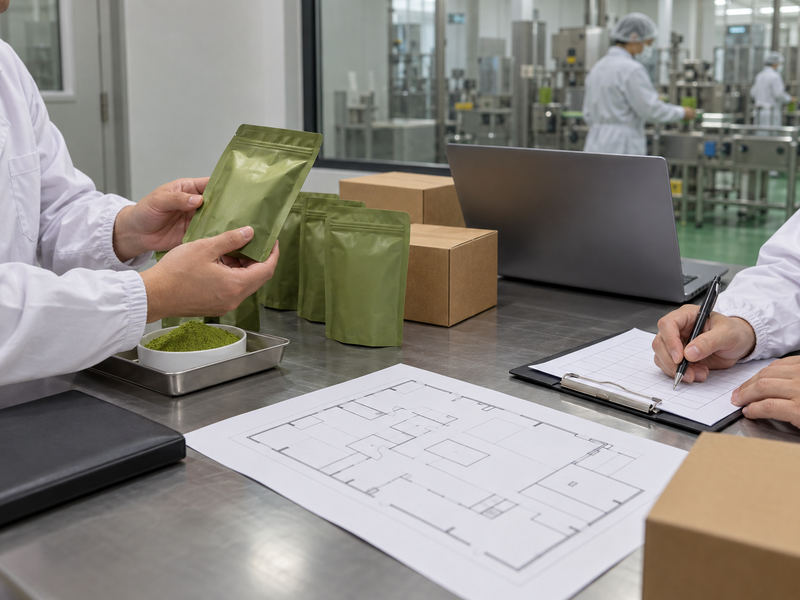
“Factory direct” tells you little about what a company actually does. Request a plain process map that names the site handling each stage: tea sourcing, leaf preparation, milling, blending, testing and packing. Some operations may happen at a partner facility. That can still be workable when the supplier identifies who controls the stage, who owns the records and how material moves between sites. A photograph of one grinding room does not establish that every offered product travels through it.
Ask for the legal company name, site address and a product list tied to that site. Where an audit or certificate is offered, compare its scope against the activity that matters to your SKU. The buyer of a single-ingredient powder needs different answers from a buyer of a sweetened blend. Write down the owner of each outsourced step and the document that links transfers. You are mapping responsibility, not collecting impressive building photographs.
| Activity | Site question | Useful evidence |
|---|---|---|
| Milling | Where is this SKU ground? | Process map and lot record |
| Blending | Are other ingredients added? | Formula control and line record |
| Packing | Who seals the sale unit? | Pack specification and batch code |
3. How does the factory identify incoming tea?
Follow material into production
Ask how incoming leaf or prepared tea is identified, accepted and stored. A meaningful intake record should let staff connect supplier, material code, receipt date and internal lot. For origin claims, request records that support the declared growing area instead of relying on a landscape photograph. A multi-source product is not inherently unsuitable; the buyer needs to know how source changes are controlled and disclosed. If a particular origin matters to your label, make that a written acceptance condition.
Storage deserves attention because powder quality cannot be recovered through attractive packaging later. Ask how material is protected from moisture, odors and mix-ups before grinding. Ask whether rejected material is segregated and who can release a held lot. During a visit, choose a current intake code and ask staff to show its route through storage. A traceable example provides more information than a presentation about general sourcing policy. If the answer depends on several record systems, confirm that their identifiers reconcile.

4. What process controls matter for your application?
Connect controls with observable outcomes
The process discussion should start with your failure modes. A powder for cold drinks may create visible sediment or clumps. A bakery may accept some color change after baking but reject harsh flavor. Ask which milling, sieving, blending and environmental controls the factory uses for the proposed product. Then ask what its operators record and what happens when a result falls outside an agreed limit. A generic equipment list does not answer either question.
Avoid specifying a machine type without understanding the intended result. Particle size, dispersion and mouthfeel are product properties; a mill photograph is only context. Request a current specification, approved sample and a practical explanation of how a process change would affect them. If the supplier offers several grades, ask whether a grade change means a new leaf source, new blend, different milling route or more than one of these. Your team can then decide which changes require another application trial.
| Buyer concern | Ask the factory to show | Buyer check |
|---|---|---|
| Lumps in milk | Sieving and handling controls | Prepare the intended drink |
| Color shift | Sample standard and storage method | Compare under fixed lighting |
| Grit | Powder specification and test method | Evaluate finished texture |
5. How can you test a representative sample?
Give the trial a repeatable method
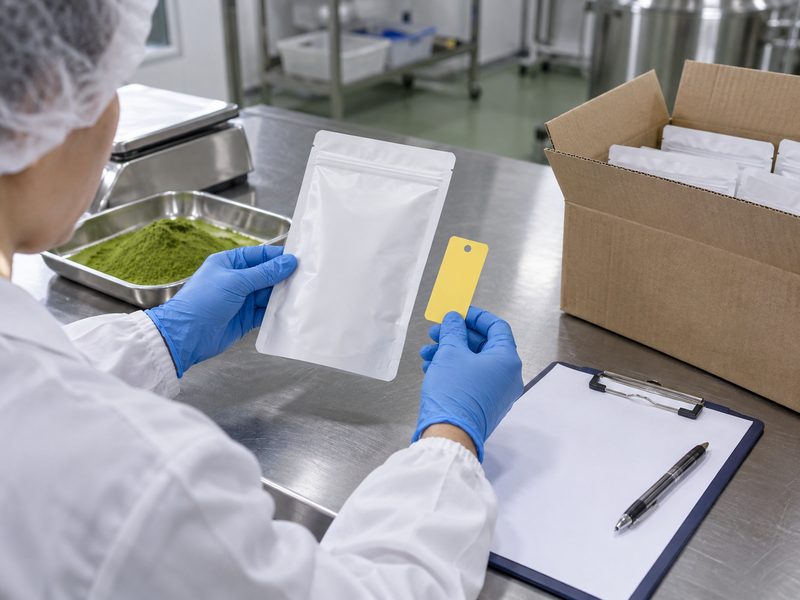
Request a sample identified by product code and lot, with its current specification. Record when it was packed and how it traveled. A pouch without an identity can help an initial taste discussion but cannot anchor an approval. If a later production batch will use different leaf, blending or packaging, ask the supplier to say so before you treat the sample as a purchase standard. Keep one sealed retain sample under conditions your quality team approves.
Run the trial as customers will encounter the product. Mix a café powder with the actual milk, sweetener, ice and equipment. Put a bakery powder through the full bake and cooling cycle. Document preparation, dosage, sensory result and acceptance decision. Include a competitor or existing approved powder as a blind comparator when possible. If a recipe needs adjustment, record whether you are changing the powder, the recipe or both. Otherwise a “passed” sample can hide a costly formulation change.
6. Which records support a release decision?
Make the document package specific
Ask quality to define records for the offered SKU and destination. A product specification, ingredient statement, relevant certificate scope and lot-linked test report often answer different questions. A certificate does not replace a lot report; a favorable sample does not prove every later batch meets the agreed limits. The supplier should identify who reviews results, who has authority to release stock and how a deviation is handled. Ask for sample copies with sensitive commercial fields redacted if necessary.
Check dates, units, methods, product code and lot reference when reviewing a report. “Pass” alone may not show which limit was applied. Import requirements also sit with the receiving business. For U.S. shipments, the FDA explains the importer’s foreign supplier verification responsibilities, subject to the applicable rule and exemptions. A buyer should confirm its own route with its regulatory team instead of treating a factory badge as import clearance.
| Record | What it answers | Common follow-up |
|---|---|---|
| Specification | What is the accepted product? | Which revision applies? |
| Lot report | What was measured on this lot? | Do units and methods match? |
| Certificate | What site and activity are covered? | Is the document current? |
7. Can the factory trace a shipped lot?
Test one chain from bag to material
Choose a finished bag code and ask the supplier to reconstruct its path. The record should connect packing, production, inputs and release. Work backward from a bag and forward from an incoming material lot. The second direction matters when an input issue requires the factory to identify every affected finished lot. If blending combines several inputs, the record should show which lots entered which batch, not merely a monthly purchase total.
Ask how the same identifier appears on commercial documents and the receiving label. A warehouse operator should not have to infer that two unrelated codes mean the same lot. Also ask who can retrieve records when the primary quality contact is absent and how long records are retained under the supplier’s program and applicable requirements. A short trace exercise is more useful than an unsupported promise of “full traceability.” Record gaps, corrective actions and a date for rechecking them.
8. What does capacity mean for your order?
Translate scale claims into available supply
Equipment counts and annual capacity can help frame a discussion, but they do not say whether your chosen grade can be supplied in your needed months. Ask for the allocation process, raw material planning, packing schedule and constraints for your specific SKU. Find out whether the quoted lead time starts after sample approval, artwork approval, deposit receipt or another event. Those start points can change the answer more than a headline capacity figure.
Share a forecast in ranges rather than presenting a market estimate as a firm purchase order. Ask what notice the supplier needs for a seasonal increase and what happens if harvest or packing inputs change. Matcha Village’s company material describes a large production base and several product categories; the buyer should still obtain current, SKU-specific capacity and available dates in writing. If your business needs split deliveries, request a schedule showing each release and the lot documentation expected with it.
| Planning item | Buyer input | Factory response needed |
|---|---|---|
| Trial | Sample quantity and due date | Available coded sample |
| Launch | Initial order window | Production and packing slot |
| Replenishment | Forecast range | Notice period and allocation rule |
9. How will packing and transport protect the powder?
Review the complete handling route
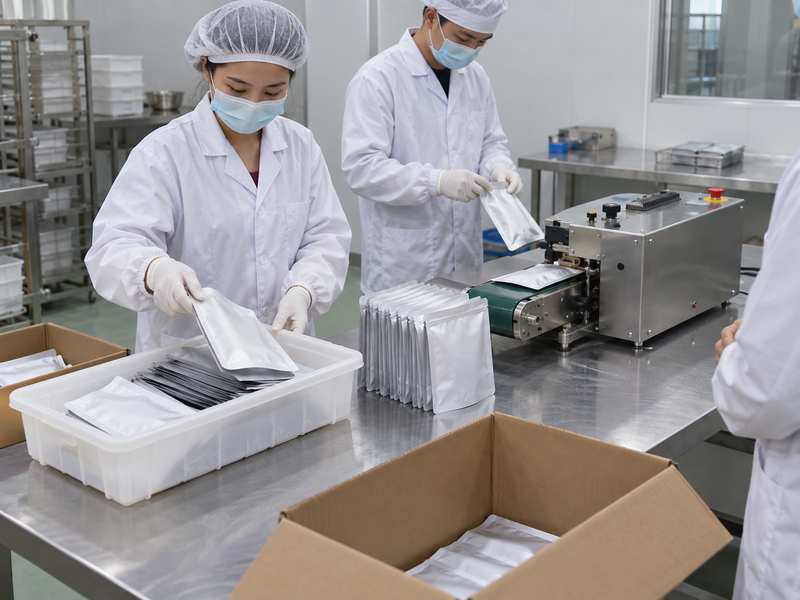
Ask for packaging specifications before assuming that a quoted bag, tin or sachet protects the product through your distribution route. Confirm inner material, seal method, net weight, carton configuration and printed lot position. The right format also depends on how your operation opens and uses powder. A food factory consuming sealed bulk packs has a different handling pattern from cafés opening many small units across a store network.
Agree who approves artwork, ingredient text and destination-market labels for retail packs. Keep label review separate from manufacturing capability: a factory can print a label that your market cannot use. Ask for a shipping sample or packed mock-up to test readability, case handling and warehouse scanning. Specify how damage or seal failure will be recorded at receipt. Transport terms should name the handoff point and the documents expected with each shipment. A vivid product photograph cannot answer a receiving team’s basic questions.
10. What belongs in a repeat-order agreement?
Preserve the approved decision
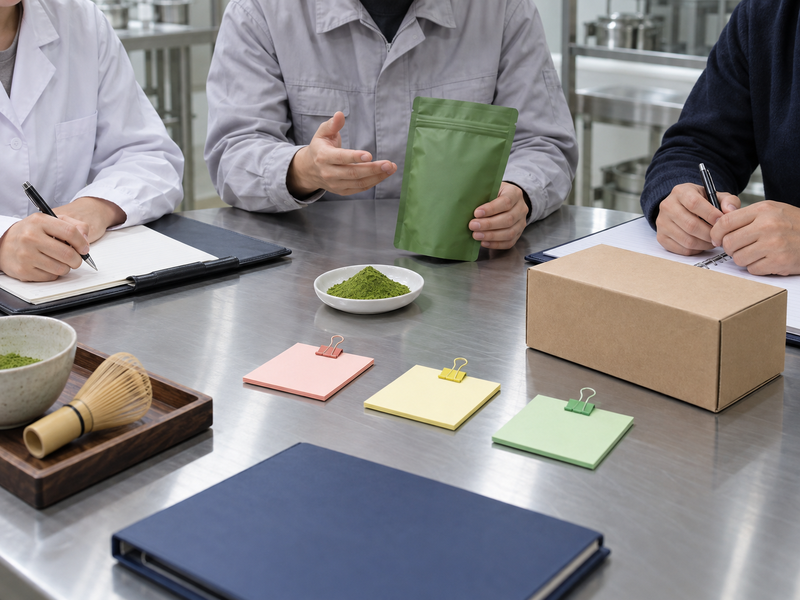
After a successful trial, turn the result into a controlled purchasing record. Attach the approved product code, specification revision, sample reference, packaging version and destination to the agreement. Name the parties that can approve a change. A supplier may need to alter leaf sourcing or a packing component; the buyer needs notice early enough to review the effect before production or dispatch. “Same quality” is too vague for that discussion.
Set a routine for lot documents, release communication, complaints and reconciliation of short or damaged deliveries. The contract should also distinguish a forecast from a committed order and specify which commercial terms apply to each shipment. Let quality own technical approval and purchasing own pricing and delivery amendments. For your next enquiry, send one application brief and ask the matcha factory to map its proposed SKU, process site, sample and records against it. That is a usable starting point for a long-term supply conversation.
| Agreement field | Practical purpose | Owner |
|---|---|---|
| Approved SKU and revision | Prevent silent substitutions | Quality |
| Pack and label version | Match receiving and sales needs | Operations |
| Change notice route | Trigger another review | Supplier and buyer |
FAQ
Q1. Does a factory tour prove that every product is made onsite? No. Ask for a process map and records tied to the item you plan to buy.
Q2. Is a very green sample enough to approve a factory? No. Test the coded sample in your recipe and review its specification and release evidence.
Q3. Should I request every possible laboratory test? Your quality team should select tests for the product, risks and destination. Agree limits and methods before comparing reports.
Q4. Can one approved sample cover later lots? It can serve as a reference, while later lots still need the agreed release review and change control.
Q5. What should I send in an initial enquiry? Send the application, intended market, forecast range, pack needs, target decision date and required documents.
The useful outcome of factory evaluation is a purchasing decision your team can repeat. Put one proposed SKU through a recipe trial, a record review and a realistic delivery discussion. Then keep those approved details with the purchase order. If your team is comparing Matcha Village products, send that brief and request a coded sample and current documents for the exact item offered.