
A matcha plum latte can look striking on a seasonal menu, yet its fruit layer is difficult to repeat. Ripe plums vary in tartness, skins leave visible flecks, and a loose compote can disturb milk when the cup moves. A café can control those variables by weighing usable fruit, cooking to a measured yield, testing milk compatibility and defining the final build. The haki. plum recipe cooks diced plums with sugar before layering milk and matcha. This guide adapts the idea into a separate operational trial for commercial service.
Contents
- 1. What should a matcha plum latte deliver?
- 2. How should a café choose and prepare plums?
- 3. What makes a repeatable plum compote?
- 4. Should the fruit be chunky or strained?
- 5. How do plum acidity and milk interact?
- 6. How much matcha belongs in the cup?
- 7. How should an iced drink be layered?
- 8. Can a hot version work on the menu?
- 9. What handling and cost checks matter?
- 10. What should the final service sheet specify?
1. What should a matcha plum latte deliver?
Define flavor and appearance separately
The cup should taste of plum and matcha after stirring, not merely show purple and green layers before service. Set a cup size, milk choice, intended sweetness and fruit visibility. Ask tasters to score fruit character, tea character, acidity, mouthfeel and aftertaste in a blind test. Then photograph the built cup at handoff, after ten minutes and after a short carry. A café may decide that a crisp, tart plum profile suits its menu, while another prefers a cooked, jam-like fruit note. That choice should precede formula work.
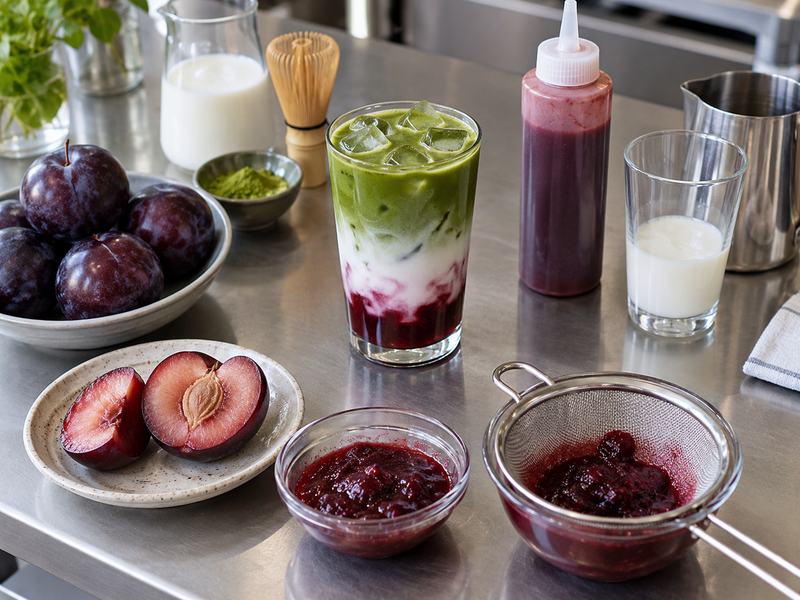
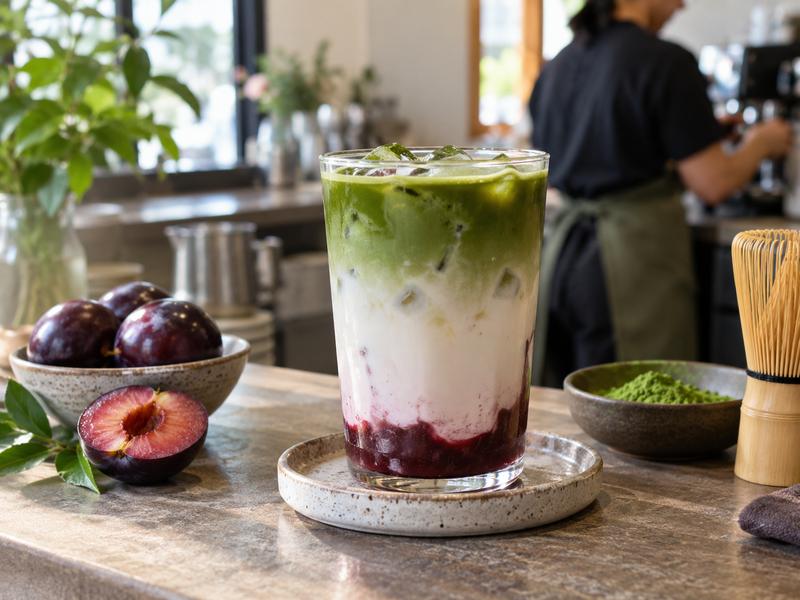
Compare a stirred drink with a layered one made from identical ingredient weights. The haki. reference builds with cooled cooked plums at the bottom, milk in the middle and matcha on top. That makes a useful visual starting point; it does not establish that customers will receive an evenly flavored drink. Taste through the straw. If the first sip is only fruit and the last is mostly tea, the café must provide a mixing cue or change the build.
| Target | Record | Accept from trial |
|---|---|---|
| Fruit flavor | Blind score | Recognizable plum |
| Tea flavor | Blind score | Clear after stirring |
| Layer appearance | Timed photos | Menu-appropriate |
| Bottom residue | Photo or grams | Comfortable last sip |
2. How should a café choose and prepare plums?
Specify usable fruit rather than fruit count
Plums change with variety, season and ripeness. A recipe that calls for two fruits may produce very different cooked yields from one delivery to the next. Record variety, supplier, raw weight, pit weight, trimmed waste and usable flesh. Select fruit that has enough flavor for cooking without extensive bruising. Compare two ripeness bands using the same compote method and taste them in the finished latte. A sweeter plum may need less added sugar, but it may also break down faster and change the puree texture.
Wash fruit before cutting according to the FDA’s fresh-produce guidance, which recommends running water and removing damaged areas. Check that every pit and fragment is removed before blending or serving. Decide whether skin stays in the formula: it supplies color but can leave flecks and astringency. Write the decision into the prep sheet so operators do not improvise. Weigh the trimmed flesh. That figure connects purchasing cost to the amount of compote the bar can actually sell.
| Fruit variable | Record | Why |
|---|---|---|
| Variety and ripeness | Supplier and visual note | Flavor drift |
| Raw versus usable mass | Grams | Yield and cost |
| Skin decision | On or off | Color and texture |
| Pit check | Count and sign-off | Preparation control |
3. What makes a repeatable plum compote?
Cook to yield and texture, not minutes alone
The reference recipe cooks diced plums with sugar until soft. For café scale, weigh plums and sugar and record the finished mass after cooking. Time matters, but pan width, batch size and fruit water content also affect evaporation. Trial two finished yields from the same starting weight, such as a looser reduction and a thicker one. Those are suggested experiments, not published standards. Cool both by the business’s approved method before assembling iced drinks. Evaluate spoonability, pourability and whether the compote spreads into the milk.
If the compote is too thick, staff may leave varying amounts in the scoop or squeeze bottle. If too thin, the purple layer may cloud the whole cup immediately. Record pan, heat setting, batch size and the temperature or visual end point that staff can reproduce. Taste sweetness after the compote is mixed with milk, since a pleasant spoonful can become weak in a full latte. Weigh the cooked pot. A finished-yield target is more reliable than “cook for seven minutes” across different equipment.
4. Should the fruit be chunky or strained?
Test the actual drinking path
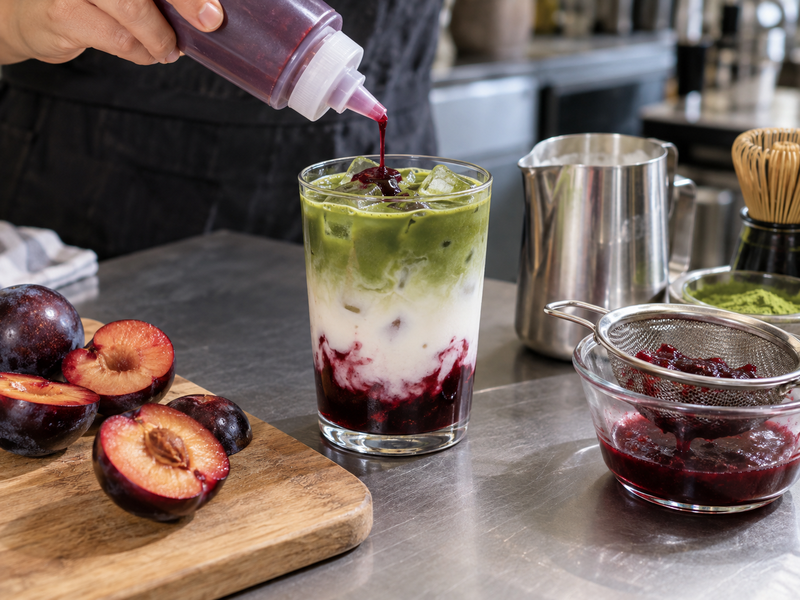
Visible fruit pieces signal a made-with-fruit drink, but they can block a narrow straw or collect under a takeaway lid. Compare chopped compote, blended puree and puree passed through a coarse sieve. Use the same usable plum and sugar mass for each. Weigh material retained by the sieve and note how much flavor and color remains in the liquid. A fine filter may make a beautiful layer while removing much of the fruit the café paid for. The right answer depends on the intended cup and customer expectation.
Run a practical cup test: build each version, drink half through the actual straw, then inspect the bottom and lid. Photograph skin flecks against the milk. Check how much compote remains in a squeeze bottle after ten portions. If staff need to shake a bottle, define the mixing action and retest the first and last dispense. Use the customer’s straw. A spoon sample cannot show whether the finished drink is easy to consume.
| Fruit texture | Benefit | Trial risk |
|---|---|---|
| Diced compote | Visible pieces | Straw blockage |
| Blended puree | Strong fruit body | Skin flecks |
| Coarse strained | Smoother pour | Yield loss |
5. How do plum acidity and milk interact?
Check the mixed drink, not only its layers
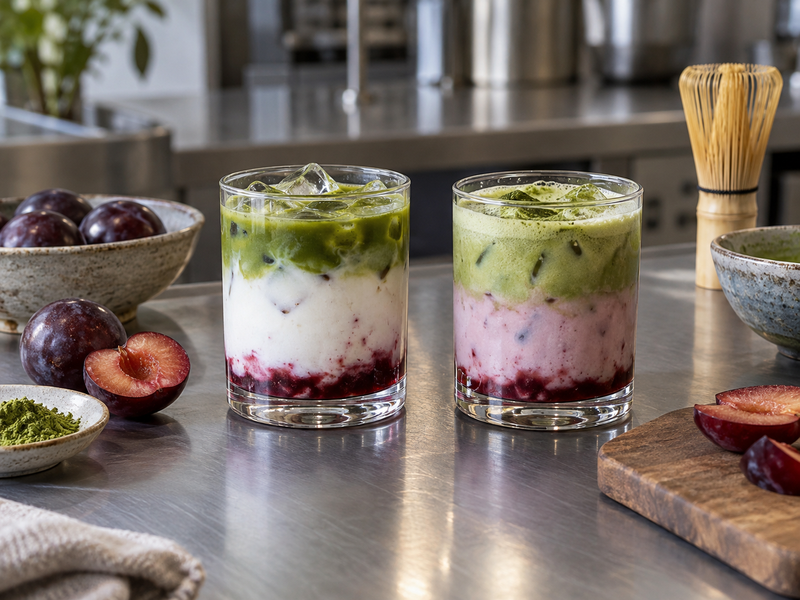
Tart fruit can make a milk drink look grainy after mixing, even if separate layers appear smooth; research on acid-induced milk gelation shows why acidity and temperature deserve attention in a dairy trial. Prepare the same compote dose with the café’s dairy and plant milk options. Mix each fully, then inspect immediately and after ten minutes for flakes, watery separation and unpleasant sharpness. Record a pH reading if the product team has the equipment, but treat it as a comparative quality measure rather than a safety claim. Milk brand and the fruit batch both matter, so repeat with a second plum delivery.
The FDA’s acidified-food guidance defines regulated acidified foods for a different product category; it should not be used to declare a fresh café latte safe or shelf stable. In this drink, the immediate question is visible milk stability and palatability. If the fruit is aggressively tart, trial less compote or a different ripeness band before adding more sugar. Stir the sample. A layered photograph cannot reveal what happens when the customer combines plum and milk.
| Milk trial | Immediately | After 10 minutes | Taste |
|---|---|---|---|
| Dairy | Smooth or flecked | Separation | Fruit balance |
| Oat | Smooth or flecked | Separation | Grain note |
| Other approved milk | Smooth or flecked | Separation | Sweetness |
6. How much matcha belongs in the cup?
Test dose against finished fruit and milk
The reference uses 3–4 g of matcha in a home drink. A café should set its own weighed dose for its cup size, powder and fruit strength. Trial two doses while holding compote, milk and ice constant. Prepare matcha with measured water as a smooth slurry. Judge tea flavor after stirring, not only the bright top layer. Plum’s tartness can make a weak tea taste thin and a heavy tea taste more bitter. Take panel notes at handoff and after a short wait.
Request supplier lot codes, current specifications, sample packs and pricing for the proposed matcha. Matcha Village’s portfolio includes application grades and bulk formats, but the buyer should test a specific sample in the approved latte. Calculate powder cost per saleable cup and include slurry left in tools. Do not infer superior performance from grade labels alone. Compare blind cups. Color may bias a panel toward the greener drink even if it is less balanced after stirring.
| Powder test | Hold constant | Score |
|---|---|---|
| Lower dose | Fruit, milk and ice | Tea clarity |
| Higher dose | Fruit, milk and ice | Bitterness |
| Replacement lot | Approved formula | Color and flavor drift |
7. How should an iced drink be layered?
Make the visual build repeatable
The visual order can be fruit, ice, milk and matcha, as in the reference. Measure each addition and test the pour over a spoon or directly onto ice. A dense compote may hold the bottom; a loose puree may bleed through milk. Neither is automatically a defect, but the café should choose an appearance it can deliver repeatedly. Photograph three cups built by different operators under normal station lighting. Record build time and whether one operator needs an unusually slow pour to achieve the menu image.
Use a fixed ice mass and a marked cup. Changing ice alone can make layers thinner or thicker. Test a lidded cup with a short carry and note how much color mixing occurs before pickup. A menu image should represent that real handoff state. Tell staff whether to serve a stirrer or advise customers to mix before drinking. Carry the cup. A layered drink that collapses on the way to the table needs either a different photo or a sturdier build.
8. Can a hot version work on the menu?
Trial it as a separate drink
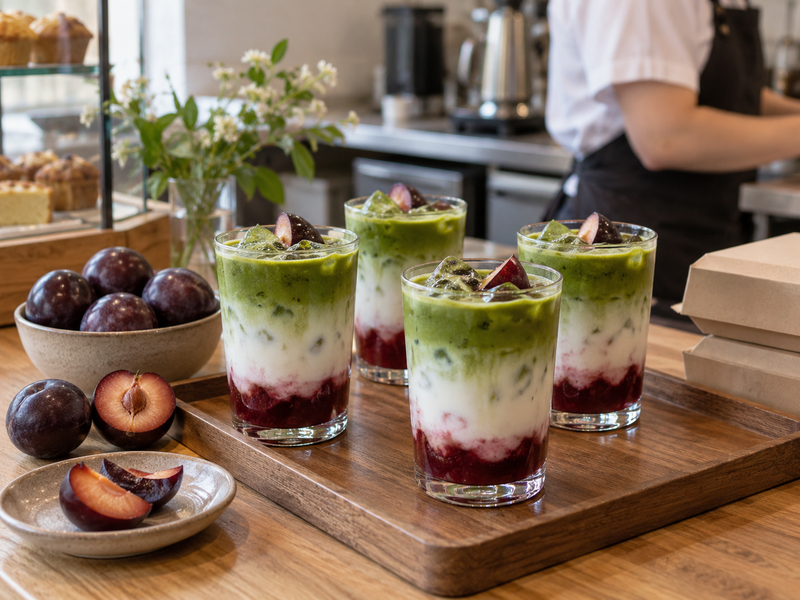
Hot milk, tart plum and matcha may produce a different flavor and texture from the iced version. Warm compote can seem sweeter, and visible layers may be less stable. Make a small controlled test using the same fruit mass as the iced formula, then adjust only after tasting. Compare compote in the bottom of the cup with compote dispersed into milk before adding prepared matcha. Inspect for graininess and residue in the pitcher. Avoid putting fruit through equipment that the café cannot clean efficiently.
Measure the final serving temperature for repeatability under the café’s equipment, not as a universal standard. Milk-containing preparation and holding must follow the business’s safety plan and local requirements; the FDA Food Code is a US retail model. If the hot cup only works when staff make multiple extra steps, count those steps in the menu decision. Taste after five minutes. A drink that is smooth at pouring can change as fruit and milk sit together.
| Hot route | Inspect | Decide from |
|---|---|---|
| Compote at bottom | Layer and later mixing | Customer experience |
| Fruit mixed into milk | Grain and foam | Texture |
| Matcha added last | Tea flavor | Final balance |
9. What handling and cost checks matter?
Include fruit loss and component handling
Cost the drink from raw fruit through saleable compote, accounting for pits, trimming, cooking loss and strained solids. Add matcha, milk, ice, cup and labor. A seasonal plum price may change weekly, so test whether the menu price still works at a higher fruit cost. Record compote per cup in grams; a generous spoonful can erase margin and change acidity. For a multi-shop rollout, define approved plum varieties or a substitute assessment rather than letting each site choose whatever looks purple.
Cooked fruit and milk components need the business’s documented preparation, cooling, storage and discard procedures. The FDA’s produce guidance covers washing before cutting; local food-safety requirements govern service. Do not set a shelf life from a sensory trial. For labeling or menu information, review dairy and any plant-milk allergens against the final ingredients; the FDA allergen list is relevant to US sales. Price the usable fruit. Raw case price hides the cost of pits and reduction.
10. What should the final service sheet specify?
Record the chosen version without ambiguity
Specify plum variety or acceptance criteria, raw and usable weight, sugar, cooked yield, texture, cooling method, portion size and dispensing tool. Add approved milk, matcha dose, slurry water, cup size, ice mass, build order and garnish. Include photographs at handoff and after the expected wait. A separate line should tell staff whether the guest should stir before drinking. Write component handling and discard directions from the business’s approved food-safety plan, with lot records for fruit, milk and matcha.
Have a second operator make three cups without coaching. Weigh each finished cup, time the build and compare blind tasting notes. Repeat when the plum supplier changes. If the drink still meets the chosen sensory and visual target, request ingredient terms for the expected seasonal volume. Matcha Village can discuss powder selection and supply, while the café owns the recipe validation and market-specific label review. Keep one failed build photo. It shows new staff what too-thin compote or a hurried pour looks like.
The matcha latte powder buying guide can narrow supplier samples; test the finalists with the actual plum compote.
FAQ
Q1: Does matcha plum latte need cooked fruit? Cooked compote is one useful route. Test it against the café’s flavor and service brief.
Q2: Should the plum skin stay on? Compare color, flecks and astringency with the actual fruit lot and drinking cup.
Q3: Why does milk look grainy after stirring? Fruit acidity, milk choice and mixing may contribute. Trial the exact combination before launch.
Q4: Can the iced formula be served hot? Treat hot service as a separate test for flavor, texture, equipment and handling.
Q5: How do we keep layers consistent? Fix compote texture, ingredient weights, ice mass, cup size and pour order, then test several operators.