
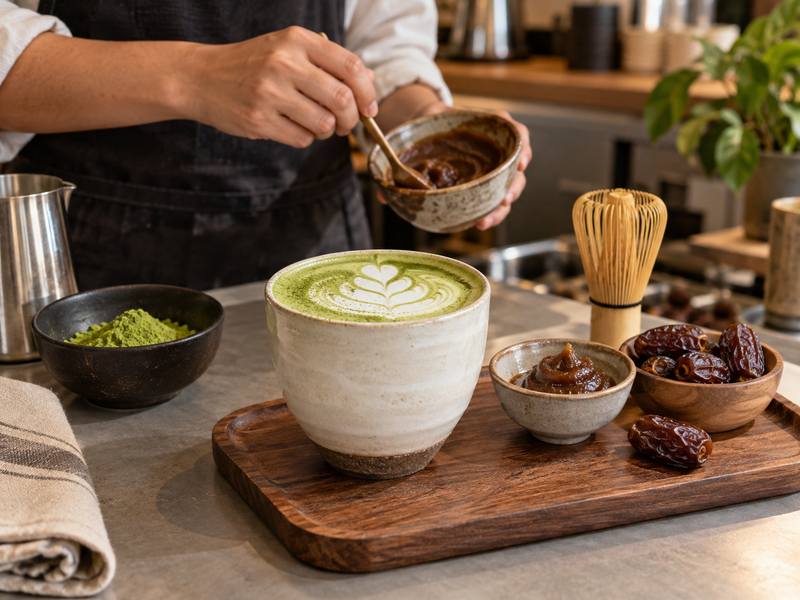
A matcha date latte lets a café sweeten with fruit, but whole dates bring pulp, variable sweetness and a cleaning step that syrup does not. One blender batch may pour smoothly while the next blocks a steam wand or leaves grit in an iced cup. The Bree Matcha recipe blends dates with warm milk and suggests straining for a silky texture. For a commercial drink, weigh the fruit, define the paste or milk process, and test hot and iced service separately. This guide treats every numeric formula as a trial starting point, not a production standard.
Contents
- 1. What should a matcha date latte taste like?
- 2. Which dates and milk should a café trial?
- 3. Should dates become paste or blended milk?
- 4. How should the pulp be managed?
- 5. How much matcha balances the date?
- 6. What works for a hot latte?
- 7. What changes in an iced version?
- 8. Can date preparation be batched?
- 9. How should the café cost and label it?
- 10. What belongs in the approved drink sheet?
1. What should a matcha date latte taste like?
Set the sensory target before blending
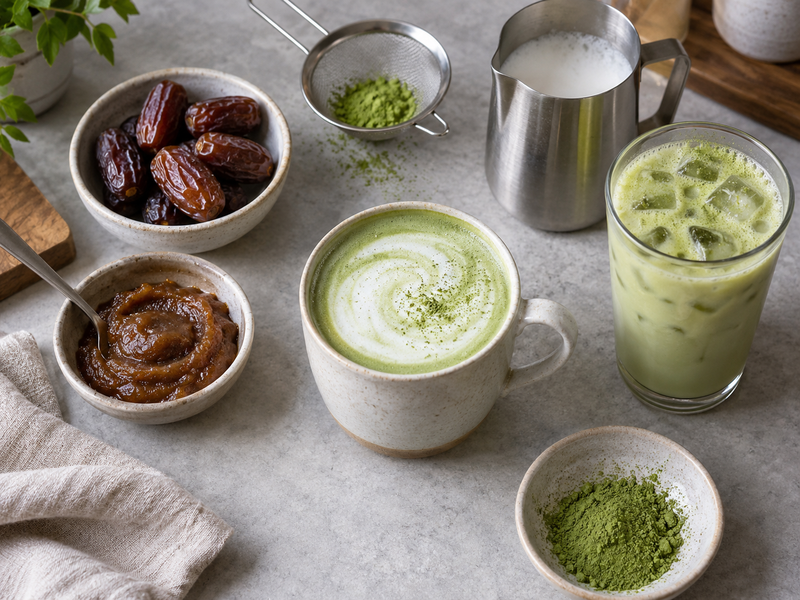
Dates contribute sweetness, caramel-like notes and body, so the drink should be judged on more than its first sip. Define a cup size, milk choice, matcha dose and serving temperature. Ask tasters to score tea clarity, fruit sweetness, texture and aftertaste without seeing the formula. A drink can taste balanced immediately and become too heavy near the bottom as date solids settle. Photograph a clear iced cup after assembly and after ten minutes; for a hot cup, check residue on the inside wall.
Decide whether the menu promises visible date flavor or simply a sweetened matcha latte. A strong date note may be welcome on a winter menu but overpower tea in a smaller espresso-style cup. Compare a plain matcha latte alongside the date version at the same milk and powder dose. The reference recipe combines date milk and whisked matcha, which offers a useful home-scale concept but no café tolerance for sediment or build time. Taste the last sip. It tells the team whether blending, straining and stirring are working.
| Cup target | Record | Failure sign |
|---|---|---|
| Matcha clarity | Blind score | Fruit hides tea |
| Date sweetness | Blind score | Syrupy finish |
| Bottom residue | Grams or photo | Uneven serving |
| Build time | Seconds | Queue delay |
2. Which dates and milk should a café trial?
Buy to a usable-weight specification
Date varieties differ in softness, water content, skin thickness and sweetness. Purchase a defined variety and record the brand, pack, pit status and usable fruit weight. Count and weigh rejected pits or hard pieces even when the pack claims to be pitted. A soft date may blend quickly; a drier lot may need an approved soaking step that adds time and water. Compare two lots at the same weighed fruit and liquid ratio before adjusting the recipe. This is a supplier-consistency test, not a claim that one variety always performs best.
Choose milk by the drink’s intended customer. Dairy, oat and almond options differ in sweetness, fat, protein and the way they foam. Test each with the same date preparation rather than scaling sugar or matcha by assumption. For plant milk, read the ingredient and allergen statement, since stabilizers and sweeteners vary between brands. Record the milk’s own sweetness so dates are not blamed for an overly sweet result. Weigh the fruit. “Three dates” can mean very different doses across sizes and varieties.
| Input | Supplier detail | Trial check |
|---|---|---|
| Dates | Variety and pit status | Usable grams and softness |
| Dairy milk | Fat level and brand | Foam and flavor |
| Plant milk | Sweetening and allergens | Texture and sweetness |
| Matcha | Lot and grade | Flavor in finished cup |
3. Should dates become paste or blended milk?
Compare two practical workflows
A concentrated date paste can be portioned into hot or iced drinks, but staff must disperse it thoroughly. Blending dates directly into milk gives a ready-to-pour component and may make a smooth hot latte, yet it ties the date preparation to one milk type. Make both from the same usable date weight. Record liquid added, blend time, final mass and loss on the blender wall. Then use each to build the same size drink. A paste can be useful for multiple milk options; date milk may reduce a step at the bar.
The Bree Matcha recipe blends dates with warm milk and notes that straining can improve texture. It lists dates by count and has an internal mismatch in matcha teaspoons, which reinforces the need for a weighed café trial rather than copying it directly. Do not infer nutrition or “no added sugar” claims from the use of fruit; the final drink and its menu wording need review. Time both routes. The smoother method may still be a poor fit if it requires a blender wash for every order.
4. How should the pulp be managed?
Strain only as finely as service needs
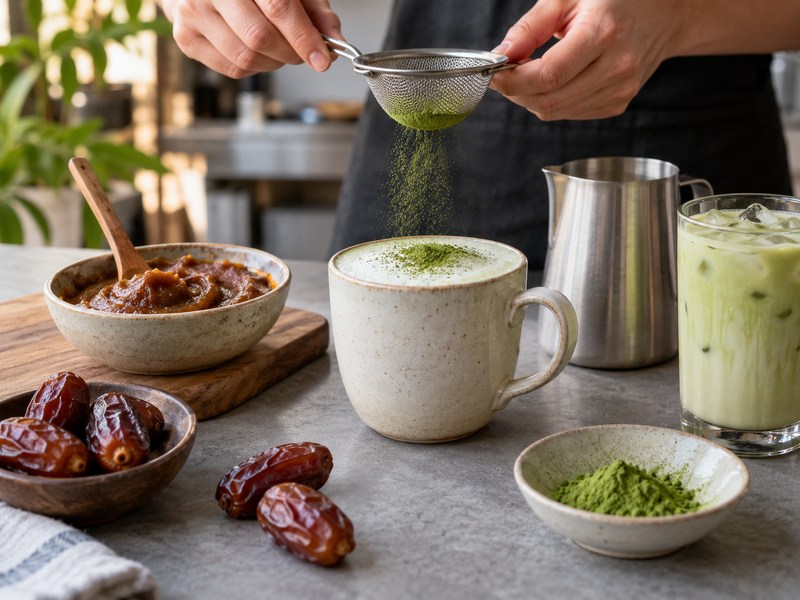
Pulp changes mouthfeel and can collect at the bottom of an iced glass. Test a coarse sieve, a fine mesh and no straining using the same blend. Weigh the retained material and the liquid recovered; a very fine sieve may remove enough date solids to reduce sweetness and yield. Ask a panel to taste coded drinks through the actual straw or cup lid. A visually smooth pitcher can still leave flecks that a customer feels while drinking. Check whether the chosen strainer is practical to clean during a rush.
If the fruit has tough skin, a longer blend might improve the cup more cheaply than a finer filter. Record blender speed and time only for the equipment in use; a different machine requires rechecking. Do not add water freely to help the blender: it changes sweetness, cup volume and steaming behavior. Compare pulp after holding a prepared component under the café’s approved conditions, because particles may settle even after a good initial strain. Inspect the strainer. Its retained weight is part of the ingredient cost and may explain why two staff members produce different sweetness.
| Pulp route | Record | Decide from |
|---|---|---|
| Unstrained | Residue and mouthfeel | Strongest date body |
| Coarse sieve | Retained grams | Speed versus texture |
| Fine mesh | Retained grams | Smoothness versus loss |
5. How much matcha balances the date?
Dose in grams, then taste with milk
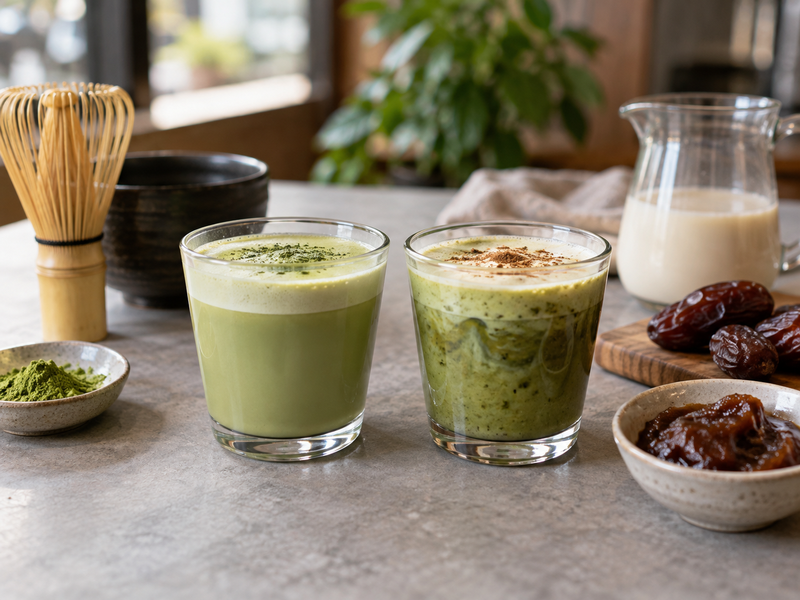
Fruit sweetness can make a low matcha dose disappear, while a high dose may taste dry against date pulp. Compare two weighed matcha doses, such as 2 g and 3 g in the same chosen cup, with date and milk held constant. These numbers are test points, not published standards. Prepare the powder as a small slurry with measured water so dry clumps do not get mistaken for date grit. Taste blind at serving temperature and after a short wait. An iced drink may need a different balance from a hot one because cold changes aroma perception and dilution.
Ask for supplier lot identification, ingredient specification and a sample of the proposed purchase grade. Evaluate the powder in the date latte, not just in a water tasting. Matcha Village’s company information describes a range of matcha grades and bulk supply, but no grade name guarantees a particular result in this formula. Calculate cost per cup at the winning dose, including wastage from mixing vessels. Let the tea speak. If tasters cannot identify matcha after fruit and milk are added, fix the balance before paying more for decorative color.
| Tea trial | Matcha dose | Hold constant | Judge |
|---|---|---|---|
| A | 2 g | Fruit and milk | Tea recognition |
| B | 3 g | Fruit and milk | Bitterness and color |
| C | Chosen dose, new lot | All else | Repeatability |
6. What works for a hot latte?
Protect texture through steaming and mixing
Hot service needs a clear order of operations. One trial can blend dates into milk before warming, then combine it with prepared matcha. Another can disperse a measured date paste into warmed milk. Compare pourability, foam, residue on the pitcher and final temperature under the café’s own equipment settings. Keep the matcha preparation separate from the steam wand so powder does not bake onto the wand or pitcher. If using a plant milk, repeat the foam test; its behavior may differ from dairy.
Do not infer a safe holding duration from a drink that looks and smells fine. Milk-containing components should follow the business’s food-safety plan and local rules; the FDA Food Code provides a US retail model. Record actual service temperature for product quality and repeatability, but do not present one temperature as a universal latte requirement. A cup can be hot yet gritty if paste is added too late. Wash the pitcher after the test. Date residue that slows cleanup belongs in the labor calculation.
| Hot build | Watch | Possible adjustment |
|---|---|---|
| Date milk steamed | Foam and pitcher residue | Blend or strain |
| Paste into warm milk | Dissolution | Pre-disperse paste |
| Matcha finish | Clumps and color | Fresh measured slurry |
7. What changes in an iced version?
Recheck viscosity after chilling
Cold milk can make date paste disperse slowly. Trial a pre-mixed chilled date milk against paste shaken with a small measured milk portion before the full build. Weigh the ice rather than filling by eye. Compare appearance, sweetness and pulp distribution at assembly, ten minutes and the likely takeaway handoff. A layered green top may look appealing but can leave all the fruit at the bottom until the customer stirs. Include a mixing instruction if the drink truly needs one.
The cup and lid matter. A narrow straw may trap date particles, while a wide sipping opening exposes sediment near the end. Test both. If the date layer is intentionally visible, photograph a realistic mixed version too, because the customer will not preserve a layered display while walking. Keep the fruit and matcha concentrations separate in preparation to avoid a pitcher whose last serving is stronger than its first. Shake, then wait. A smooth first sip does not prove the chilled drink stays evenly distributed.
8. Can date preparation be batched?
Test the component through the intended service period
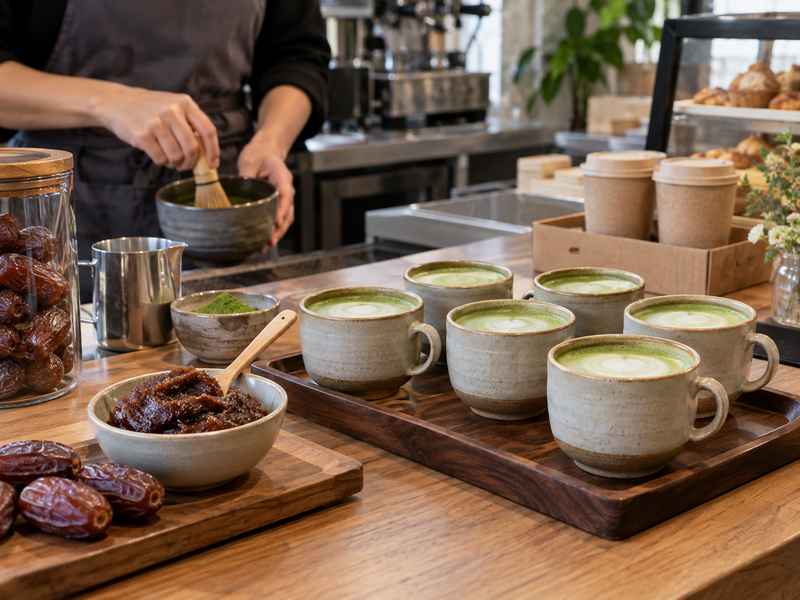
Batching can cut order time, but it also creates a container of sweet fruit and milk or water that needs controlled handling. Make a small labeled trial under the site’s food-safety plan. Compare the first, middle and final pours for solids, sweetness and weight. Record the mixing method before each pour; “shake well” is too vague unless the team defines how long and with what container. Check whether the component thickens when chilled and whether a bottle nozzle traps skin or pulp.
Set preparation, refrigeration and discard procedures through the operation’s safety review. Do not assign shelf life from a kitchen observation. The FDA Food Code is a starting reference for US retail operations, while the local authority and business plan govern the actual process. Track date and milk lots so a complaint or unexpected texture can be investigated. Test the last pour. A bottle that begins thin and finishes as paste cannot support a consistent menu item.
| Batch check | First pour | Last pour | Decision |
|---|---|---|---|
| Weight | Grams | Grams | Portion drift |
| Pulp | Photo | Photo | Separation |
| Sweetness | Panel score | Panel score | Mix routine |
| Nozzle | Clear | Clear or blocked | Package choice |
9. How should the café cost and label it?
Count usable fruit and lost paste
Cost date fruit by usable grams after pits and rejects, then add blender and sieve loss. Calculate matcha, milk, ice, cup, labor and any discarded prepared component per saleable drink. A date-sweetened latte may cost more in prep time than a syrup-sweetened one even if raw fruit is inexpensive. Run the calculation at a realistic daily order volume, not only a perfect single-cup trial. Record whether preparation can be shared between hot and iced service without compromising either drink.
For menu and packaged applications, review ingredient and allergen wording using the final recipe. Dairy milk is a major allergen in the United States, and tree nuts or soy may enter through alternate milks; the FDA allergen list identifies the major categories. A claim such as “no added sugar” requires market-specific review rather than an assumption from the use of dates. Cost the retained pulp. If a fine sieve removes much of the purchased fruit, that loss belongs in the price decision.
10. What belongs in the approved drink sheet?
Write a method another barista can follow
The final sheet should name the date variety and usable fruit weight, preparation ratio, blend and straining method, approved milk, matcha dose, slurry water, cup size, ice amount and build order. Give hot and iced versions separate instructions. Include photographs of an accepted fresh cup and the acceptable appearance after the expected service delay. Record the batch label, handling rules and person authorized to change a supplier lot. Any tolerance for pulp, sweetness or pour weight should come from repeated tests.
Ask a second operator to make both versions without help, then compare finished weights, preparation time and tasting scores. Repeat with another date lot before adopting the formula at scale. For sourcing, request matcha samples with the actual latte brief and current documentation from Matcha Village or another supplier; the approved cup, not the grade label, decides the purchase. Keep the messy cup in the notes. It may show exactly which step needs a clearer instruction before rollout.
Consult the matcha latte powder buying guide when comparing powder samples, then taste them with the chosen date base.
FAQ
Q1: Is a matcha date latte made with paste or date milk? Either works. Compare texture, build time and flexibility with the café’s milk options.
Q2: Should the date mixture be strained? Test it with the intended cup or straw and weigh the material removed before deciding.
Q3: Can the same formula serve hot and iced? Use the same idea, then validate dose, dispersion and sweetness separately at each temperature.
Q4: Why is the last sip thicker? Date pulp may settle. Check blending, straining, mixing and time between preparation and service.
Q5: Does using dates permit a no-added-sugar claim? A claim needs review under the target market’s rules and the complete final formula.