
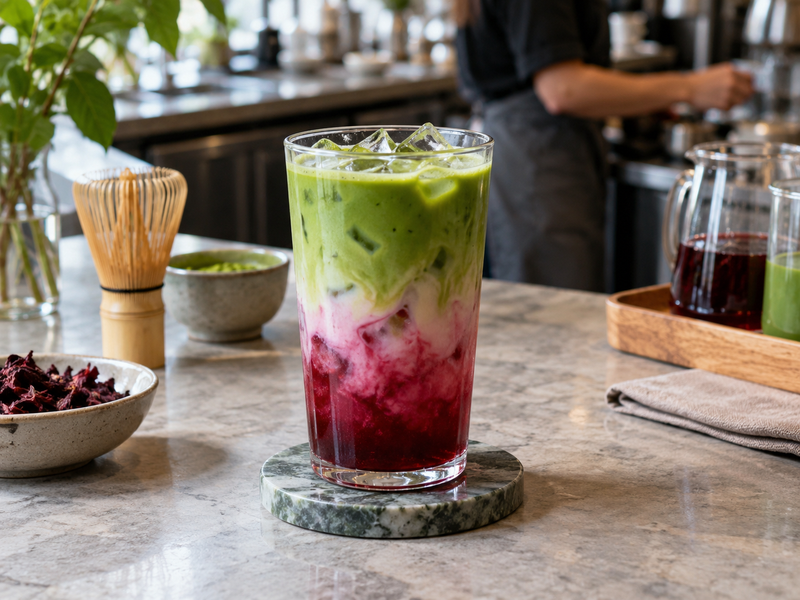
A matcha hibiscus latte offers a vivid green and ruby cup, but the color is the easy part. Hibiscus concentrate varies with brew strength, its tartness can make milk look grainy, and an iced layer may turn muddy during pickup. A café needs a measured tea brew, a milk compatibility test and a service build that survives normal handling. The Matcha.com hibiscus recipe combines hibiscus tea, non-dairy milk, sweetener and whisked matcha. This guide develops an independent B2B trial around brew control, taste and cup stability.
Contents
- 1. What should a matcha hibiscus latte deliver?
- 2. How should hibiscus concentrate be brewed?
- 3. How do you control tartness and sweetness?
- 4. Which milks work with the concentrate?
- 5. How much matcha balances hibiscus?
- 6. What build keeps the colors clear?
- 7. How does the drink change after stirring?
- 8. Can hibiscus be prepared ahead?
- 9. Which purchasing and labeling checks matter?
- 10. What belongs in the café specification?
1. What should a matcha hibiscus latte deliver?
Judge the stirred cup as well as the photograph
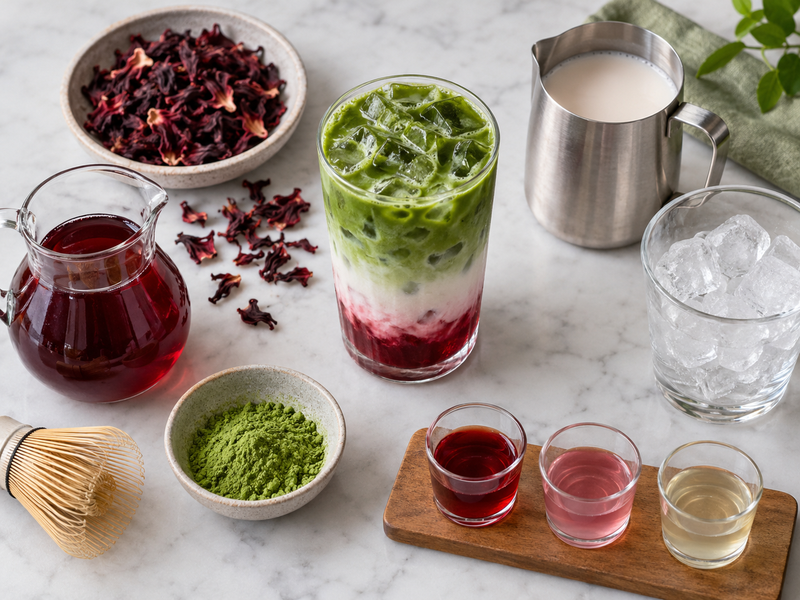
Set the intended cup size, milk option, sweetness and flavor balance. Hibiscus brings floral tartness; matcha brings tea depth and a different bitterness. A layered drink should remain appealing at handoff, but the real drinking experience may be a fully mixed pale or muddy color. Taste both states. Ask a small panel to score hibiscus clarity, matcha clarity, sweetness, acidity and texture without seeing the ingredient amounts. Photograph the cup at assembly and after a short carry in the container actually used for service.
The Matcha.com reference recipe uses hibiscus tea, non-dairy milk and matcha in an iced drink. That is a useful flavor reference, not a commercial formula or evidence for health claims in its title and prose. Build a plain hibiscus-milk control and a plain matcha-milk control so tasters can explain what each component contributes. Stir before judging. A beautiful red base is no help if the full cup tastes sharply sour or chalky.
| Cup target | Trial record | Failure signal |
|---|---|---|
| Floral flavor | Blind score | Hibiscus disappears |
| Tea flavor | Blind score | Matcha buried |
| Mixed texture | Photo and tasting | Visible grain |
| Handoff appearance | Timed photograph | Muddy layers |
2. How should hibiscus concentrate be brewed?
Weigh dried flowers and finished liquid
Hibiscus tea strength depends on flower mass, water mass, temperature and steep time. Start with weighed dried hibiscus and water, then compare two steep times while keeping the other variables fixed. Record the mass of strained concentrate, since flowers retain liquid. A simple color photograph under fixed lighting helps, but taste must decide whether the concentrate is too harsh. A dark brew is not automatically a better latte; it can overwhelm tea and require excessive sweetener. Use one hibiscus supplier lot for the first test, then repeat with another lot.
Strain consistently to remove petal fragments that can lodge in a squeeze bottle or make a drink look dirty. Cool the concentrate using the café’s approved method before pouring it into an iced drink. Do not infer safe storage from brew strength, tartness or color. A pH reading can help compare batches for quality, but it does not replace the business’s safety review. Weigh the strained yield. A formula based only on starting water overlooks liquid left in the flowers.
| Brew variable | Keep fixed | Observe |
|---|---|---|
| Flower dose | Water and time | Color and tartness |
| Steep time | Flower and water | Astringency |
| Strainer | Same brew | Clarity and yield |
3. How do you control tartness and sweetness?
Test the finished combination on ice
Hibiscus can taste pleasantly tart as tea and too sharp once milk and matcha enter the cup. Trial a fixed hibiscus dose with two measured sweetener levels, then adjust concentrate only after tasting. Use a defined syrup concentration so staff do not change sugar content by swapping products. Compare a freshly built drink with one held for the normal pickup time; melting ice can soften both sweetness and acid. Suggested trial doses should be recorded in grams or milliliters for the chosen cup and revised by tasting. They are not industry standards.
If the drink tastes thin, increasing syrup may make it sweet without restoring tea or floral flavor. Try a different hibiscus concentration while holding total liquid volume constant. Measure pH only as one quality observation and keep it out of safety or shelf-life promises. The FDA’s acidified-food guidance concerns regulated acidified products, not a fresh café latte. Taste after dilution. A recipe balanced before ice melts may fail during the customer’s first few minutes with it.
4. Which milks work with the concentrate?
Check visible stability after mixing
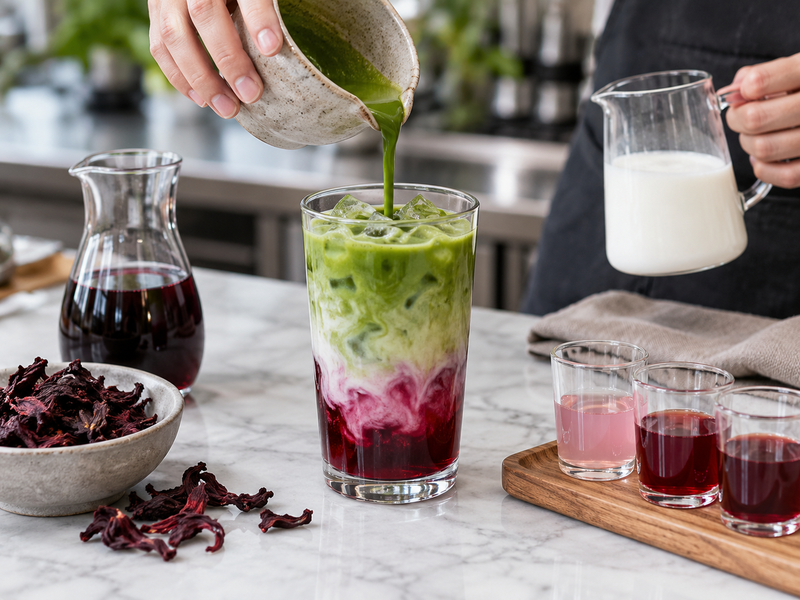
The reference favors non-dairy milk, but a café should test the actual brands it sells. Prepare identical hibiscus and matcha portions with dairy, oat and any other planned milk. Stir each fully and inspect for flakes, watery separation, foam loss and unpleasant texture immediately and after ten minutes. Research on acid-induced milk gelation supports checking dairy under the actual acidity and temperature; it does not predict how a particular café drink will perform. Some plant milks include acid regulators or stabilizers; read their ingredient statements rather than assuming all oat milks behave alike. The result is an observed compatibility decision for those specific products, not a general rule about milk categories.
Test at the serving temperature and with the intended ice. A warm bench cup may behave differently from an iced one. If a milk looks grainy, reduce direct contact between concentrated hibiscus and milk during the build, test a weaker concentrate or choose a different milk. Do not hide an unstable combination under a layered photograph; customers will stir it. Record brand and lot in the trial sheet. Mix the full cup. That is the stress test for milk compatibility.
| Milk trial | Immediately | After 10 minutes | Decision |
|---|---|---|---|
| Dairy | Smooth or flecked | Separation | Keep or reject |
| Oat | Smooth or flecked | Separation | Keep or reject |
| Other plant milk | Smooth or flecked | Separation | Keep or reject |
5. How much matcha balances hibiscus?
Use a measured slurry and a blind tasting
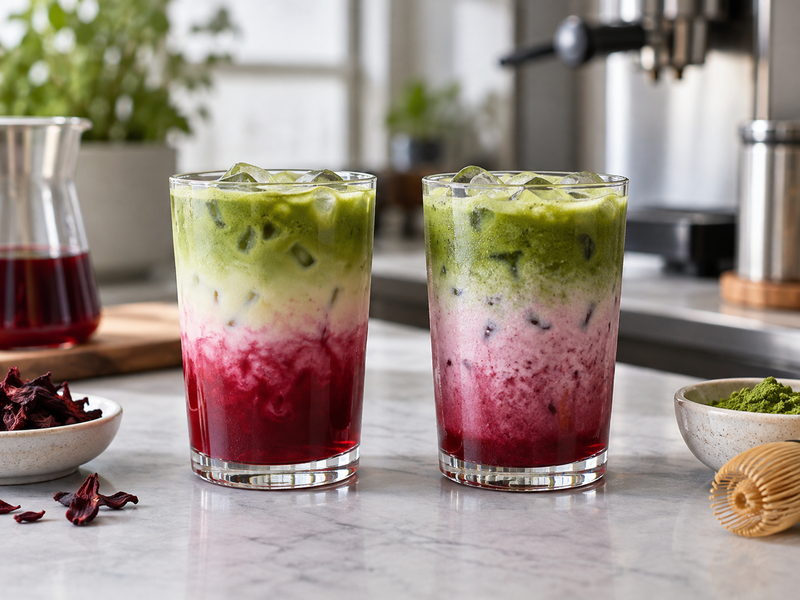
Fine matcha needs dispersion before it meets a cold milk drink. Sift a weighed dose and whisk with a fixed amount of water. Compare two matcha doses while hibiscus, sweetener, milk and ice remain constant. A café might begin with 2 g and 3 g for its selected cup size; those figures are suggested experiments, not published standards. Check the taste after stirring and at the last sip. A heavier dose may strengthen tea but also add sediment that looks dark against a red base.
Ask the proposed supplier for a current specification, lot identifier and sample. Test the lot in the finished drink rather than choosing from dry powder color. Matcha Village’s company information lists application grades and bulk supply options; the buyer still needs to select a grade through the actual hibiscus formula and price it per saleable cup. Record slurry water as part of total liquid, since it changes dilution and layer thickness. Blind the cups. The brightest green top can bias the panel away from the better tasting balance.
| Matcha version | Hold constant | Judge |
|---|---|---|
| Lower dose | Brew, milk, syrup | Tea recognition |
| Higher dose | Brew, milk, syrup | Bitterness and grit |
| Replacement lot | Approved build | Color and flavor |
6. What build keeps the colors clear?
Standardize density, ice and pour order
The order of hibiscus, ice, milk and matcha changes the first impression. Compare hibiscus at the bottom with a top pour, keeping all ingredient weights the same. A denser sweetened hibiscus base may hold a lower layer, but stirring and movement will still change it. Measure ice by mass and use a marked cup so the liquid headspace is repeatable. Pour the matcha slurry at a fixed pace and position; a dramatic slow pour that only one staff member can execute is a weak service method.
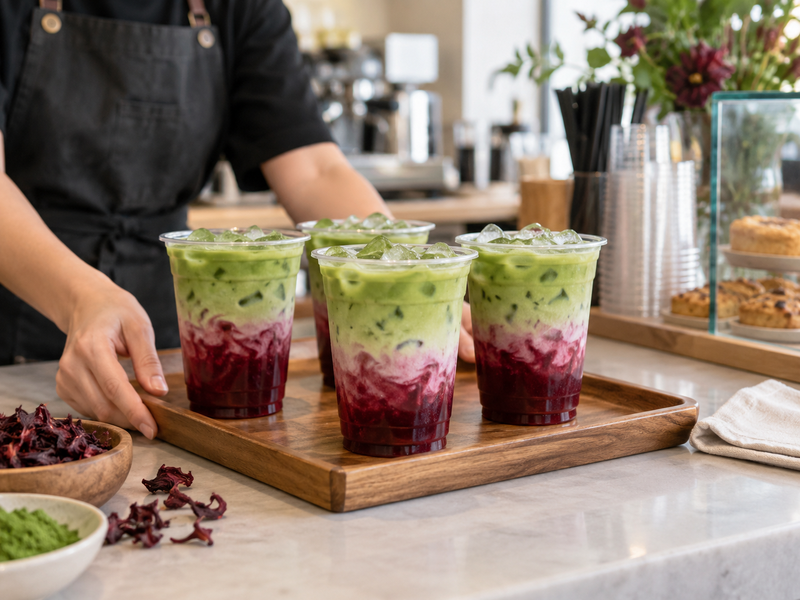
Photograph three cups built by different operators. Then place lids on them and carry them through the normal handoff route. Decide which appearance is acceptable at both points. A clear cup can display the layers, while an opaque takeaway cup should be judged mainly on taste and texture. Provide a stirrer or menu instruction if the drink is intended to be mixed. Test the actual pickup. An undisturbed studio-style cup can set a promise the bar cannot keep.
7. How does the drink change after stirring?
Let the customer experience determine the recipe
Layering can create three different first sips: tart hibiscus from the bottom, plain milk in the middle and concentrated tea at the top. Some customers will stir, some will not. Trial both drinking paths with the same cup and straw. Score flavor at the first, middle and final third, and look for milk flecks once the acid is distributed. If the mixed color is gray or dull, it may be better to market the drink for its floral flavor than for a long-lasting two-color effect.
Measure sediment left in the cup and check whether hibiscus petals or matcha collect in the lid opening. A clean strained concentrate and a fresh matcha slurry can improve the experience without another ingredient. If a stir makes the drink visibly grainy, revisit milk compatibility before changing garnish. A flower garnish cannot repair the base. Drink the entire test cup. The last sip exposes any imbalance that a small tasting spoon misses.
| Drinking test | First third | Middle | Final third |
|---|---|---|---|
| Unstirred | Component dominance | Transition | Sediment |
| Stirred | Integrated flavor | Stability | Residue |
8. Can hibiscus be prepared ahead?
Separate brew preparation from service assembly
Brewing concentrate ahead may save bar time. Prepare and strain a small trial batch, label it with ingredients and lot codes, then evaluate the first and final pours under the site’s approved handling conditions. Check color, tartness, clarity and sediment. Keep milk and matcha preparation separate until a complete pre-batch has proved acceptable. A pitcher that looks uniform when full may deliver different strengths as fine particles or concentrate residues settle. Define a mixing action before pouring and test whether staff can perform it during a rush.
Set cooling, refrigeration and discard decisions through the business’s food-safety plan and local rules. The FDA Food Code is a US model for retail operations, not a shelf-life certificate for this beverage. Do not use the concentrate’s tart taste as evidence that it may sit unrefrigerated. Track flower, milk and matcha lots for quality investigation. Check the final pour. It should taste and look like the first one, not like a stronger brew left at the bottom.
| Batch check | First pour | Last pour | Note |
|---|---|---|---|
| Color | Photo | Photo | Consistency |
| Tartness | Blind score | Blind score | Brew distribution |
| Sediment | Visual | Visual | Straining |
9. Which purchasing and labeling checks matter?
Specify each botanical and milk ingredient
Ask a hibiscus supplier for product identity, ingredient statement, lot code, cut size and relevant quality documents. Dried flower products may differ in particle size, which changes strain loss and brewing rate. Matcha purchasing should include lot samples tested in the full latte, not a generic grade promise. Milk suppliers should provide current ingredients and allergen statements; dairy, soy and tree nuts may be relevant depending on the options. The FDA major-allergen list identifies US categories, while other markets require their own review.
Cost the beverage from dry flowers through strained concentrate yield, then add matcha, milk, sweetener, ice, cup and preparation labor. Include discarded concentrate from small daily volumes. Review menu claims carefully: the home reference uses health language, but this commercial drink should not inherit claims without substantiation and market review. Record any garnish or added flavor because it changes ingredient information and operations. Buy the exact flower cut you tested. A cheaper coarse or dusty lot can change both flavor and yield.
10. What belongs in the café specification?
Give the bar a reproducible cup
List approved hibiscus material, dry flower mass, water mass, steep time, strainer and finished concentrate yield. Add sweetener concentration, milk brand or approved alternatives, matcha dose, slurry water, ice mass, cup size and pour order. Include a photo of the passing drink at handoff and a second photo after the normal wait. Define what milk graininess or sediment triggers a reject. Put preparation, cooling, storage and discard instructions from the site’s approved safety plan beside the recipe, not in an informal staff note.
Run a second-operator trial with three cups and compare mass, build time and tasting results. Repeat with a replacement hibiscus and matcha lot before scaling across locations. If the result passes, ask suppliers including Matcha Village for the specific powder and documentation required by the buyer, then keep the approved sample as a reference. No supplier description can replace a cup test using the café’s own milk and ice. Keep a mixed-cup photo. It gives staff and menu planners an honest view of what customers will drink.
Use the matcha latte powder buying guide to shortlist tea powders, then test milk stability with the finished hibiscus drink.
FAQ
Q1: Is a matcha hibiscus latte served only iced? Iced service is a practical starting point. A hot version requires separate flavor and milk-stability testing.
Q2: Why does milk turn grainy with hibiscus? Tart concentrate and the specific milk may be incompatible. Test the fully mixed drink with the intended brands.
Q3: Should hibiscus be brewed strong? Brew strength should be set by weighed flower, water and finished flavor, not color alone.
Q4: Can the entire latte be made ahead? Trial components separately first; complete pre-batching needs its own settling, handling and quality checks.
Q5: How do we keep green and red layers visible? Fix brew concentration, sweetener, ice, cup and pour order, then test the cup after normal movement.