
Matcha pH stability describes quality behavior across measured formulation conditions. Buyers need a controlled comparison before choosing powder or changing a recipe. Record pH, matrix and observation time together. Primary green tea pigment research demonstrates analytical pigment profiling, giving teams a way to investigate chemical changes beyond an appearance comparison.
Table of contents
- What should your matcha pH stability trial answer?
- Which commercial matrix should you test?
- How should you choose the comparison conditions?
- How should you prepare a repeatable pH measurement?
- When should pH be measured during development?
- How should you control temperature and exposure?
- Which quality endpoints should accompany pH?
- How should you interpret matcha pH stability differences?
- What should the supplier sample brief include?
- How should an approved formula remain controlled?
1. What should your matcha pH stability trial answer?
Define the quality concern and decision
Name the intended beverage or food and the change your team has observed. A developer may see another color after adding fruit, a flavor difference across bases or a shift during storage. Record the observation without assigning its chemical cause. Choose a question that a controlled recipe comparison can answer and identify the technical owner.
Frame matcha pH stability around the product requirement. Write the quality endpoint before adjusting the formula. Decide whether the trial will compare powder candidates, investigate an existing defect or assess a permitted recipe option. Keep these purposes separate where they need different controls. A broad request for a stable powder leaves suppliers with too little application information.
Assign safety and preservation decisions to competent quality and process staff. A favorable green appearance at one pH cannot establish a safe beverage or validate a commercial process. Development should work within the constraints those staff approve. Keep any safety concern under the site’s control procedure while the trial examines appearance, sensory performance and analytical questions.
| Trial purpose | Defined decision | Required control |
|---|---|---|
| Compare powders | Select a candidate | Same recipe |
| Investigate color | Identify relevant conditions | Matched baseline |
| Review a formula option | Assess quality suitability | Approved recipe scope |
2. Which commercial matrix should you test?
Use the ingredients intended for production
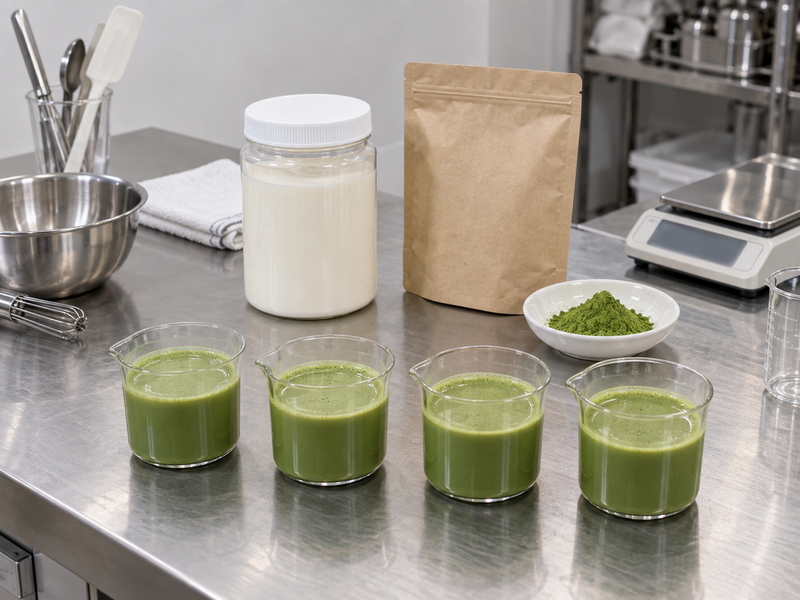
Record the base recipe, ingredient codes, water source, powder dose and mixing order. Identify fruit, dairy, plant ingredients or other components that form the actual product. Keep these details fixed during the initial pH comparison. A water dispersion can help screen samples, but it cannot establish how the commercial matrix will perform.
For matcha pH stability, prepare a baseline from the same formulation and traceable powder lot. Keep the matrix identity with every result. State whether the sample is a simplified screen or the finished recipe. Ask the technical team which properties require additional measurement and how to retain samples without introducing another handling difference.
Give the supplier a useful description of the matrix and intended application. A general grade recommendation should become a candidate for testing rather than a final specification. Keep commercial recipe adjustments separate from laboratory analytical preparation. If the laboratory uses a particular solvent or buffer for measurement, that procedure does not establish an ingredient suitable for use in the finished product.
3. How should you choose the comparison conditions?
Select realistic permitted recipe options
Ask development, quality and process staff which conditions are relevant and permitted for this product. Choose levels around the actual recipe question rather than copying a broad range from a supplier marketing table. Record how each condition will be prepared and how much of each adjustment ingredient is added. Keep the adjustment sequence repeatable.
Matcha pH stability comparisons should distinguish a measured condition from a nominal target. Use the measured result in the trial record. If a target cannot be reached repeatably, investigate preparation and measurement before interpreting appearance. Identify any ingredient adjustment as a recipe variable with its own potential effects on flavor and other product properties.
Avoid recommending a universal pH for matcha beverages. The intended matrix, process, packaging and market determine the competent product assessment needed. A development team may screen several conditions for quality, but commercial adoption requires the responsible staff to review the complete formula. Record any outstanding assessment instead of presenting the greener sample as automatically ready for sale.
| Comparison field | Record | Review before adoption |
|---|---|---|
| Nominal target | Planned condition | Relevant recipe scope |
| Measured pH | Actual result and timing | Measurement basis |
| Added ingredient | Identity and mass | Formula and market suitability |
4. How should you prepare a repeatable pH measurement?
Follow an approved measurement procedure
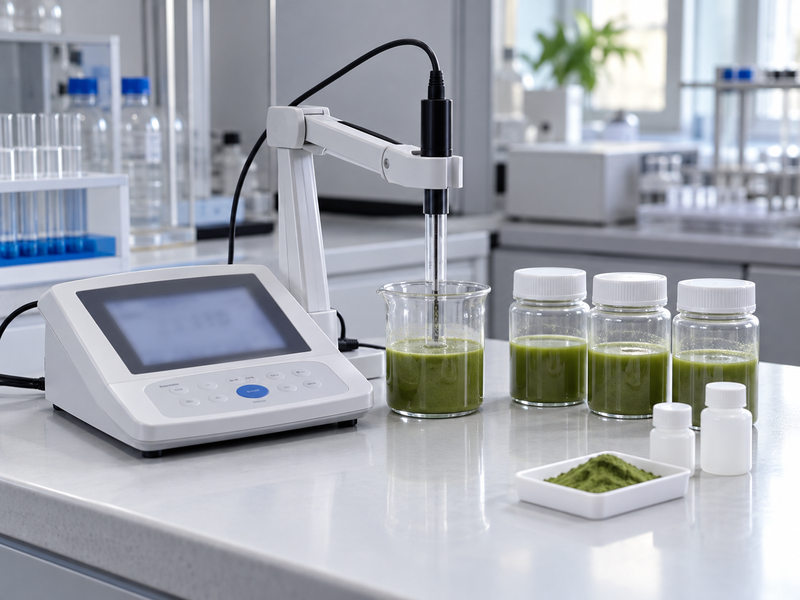
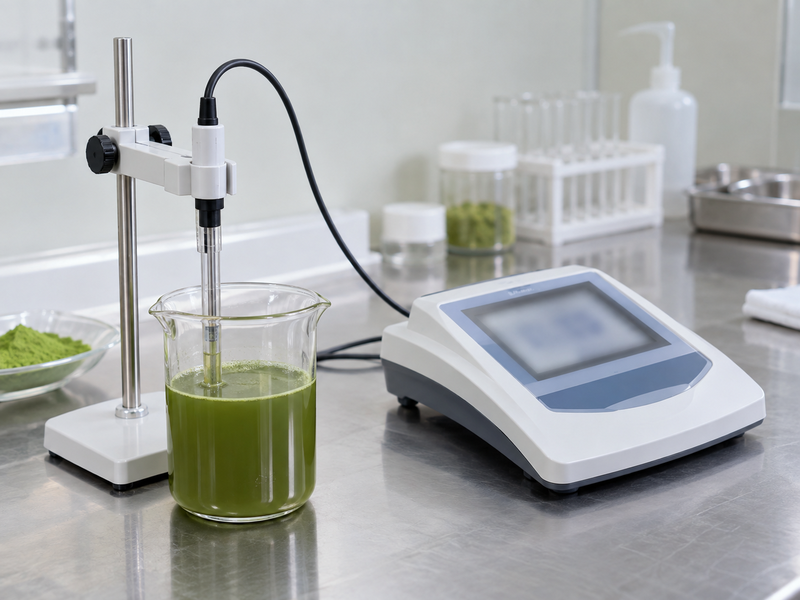
Choose equipment suited to the sample with the technical owner and instrument supplier. Follow their procedure for calibration, preparation, cleaning and use. Record device identity and calibration information. A screenshot of a single reading without sample preparation and instrument history provides a weak basis for comparing supplier powders or deciding a formula change.
For matcha pH stability, agree measurement temperature, sample mixing and reading procedure. Keep measurement conditions consistent. Ask the operator how the procedure handles a powder suspension or a thick base. Record a suitable stable reading according to the approved method. If the sample requires a different preparation, identify that basis clearly rather than mixing its result with direct measurements.
Include checks appropriate to the site’s measurement system. Keep repeat readings and any drift concern visible for technical review. Do not average inconsistent measurements without investigating the cause. Where another laboratory performs the measurement, request enough method detail to compare its basis with the plant’s procedure. The objective is a repeatable result tied to a defined sample, not additional decimal places.
5. When should pH be measured during development?
Link each reading with a preparation stage
Plan measurement points before starting the trial. They may include base preparation, powder charging, completion of mixing and a defined post-process stage. Select points that answer the recipe question. Record actual timing and sample condition. A reading before powder charging describes a different material from the finished formulation and should remain in a separate field.
Matcha pH stability reports should preserve the sequence. Identify the stage beside every pH value. Include adjustment and measurement intervals. If staff charge another ingredient after a reading, take the next planned measurement rather than presenting the previous value as the final condition. Keep the final recipe mass and actual added amounts available for review.
During storage comparisons, define whether the unit remains unopened until its measurement point. Repeated opening and sampling create another exposure history. Keep that condition explicit. Use suitable sampling procedures and separate safety controls established by quality staff. Record any deviation or interrupted storage so a later change in appearance is interpreted against the actual sample history.
| Measurement stage | Sample identity | Timing detail |
|---|---|---|
| Prepared base | Base before matcha | After agreed mixing |
| Finished formulation | Complete recipe | After final ingredient charging |
| Stored unit | Identified filled sample | Planned observation point |
6. How should you control temperature and exposure?
Prevent unrelated changes in the comparison
Record preparation temperature, thermal history, container and observation time. Keep lighting, storage and opening conditions consistent when comparing pH. A sample measured after a longer warm hold differs in more than one variable. Preserve the actual exposure record and repeat the comparison when unexplained differences prevent a useful interpretation.
For matcha pH stability, keep process conditions fixed during initial screening where practical. Change one planned factor at a time. A larger experimental design may be appropriate when your technical team needs to study interactions, but it should be planned and interpreted by qualified staff. Record the complete combination rather than attributing its result to pH alone.
Ask process staff how development conditions relate to production. A small open vessel can have another preparation and cooling history from a filled commercial package. Use representative process confirmation for the shortlisted recipe. Keep safety and preservation decisions separate from quality screening; a pigment or taste result does not authorize changes to the process controls your responsible team has established.
7. Which quality endpoints should accompany pH?
Measure the attributes used for approval
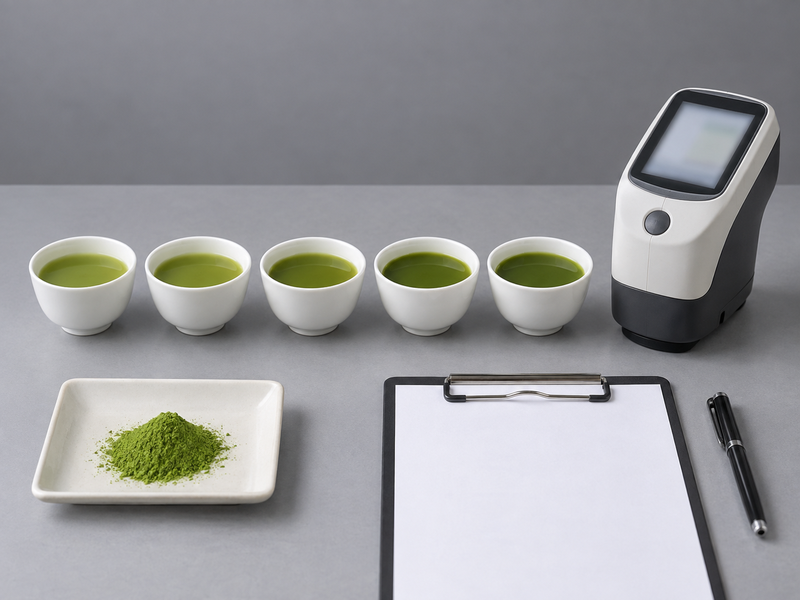
Choose consistent color observation and, where suitable, instrumental measurement. Fix vessel, fill depth, background, lighting and observation time. Record any remixing before assessment because a settled sample may present differently. Use the site’s color measurement guide as a related preparation check while defining a method appropriate to your product.
Matcha pH stability needs sensory assessment as well when the commercial target includes flavor. Evaluate coded samples under matched conditions. Record tea character, sourness, bitterness and any other relevant descriptor using the agreed reference. Keep taste decisions separate from pH numbers. Another measured pH does not by itself describe which sample the intended customer will accept.
If the team needs chemical evidence, give the laboratory a focused pigment question and the actual matrix. Request method scope, units and sample basis. Preserve analytical qualifications. Avoid treating a color photograph as proof of a particular compound change. Document which quality endpoint failed and what follow-up will answer the unresolved question before modifying powder dose or recipe.
| Endpoint | Fixed assessment basis | Decision owner |
|---|---|---|
| Appearance | Lighting and presentation | Product development |
| Flavor | Coded matched samples | Sensory reviewer |
| Pigment composition | Suitable laboratory method | Technical reviewer |
8. How should you interpret matcha pH stability differences?
Keep conclusions within the trial design
Place measured pH, recipe adjustments, process exposure and quality results together for review. Ask which variables changed and which remained fixed. If several additions or process changes accompanied a result, the trial may need a narrower follow-up. Preserve the observation without inventing a chemical explanation unsupported by laboratory evidence.
Use matcha pH stability findings to answer the chosen purchasing question. Compare the same endpoint across matched samples. A candidate that meets color requirements may still fail the flavor target. Record these decisions separately. If technical staff find the difference too small or uncertain to interpret, keep the result qualified rather than turning it into a supplier ranking.
Review practical recipe costs and operating requirements after identifying acceptable options. Include adjustment ingredients, preparation time and the selected powder dose. Any commercial formula change needs the responsible technical and market review. Keep the accepted reference and its measured condition available so the production confirmation has a concrete target beyond a vague instruction to maintain a bright green appearance.
9. What should the supplier sample brief include?
Describe the tested application
Send suppliers the matrix description, dose, measured condition range, process and observation procedure. State which quality endpoints matter and identify the accepted reference. Ask for traceable candidate samples rather than a promise of universal pH tolerance. A useful response should connect the proposed powder with your defined recipe and trial conditions.
For matcha pH stability, request independent lots when recurring consistency needs confirmation. Keep every sample linked to its product code. Record opening and handling conditions. Begin with equal doses, then run any dose optimization separately. Commercial grade names belong in the supplier record but do not establish performance in the tested formula.
Ask which quality documents and application support are available for the proposed ingredient. Ask Matcha Village about samples and application recommendation; confirm the exact service, quantity and terms in writing. Keep laboratory test requirements explicit. An application suggestion from a supplier cannot replace your technical review of measured pH, process suitability and finished product performance.
| Supplier brief item | Include | Requested response |
|---|---|---|
| Matrix | Base and dose | Candidate ingredient codes |
| Trial condition | Measured pH and process | Relevant application support |
| Quality target | Defined reference and method | Traceable samples |
10. How should an approved formula remain controlled?
Define changes requiring technical review
Keep recipe version, ingredient codes, charging sequence, measurement procedure and approved quality target in the controlled file. Name document and approval owners. Separate development trials from the current production instruction. Operators should be able to retrieve the correct formula and measurement procedure without interpreting several competing screening conditions.
A matcha pH stability record should name triggers for another confirmation. Review changes in base, powder or process. Water source, adjustment ingredients, package and storage arrangement can also require assessment. Ask quality and process staff which changes need a full investigation and which can receive a focused check within their established controls.
Include supplier notification for changes to the selected ingredient code or blend arrangement. Set the receiving checks that the approved application requires. When a later batch behaves differently, preserve its identity, measured conditions and finished sample. Compare with the accepted reference and record the technical decision before revising the supplier specification or authorizing another commercial recipe change.
FAQ
Q1: Can a universal pH range guarantee matcha quality?
Test the actual recipe, process and package. Keep findings limited to measured conditions and agreed quality endpoints.
Q2: Should the meter procedure be recorded?
Yes. Record device identity, calibration, sample preparation, measurement temperature and the approved reading procedure.
Q3: Can a green sample establish beverage safety?
No. Competent quality and process staff must assess safety and preservation requirements separately from appearance.
Q4: Can a simple water test replace the commercial matrix?
Use it for screening where useful. Confirm the shortlisted option in the finished recipe and representative process.
Q5: What should trigger another pH trial?
Review changes in recipe, base, water, powder, adjustment ingredient, process, package or intended storage arrangement.
Choose a specific recipe question, prepare matched controls and agree the measurement procedure. Record actual pH alongside additions and process exposure, then assess finished color and flavor. Send suppliers the tested application brief and approve a candidate only after the responsible technical team reviews quality performance and outstanding process requirements.