
Matcha pesto is a specific herb-and-oil sauce with tea powder incorporated into it. That sounds like a minor variation until a kitchen needs to make the same batch for a week of service or a brand wants to pack it. Matcha can disappear behind garlic, form dry green flecks or turn the sauce muddy when the herb mix changes. Oil separation, allergens and cold handling complicate the buying decision. This guide focuses on pesto formulation and release, rather than a general matcha sauce overview or a pasta-making article. Ten checks help a restaurant or food brand decide what to test, record and request from a matcha supplier.
Table of contents
- What job should matcha pesto do on the menu?
- Which matcha and herbs should be tested together?
- How should matcha enter the pesto mixture?
- What process gives a repeatable texture?
- How should the kitchen test pesto in a finished dish?
- Which allergens and menu claims need review?
- How should pesto be packed and held?
- What evidence supports a commercial shelf life?
- What determines cost and saleable batch yield?
- What should the supplier enquiry contain?
1. What job should matcha pesto do on the menu?
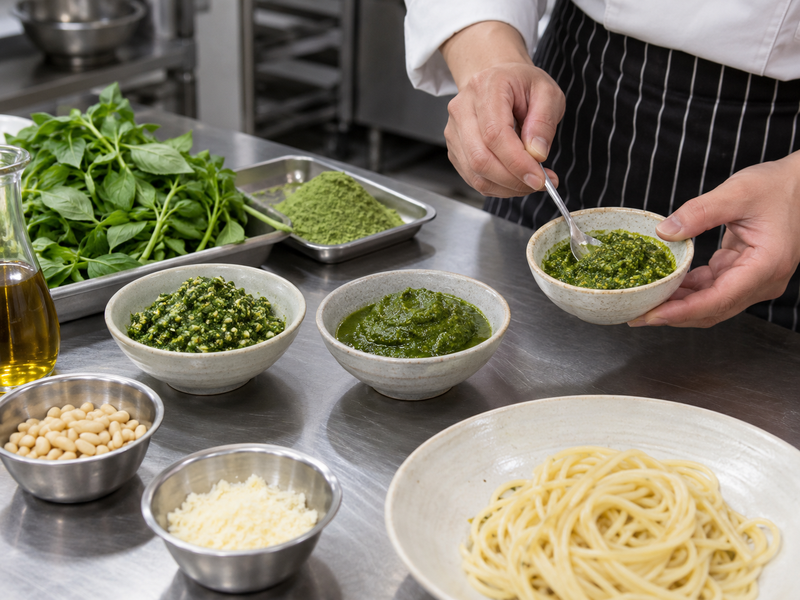
Pick a use before judging the sauce alone
A pesto stirred into hot pasta faces different heat and dilution from a cold sandwich spread or a finishing spoonful on a plated vegetable. Choose the first application and target amount per portion. Decide whether guests should notice tea distinctly or only find a subtle green depth behind herbs. Define a texture that suits the use, from coarse herb pieces to a smoother foodservice finish.
Set a color and flavor standard using the finished dish under service lighting. A neon-green laboratory sample is a poor reference for a natural herb, oil and matcha mixture. Write the planned serving temperature, holding method and whether the kitchen will add the pesto before or after final heating. Keep this brief separate from the restaurant’s existing broad matcha sauce or matcha pasta content: the buying target here is a specific pesto with leafy herbs, oil and optional nut or cheese ingredients. Its ingredient system drives the process and allergen controls.
| First application | Pesto decision | Service test |
|---|---|---|
| Warm pasta | Coating and dilution | Tea flavor after toss |
| Cold sandwich | Spreadability | Oil release on bread |
| Plate finish | Spoonable texture | Color and portion control |
| Packaged food | Distribution stability | Texture after intended hold |
2. Which matcha and herbs should be tested together?
Treat the herb mix as part of the tea decision
Basil, parsley, mint and other greens do not have the same aroma or water content. A herb mixture that dominates matcha can make extra powder seem like the only route to a tea note, but a simpler herb base may work better. Compare one herb composition at a time with the same weighed matcha dose and oil source. Taste a plain herb pesto alongside the matcha version to see what tea actually contributes. If cheese or nuts are included, test them consistently; their fat and flavor can soften or conceal tea bitterness.
Matcha Village’s supplied material lists culinary, premium and other matcha options with application-selection support. Ask for named samples and current specifications, then make identical pilot batches. Evaluate color, aroma and flavor in the finished sauce and in its intended dish. Do not pick a sample on dry powder color alone. Matcha’s fine particles can also affect texture; note whether one sample leaves a gritty finish at the selected dose.
| Ingredient choice | Question for the pilot | Buying record |
|---|---|---|
| Herb blend | Does it support or mask tea? | Exact species and source |
| Matcha | Flavor, color and mouthfeel in pesto | Named grade and lot |
| Oil | Body and separation | Type and supplier |
| Nuts or cheese | Flavor, texture and allergens | Identity and label status |
3. How should matcha enter the pesto mixture?
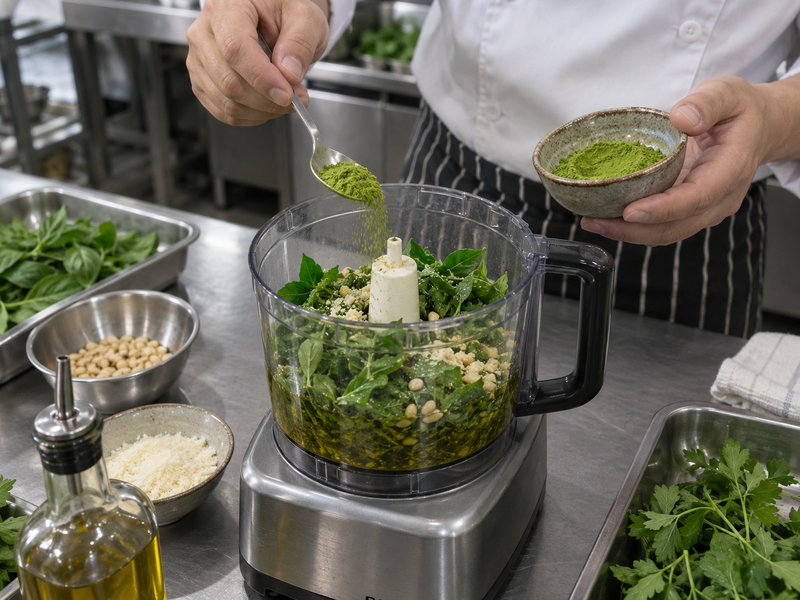
Distribute fine powder before final blending
Dumping matcha into a thick finished paste can create dark dry pockets that a brief stir will not remove. In a trial, weigh the powder and disperse it into a small measured portion of oil or another approved ingredient before combining it with the herb mix. Compare that with an orderly dry-addition method in the same machine. Record addition point, mixing time and visual uniformity across the bowl. Extra oil used to wet powder changes the formulation and should be included in the batch record rather than treated as a free processing aid.
Inspect sauce from the top, center and bottom of the vessel. Avoid grinding until everything is perfectly smooth merely to chase color uniformity; pesto texture is part of the product. If a sample looks muddy or bitter, adjust herb balance, matcha choice or dose in controlled steps. Simply raising the powder level can create a darker sauce without a clearer tea note. The operator should document a practical mixing endpoint that staff can recognize at production scale.
4. What process gives a repeatable texture?
Control cut size and temperature in the real equipment
Herbs, nuts and cheese break down at different rates. A food processor, immersion blender and larger production mixer may produce very different particle sizes from the same ingredient list. Select one tool for the pilot and record batch load, pulse or mix pattern and order of addition. Watch for excessive heating during processing: a warm paste can lose fresh herb character and may look different after packaging. The kitchen’s quality team should set its process and temperature controls based on actual equipment and safe handling rules.
Decide whether the desired pesto is coarse enough to show leaf fragments or smooth enough for a pump, squeeze bottle or depositor. A thick batch may cling to the vessel and create significant loss; a thin one can separate on the plate. Trial small adjustments to oil level and solids while keeping matcha dose fixed. Use a simple texture reference, such as an approved sample photograph and a measured portion test.
5. How should the kitchen test pesto in a finished dish?
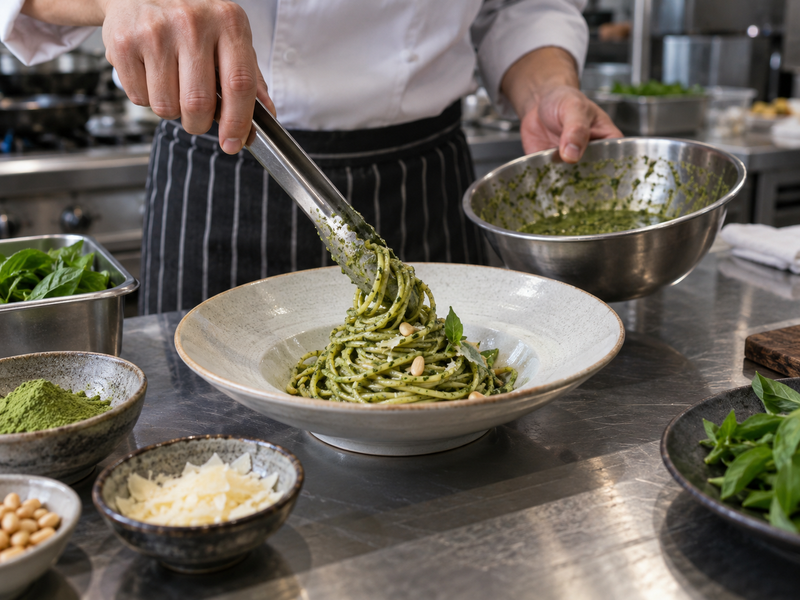
Taste the actual serving route
For pasta service, weigh cooked pasta and pesto separately, then toss as the line would during a rush. Record any cooking water or other dilution because it changes sauce strength. Taste immediately and after the normal walk to the table. Matcha aroma that seems clear in a cold bowl may fade when the pesto meets hot pasta, while a bitter edge may become more noticeable as the plate cools. Test the pasta shape the menu will actually use; a ridged shape holds sauce differently from a smooth noodle.
For a cold spread or plated garnish, run a separate test rather than reusing the pasta result. The matcha pasta guide covers a related application, while this pesto still needs its own plated trial. Check for oil rings, herb pieces that detach and a portion that looks much larger or smaller than the menu photo. If diners cannot detect matcha at a sensible dose, reconsider whether it belongs in the menu name. Keep a service-ready sample and a concise instruction that staff can use without improvising extra powder at the pass.
| Finished-use check | What to measure | Reject signal |
|---|---|---|
| Pasta toss | Pesto and pasta weight | Patchy coating |
| Table delay | Normal pickup time | Dull color or oil ring |
| Cold spread | Portion and bread contact | Greasy migration |
| Plate garnish | Spoon or squeeze portion | Inconsistent appearance |
6. Which allergens and menu claims need review?
Build the ingredient map before launch
Pesto often contains nuts and cheese, but a matcha pesto does not require any particular nut or dairy ingredient. The selected recipe determines the allergen profile. Record all ingredients, including any prepared cheese, nut paste or seasoning blend, then have the food business’s quality and regulatory team review the destination market’s disclosure rules. Shared equipment and utensils may create cross-contact concerns even when an alternative version omits nuts or dairy. A “vegan” or “nut-free” menu claim needs a controlled recipe and process assessment, not just a different ingredient list on a trial card.
Keep health language out of the sales pitch. The matcha reference recipe uses wellness framing, but a foodservice buyer should evaluate flavor, appearance, handling and ingredient identity. If a distributor or chain will sell the sauce in several markets, confirm labeling and nutrition claims through its own review before printing packaging. Ask matcha suppliers for current product information and lot documentation as needed; a general company profile cannot validate a finished pesto claim. Train staff to answer ingredient questions from the approved menu specification, rather than guessing from the sauce’s green color.
7. How should pesto be packed and held?
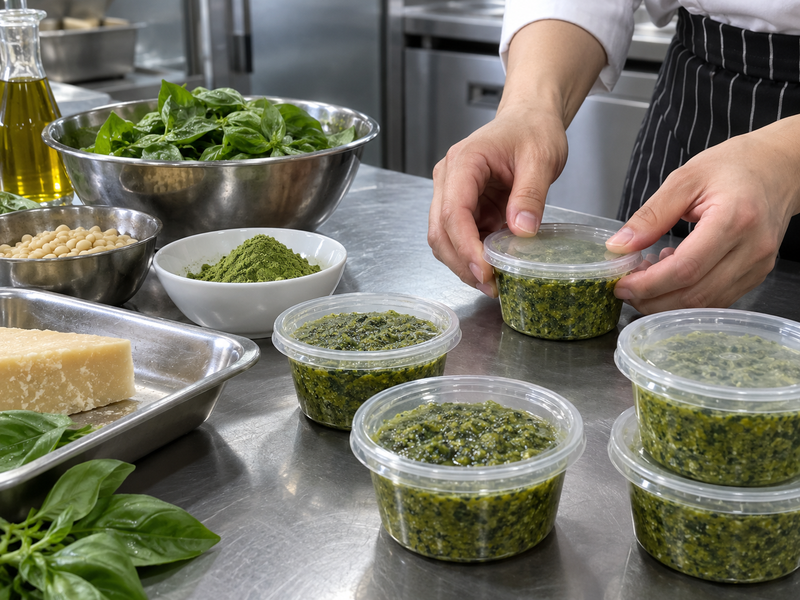
Protect the sauce during its actual route
Fresh herb and oil mixtures can change appearance and texture while they wait. Define whether the kitchen will use covered small containers for a shift or whether a manufacturer will make sealed packs for distribution. These are different products with different evidence needs. In a foodservice trial, portion sauce into the real container, close it, store under the venue’s required conditions and check whether oil separates or the surface darkens. A large open bowl on a prep bench is not a valid test of a sealed retail tub.
Evaluate container fill, headspace, closure integrity and the ability to portion without contamination. If the sauce is sold chilled, the entire storage and transport route must be designed for that condition. Do not infer that an oil layer makes a fresh pesto safe at room temperature. Record the matcha and herb lots, production date and pack code in the business’s traceability system. A food manufacturer should approve the final package with its quality team and validate any claimed storage life. Good presentation cannot replace safe handling.
| Pack condition | What to inspect | Decision |
|---|---|---|
| Filled container | Headspace and closure | Pack size and seal |
| Short hold | Oil layer and surface color | Mixing or portion method |
| Distribution | Leakage and texture | Transport pack |
| Opened pack | Dispensing and contamination risk | Service instruction |
8. What evidence supports a commercial shelf life?
Test the exact finished sauce and package
A restaurant’s small fresh batch and a packaged sauce for wholesale cannot share a storage date merely because their ingredient lists look similar. Shelf-life work must consider the actual formula, process, packaging and distribution. The producer’s quality team should design appropriate microbiological and sensory checks under the intended conditions. Herbs, nuts, cheese and moisture-bearing additions matter; so does any change in oil, acidity or heat treatment. A home recipe’s storage comment is not commercial validation. Nor does matcha itself make an oil-and-herb mixture shelf stable.
Assess whether tea flavor, herb aroma, color, texture and oil separation remain acceptable through the proposed period, alongside the safety criteria chosen by qualified staff. The UK Food Standards Agency’s product-description guidance identifies storage and distribution as part of hazard review. Test at the endpoints that match real transport and service, and retain lot-linked records. If a buyer changes cheese, removes nuts or switches pack material, revisit the study. A matcha supplier can provide current ingredient specifications and traceability documents, but the sauce producer owns finished-product release. This distinction should be clear in the purchasing agreement and in any date printed on a pack.
9. What determines cost and saleable batch yield?
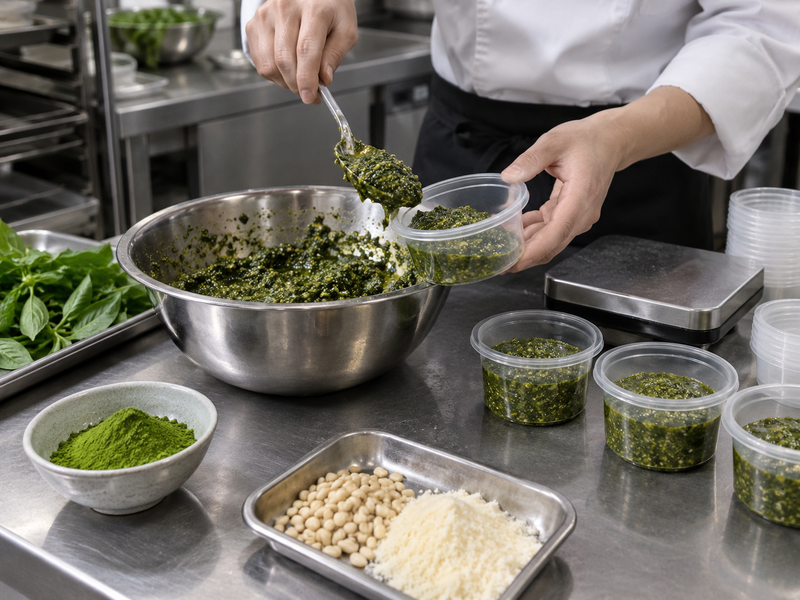
Cost the portion that reaches the plate
Calculate the matcha contribution from the approved weighed dose and delivered price, then include herbs, oil, nuts or cheese, packaging and labor. Record processor residue, sauce left in a piping bag or dispenser, and rejected batches with poor texture. A low powder price is not a win if a larger dose is needed to remain visible behind garlic and herbs. Compare cost per saleable portion, not only per kilogram of mixed pesto. For restaurant service, time the actual build and cleanup; for packaged food, include filling and chilled distribution costs.
Scale a pilot only after texture and dispersion are consistent. A larger mixer may need a revised addition sequence, and heat generated during processing may change the sensory result. Use several runs to estimate yield and variability before setting a purchase forecast. Matcha Village’s supplied company information describes bulk and application support, but request current terms for the exact sample that passed the pesto trial. Connect the supplier quote to a demand estimate based on real portions and realistic waste.
| Cost input | Record | Scale-up risk |
|---|---|---|
| Matcha | Grams per accepted portion | Dose change with new mixer |
| Herbs and oil | Actual batch weights | Trim and vessel loss |
| Optional nut or cheese | Approved formulation | Allergen and price changes |
| Pack and labor | Finished units and time | Filling loss and cold-chain cost |
10. What should the supplier enquiry contain?
Describe a pesto, not simply a green sauce
Send the matcha supplier a concise application brief: herb mix, oil system, optional cheese or nuts, planned matcha range, desired tea note, target green appearance, processing method, intended serving temperature, pack size and destination market. Ask for named samples, current specifications, lot identity, packaging options, lead times and documents needed for the buyer’s market. Matcha Village’s stated portfolio and selection support can help shortlist candidates, but any product-specific certificate, analytical result or commercial term must be confirmed for the sampled material.
Run those samples through the same pesto process and finished-dish test. Keep the approved sample, recipe, processing record and acceptance photographs together. If a supplier proposes a replacement, compare it with the retained reference before changing the purchasing code. A precise enquiry helps procurement buy a matcha that works in a herb-and-oil matrix, not merely one that looks bright in water. The next step is a controlled multi-batch pilot with pack and service checks, followed by finished-product approval from the food business’s quality team.
FAQ
Q1: Is matcha pesto the same as matcha sauce?
Matcha pesto is a specific herb-and-oil sauce containing matcha. A broader matcha sauce may use an entirely different base and process.
Q2: Must pesto contain pine nuts and Parmesan?
No. The selected recipe may use different ingredients, but each change needs flavor, texture, allergen and label review.
Q3: Can matcha powder be stirred into finished pesto?
It may leave dry pockets. Trial a measured dispersion step and check samples from several points in the batch.
Q4: Does oil make fresh matcha pesto shelf stable?
No such claim follows from oil content. Storage and shelf life require validation for the exact sauce, process, pack and route.
Q5: What should a supplier know before sending samples?
Share the herb and oil system, intended use, processing method, flavor target, pack format and expected demand.