
Matcha pasta uses finely milled green tea in pasta dough or a pasta preparation. It offers color and a mild tea note, but green dough alone is not a finished product. Cooking can fade the color, a heavy sauce can erase the tea, and the powder can change dough hydration. Kokoro Care’s matcha pasta recipe shows a consumer use. A restaurant, meal-kit team or pasta producer needs to test the noodle, cooking route and sauce together before placing the dish on a menu.
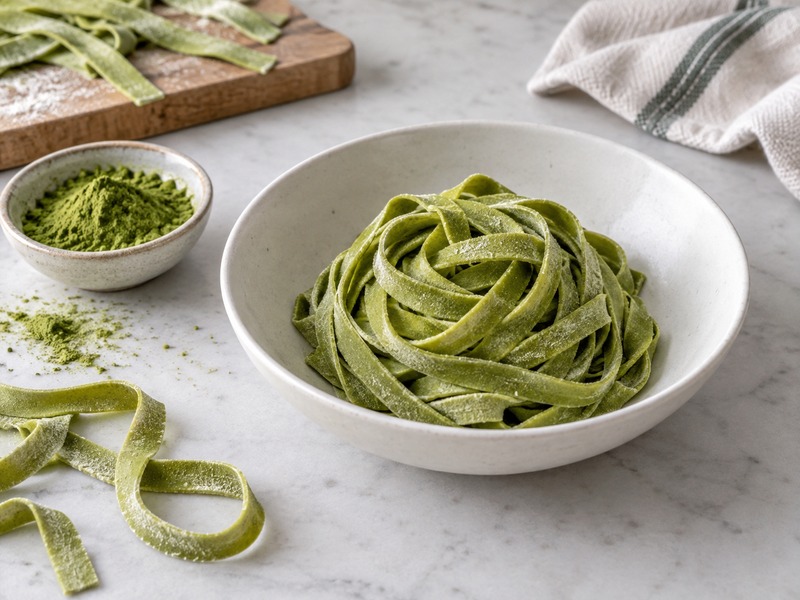
For: chefs, pasta producers, foodservice developers and tea buyers. Decision: whether matcha contributes a useful flavor and color after the pasta is cooked and served.
1. What is the intended matcha pasta format?
Set the product route first
Fresh noodles served the same day, frozen filled pasta and dried shelf-stable pasta are separate development projects. Each has different hydration, processing, packaging and shelf requirements. A restaurant can tune cooking by observation; a retail pack needs instructions that work in many kitchens. Decide the pasta shape, portion weight, sauce style, production volume and sale channel. If the concept is simply green pasta, compare matcha with other coloring approaches honestly. The ingredient should earn its place through a recognizably tea-led flavor or a credible menu story.
Set the sensory target. The cooked noodle should have the intended bite, a clean color and a tea note that does not read as bitterness. Taste it plain, then with the planned sauce. Note whether the tea appears in the aroma, first bite or finish. A vivid raw sheet that tastes flat after boiling is not a successful matcha pasta. Keep a reference cooked sample description and a consistent plating photograph for later trials.
| Route | Product advantage | First validation |
|---|---|---|
| Fresh restaurant pasta | Fast feedback | Service cooking consistency |
| Frozen pasta | Flexible production | Freeze–thaw and texture |
| Dried pasta | Longer distribution | Drying, color and rehydration |
2. Which matcha should be screened in dough?
Test after cooking
Matcha quality is often judged in water, but pasta involves flour, egg or water, kneading and heat. Request identified food-grade samples and incorporate each at the same mass relative to total flour. Compare them after the standard cooking time. Look at dough color, finished color, flavor, aroma and visible specks. A powder that is beautiful in a bowl may contribute little after boiling; a more assertive sample may survive cooking better. The purchase decision belongs to the cooked dish.
Check supply details. Ask for product specification, pack size, lot traceability, storage guidance and documents relevant to the market. Consider whether tea particle behavior affects sheet smoothness or extrusion. Keep a retained lot sample and a standard dough test for incoming tea. If a new lot makes the dough darker or more bitter, the team should detect it before it reaches service.
3. How does tea powder affect dough hydration?
Measure by weight
Adding a dry powder changes the ratio of total solids to liquid. If a kitchen merely adds matcha to its usual dough, the dough may become firmer or harder to sheet. Record flour, matcha, liquid and egg weights for every trial. Introduce matcha at several measured levels, adjusting liquid only after observing the dough’s mixing and rest behavior. A pasta formula is sensitive to flour protein, egg size and ambient conditions, so a repeatable method needs more than a list of ingredients.
Allow an equal rest. Compare doughs after the same resting interval, then pass them through the same rollers or extrusion settings. Check cracking, tackiness and edge quality. Matcha clumps can make small dark spots; blending the powder thoroughly with flour before hydration may help. Do not solve every defect with more water. Overhydrated sheets can stick and lose clean cut edges, while a too-dry dough can tear and produce excessive scraps.
| Dough signal | Possible cause | Controlled response |
|---|---|---|
| Cracked edge | Low hydration or short rest | Change one variable |
| Sticky sheet | Excess liquid | Reduce liquid or change rest |
| Dark spots | Poor powder distribution | Dry preblend or sift |
| High scrap | Process mismatch | Review thickness and cutters |
4. What matcha level survives cooking?
Taste a small dose ladder
Use a short ladder of matcha doses defined as a percentage of flour mass. Make equal dough batches, roll to equal thickness and cook at the same pasta-to-water ratio. Taste blind while hot. Record color before and after cooking, the amount of tea aroma, bitterness and any difference in bite. A high dose can produce an attractive raw sheet but overwhelm a delicate sauce. A low dose can be hard to justify on the ingredient statement or in a premium price. Select a range based on the finished dish, not the mixer bowl.
Account for cooking loss. Some tea color and soluble flavor will move into the water. Photograph the water and cooked pasta, then compare different cook times. Do not assume a darker cooking liquid always means poor performance; use the sensory result and noodles’ appearance. Once a dose is selected, repeat it with a second tea lot and a larger dough batch before setting purchasing volumes.
5. Which cooking method keeps the intended bite?
Standardize the water and timing
Fresh, frozen and dried matcha pasta need their own cooking directions. Use measured portions and water volume. Start with the restaurant’s normal salted water, then test whether salt and cooking time change the tea perception. Pull samples at several time points and assess bite, surface condition and color. A noodle can become soft before the tea flavor seems fully developed; extended cooking is not necessarily the cure. For service, include the time the pasta spends finishing in a sauce.
Test the weakest operator route. A chef may handle a delicate noodle perfectly during a quiet trial, but the menu must survive a busy line. Ask different cooks to prepare the same written method. Record time from drop to plate, holding time and any broken pieces. If the product only works within a narrow window, it may suit a limited special better than a high-volume core menu item.
| Cooking check | Record | Why it matters |
|---|---|---|
| Pull time | Minutes and seconds | Reproducible bite |
| Finished portion | Mass and yield | Cost and plating |
| Color | Fixed-light photo | Visual promise |
| Sauce finish | Time in pan | Extra heat exposure |
6. What sauce allows matcha to matter?
Build the plate around the noodle
A delicate cream sauce can support tea without competing, while a strong tomato or heavily spiced sauce may make the green noodle decorative. That is not inherently wrong, but the menu should not promise a tea-forward taste if customers cannot find it. Test at least two plausible sauce styles with the same noodle and portion. Compare plain cooked pasta first, then the assembled dish. Balance salt, fat, acid and umami with the tea finish. Some toppings add a useful contrast; others make the plate busy.
Watch color transfer. A thin sauce can make green pasta look washed out; a dark sauce can hide it entirely. A very pale sauce may highlight natural color variation between lots. Photograph the plated portion at pass and after the likely time before a guest eats. If the concept depends on green visual appeal, ensure the dish still looks intentional after the sauce has settled.
7. How should the team assess texture and defects?
Look beyond one perfect plate
Inspect early and late sheets from the batch. Measure thickness, check cut edges and count broken strands or filled pieces. After cooking, note surface roughness, clumping, chew and any floury or gritty sensation. Tea powder should not create perceptible grit in a well-made noodle. If it does, compare tea samples and mixing, then reassess dose. Filled pasta brings an additional seal and moisture challenge; a colored dough that tears around filling will create cooking loss.
Keep failure notes specific. “Too soft” may mean overcooked, overhydrated or too thin. “Dull green” may reflect tea, heat or sauce. Change one factor per trial and record the result. If a dried product is planned, examine breakage during packing and distribution in addition to cooked texture. Restaurant results cannot establish a retail shelf-life claim.
| Defect | First check | Next trial |
|---|---|---|
| Broken strands | Dough rest and sheet thickness | Standardize rolling |
| Washed-out green | Cook time and tea lot | Timed comparison |
| Gritty bite | Tea dispersion | Preblend and sample tea |
| Weak tea flavor | Dose and sauce | Blind dish tasting |
8. What production route can be repeated at scale?
Test the actual equipment
Hand-rolled dough, a small pasta machine and an industrial extruder stress dough differently. A larger batch may have longer mixing, warmer dough and different scrap rates. Run a pilot at a size that reveals those constraints. Record ingredient addition order, mix time, dough temperature if relevant, rest, sheeting passes, cut settings and final yield. Define a maximum waiting time before cooking or packing based on a real trial.
Include cleaning and changeover. Green powder can mark equipment and create cross-contact concerns if the line handles other products. Evaluate the cleaning method and time between production runs. If a café prepares the dough daily, consider whether staff have the skill and time for consistent thickness. If a supplier makes it, agree on measurable acceptance criteria rather than buying on a photograph of the raw sheet.
9. How should the pasta be packaged and costed?
Price the served plate
Cost flour, egg or other liquid, matcha, sauce, garnish, process loss, labor and packaging per finished portion. Include cooking yield and the scraps generated when shaping. A premium tea dose can be justified if guests perceive it and the menu explains it clearly; a decorative dose may not support the same price. Compare supplier quotes by the grams needed for the accepted cooked flavor rather than price per kilogram alone.
Match pack to route. Fresh pasta requires appropriate chilled handling, frozen pasta requires a tested freeze and thaw route, and dried pasta needs moisture and breakage control. Obtain shelf-life and safety decisions through the applicable product program. If the pack makes claims about tea origin or certification, source documents must support them. Do not borrow storage guidance from the reference home recipe for a commercial product.
| Cost or pack factor | Measure in pilot | Decision it informs |
|---|---|---|
| Dough scrap | Mass discarded | True ingredient cost |
| Cooked yield | Portions per batch | Menu price |
| Breakage | Pieces lost in transport | Pack choice |
| Tea dose | Grams per portion | Supplier comparison |
10. What pilot proves the dish is ready?
Serve several real portions
Produce a batch with the chosen matcha lot and the intended dough equipment. Cook multiple portions during a simulated service window, including the first and last. Plate them with the actual sauce and toppings. Ask tasters to judge bite, tea clarity, flavor balance and appearance after a realistic wait. Record preparation time and waste. A matcha pasta that cooks beautifully once but slows the line or varies across cooks needs another round of work.
Write a release decision. Approve a matcha specification, dose range, dough recipe, rest, thickness, cooking time and plated standard. Decide what happens when a new tea lot arrives or a sauce ingredient changes. The useful next step is a controlled service trial with two cooks and the final sauce, not another raw-dough photo. If the dish still reads primarily as green pasta without tea character, either revise the formula or describe it more modestly.
Reference: RECIPE: MATCHA PASTA is a consumer format reference. The production recommendations here are independent.
FAQ
Q1: Does matcha pasta taste strongly of tea? That depends on powder, dose, cooking and sauce. Taste the finished plate before making the menu claim.
Q2: Can matcha replace flour in pasta dough? It is usually treated as a measured additional dry ingredient in a trial formula, not a direct flour replacement.
Q3: Why does the green color fade in cooking? Check matcha lot, cook time, water conditions and sauce before adding more powder.
Q4: Is fresh matcha pasta suitable for retail? It can be, but retail packaging, handling, shelf life and safety need separate validation.
Q5: What should a buyer ask the tea supplier? Request an identified sample, specification, lot traceability, storage guidance and the documents required by the buying program.